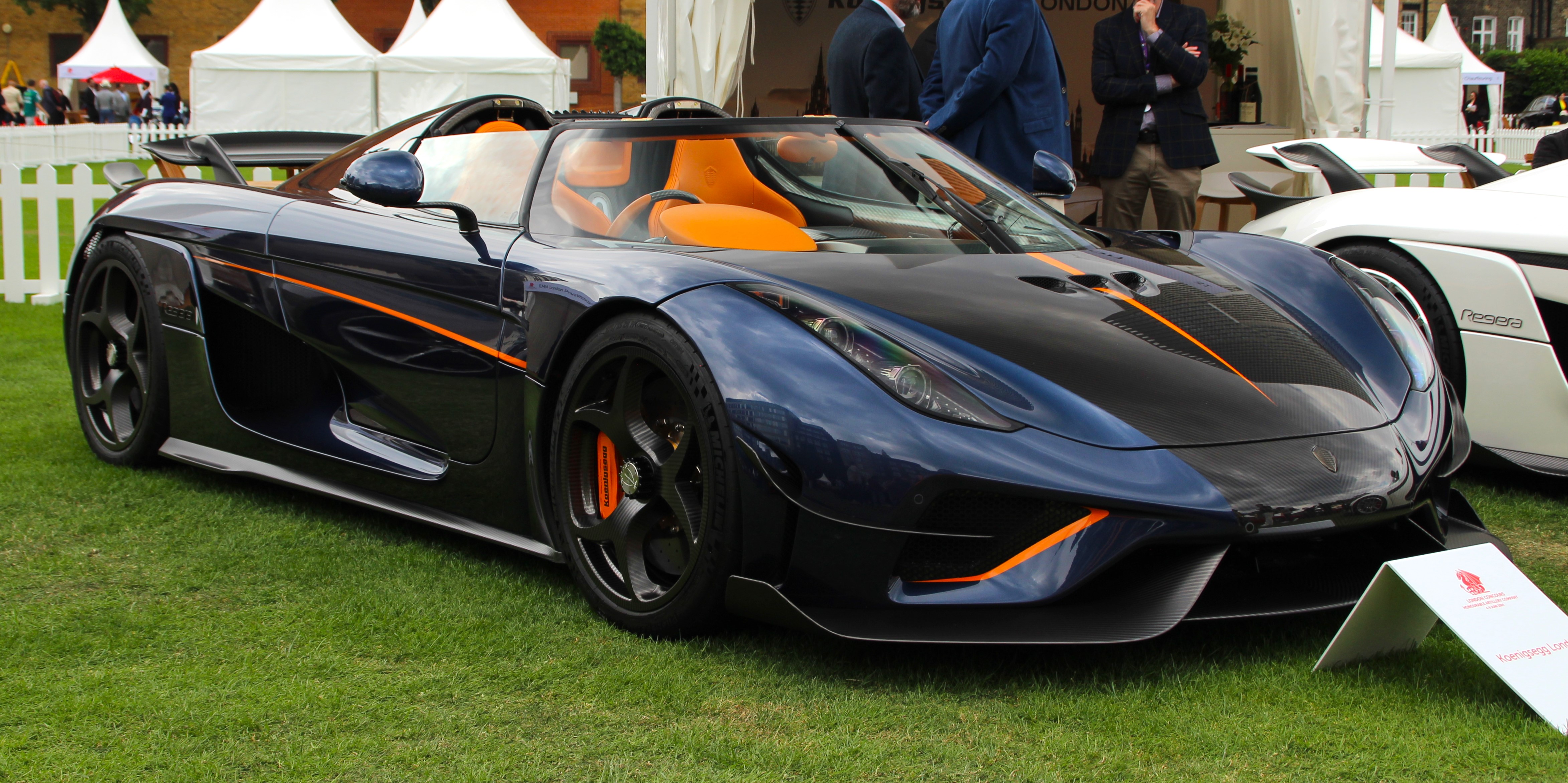
The Koenigsegg Regera: Why This Is Still the Most Insane Car Ever Built
Koenigsegg Regera at a glance: 1,500 horsepower · 0-400 km/h in 20.0 seconds · No multi-speed gearbox (KDD — Koenigsegg Direct Drive) · 5.0L twin-turbo V8 + 3 electric motors · Produced 2015-2022, 80 units built.
Fast cars are easy enough to find. Very fast cars, less so. And then there’s the Koenigsegg Regera, a machine so far outside the normal frame of reference that calling it a “car” undersells it.
I’ve been obsessed with Koenigsegg since I was twelve. Long before I knew what a power-to-weight ratio was, the shape of these things told me something was going on: angular, purposeful, Swedish in the way that means precisely engineered to within an inch of its life. The Regera took that instinct, broke it apart and rebuilt it from scratch.
What Makes the Regera Insane (The Short Version)
Start with the numbers, because they want to be said out loud. 1,500 horsepower, combined, from a twin-turbocharged 5.0-litre V8 and three electric motors. And no traditional multi-speed gearbox at all. Koenigsegg calls the system Koenigsegg Direct Drive (KDD), and it links the engine to the rear wheels through a single-speed hydraulic coupling while the electric motors fill in torque wherever the combustion engine can’t.
The result: 0–400 km/h in 20.0 seconds flat. A Bugatti Chiron Super Sport needs around 26 seconds for the same run. Different category entirely.
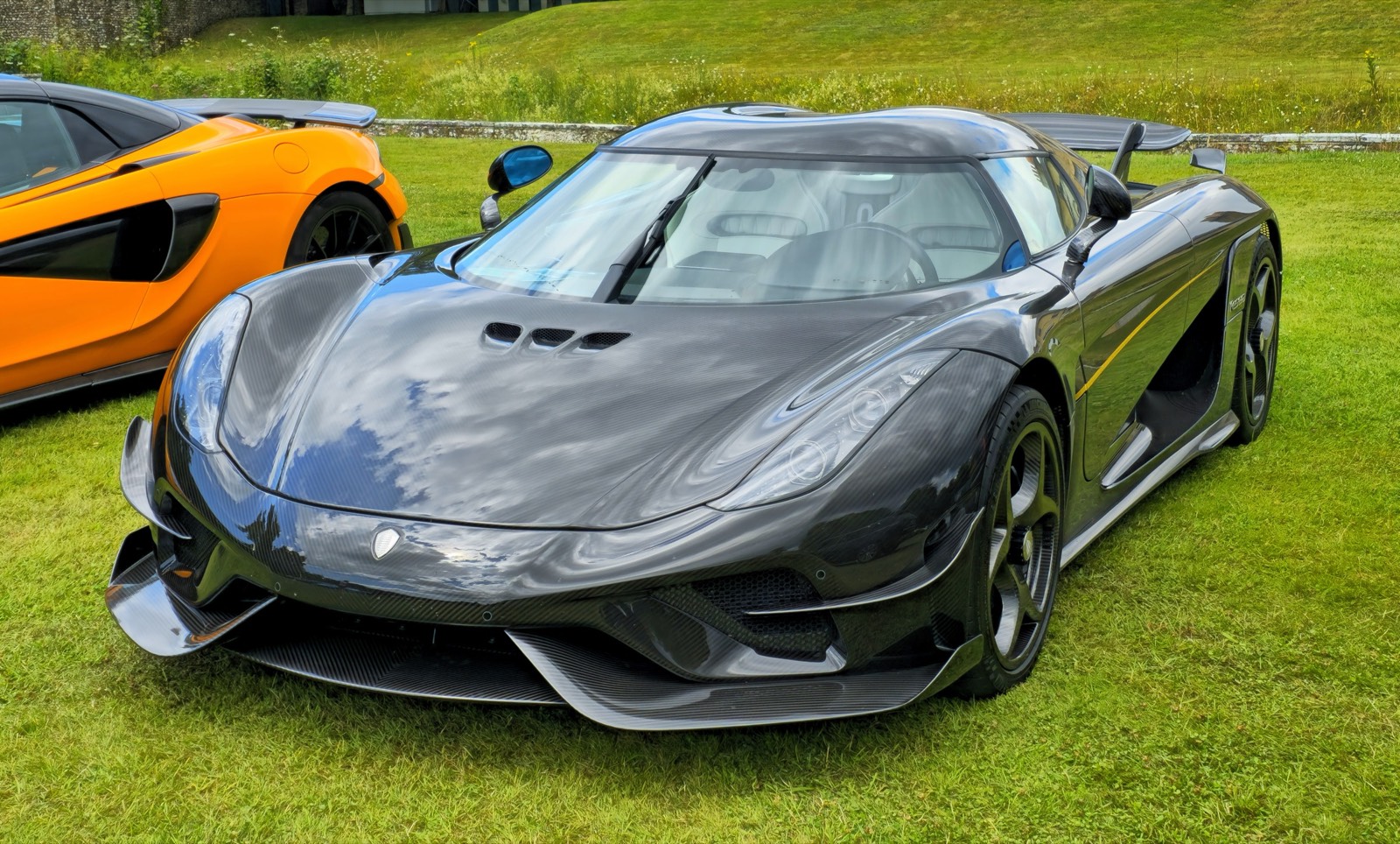
The Engineering That Should Not Exist
The first thing to understand about the Regera is that it shouldn’t work.
Not “it probably won’t work.” Not “it’s risky.” It should not work, at least not according to the conventional wisdom that has governed performance car engineering for 100 years.
Every high-performance car uses a multi-speed gearbox for the same reason bicycles have gears. Engines make peak power in a narrow RPM band, and gears keep the engine inside that band across a wide spread of road speeds. Take the gearbox away and you’re supposed to get one thing or the other: brutal low-speed shove, or violent top-end power. Never both.
Koenigsegg’s answer was to treat the electric motors as a mechanical solution to the torque gap rather than a performance garnish. Three of them, two on the rear axle and one on the crankshaft, filling in torque everywhere the combustion engine can’t. The torque curve that comes out the other side is so flat and so wide that a traditional gearbox has nothing left to do.
This is not a hybrid in the Prius sense. The Regera doesn’t potter about on electricity at low speed and then hand over to petrol higher up. It uses both at once, always, in proportions calculated to the decimal. The control software is juggling three power sources (a twin-turbo V8 making 1,100 horsepower on its own, plus electric motors adding another 400+) and blending them in real time into one seamless, continuous surge of acceleration that conventional cars simply cannot replicate.
The engineers call it “one gear to rule them all.” That’s not marketing copy. It’s literally how it works.
The Regera’s Party Trick: That 0–400 km/h Number
Before we go further, sit with that 0–400 km/h time one more time.
20.0 seconds. Nought to 400 km/h. That’s 249 mph. In twenty seconds.
Put it another way: in the time it takes to boil a kettle, a Regera could go from a standing start to a speed that would earn you a multi-year prison sentence in most countries.
The Bugatti Veyron Super Sport, once considered the pinnacle of accessible hypercar performance, does 0–300 km/h in around 24 seconds. The Regera does 0–300 in roughly 10. The extra 100 km/h on top takes another 10. The progression never relents.
The speed is only half of it. The shape of the acceleration is the genuinely strange part. In a conventional turbocharged car you get a kick as boost builds and then it flattens off. In a car with a traditional gearbox you feel the hesitation of every shift, those fractions of a second where power is interrupted. The Regera has neither compromise. One unbroken, constantly escalating wall of force from zero to wherever your courage runs out.
Under the Carbon Shell
The body you see on a Regera is carbon fibre. All of it. Underneath sits a full carbon monocoque, a single structural shell. Wet, the Regera weighs just 1,420 kg, roughly 400 kg less than a Porsche 911 Turbo S.
And that 1,420 kg is carrying 1,500 horsepower.
Just over 1,000 horsepower per tonne puts it in the company of cars built purely for track use, the sort that wear cages where the upholstery should be. The Regera has a proper interior, luggage space and infotainment. In the most technical sense, it’s a road car.
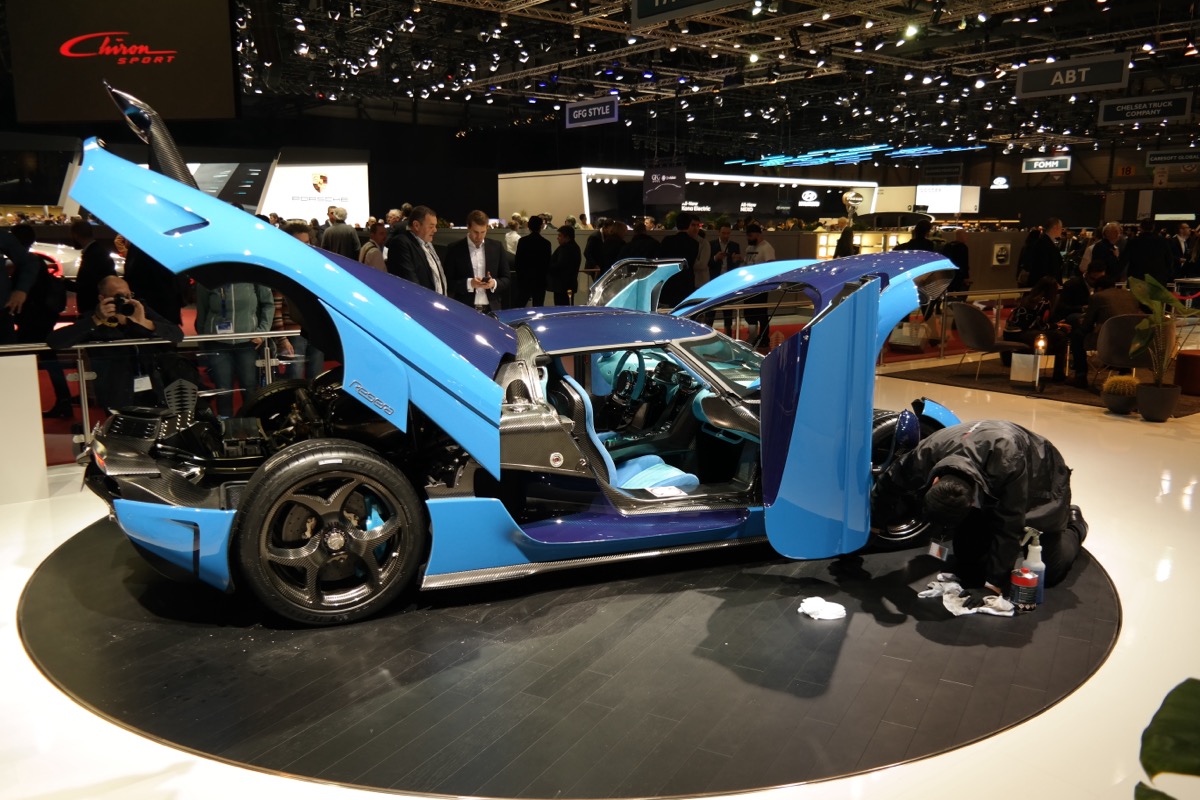
The carbon panels do work, too. Rear spoiler deployment is automated, and the front underbody aerodynamics adjust based on speed, throttle and where the car sits in its current performance envelope. By 400 km/h, every surface that could create unwanted lift has been neutralised.
Buyers who wanted even more downforce could option the Ghost Package, a $285,000 aero upgrade that adds over 20% additional downforce among other changes. Ghost Mode, the theatrical all-panels-open choreography, is Regera-specific as well. Both are covered in depth in our separate piece on the Koenigsegg Ghost.
The Man Behind the Machine
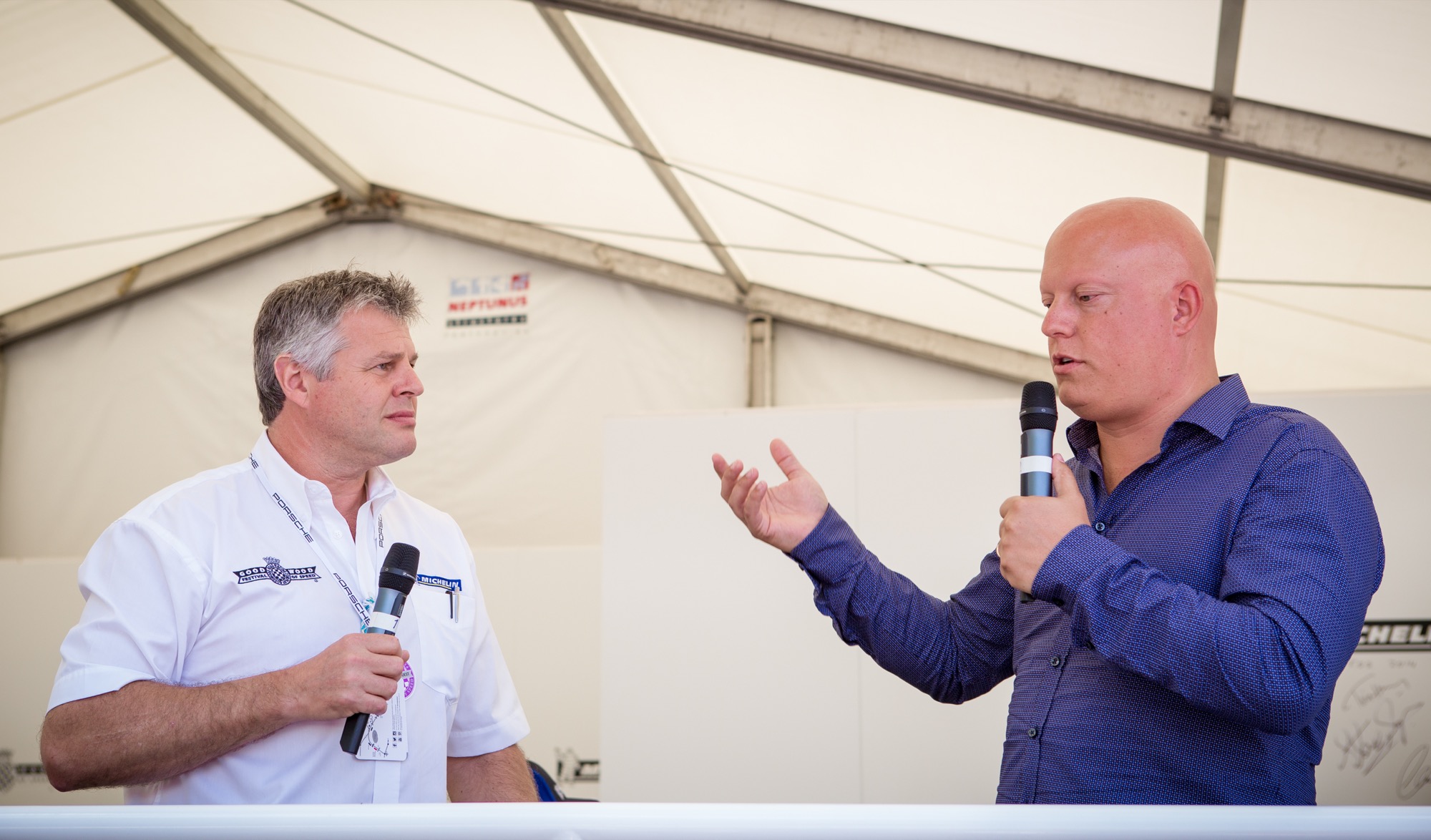
To understand the Regera, you have to understand Christian von Koenigsegg.
He founded the company in 1994 at age 22 with no engineering degree, no automotive industry experience and no particular reason to believe he could build the world’s fastest car. He just decided he would. Koenigsegg Automotive AB was incorporated in Ängelholm, a small town in southern Sweden, and set up in a former Swedish Air Force base where Saab used to test fighters.
The first road-going car, the CC8S, was delivered in 2002. It made 655 horsepower and could hit 387 km/h, from a company that hadn’t existed eight years earlier.
What’s remarkable about Christian is the particular type of obsession he brings to a problem. He doesn’t accept that an existing solution is correct simply because everybody uses it. KDD is the clearest example. Every engineer on the planet had looked at the problem of optimising a combustion engine’s torque across a speed range and concluded: you need multiple gears. Christian looked at the same problem and concluded: you need better electric motors.
He’s done this over and over. Koenigsegg invented a carbon fibre wheel with embedded sensors. They built a door hinge mechanism so intricate, the “dihedral synchro-helix” door, that it became a signature across the entire lineup. They wrote their own infotainment system from scratch because nothing off the shelf was good enough. Their own engine. Their own active aerodynamics. Their own carbon fibre manufacturing process.
A company with fewer than 200 employees competes against Bugatti (Volkswagen Group), McLaren (ten times its size) and Ferrari (a 75-year-old institution), and wins. The reason is Christian. He hires obsessives and then gives them latitude to solve problems the right way rather than the conventional way. The closest analogue in modern automotive engineering is Gordon Murray, who has spent fifty years making the same kind of bet: that the conventional answer is usually wrong, and the correct one is recognizable if you’re willing to ignore the constraints everyone else accepts.
The Regera is the purest expression of that philosophy.
80 Cars. That’s It.
The Regera was produced in a run of exactly 80 examples. Not 800. Not 80,000. Eighty.
Each one was configured to the owner’s specification and built by a small team in Ängelholm. Each one is unique by definition, though not in the marketing sense where “unique” means a different paint colour. Unique in the engineering sense, hand-assembled by people who each know its components intimately.
At the time of writing, Regeras rarely come up for sale. When they do, they trade for between $4M and $6M USD, well above their original approximately $1.9M asking price. More than 3x appreciation in under a decade.
The money says something worth hearing. The people who understand what a Regera actually is treat it as a singular object, a thing that exists because one person refused to accept the limitations everyone else had accepted and then found the engineering to back that refusal up.
Why This Car Still Matters
Announced in 2015. First deliveries in 2016. We’re a decade out from those first road cars now, and the hypercar landscape has changed dramatically: electric hypercars, active aerodynamics, torque-vectoring all-wheel drive systems, Formula 1 hybrid technology adapted for the road.
And yet.
Nothing has done 0–400 km/h faster on a production car. The Regera record has not been broken. The McLaren F1 held its own record for nine years for the same reason — when something is done correctly, the rest of the industry needs a very long time to catch up.
More importantly, nobody has done what the KDD system does, which is replace the gearbox outright instead of supplementing it. The closest attempts have been dual-motor EV systems that use raw torque to paper over the need for gear ratios, and that’s a different trick altogether. Koenigsegg’s solution is harder and far more elegant: a petrol engine that shouldn’t work this way, made to work this way by three electric motors that know exactly what the engine needs at every moment.
I’ve dreamed about owning a Koenigsegg for as long as I’ve known the name. The dream drifts about a bit, some years it’s a CC8S, some years a Jesko or a One:1, but the Regera has stayed near the top of the list for one reason. Of all of them, it proves most clearly what the company is.
Fast and expensive are the easy parts. The word that fits is correct. Engineering done the right way, without compromise, because the person leading it decided that the conventional answer wasn’t good enough and had the technical vision to find a better one.
That’s what a Regera is.
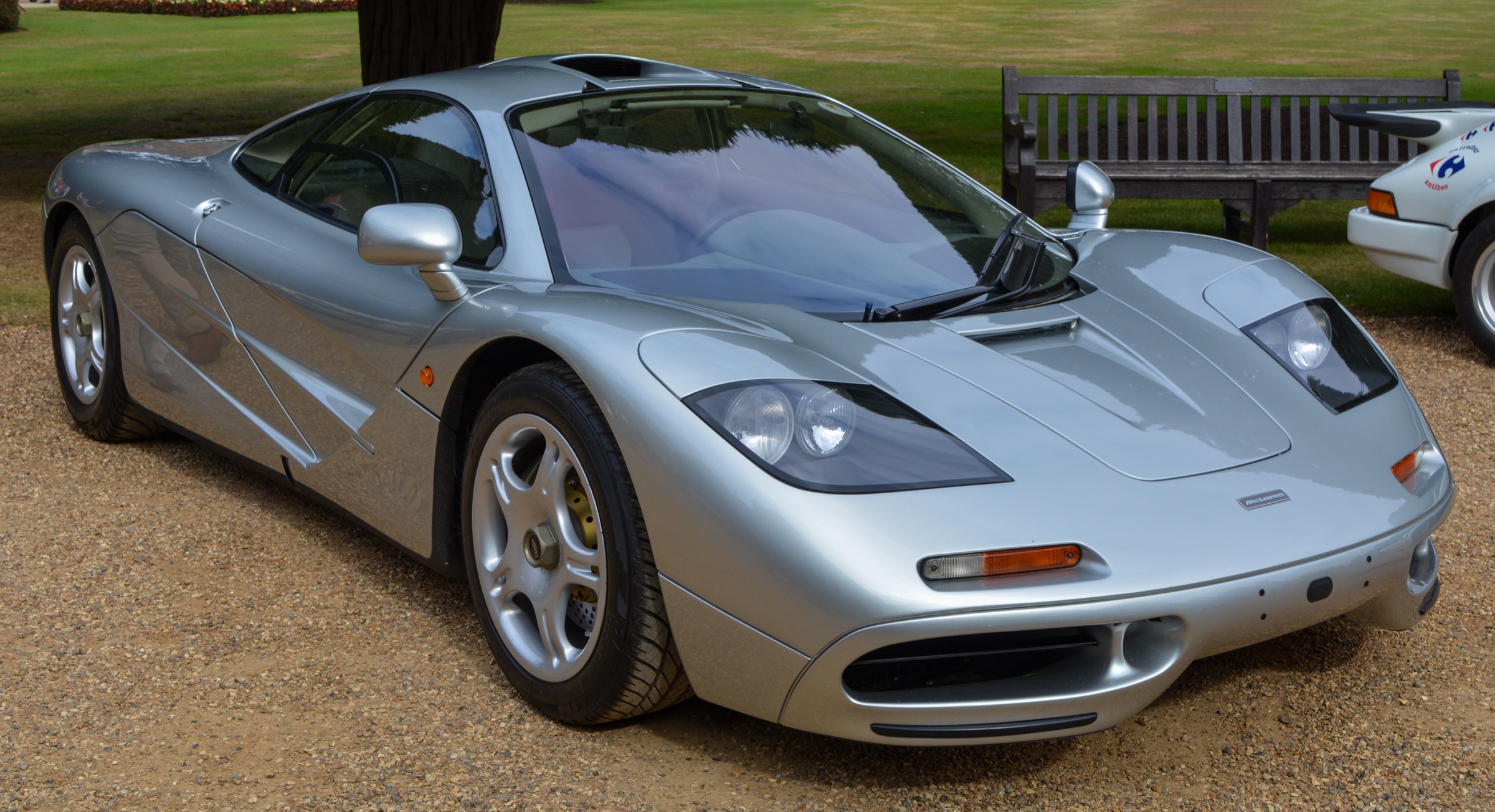
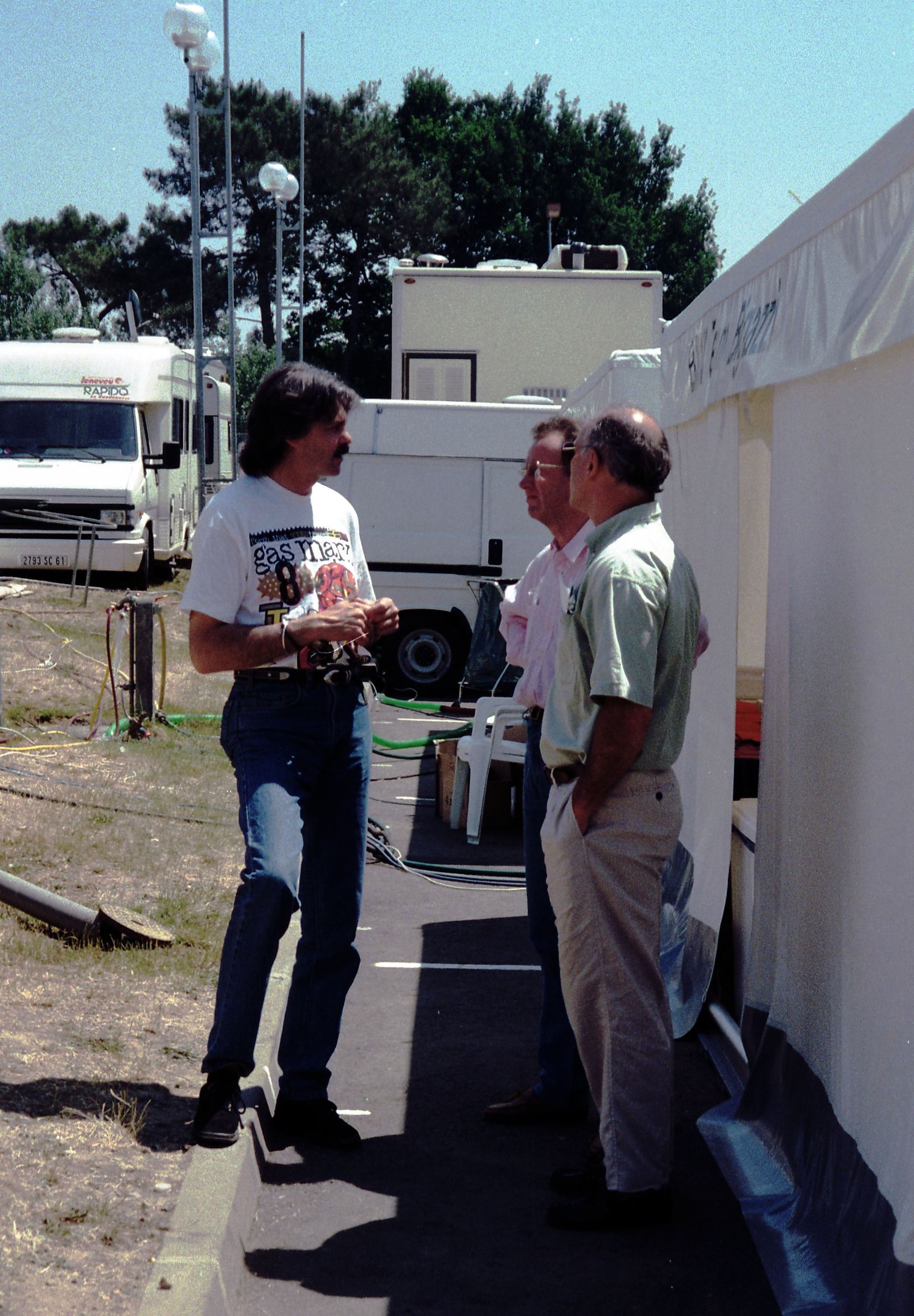
Images: Regera at the London Concours, 2024. Christian von Koenigsegg at Goodwood Festival of Speed. Both used for editorial/commentary purposes.
Share this
Join the conversation
COMMENTS
Loading comments…
No comments yet. Be the first to weigh in.
Leave a comment
Posted
Thanks for joining the conversation.