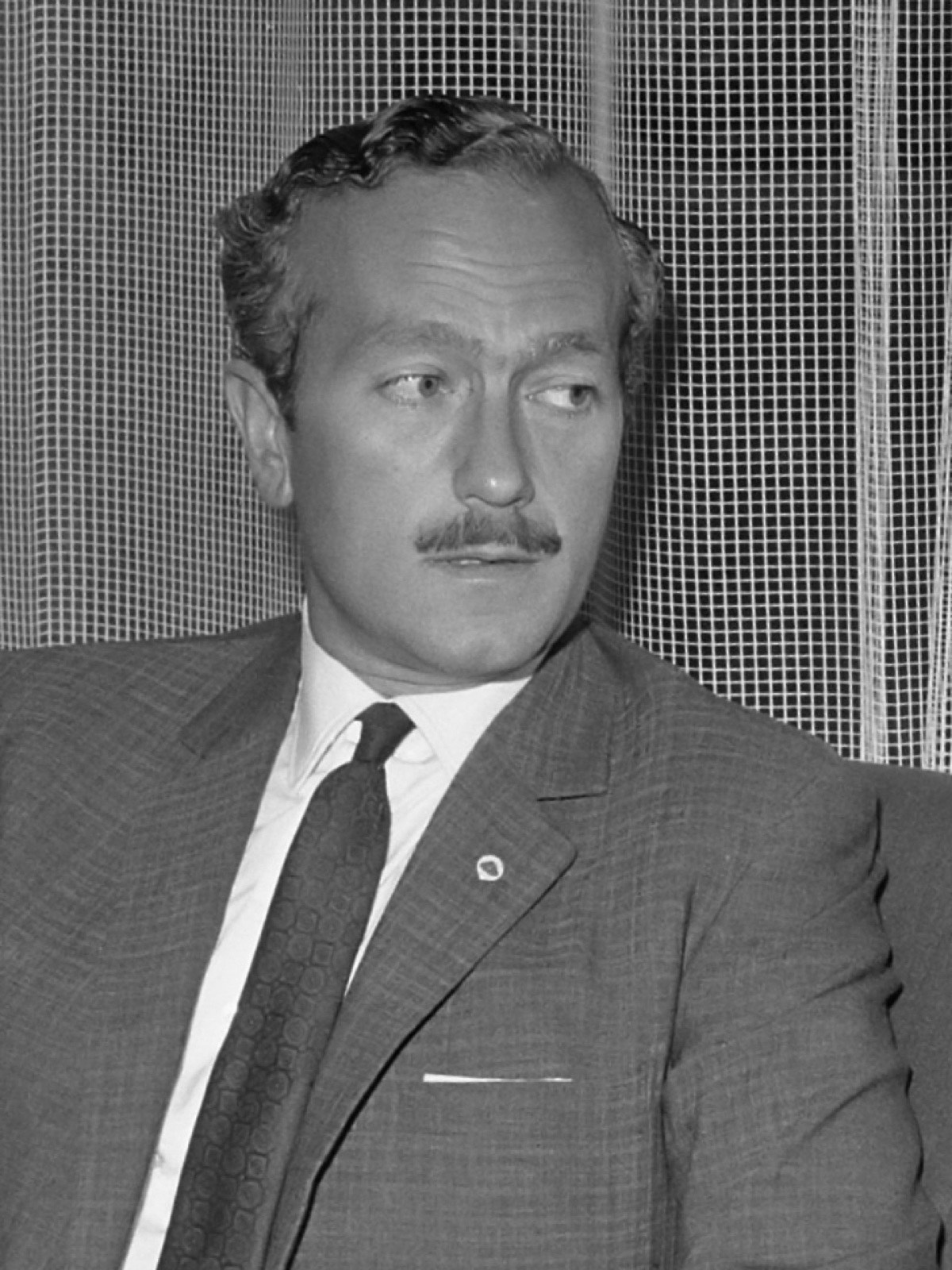
Lotus and Colin Chapman: Why Light Is the Only Luxury That Matters
“Simplify, then add lightness.”
Colin Chapman said it more than once. He used it as both an engineering instruction and a moral position. He built a company on it, won seven Formula 1 constructors’ championships with it, redefined what a sports car could be by applying it to road cars, and died at fifty-four still applying it. The phrase is the most concentrated statement of an engineering philosophy in motorsport history, and it has aged better than nearly anything else from the era it came from.
This is the story of Colin Chapman — the man who built Lotus, the philosophy that defined his work, and the legacy that continues to shape how light cars are engineered four decades after his death.
Royal Air Force, University, and the Mark VI
Anthony Colin Bruce Chapman was born in Richmond, England in 1928. His father owned a pub. He flew training missions in the Royal Air Force after the Second World War — too late to fly combat, early enough to learn what could be done with a small, light aircraft pushed beyond its specifications. He studied structural engineering at University College London. He was twenty-one when he started modifying Austin Sevens in his girlfriend’s parents’ garage to compete in club motorsport events.
The first car that bore the Lotus name appeared in 1948 — a modified Austin Seven trial car, built for low-speed off-road competition. The cars that followed got progressively faster, lighter, and stranger. By 1952 Chapman had registered Lotus Engineering Company Ltd. and was building one-off racing chassis for amateur competitors. The breakthrough was the Lotus Mark VI in 1953 — a tube-frame chassis with aluminum body panels and a removable nose section, designed for amateur club racing in 750 Motor Club events. It weighed approximately 1,000 pounds. It could be ordered as a kit, assembled in a domestic garage, and registered for road use.
The Mark VI established Chapman’s pattern. Light. Stripped of anything not load-bearing. Body panels designed to flex slightly so the chassis could carry less weight in structural reinforcement. The aerodynamics were primitive by any post-1980 standard but state-of-the-art for 1953 club racing. Most importantly, the cars worked. They won races at every level of British amateur and semi-professional competition. Chapman’s customer cars beat his customers’ competitors, and Chapman’s own cars beat his customer cars when he raced them himself.
By 1957 the company had outgrown the garage. Lotus moved to a small factory in Hornsey, north London. The model line had expanded. The racing program was producing results at international level. And the philosophy that would define everything Chapman built for the next twenty-five years was already in place.
The Lotus Seven — The Philosophy Made Visible

If you want to understand Chapman in a single car, the Seven is the answer.
Introduced in 1957, the Lotus Seven was a road-legal interpretation of the Mark VI engineering ideas. Tube-frame chassis. Aluminum bodywork. No doors — you stepped over the side of the car to get in. No roof on the original models, only a folding fabric cover. No traction control, ABS, power steering, or any other system that modern automotive design considers essential. The instrument panel was three gauges. The seats were unupholstered. The car weighed approximately 1,100 pounds in original specification.
What it had: a four-cylinder engine making between 40 and 105 horsepower depending on year and trim. Four wheels, each with independent suspension and disc brakes. A four-speed manual transmission. A driver, exposed to the elements, with nothing between him and the road except the car’s chassis and the laws of physics.
The Seven was, and is, a perfect car. Not because it’s the best at anything in particular — every modern sports car outperforms it in every conventional metric — but because it perfectly expresses the philosophy that produced it. There is no fat on the Seven. Every component exists because the car needs that component to function. Removing any single piece of the Seven would degrade it. Adding any piece would add weight without proportional benefit.
Chapman sold the Seven design to Caterham Cars in 1973. Caterham has built the Seven, with continuous engineering refinement, every year since — for fifty-three consecutive years as of 2026. The current Caterham Seven 360 weighs 1,180 pounds, makes 180 horsepower, and accelerates from 0–60 mph in 4.0 seconds. The chassis architecture is essentially the same as the 1957 original. The car has aged because the world around it has aged; the philosophy hasn’t.
Road Cars — Elite, Elan, Europa, Esprit
While the Seven satisfied the racing-purist segment of Lotus’s customer base, Chapman built parallel road car programs that interpreted the lightness philosophy through more conventional commercial design.
The Lotus Elite (1957–1963) was the first all-glass-fibre monocoque road car in production. The chassis was a structural fibreglass shell — the entire body was the car’s structural component. There was no separate frame. The Elite weighed approximately 1,460 pounds with a 1.2-litre engine producing 75 horsepower. The car was beautiful in a way Lotus road cars hadn’t previously attempted. It was also expensive, complex to manufacture, and lost money on every unit sold. Chapman discontinued it after roughly 1,000 cars.
The Lotus Elan (1962–1973) replaced it. Steel backbone chassis, fibreglass bodywork, twin-cam four-cylinder engine making 105–126 horsepower depending on year. The Elan weighed approximately 1,500 pounds. It was, by every account from period reviewers and contemporary collectors, one of the finest-handling road cars ever built. The Elan inspired the Mazda MX-5 Miata generation thirty years later — Mazda’s engineers studied the Elan obsessively before designing the original Miata, which used the same backbone-chassis-plus-light-body principle to similar effect.
The Lotus Esprit (1976–2004) was Chapman’s expansion into the proper supercar segment. Mid-engine layout, wedge-shape body designed by Giorgetto Giugiaro at Italdesign, four-cylinder turbocharged engine producing up to 264 horsepower in later variants. The Esprit appeared in The Spy Who Loved Me in 1977 — Roger Moore drives it off a pier and it converts into a submarine — and the cinematic association made the car a cultural touchstone separate from its on-road performance.
What unified all three was the philosophy. Light first. Beautiful by accident if at all. Performance through power-to-weight ratio rather than absolute power output. The Esprit at 264 horsepower in 1986 outperformed contemporary Ferrari V8s producing 300+ horsepower because the Esprit weighed roughly 2,500 pounds and the Ferrari weighed roughly 3,300. Lightness wins.
Formula 1 — The Engineering Revolution
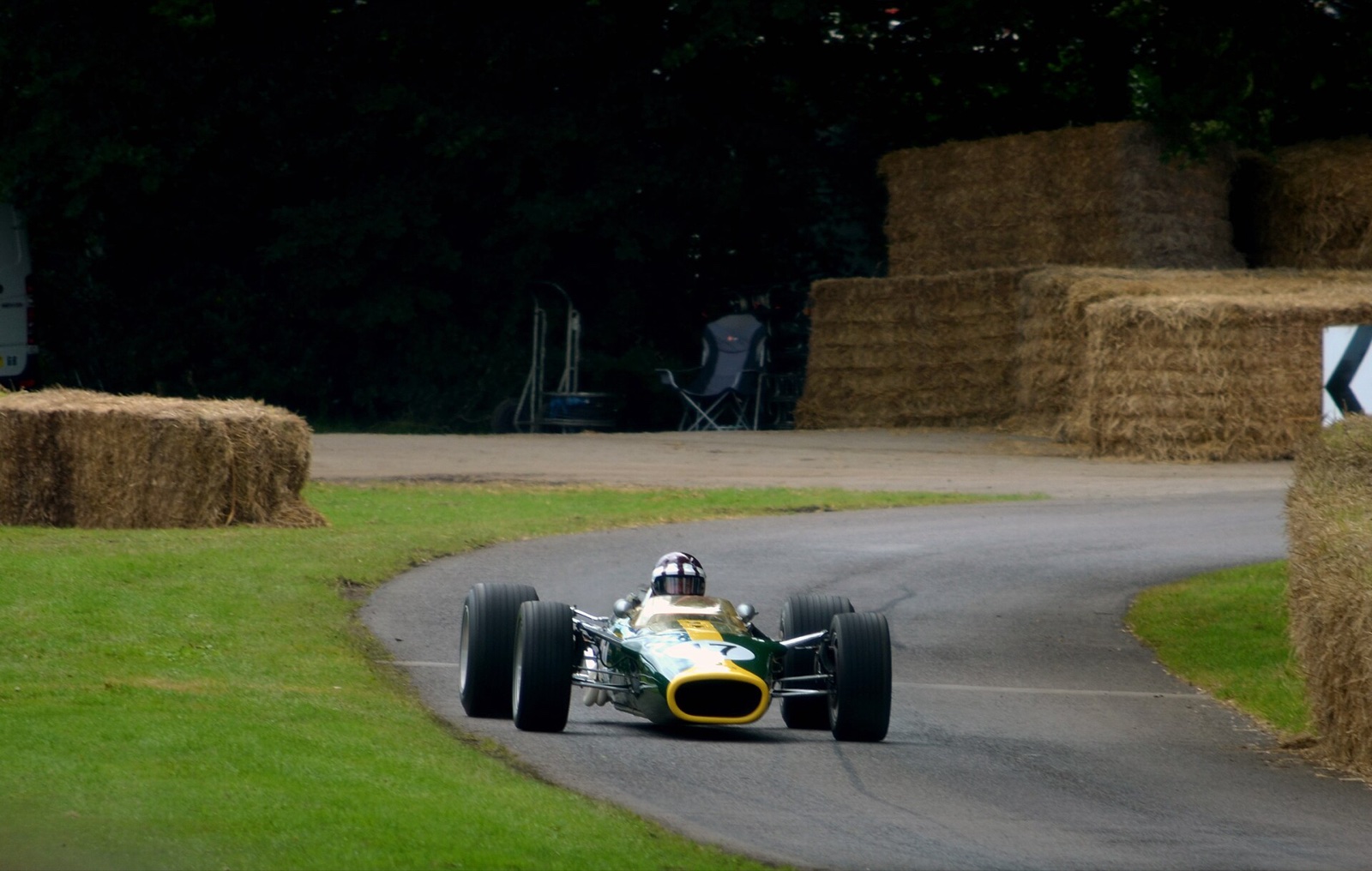
Chapman’s Formula 1 program is where the philosophy produced its most consequential engineering innovations.
Lotus 25 (1962) was the first F1 car to use a fully stressed monocoque chassis. Before the 25, F1 cars used tube-frame chassis with separate body panels. Chapman’s design used the body itself as the load-bearing structure — aluminum panels riveted into a unified shell that was simultaneously the car’s exterior and its primary structural element. The 25 was significantly lighter and stiffer than its contemporaries. Jim Clark won the 1963 Formula 1 World Championship driving it. Every subsequent F1 car, by every constructor, used some form of stressed-monocoque chassis. Chapman invented the architecture that defined Formula 1 for the next sixty years.
Lotus 49 (1967) introduced the engine-as-stressed-member design. The Cosworth DFV V8 engine — newly designed for the 49 — bolted directly to the rear of the car’s monocoque and served as the structural connection between the chassis and the rear suspension. The engine carried suspension load. There was no separate sub-frame between the engine and the rear of the car. The result was a substantially shorter, lighter, and more aerodynamically efficient package than F1 cars that mounted engines in subframes. Jim Clark won the 49’s debut race at Zandvoort in 1967. Lotus and Cosworth won 155 Grands Prix together in subsequent years. The engine-as-stressed-member became the standard F1 design and remained the standard for the next fifty years.
Lotus 78 (1977) introduced ground-effect aerodynamics to Formula 1. Mario Andretti drove it. The car’s underbody was shaped to generate aerodynamic suction — sliding skirts on the sides of the car sealed against the track surface, allowing the underbody airflow to create downforce equivalent to several times what wing surfaces alone could produce. Andretti won the 1978 Drivers’ Championship and Lotus won the Constructors’ Championship. Every F1 team copied the design within two seasons. Ground effects dominated F1 until the FIA banned the configuration in 1983 — too dangerous in failure modes (when the underbody seal failed, downforce vanished instantaneously, sending cars airborne). The technical concepts Chapman pioneered with the 78 returned in modified form to F1 in 2022 with the regulatory reset.
Total Lotus F1 results under Chapman (1958–1982): 79 Grand Prix wins. Six Drivers’ Championships (1963 Clark, 1965 Clark, 1968 Hill, 1970 Rindt, 1972 Fittipaldi, 1978 Andretti). Seven Constructors’ Championships. Drivers killed in Lotus F1 cars during the period: four (Stacey, Clark, Rindt, Peterson). The cars were fast and they were light. The trade-off Chapman lived with was that “light” sometimes meant “structurally on the edge.” The era’s safety standards forgave this in ways the modern era doesn’t.
DeLorean and the End
The 1970s nearly broke Lotus financially. The Esprit was expensive to manufacture. The road car market shifted away from small specialist sports cars toward larger, more comfortable GT cars. The F1 program required substantial capital. By 1980 the company was in serious financial difficulty.
Chapman’s response was an engineering consultancy partnership with John DeLorean’s company. Lotus would design and engineer the DMC DeLorean’s chassis and body engineering. DeLorean would pay Lotus approximately £18 million for the work. The contract was a lifeline.
It was also, in retrospect, a substantial financial irregularity. Approximately £10 million of the contract value was diverted into a Swiss bank account through layered offshore arrangements. Chapman was implicated. The fraud investigation began in 1982 after DeLorean’s company collapsed. Chapman would have been a primary defendant in the resulting trial.
He died of a heart attack on December 16, 1982, at the age of fifty-four, before the criminal proceedings reached him. His widow Hazel and the Lotus board worked through the resulting financial and legal complications for years afterward. The company survived. Chapman’s reputation, in the immediate aftermath of his death, was complicated by the ongoing DeLorean investigation. Time has restored the engineering reputation while the financial allegations have receded into footnote status.
He was, by every account from people who worked with him, an extraordinarily demanding boss — direct, impatient with slow thinking, willing to ship cars with known structural compromises if the alternative was missing a race. He was also, by the same accounts, the most original engineering mind the British motorsport industry produced in the postwar era. Both descriptions are true.
What Remains
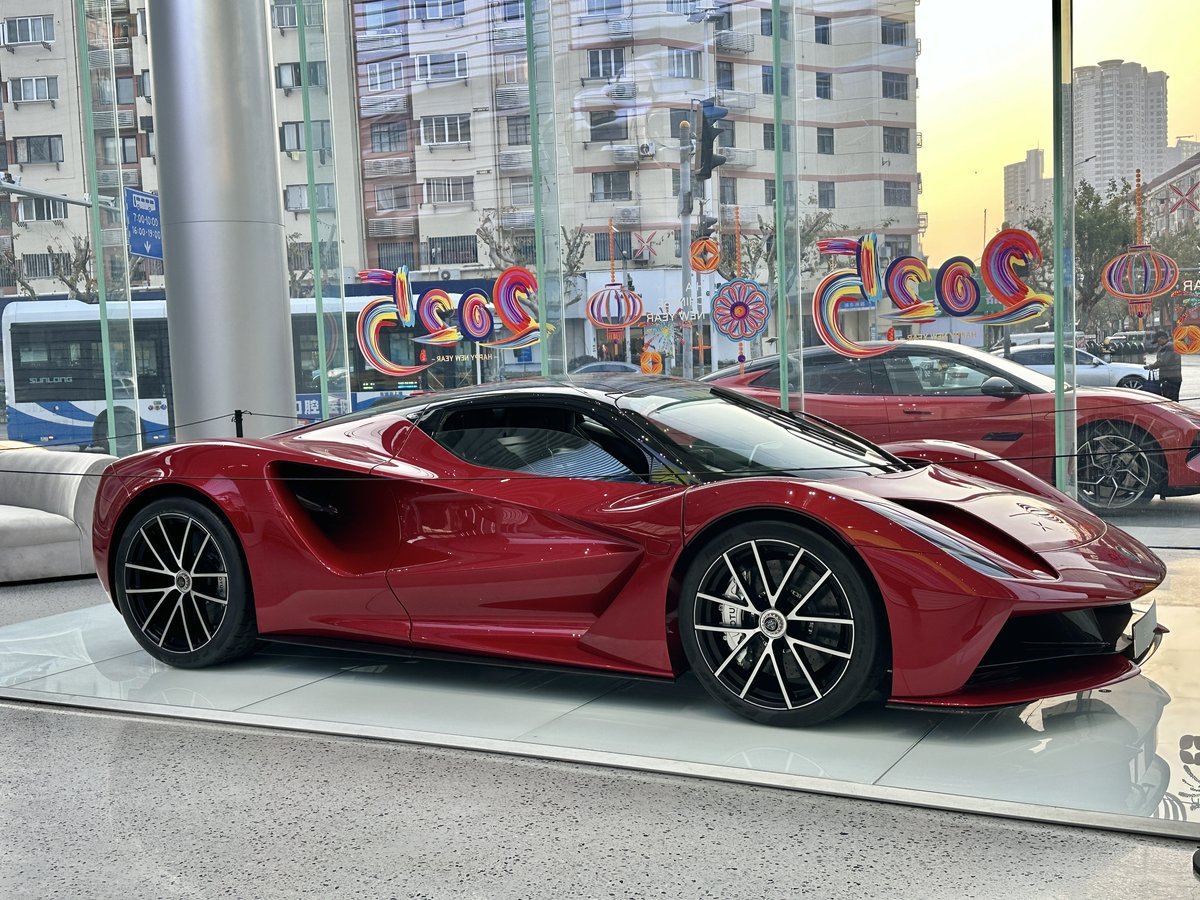
Lotus today is owned by Geely, the Chinese automotive group. The company builds the Evija hypercar — 2,000 horsepower from four electric motors, carbon-fibre construction, the most powerful production car in history at launch — and the Emira, the company’s last internal-combustion sports car. The current Lotus portfolio doesn’t directly extend Chapman’s road-car philosophy. The Evija is a serious hypercar but it’s not a light car by Chapman’s definition; the battery pack alone weighs more than a complete Seven.
What survives Chapman is the philosophy itself. Every engineering review at every serious sports car manufacturer asks some version of his question: can we delete this component? Porsche’s GT3 program is structured around the question. Singer Vehicle Design’s entire business model is structured around it. McLaren’s carbon monocoque obsession traces directly to Chapman’s stressed-monocoque innovations. The Mazda Miata exists because Mazda engineers spent months studying the Elan before designing it.
The most influential test of any sports car engineering decision is whether it adds weight without proportional performance benefit. Chapman codified that test. He died before he could see how completely the rest of the industry adopted it.
Forty-three years after his death, “simplify, then add lightness” remains the most quoted four-word phrase in motorsport engineering. It survives because it’s correct. Most engineering philosophy ages poorly. Chapman’s hasn’t. That’s the rarest result in any field, and it’s the measure of an extraordinary mind.
The Caterham Seven you can buy today — direct continuation of the 1957 design — is the proof. Sixty-nine years of continuous production. Same architecture. Same philosophy. Light. Always light.
That’s the legacy.
Photo credits: Wikimedia Commons, CC BY-SA — Caterham Seven (continuous production of the original Lotus Seven design), Lotus 49 with Cosworth DFV (1967 Formula 1 season).
Share this
Keep Reading
The McLaren F1: The Last Car Gordon Murray Will Ever Need to Apologise For
April 5, 2026
Gordon Murray: The Man Who Refused to Build a Bad Car
April 5, 2026
The Lotus Evija: 2,000 Horsepower. Four Motors. The Most British Car You've Never Heard Of.
April 15, 2026
Join the conversation
COMMENTS
Loading comments…
No comments yet. Be the first to weigh in.
Leave a comment
Posted
Thanks for joining the conversation.