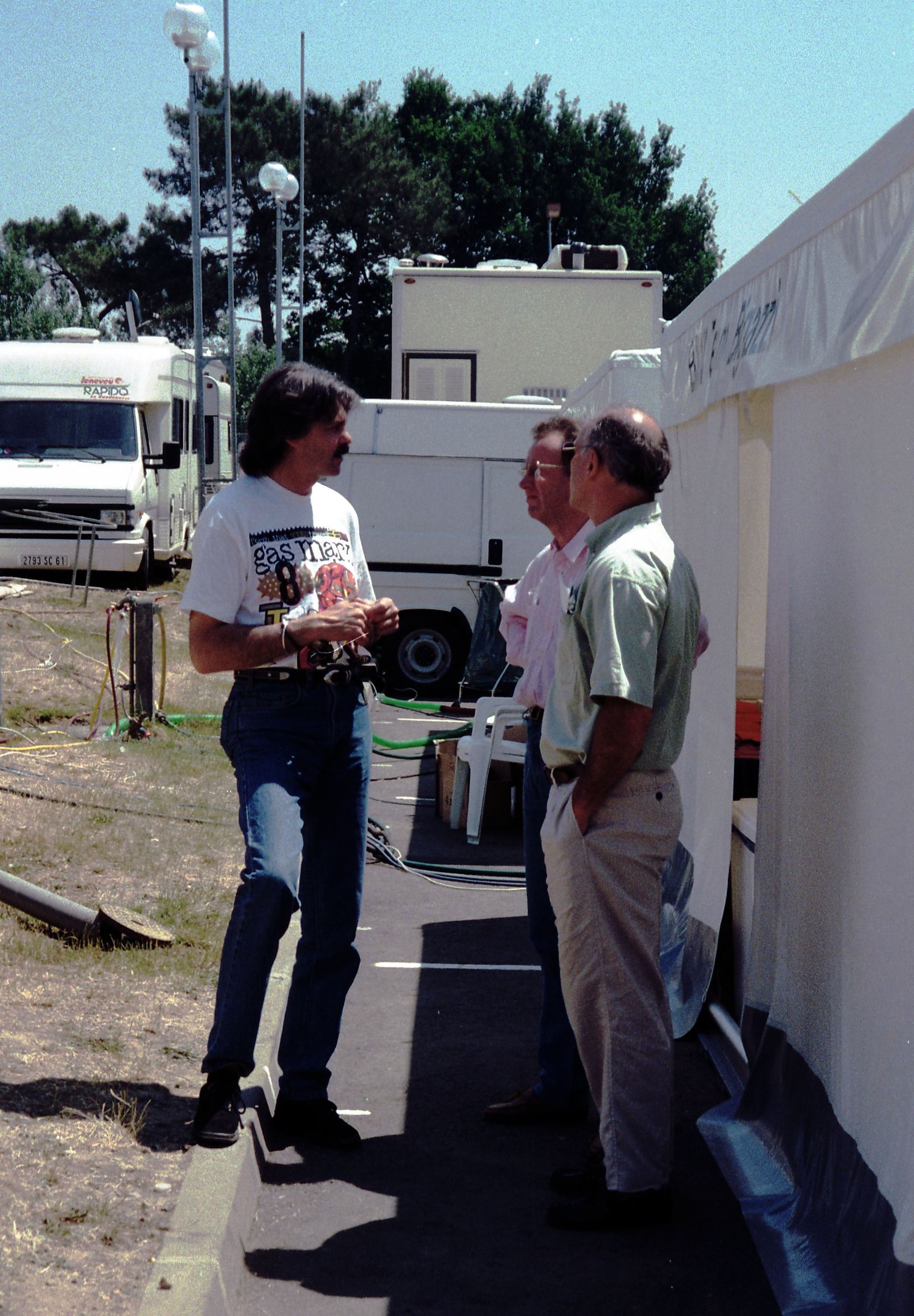
Gordon Murray: The Man Who Refused to Build a Bad Car
Gordon Murray is 78 years old, and he has designed two of the greatest road cars ever built. Before that he spent twenty years drawing Formula 1 cars that won World Championships. People who have worked with him describe him as brilliant, demanding, obsessive, and occasionally insufferable.
Those last qualities aren’t incidental to the work. They’re the reason it exists.
Plenty of intelligent engineers get hired every year. Very few of them refuse, at every stage of a fifty-year career, to accept a compromise they believe is wrong. Murray belongs to the second, much smaller group, and the cars are the evidence.
South Africa and the Beginning
Gordon Murray was born in Durban, South Africa, in 1946. He grew up building things, model aircraft and go-karts and motorcycles, with the particular intensity of a kid who is better at making something work than at explaining why he needs to.
He emigrated to England in 1969 with a mechanical engineering degree from Natal Technikon and an appointment at Brabham, the Formula 1 constructor Jack Brabham founded in 1962. Brabham was not McLaren or Ferrari. Small team, thin resources, forced to be cleverer than the competition because it could never outspend them.
That constraint shaped him. He learned to think in terms of weight and simplicity, working from first principles, not out of any philosophical commitment but because a small team on a limited budget has no other move available. Can’t afford more engine? Make the car lighter. Can’t afford aerodynamic testing? Make the car simpler. The lessons stuck long after the budgets grew.
By the mid-1970s Murray was Brabham’s chief designer: 28 years old, responsible for the technical direction of a Formula 1 team. What he did next tells you what kind of engineer he is.
The BT46B and the Year Everyone Lost Their Mind
In 1978, Gordon Murray designed the Brabham BT46B. It ran in one race.
The regulations of the day prohibited aerodynamic devices that were “movable.” Murray’s interpretation: a fan mounted at the rear of the car, driven by the engine, extracting air from under the floor and creating suction (ground effect) was primarily a cooling device for the radiators, and the aerodynamic benefit was incidental.
The BT46B won its only race, and won it by a margin that embarrassed every other car on the grid. Niki Lauda drove it to victory at the Swedish Grand Prix and reported that it felt like the car was bolted to the road.
The other teams protested. The FIA investigated. Brabham withdrew the car, because Bernie Ecclestone, who owned Brabham, decided the political cost of running it was too high even if it was technically legal. One win, then gone.
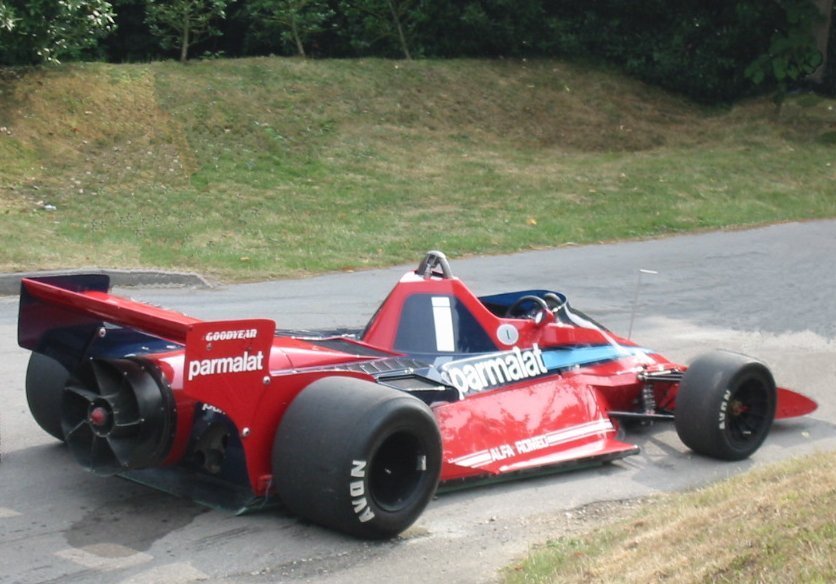
The fan car was legal. The FIA found no specific rule violation. Murray had identified a loophole, engineered a solution that exploited it to the last detail, and produced a car so dominant in a single appearance that the governing body rewrote the rules before it could run again.
That pattern repeats across his career: finding the correct answer to a question while everyone else is still arguing about the question.
The McLaren Years and the 65-Page Brief
Murray joined McLaren in 1987 and spent two years designing the MP4/4, the car that won 15 of 16 races in the 1988 Formula 1 season with Ayrton Senna and Alain Prost. Statistically the most dominant car in Formula 1 history.
Then he stopped designing Formula 1 cars and started writing a document.
The brief for what became the McLaren F1 ran to 65 pages, and Murray wrote it himself. It specified the target weight at 1,000 kilograms, a number he believed represented the absolute ceiling of what a road car should weigh. It specified a naturally aspirated engine, because he believed turbocharged power delivery was compromised at the source. It specified the central driving position as a structural and sight-line decision, with no marketing reason attached.
It also specified no stability control, no traction control, no power steering. Purism in the abstract had nothing to do with it. Each of those systems adds weight and complexity, and lays another layer of mediation between driver and machine. Murray didn’t want mediation. He wanted the driver to feel everything.
None of this read as a concept document. It was an engineering specification that happened to be written in language describing emotional outcomes. Murray knew what he was building, and the 65 pages were instructions to himself and to the team about what the car had to be, at every level of detail.
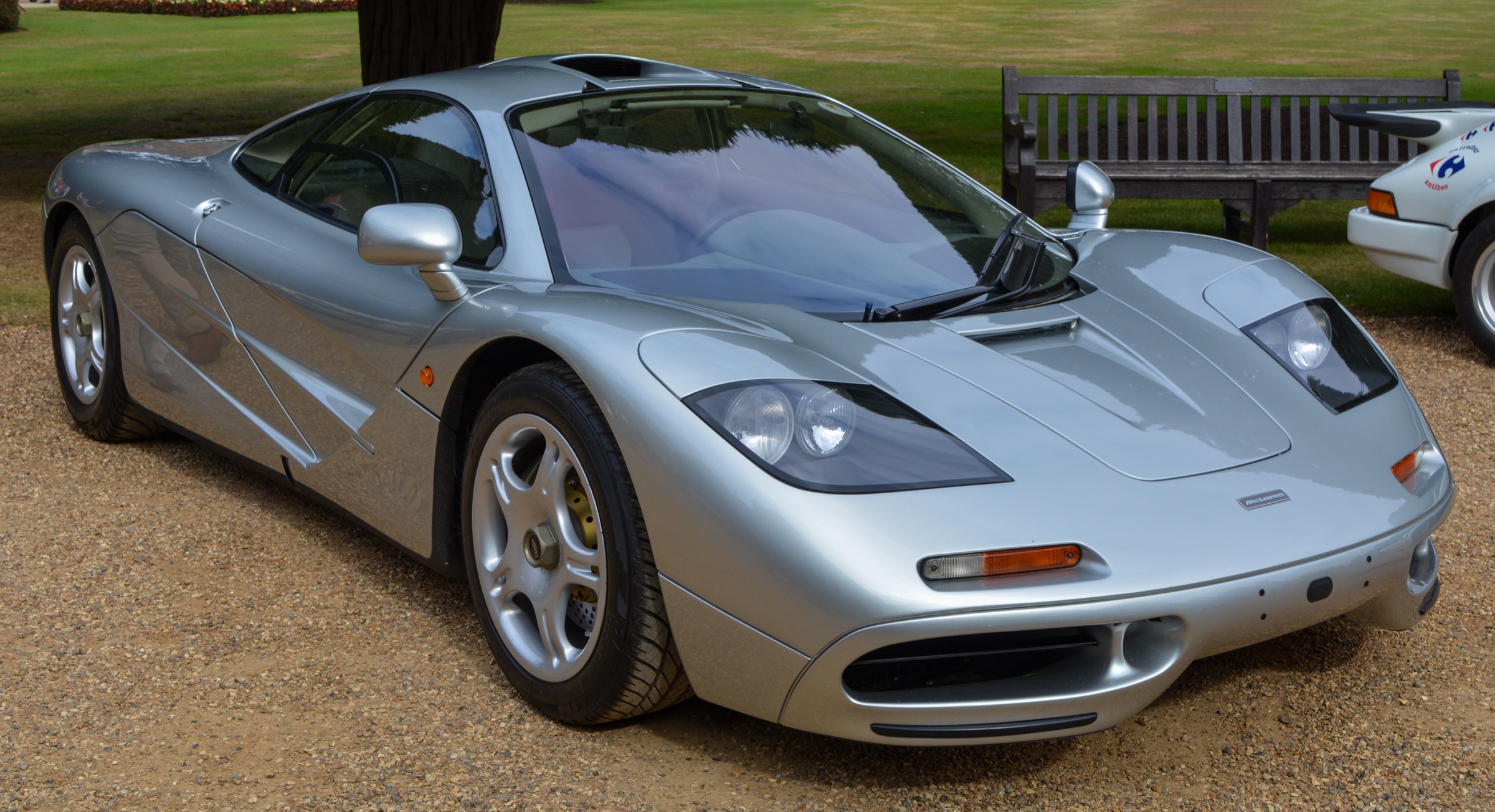
The McLaren F1 weighed 1,138 kilograms in final form, slightly over the target, which Murray has described in interviews as a failure. The car ran to 243 mph with a naturally aspirated BMW V12. It won Le Mans in 1995 with a race variant modified primarily by removing weight and adding a roll cage. It held the production car top speed record for nine years.
Calling that a failure because it landed 138 kilograms over the number is exactly the kind of thinking that produces cars like the McLaren F1.
The Weight Argument
Murray’s central position, maintained across fifty years of public statements and engineering decisions, is simple. Weight is the enemy of everything.
A heavier car requires a bigger engine to accelerate at the same rate. A bigger engine requires a stronger, heavier structure to contain it. Heavier structure, larger brakes. Larger brakes, more cooling. More cooling, more aerodynamic management, and active aero systems bring their own mass with them. The cycle compounds.
Every kilogram added to a car costs you twice, once in the energy required to accelerate it and once in the energy required to stop it. Every kilogram also demands another kilogram of compensating engineering somewhere else.
Murray’s solution is to remove the kilogram before anything has to compensate for it.
Modern road cars went the other way. The Porsche Taycan Turbo S weighs 2,370 kilograms. The Mercedes-AMG GT Black Series weighs 1,625 kilograms. The Ferrari SF90 Stradale weighs 1,570 kilograms with its hybrid system aboard. The Bugatti Chiron sits at 1,995 kilograms, and the engineering case for it is essentially the inverse of Murray’s: solve for completeness through brute capability, accept the mass that capability requires. Every one of those numbers would have sent Murray back to rewrite the brief.
The F1 at 1,138 kilograms and the T.50 at 986 kilograms are not accidents. They come out of a methodology that treats weight reduction as the primary engineering objective rather than something to tidy up once the performance targets are signed off. The closest contemporary expression of the same philosophy is the Koenigsegg Regera at 1,420 kilograms wet, a 1,500-horsepower hypercar built by a small Swedish team running Murray’s playbook in a different accent.
The T.50 and the Second Answer
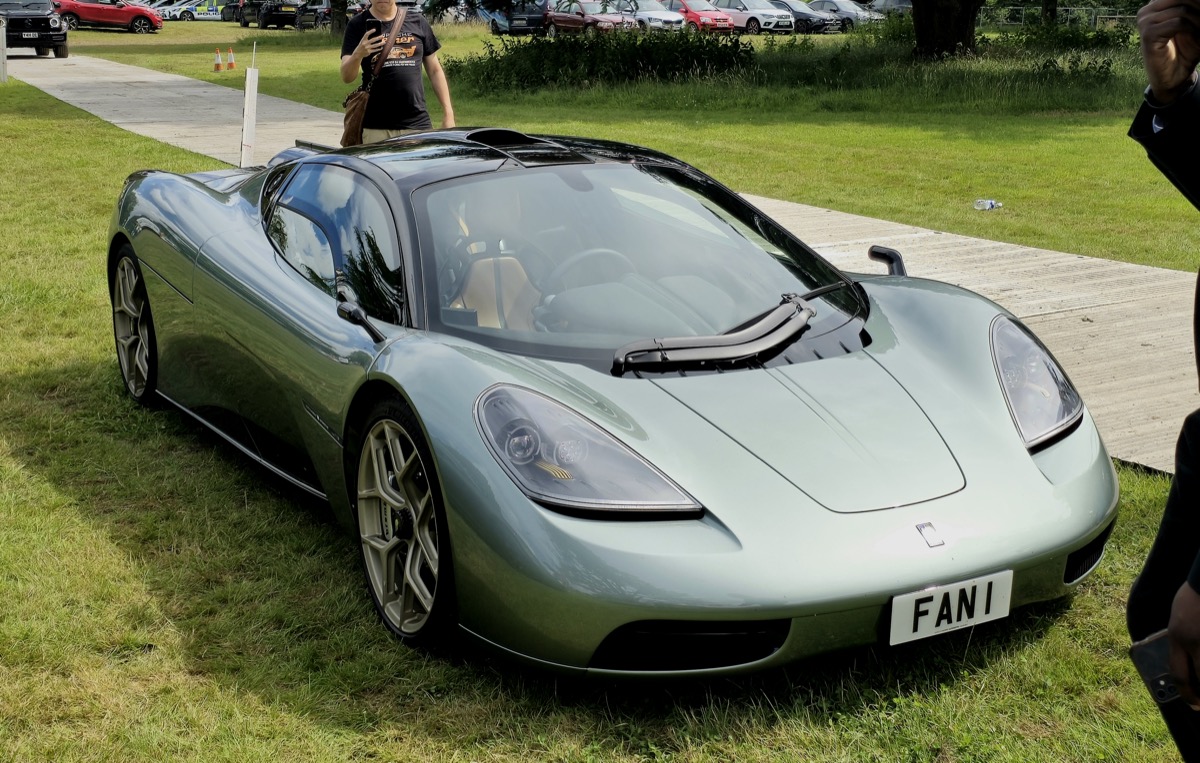
In 2017, Murray announced the T.50. He described it as the car he had always wanted to build, the McLaren F1 as it would have been if designed thirty years later, with everything he had learned about materials, aerodynamics and engine technology in the intervening period.
The T.50 uses a Cosworth-developed 3.9-litre naturally aspirated V12 producing 663 horsepower at 11,500 rpm, and the engine revs to 12,100 rpm. The car weighs 986 kilograms. At the back sits a 400mm fan, a deliberate reference to the BT46B, actively managing aerodynamic downforce and replacing heavy fixed aerodynamic elements with a system that achieves more downforce at lower drag.
Same brief philosophy as the F1: no stability control in the primary driving mode, no power steering, no mediation. There are driver modes, including a track mode where the fan operates at maximum and the engine management is recalibrated for circuit use, but the default is unassisted.
He announced the car with 100 units available at £2.36 million each and sold them all before it was publicly revealed. Not pre-ordered. Sold. Deposit paid, allocation confirmed, buyer waiting for delivery, all of it settled before the automotive press had seen the car in person.
That is what fifty years of being correct does for your credibility.
The Difficult Part
People who have worked with Murray describe someone who does not accept partial answers. If the brief says 1,000 kilograms and the car weighs 1,138 kilograms, it’s a failure to him regardless of what that car achieves at that weight. If the specification says naturally aspirated and the supplier wants to float a turbocharged option, the conversation is over.
That quality makes him hard to work for and probably not much easier to work alongside. It also means every car that leaves his team reflects a decision made consciously at every level. Nothing on an F1 or a T.50 is there because it was convenient, or because everyone else does it that way. It’s there because Murray decided it was correct.
His career demonstrates that obsessive specificity, maintained over decades, produces work that holds up. The F1 is still the benchmark for what a road car can be. The T.50 sold before it was revealed because buyers understood they were acquiring a position that had never been compromised for commercial reasons.
Murray has never built a bad car because he has never accepted the conditions that produce one. Rare, that. Rarer than the cars themselves.
Share this
Keep Reading
The McLaren F1: The Last Car Gordon Murray Will Ever Need to Apologise For
April 5, 2026

The Koenigsegg Regera: Why This Is Still the Most Insane Car Ever Built
April 5, 2026

The World's Most Insane GT-R Builds (And Why the R34 Is Still the Starting Point)
April 5, 2026
Join the conversation
COMMENTS
Loading comments…
No comments yet. Be the first to weigh in.
Leave a comment
Posted
Thanks for joining the conversation.