
How to Buy Your First Exotic Car: The Complete First-Timer's Guide
Most people make every mistake they’re ever going to make on their first exotic. Not because the process is uniquely difficult, but because the emotional pull swamps the rational framework that protects buyers in every other major transaction. The car is more than you expected in person. The seller knows exactly what they’re dealing with. Then the insurance quote comes in higher than you’d planned for, and the service costs arrive as a genuine surprise.
This guide exists to remove the surprises. All of it comes from what experienced owners consistently say they wish they’d known before their first purchase. Read it before you start looking at inventory, then use it as a checklist.
Step 1: Define Your Actual Budget — Including Running Costs
Treating the purchase price as the budget is the most common mistake exotic car buyers make. The purchase price is the entry cost. Running costs decide whether you can enjoy the car.
Annual ownership cost framework:
| Cost Category | Estimate |
|---|---|
| Service and maintenance | 3–8% of purchase price/year |
| Insurance (agreed value) | 2–5% of vehicle value/year |
| Tires | $1,500–4,000 per set |
| Storage (climate-controlled) | $300–2,000/month |
| Depreciation | Varies widely by model and market |
Call it $15,000–30,000 a year on a $200K car. On a $400K car, $25,000–50,000.
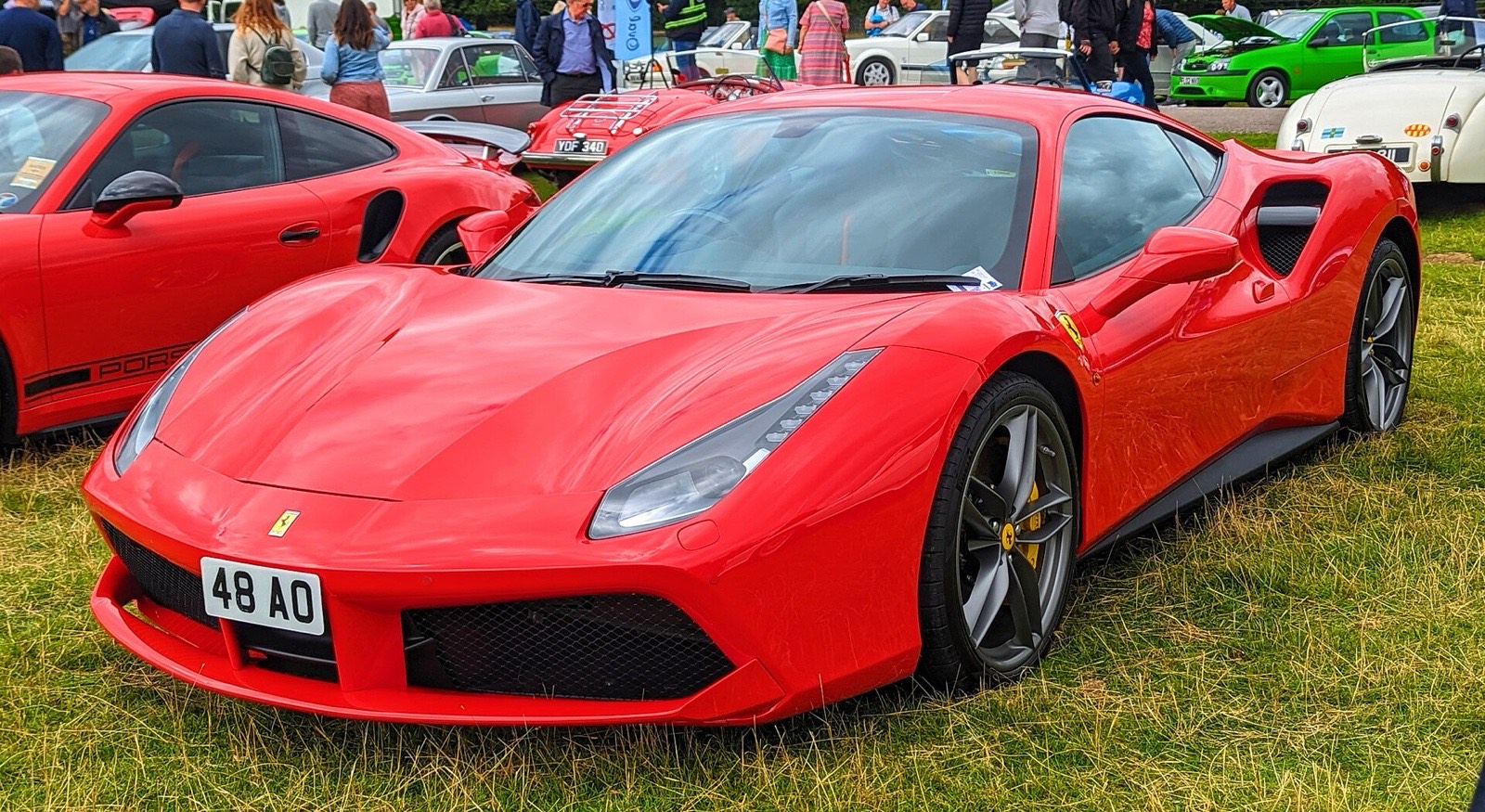
The 10–15% test: If you can comfortably carry annual running costs equal to 10–15% of the purchase price without it materially affecting your life, you’ll genuinely enjoy the car. If those numbers cause stress, buy a less expensive model. A $120K Ferrari 488 enjoyed fully is a better ownership experience than a $300K 488 Pista owned anxiously.
Anyone coming from the gaming world already knows the shape of this from Gran Turismo’s credit system. You learn quickly that a car you can’t afford to tune and maintain just sits in your garage, unused. The real-world version of that lesson costs significantly more.
What These Cars Actually Cost Over Five Years
The percentages above are the right framework to start with, but they hide variance that changes the buying decision. Our 5-year cost-of-ownership comparison across five representative exotics (Ferrari 488 GTB, Porsche 911 Turbo S, Lamborghini Huracán, McLaren 570S, and Corvette C8 Z06) projects all-in costs, purchase plus running with residual netted out, that span a $200,000 range:
| Car | Purchase | 5-yr All-In Cost |
|---|---|---|
| Ferrari 488 GTB | $170K–230K | $240K–340K |
| Lamborghini Huracán | $170K–240K | $230K–335K |
| McLaren 570S | $130K–170K | $195K–275K |
| Porsche 911 Turbo S | $130K–180K | $175K–245K |
| Chevrolet Corvette C8 Z06 | $115K–150K | $140K–195K |
That roughly $100,000 gap between the cheapest car to own over five years (the Z06) and the most expensive (the 488) is real ownership economics, and none of it is visible from the purchase price. It’s the kind of math that should change which car you buy rather than rubber-stamp a choice you’ve already made.
Step 2: New, CPO, or Used?
New — Full warranty, configure to your spec, first owner. Also the highest immediate depreciation risk. The Ferrari 296 GTB will lose 15–25% in the first three years. For most first-time buyers, new isn’t the financially rational choice.
Certified Pre-Owned (CPO) — Manufacturer-certified with an extended warranty attached. Ferrari Approved, McLaren Certified, Lamborghini Certified: 1–2 years of additional warranty after a manufacturer inspection. For a first-time buyer this is the sweet spot. Recent-vintage car, known service history, warranty buffer, typically 10–20% below new.
Used (independent/private) — Where the real deals live, along with the real risks. Due diligence requirements go up accordingly. A pre-purchase inspection is non-negotiable, and with no warranty behind you, your purchase price needs a contingency built in for deferred maintenance.
Step 3: The Pre-Purchase Inspection (Non-Negotiable)
Every non-CPO exotic car purchase requires an independent PPI by a marque specialist. Not a general mechanic. Not the selling dealer’s service department. An independent specialist with no relationship to the seller.
What a PPI covers:
- Engine compression and leakdown tests
- Transmission function and fluid condition
- Brake pad and rotor measurement
- Suspension component inspection
- Structural inspection (accident evidence)
- Electronic systems scan (error codes, even cleared ones)
- Service history verification against manufacturer records
- Tire condition and age (tires degrade with age even without mileage)
PPI cost: $300–800. Return on investment: potentially the entire purchase price, if it turns up something undisclosed. Seller refuses a PPI? Walk away. Full stop.
Step 4: Insurance — Set This Up Before You Buy
Exotic car insurance is a specialist product. Standard auto insurers either refuse to cover these cars or cover them badly and charge a lot for the privilege.
Specialist providers to contact:
- Hagerty — the dominant collector/exotic insurer, excellent agreed-value policies, knowledgeable staff
- Chubb — high-net-worth insurer with strong exotic car programs
- American Collectors Insurance — good for entry-level exotics, competitive rates
- Markel — strong for high-value vehicles
Key insurance decision: Agreed Value vs. ACV. Agreed value policies pay the stated insured amount in a total loss. ACV (Actual Cash Value) policies pay depreciated market value, which can be significantly less than what you paid. Always insure at agreed value for an exotic — the premium difference is modest and the coverage difference is enormous.
Other coverage to arrange:
- Track day insurance (if you plan to track): Lockton Motorsport or Kevin Davis Racing Insurance, available per-event
- Transport insurance: for shipping the car to a new location or returning from service
- Gap insurance (if financing): covers the difference between loan balance and insurance payout
Real-World Hagerty Quote Bands (2026)
What you actually pay depends on the car, your age, garaging conditions, annual mileage, and driving record. These are the bands experienced owners report for clean-record buyers with secured suburban garaging at 5,000 miles per year:
| Car | Age 28–34 | Age 35–49 | Age 50+ |
|---|---|---|---|
| Ferrari 488 GTB ($200K) | $5,500–7,500 | $3,500–5,500 | $2,800–4,200 |
| Lamborghini Huracán ($210K) | $6,000–8,500 | $4,000–7,000 | $3,200–5,000 |
| McLaren 570S ($150K) | $4,500–6,500 | $3,500–5,500 | $2,800–4,500 |
| Porsche 911 Turbo S ($160K) | $3,500–5,000 | $2,500–4,000 | $2,000–3,500 |
| Corvette C8 Z06 ($130K) | $2,500–4,000 | $1,800–3,000 | $1,500–2,500 |
Geographic variance is significant. Rates in California, the New York metro, and South Florida run 25–40% higher than the bands above. Texas, Nevada, and the Mountain West come in 15–25% lower for equivalent profiles. Urban garaging instead of suburban adds another 10–20%. If your quote lands wildly above these bands, you have wrong information, not wrong rates. Push your broker for an explanation, or get a second quote from a different specialist insurer.
The Lambo premium over the Ferrari at the same purchase price is real and consistent. Hagerty’s actuarial data shows higher claim frequency on Lamborghinis, often single-vehicle, often during high-throttle events. The Z06 premium sitting at roughly half the Ferrari’s reflects something duller but just as real: GM has 70 years of Corvette claim data and a parts and repair network that keeps loss costs predictable.
Step 5: Know the Service Reality Before Day One
Every exotic comes with a service schedule, and none of it is optional. Ferrari requires annual service regardless of mileage. Major service intervals, whether 5-year or mileage-based, run $5,000–30,000 depending on model and scope.
Before purchase: Obtain the complete service history. A Ferrari without documented full service history is a red flag regardless of how good the car looks. Manufacturer dealer records are the gold standard. Gaps in the history are negotiating leverage and risk indicators at the same time.
Independent specialists vs. dealers: Once out of warranty, independent marque specialists typically provide better service at lower cost than manufacturer dealerships. Find your local specialist before you buy, have a conversation about what the car you’re considering actually costs to maintain, and that bit of due diligence pays for itself.
The Specialist Service Network: Where to Get the Work Done
Manufacturer dealerships handle warranty work and concierge-level service at concierge-level prices. Once you’re out of warranty, independent marque specialists are usually the better option: 30–50% lower labor rates, with deeper marque expertise than dealer technicians who rotate across brands. A partial directory of shops experienced owners consistently recommend, organized by region:
Northeast (Boston / NYC / DC corridor):
- Ferrari and Lamborghini: Algar Ferrari (Philadelphia area, dealer-grade independent expertise), Foreign Cars Italia (Greensboro NC, ships throughout the region), Manhattan Motor Cars (NYC area)
- McLaren: McLaren Boston, McLaren Greenwich (CPO and post-warranty service)
- Porsche: Black Forest Industries (Connecticut), Stuttgart West (Long Island), Holbert Racing (Pennsylvania, the historic 911 specialist)
West Coast (LA / Bay Area / Pacific Northwest):
- Ferrari and Lamborghini: Symbolic Motors (San Diego, multi-marque), Ferrari of Beverly Hills, Lamborghini Beverly Hills, Cars Dawydiak (San Francisco, independent Ferrari specialist with three decades of experience)
- McLaren: McLaren Beverly Hills, McLaren San Francisco
- Porsche: RS Werks (LA), Vasek Polak heritage shops (LA), Bay Area Workshop (SF)
Texas and the Southwest:
- Multi-marque: European Auto Group (Houston), Park Place (Dallas), Riverside Garage (Austin)
- Porsche: Workshop 5001 (Phoenix, high-end Porsche specialist with a national reputation), Patrick Motorsports (San Diego origin, Texas presence)
Florida and the Southeast:
- Ferrari and Lamborghini: Naples Motorsports, Prestige Motors (Miami), Foreign Cars Italia (NC, ships throughout the SE)
- McLaren: McLaren Tampa, McLaren Charlotte
- Porsche: Champion Porsche (Pompano Beach), Brumos heritage shops (Jacksonville)
Midwest (Chicago / Detroit / Twin Cities):
- Multi-marque: Continental Autosports (Chicago, Ferrari and Lamborghini), The Stable (Cincinnati), Park Place Motors (Cleveland, Porsche specialist)
Before you buy a specific car, call two specialists in your region who work on that marque. Describe the car you’re considering and ask what service costs at the major intervals, what fails on this model year, what to watch for in the PPI, and whether they currently maintain customer cars matching your spec. Three twenty-minute phone calls before purchase will save you the most expensive lesson in exotic ownership, which is discovering after the fact that your “rare” car is orphaned by the local specialist network.
Step 6: Storage and Practical Logistics
Low-clearance cars force you to rethink your daily environment. Parking garage ramps, speed bumps, steep driveways: all of it becomes a calculation. A front-lift system, available as a factory option on most modern exotics, is worth every cent up front.
Storage essentials:
- Climate-controlled environment (prevents condensation, rust, tire flat spots)
- Quality indoor car cover
- Battery maintainer (trickle charger) for any car sitting more than two weeks
- Tire cradles if storing long-term (prevents flat spots)
For daily driver use: Most modern exotics (Ferrari 488+, Huracán, McLaren 720S) are genuinely usable every day with appropriate care. The Porsche 911 GT3 and Audi R8 are the most practical at their performance level. The Ferrari F40 is not a daily driver. Know what you’re buying.
Step 7: The Community Before the Car
Ask experienced owners for one piece of advice and this is the one they repeat: join the community before you buy, not after. Marque-specific clubs (Ferrari Club of America, Lamborghini Club America, McLaren Owners Club) run driving events, technical seminars, and social events.
Three months of club participation will teach you more about which car to buy, which configurations matter, and which examples to avoid than three years of online research. Membership also gets you access to owners who’ll answer honestly the questions dealers have an interest in dodging.
Online communities worth joining before purchase:
- FerrariChat.com (Ferrari)
- LamborghiniTalk.com (Lamborghini)
- McLarenLife.com (McLaren)
- Rennlist.com (Porsche)
- r/exoticspotting, r/cars (Reddit — general)

Step 8: The Not-Ready-to-Buy Path
If the budget math doesn’t work yet and the passion is real anyway, there are genuine ways to engage with exotic cars that build knowledge and community connections without a six-figure commitment:
- Track day experiences ($200–500/half day): Xtreme Xperience, Exotics Racing, and regional track day operators let you drive multiple exotics on closed circuits with instruction. Best dollar-for-experience value in the hobby.
- Exotic car rentals: Turo’s luxury tier has privately-owned exotics available for daily rental. Gotham Dream Cars operates in major markets with a curated fleet. A weekend rental ($500–2,000) teaches you more about whether you actually want a specific car than any review.
- Concours and car shows: Free or low-cost admission, access to cars and owners, community connections. Cars & Coffee events happen monthly in most major cities.
- Sim racing: A Fanatec DD Pro wheel setup ($600–1,200) running Gran Turismo 7 or iRacing provides surprisingly accurate force feedback and driving dynamics. It’s not the same as real driving, but it builds genuine understanding of weight transfer, braking points, and car behavior that transfers to the road.
Making the Decision
Once the work is done (real budget defined, right car identified, insurance arranged, service reality understood) the decision gets much simpler. You’re no longer choosing between cars you don’t understand. You’re choosing between specific examples with documented histories, priced against a market you’ve studied, inside a cost structure you’ve modeled honestly.
The golden rule: Buy the best-documented, best-maintained example of the car you want at the price your real budget supports. Don’t compromise on documentation or condition just to get into a more expensive model. A perfectly maintained Ferrari 488 beats a neglected 488 Pista in every dimension of ownership satisfaction.
Ready to see what’s available in your budget? Our Best Supercars Under $200K guide ranks the best options with honest trade-offs for each. Or go broader with our Ultimate Guide to Exotic Cars for the full landscape.
Share this


Join the conversation
COMMENTS
Loading comments…
No comments yet. Be the first to weigh in.
Leave a comment
Posted
Thanks for joining the conversation.