Total Cost of Ownership: 5 Exotic Cars Compared (Real Numbers)
The spec sheet doesn’t tell you what these cars cost to own. It tells you what they cost to buy.
This article is about the difference. Five exotic cars that span the modern supercar era — three European, one British, one American — compared on five years of real ownership economics. Purchase price on the current used market, depreciation, insurance, scheduled service, tires, fuel, and the all-in total at the end of year five. Numbers sourced from Bring a Trailer recent sales, Hagerty agreed-value quote bands, manufacturer service intervals, independent specialist rates, and forum-reported owner data. Ranges, not single-point estimates — because the variance between dealers, regions, and driving habits is the actual story.
The comparison is deliberately scoped to modern-era cars — current production or recently-out-of-production exotics in the 2014–2024 build window. F40s and 911 GT2s have different ownership economics shaped by classic-car appreciation, specialist parts inflation, and concours-grade preservation costs. That’s a separate article. This one answers the question first-time buyers actually ask: what does it cost to own one of these in 2026, used, for the next five years?
If you want a quick verdict, scroll to the comparison table near the end. If you want to know why the Corvette Z06 ends the five-year period costing roughly half what a Lamborghini Huracán costs, the long version is below.
Methodology — How These Numbers Were Built
Every number in this article is a range, not a point estimate, because exotic car ownership is shaped more by your specific dealer, region, mileage, and luck than by the model on the badge. Two Ferrari 488 owners with identical cars can pay $4,000 and $9,000 respectively for the same scheduled service depending on whether they use Maranello of Beverly Hills or an independent specialist in Phoenix. Both numbers are real.
What’s included in the five-year total:
- Purchase price (used market, current 2026 pricing from Bring a Trailer recent sales)
- Five-year depreciation projection (based on observed curves 2020–2025 plus model-specific factors)
- Annual insurance (Hagerty agreed-value, average risk profile, 5,000 miles/year)
- Annual scheduled service (mix of dealer and independent specialist rates)
- One major service in the five-year window (varies by model)
- Tires (one full set replacement, model-appropriate brand and compound)
- Fuel (5,000 miles/year, premium gasoline at $4.50/gallon US average)
What’s not included:
- Storage costs (assume you have a garage)
- Trackday consumables, brake wear from track use, harness/seat/cage modifications
- Modifications, tunes, body work
- Catastrophic repair (engine-out work, dual-clutch transmission rebuilds, accident repair beyond insurance)
- Sales tax, registration fees, smog/inspection
The numbers reflect a reasonable, well-maintained ownership profile. Drive 2,000 miles a year and treat the car like art and your numbers come in lower. Drive 8,000 miles a year and run it hard at three trackdays and your numbers come in higher. Use these as the baseline to adjust from.
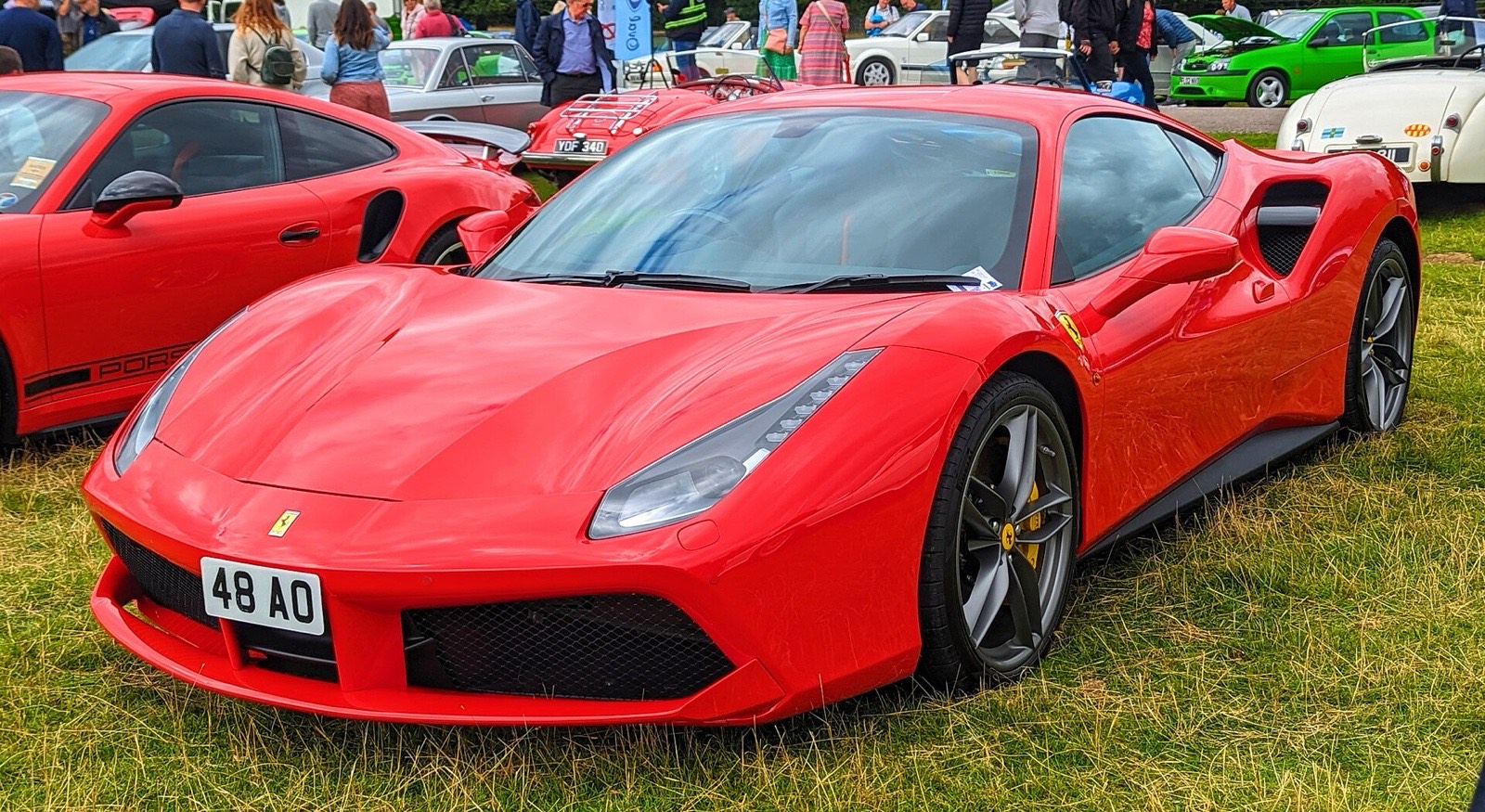
1. Ferrari 488 GTB — The Italian Benchmark
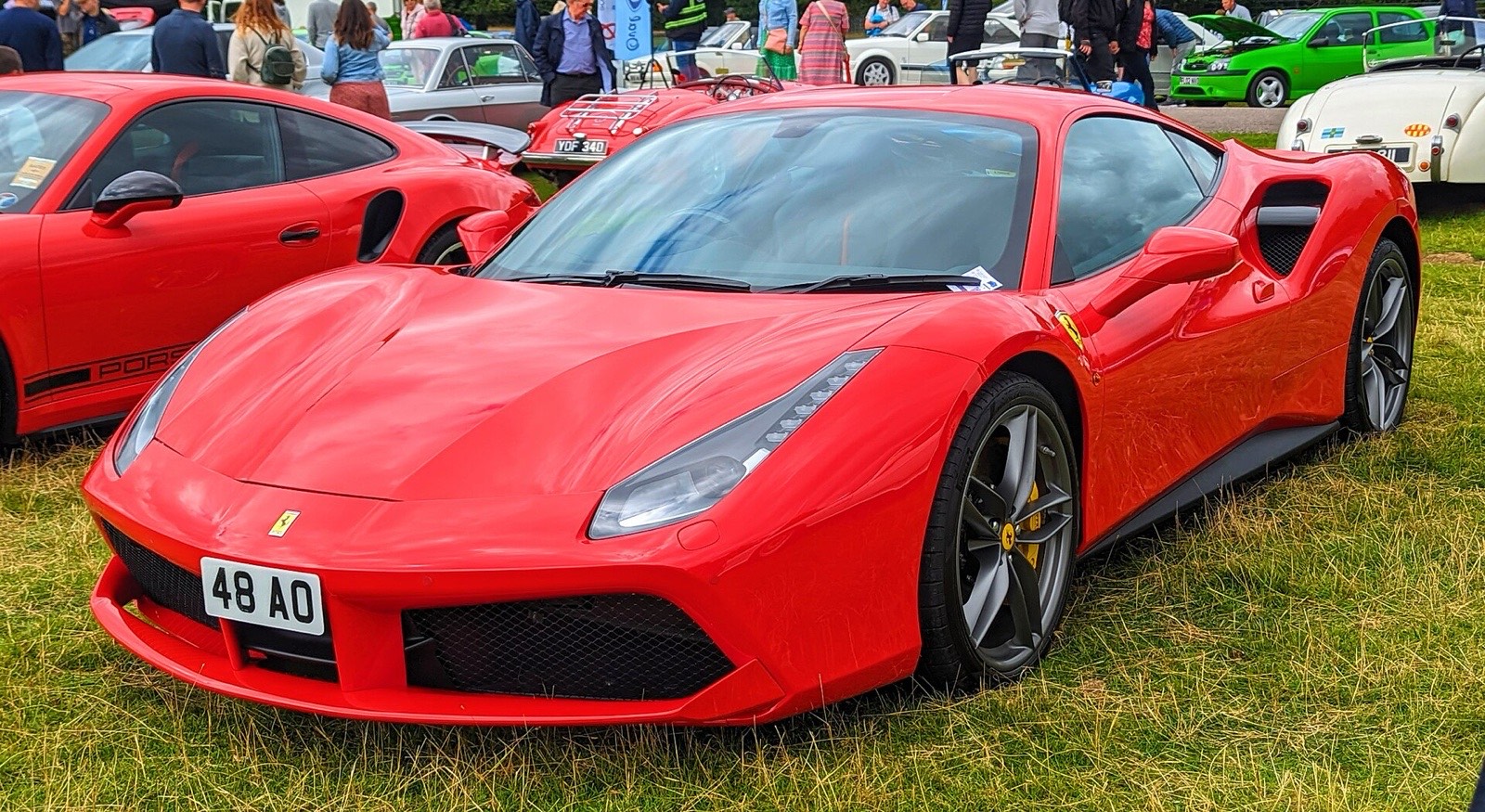
Purchase price (2026 used market): $170,000–230,000 for a 2016–2019 488 GTB with full service history and reasonable miles (10,000–25,000). Spider variants command a $10,000–20,000 premium. Pista and Pista Spider sit in a different price bracket entirely and are excluded from this comparison.
Five-year depreciation projection: Roughly 18–25% over the next five years, slowing in years three through five. The 488 has stabilized — the post-2022 enthusiast market has held Ferrari values better than expected, and the 488 occupies a sweet spot as the last twin-turbo V8 Ferrari before the SF90’s hybridization. Expect to recover $130,000–185,000 at the end of year five if you sell with documented service history.
Insurance (annual): $3,500–7,000 for agreed-value coverage through Hagerty or Chubb, depending on driver age, region, garaging conditions, and annual mileage. The 488 sits in a specific risk band — high-value enough to require specialist coverage, common enough that insurers have actuarial data to price it tightly. Owners in the Northeast and California pay the upper end. Texas and Florida tend lower.
Annual scheduled service: $2,500–5,000 at Ferrari dealer rates, $1,500–3,000 at experienced independent specialists. The 488 service intervals are annual or 6,250 miles, whichever comes first. Plan for one major service in the five-year window — typically year three or year four — running $8,000–15,000 depending on what’s covered (timing belt service was eliminated on the 488; the major intervals are spark plugs, fluids, and inspection-heavy).
Tires: $1,800–2,400 per set for OEM Pirelli P Zero or Michelin Pilot Sport 4 S. Depending on driving style, expect to replace once during the five-year window. Track use shortens this dramatically.
Fuel: $2,000–3,500 per year at 5,000 miles annually on premium. The 488 returns roughly 16–20 mpg combined in mixed use.
Five-year all-in cost (purchase + running): $240,000–340,000. The Ferrari premium is real and shows up most heavily in service and insurance. The depreciation has stabilized; the variable costs are where the spread lives.
2. Porsche 911 Turbo S (991.2) — The Reliable Outlier
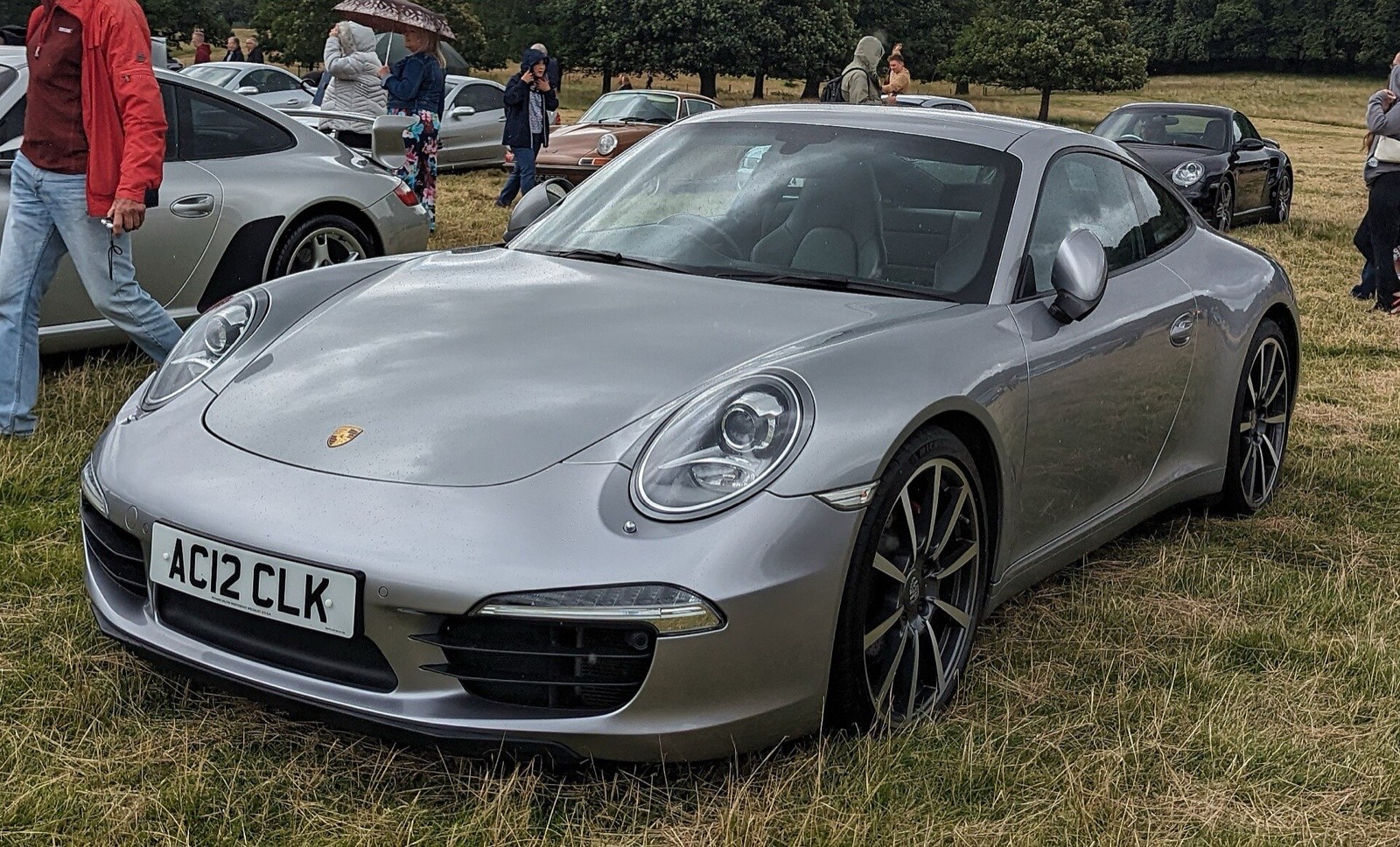
Purchase price (2026 used market): $130,000–180,000 for a 2017–2019 991.2 Turbo S with reasonable miles. The 991.2 generation is the sweet spot — direct injection, refined twin-turbo flat-six, and Porsche’s reliability without the older 911 IMS bearing concerns. Cabriolet variants run $5,000–15,000 more.
Five-year depreciation projection: 15–22%. The 911 platform is famously depreciation-resistant, and the Turbo S specifically holds value better than almost any modern exotic. Expect to recover $105,000–148,000 at the end of year five. This is the single biggest financial advantage of the 911 in this comparison.
Insurance (annual): $2,500–4,500. Insurers price the 911 platform aggressively low because the actuarial data is decades deep. Theft rates are moderate, claim costs are predictable, and Porsche’s repair network is the most mature in the industry.
Annual scheduled service: $1,500–3,000 at dealer rates, $1,000–2,000 at independent Porsche specialists. The 991.2 service intervals are 10,000 miles or 12 months. There is no equivalent of the Ferrari “major service” — the most expensive scheduled item is the 60,000-mile spark plug and coolant service at $2,500–4,000. The 991.2 is, in genuine engineering terms, the most reliable car in this comparison by a wide margin.
Tires: $1,400–2,000 per set for Pirelli P Zero PZ4 or Michelin Pilot Sport 4 S. Tire wear on the Turbo S is moderate — the AWD system and electronic management distribute load efficiently. One replacement in five years is typical for normal driving.
Fuel: $1,800–2,800 per year. The Turbo S returns 17–22 mpg combined.
Five-year all-in cost (purchase + running): $175,000–245,000. The 911 Turbo S is the ownership cost outlier in this group — significantly cheaper to keep than the Italian and Anglo-Italian competition, with reliability that means actual budgeted costs rarely exceed projections. The trade-off is that it’s also the least visually exotic car in the lineup, which matters if owner satisfaction is partly social.
3. Lamborghini Huracán LP610-4 — The Volume Exotic
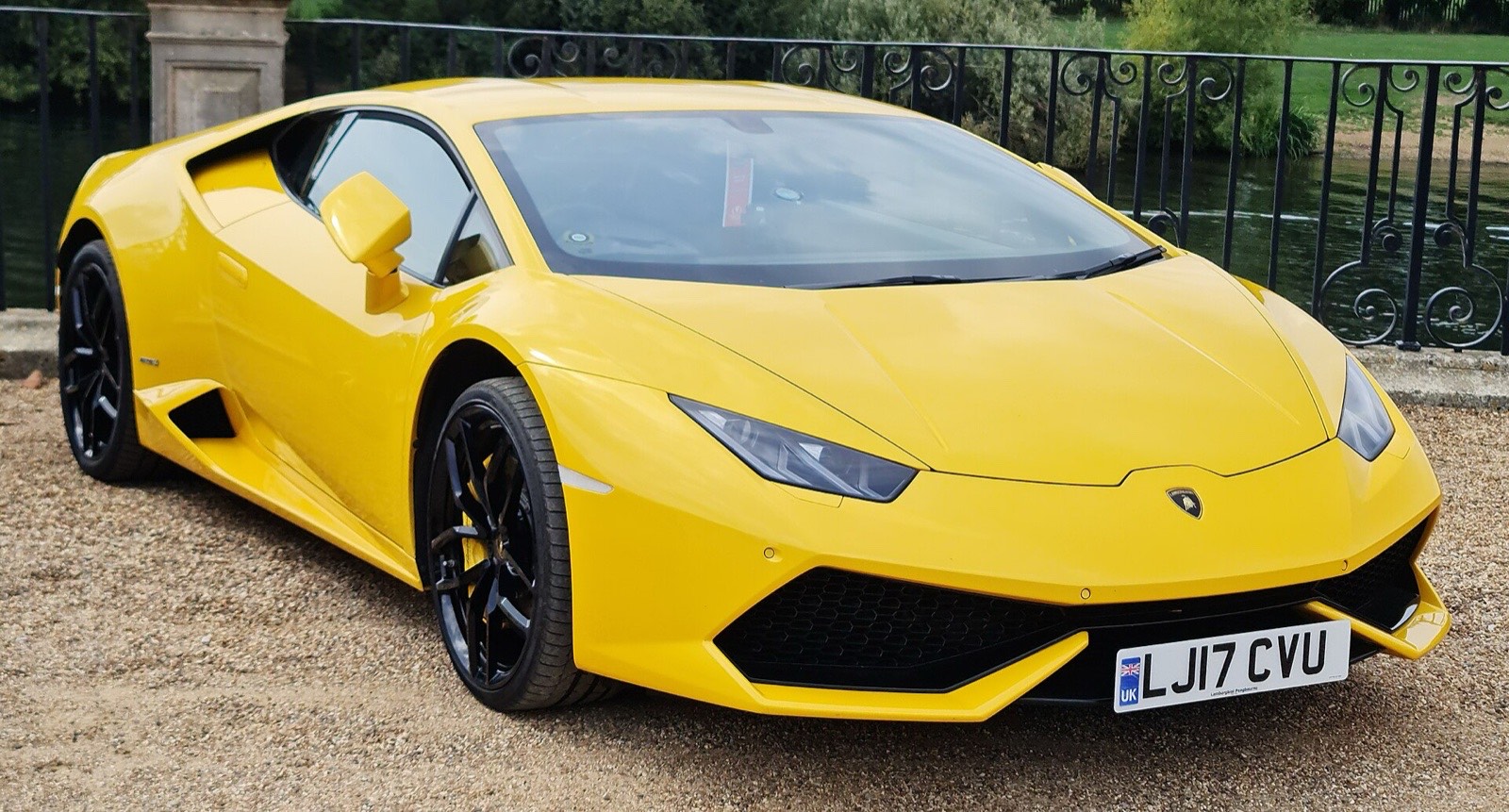
Purchase price (2026 used market): $170,000–240,000 for a 2015–2019 LP610-4 coupe with documented service. Spyder variants command a $15,000–25,000 premium. The LP580-2 (rear-drive variant) trades $10,000–20,000 under the LP610-4 due to less perceived performance pedigree.
Five-year depreciation projection: 20–28%. Huracán values softened in 2024 as the Tecnica and STO arrived and pushed used Performante values down. The LP610-4 is past the bulk of its depreciation curve but hasn’t fully stabilized. Expect to recover $125,000–180,000 at year five.
Insurance (annual): $4,000–7,500. Lamborghini’s brand carries a higher actuarial premium than equivalent Ferrari or Porsche models — the cars are statistically more likely to be involved in claims, often single-vehicle, often during high-throttle events. Hagerty and Chubb both price aggressively against Lambos, especially for younger drivers and urban garaging.
Annual scheduled service: $3,000–6,000 at Lamborghini dealer rates, $2,000–3,500 at Audi/VW-friendly independent specialists who can work the Huracán’s largely shared mechanicals. Annual or 9,000-mile intervals. The Huracán shares meaningful platform DNA with the Audi R8, which keeps independent service viable in ways the more bespoke McLaren and Ferrari platforms don’t.
Major service: Year four typically runs $5,000–10,000 — clutch inspection, fluid services, brake fluid and pad assessment. The dual-clutch transmission is the largest unknown — replacement scenarios run $15,000–25,000 if it fails out of warranty, though confirmed failures are rare on well-maintained cars.
Tires: $1,500–2,200 per set for Pirelli P Zero. Replace once in five years for normal use. The Huracán wears tires harder than the Turbo S due to AWD power distribution and chassis tuning that prioritizes lateral grip over efficiency.
Fuel: $2,500–3,500 per year. The 5.2L V10 returns 14–17 mpg combined — the thirstiest engine in this comparison.
Five-year all-in cost (purchase + running): $230,000–335,000. The Huracán is competitive on purchase price with the 488 but more expensive to insure and slightly cheaper to service due to the Audi shared platform. The dual-clutch reliability tail is the biggest variable. Buyers who value visual presence over operating economics consistently pick the Lambo over the more expensive-to-own Ferrari, and the math supports that decision more than commentators acknowledge.
4. McLaren 570S — The Engineering Pick (with the Reliability Tail)
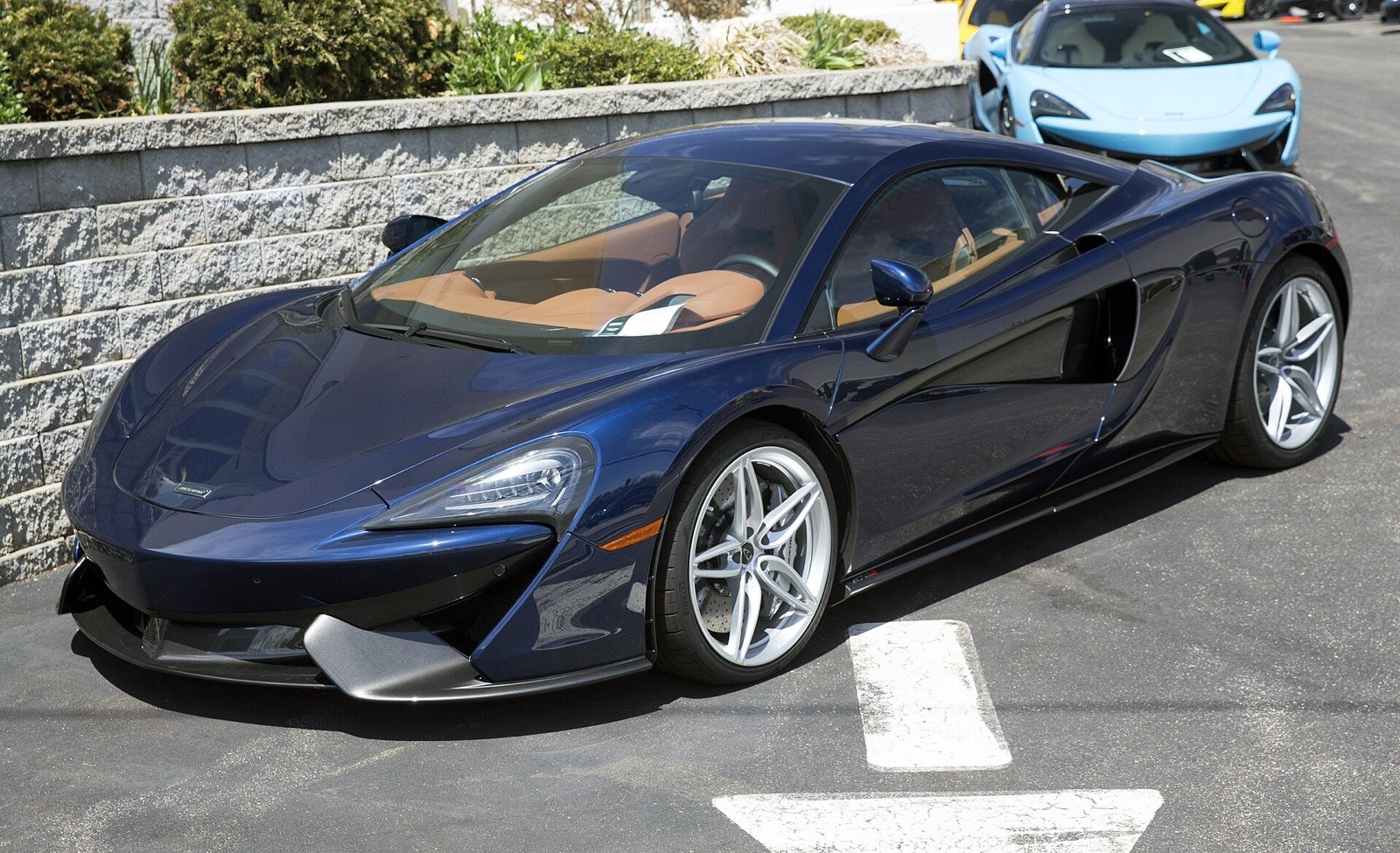
Purchase price (2026 used market): $130,000–170,000 for a 2016–2019 570S coupe. The 570S Spider commands a $10,000–15,000 premium. The 600LT and 600LT Spider sit in a different bracket and are excluded. The 570S is the most aggressively-depreciated car in this comparison, which is both its appeal and its risk.
Five-year depreciation projection: 25–35%. McLaren’s Sport Series has depreciated harder than any other modern supercar, partially due to brand newness, partially due to early reliability concerns that affect resale confidence. The depreciation curve is flattening — 2017 cars that were $250,000 new are now stable in the $135,000–155,000 range. Expect to recover $90,000–120,000 at year five. The depreciation has already happened; future loss is limited.
Insurance (annual): $3,500–6,000. McLaren is a smaller risk pool than Ferrari or Porsche, so insurers price with less actuarial confidence — usually a small premium over equivalent Ferrari rates. Hagerty’s MSO program (McLaren Service Organization-equivalent) is the most consistently competitive option.
Annual scheduled service: $2,500–5,000 at McLaren Qualified specialists (the manufacturer-backed independent service network). Dealer rates run 30–50% higher and are not necessary unless you’re maintaining a CPO warranty. Annual service is standard. McLaren’s 12,000-mile or annual interval has been refined over the Sport Series production run.
Major service / reliability tail: This is where the 570S earns its asterisk. Pre-2019 Sport Series cars have well-documented patterns of electrical and hydraulic issues — proactive coolant pump replacements, the occasional brake-by-wire calibration drift, infotainment concerns. Most are not catastrophic, but the cumulative repair history can add $2,000–5,000 per year of contingency beyond scheduled service for cars out of warranty. CPO warranty extension is strongly recommended for any 570S without one — it transforms the ownership math.
Tires: $1,600–2,400 per set for Pirelli P Zero Corsa or P Zero. Replace once in five years for normal use. The 570S is exceptionally light, which extends tire life relative to its peers.
Fuel: $2,000–3,000 per year at 16–19 mpg combined.
Five-year all-in cost (purchase + running): $195,000–275,000 with a reliability tail of $10,000–25,000 above the high end if pre-2019 issues materialize without warranty coverage. The 570S is the single best-engineered car in this group — carbon monocoque, mid-engine layout, aero that genuinely works at supercar speeds — and the cheapest way into a true exotic in absolute terms. The trade-off is the variance: 570S total ownership cost has the widest possible spread of any car here.
5. Chevrolet Corvette C8 Z06 — The American Compression Play
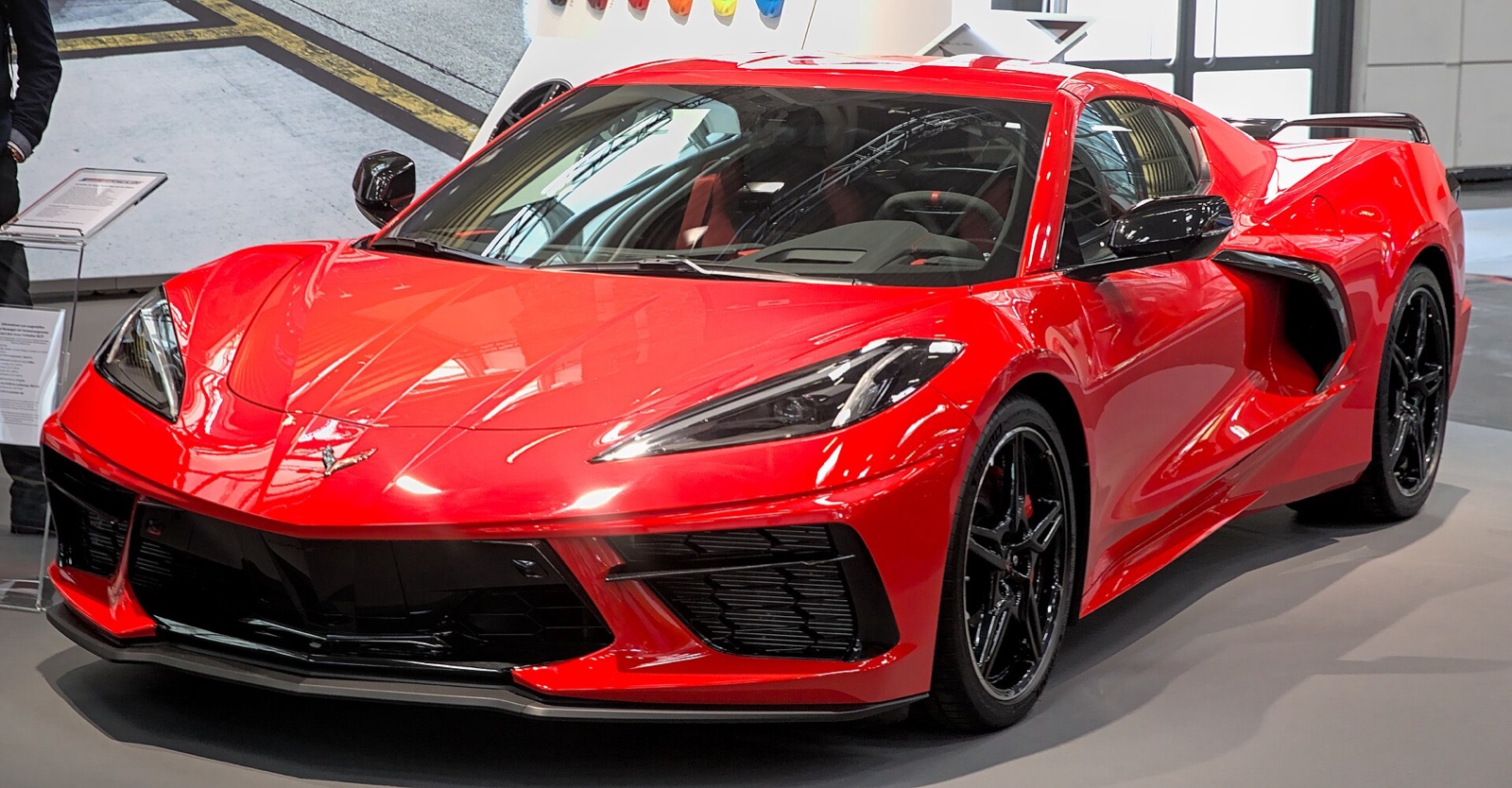
The full story of the C8 Z06’s mid-engine architecture and flat-plane V8 is covered in a separate piece. This section focuses on what it costs to own.
Purchase price (2026 used market): $115,000–150,000 for a 2023–2024 Z06 coupe. Allocation premiums from the 2023 launch year have largely faded. Z07 Performance Package cars trade $10,000–15,000 over standard. Convertible adds $7,000–10,000.
Five-year depreciation projection: 18–28%. The C8 Z06 is too new to have a multi-year depreciation curve, but the C7 Z06 and ZR1 trajectory plus the C8 Stingray’s first three years suggest the Z06 will follow a steeper-than-average GM depreciation curve in years one through three before stabilizing. Expect to recover $85,000–120,000 at year five.
Insurance (annual): $1,800–3,500. This is where the math breaks open. The Z06 is a high-volume manufacturer’s product with extensive parts availability, a large dealer service network, and actuarial data based on 70 years of Corvette claims. Insurers price aggressively. Hagerty agreed-value coverage on a $130,000 Z06 frequently comes in under $2,500.
Annual scheduled service: $400–1,200 at Chevrolet dealer rates. The Z06 follows the same maintenance schedule as the Stingray with minor adjustments for the higher-revving engine. Oil changes are interval-based at 7,500 miles. There is no major service equivalent in the five-year window — typical wear items only. Costs at independent specialists are roughly 25% lower.
Tires: $1,800–2,400 per set for Michelin Pilot Sport Cup 2 R (Z07 package) or Pilot Sport 4 S (standard). The Z07 compound wears faster — replacement is common at 8,000–12,000 miles. The standard tire wears like a normal performance tire and lasts 15,000–20,000 miles. Track use shortens this dramatically.
Fuel: $1,800–2,800 per year. The 5.5L LT6 flat-plane V8 returns 14–18 mpg combined depending on configuration.
Five-year all-in cost (purchase + running): $140,000–195,000. This is the article’s actual story. The Z06 owner’s five-year ownership cost is roughly 60% of the Ferrari 488 owner’s, on a car that posts comparable lap times, makes a more characterful sound, and has none of the service anxiety. The tradeoffs are real — slower depreciation isn’t guaranteed, the badge doesn’t carry the same social signal, and the dealer network is volume-oriented rather than concierge-oriented. But on raw ownership economics, the C8 Z06 sits in its own column.
The Comparison Table
The number you’re looking for is the rightmost column. Every other column explains how it got there.
| Car | Purchase | 5-yr Depr. | Insurance/yr | Service/yr | Major Service | Tires | Fuel/yr | 5-yr Total |
|---|---|---|---|---|---|---|---|---|
| Ferrari 488 GTB | $170K–230K | 18–25% | $3.5K–7K | $2.5K–5K | $8K–15K | $1.8K–2.4K | $2K–3.5K | $240K–340K |
| Porsche 911 Turbo S | $130K–180K | 15–22% | $2.5K–4.5K | $1.5K–3K | — | $1.4K–2K | $1.8K–2.8K | $175K–245K |
| Lamborghini Huracán | $170K–240K | 20–28% | $4K–7.5K | $3K–6K | $5K–10K | $1.5K–2.2K | $2.5K–3.5K | $230K–335K |
| McLaren 570S | $130K–170K | 25–35% | $3.5K–6K | $2.5K–5K | $10K–25K reliability tail | $1.6K–2.4K | $2K–3K | $195K–275K |
| Chevrolet C8 Z06 | $115K–150K | 18–28% | $1.8K–3.5K | $0.4K–1.2K | — | $1.8K–2.4K | $1.8K–2.8K | $140K–195K |
The five-year totals include purchase price, projected depreciation already netted out (recovered residual not added back), all running costs, one tire replacement, one major service where applicable, and 5,000 miles/year of fuel.
What This Means
The cheapest car to own here is the Z06 by a wide margin — roughly $100,000 less than the Ferrari over five years, on a car that is faster than the 488 around most circuits and arguably has the more characterful engine. If ownership economics are the deciding factor, the conversation ends here.
The cheapest European to own is the 911 Turbo S — by approximately $45,000–60,000 over the Ferrari, $50,000–75,000 over the Lambo. The 911 is the rational answer in this group. It’s also the answer most enthusiasts know but reject for reasons that have nothing to do with money.
The Huracán is the visual-impact winner — the loudest, most aggressive, most photographed car in the group, at a five-year cost roughly equivalent to the 488 but with notably worse insurance and better service economics. Buyers who value visual presence are correct to pick this over the Ferrari on pure ownership math.
The 570S is the highest-variance bet. Its low entry price and aggressive depreciation flattening make it the cheapest way into a genuine supercar. The reliability tail on pre-2019 cars without warranty coverage means the upper end of its five-year cost can exceed the Ferrari. CPO warranty changes the math entirely; without it, the variance is real.
The 488 is the brand premium price. It’s not the most expensive to own — the Huracán is, by a small margin — but the gap between “Ferrari ownership” and “Porsche ownership” is roughly $70,000 over five years. That gap buys the prancing horse, the V8 sound signature, the heritage, and the ownership community. Whether that’s worth $70,000 is a personal question. The math doesn’t answer it.
The exotic car market has spent thirty years pretending these costs don’t exist, and the result is a steady supply of three-year-old supercars with 4,000 miles whose owners discovered the answer the expensive way. The numbers above won’t make the decision for you. They will make it harder to be surprised.
Numbers in this article reflect 2026 used-market conditions and current service economics. Insurance bands assume Hagerty agreed-value coverage for an average risk profile (35+ year old, clean record, suburban garaging, 5,000 miles/year). Adjust upward for urban garaging, younger drivers, or higher annual mileage; downward for retired collectors with secure storage. All prices in US dollars.
Photo credits: Wikimedia Commons, CC BY-SA — Ferrari 488 GTB (2018), Porsche 911 Turbo S (2012, 991), Lamborghini Huracán LP610 (2017), McLaren 570S, Chevrolet Corvette C8.
Share this


Join the conversation
COMMENTS
Loading comments…
No comments yet. Be the first to weigh in.
Leave a comment
Posted
Thanks for joining the conversation.