
The Koenigsegg Jesko: The Most Extreme Road Car Ever Made
There are hypercars, and then there is the Koenigsegg Jesko. That distinction is worth drawing. Most hypercars come out of large companies with engineering departments, shareholder committees and brand positioning documents standing behind them. The Jesko comes from one man. Christian von Koenigsegg started building cars in a Swedish Air Force hangar because he couldn’t afford anything fast enough, and he has spent three decades refusing to accept that the laws of physics get the last word.
The car carries the name of Christian’s father, who kept the company alive financially in its early years. That tells you how the place works. Not a corporation. A family obsession made physical, road-registered, and driven at speeds that shouldn’t be possible.
What the Jesko Actually Is
The Jesko debuted at Geneva 2019 and blew up the conversation in a way more cautious manufacturers never permit themselves. Twin-turbocharged 5.0-liter V8, flat-plane crank, 1,280 horsepower on ordinary 95-octane pump fuel and 1,600 horsepower on E85. Not a track-only exercise. A road car. The version you drive to dinner.
Dry weight is 1,420 kg (3,131 lbs). A Porsche 911 GT3 weighs more than that with half the power. On E85 the power-to-weight figure works out to roughly 1,127 hp per ton, and the number stops meaning much simply because nothing road-legal had ever been built to it before this car.
The aero package generates 1,400 kg of downforce at 250 km/h, so at speed the car presses itself into the road harder than it weighs. In theory it could drive upside down on a ceiling. Useless as a practical claim, but it does tell you what the aerodynamic engineering is actually up to.
The Light Speed Transmission
The gearbox is a nine-speed multi-clutch unit Koenigsegg designed themselves and calls the Light Speed Transmission (LST). Nine wet clutch packs work at once, selecting whatever gear suits the moment instead of being stuck stepping through adjacent ratios in sequence. In theory and in practice, it goes 1st to 7th, or any gear to any other gear, with nothing in between. Shift time is about 20 milliseconds. A blink is 150–400 milliseconds.
Nothing else in the world works this way. It isn’t a dual-clutch. It isn’t a torque-converter automatic or an automated manual either. This is a genuinely new transmission architecture, and building it meant Koenigsegg had to manufacture most of the components in-house, because no supplier existed who could make what they were asking for. Every other gearbox trades something away. Dual-clutches give up flexibility for speed, torque-converter automatics give up speed for smoothness, manuals give up both for engagement. The LST attempts to give up nothing.
If you’ve ever played a racing game, Forza Horizon or Gran Turismo, and wondered why you can’t just jump straight to the gear you need, the LST is that question answered in metal. It does what game physics has always allowed and real engineering couldn’t manage until now.
The Jesko Absolut: When Road Cars Stop Pretending
Koenigsegg revealed the Jesko Absolut alongside the standard car, same day. The Jesko is a road car in the most demanding possible sense of that term; the Absolut is a road car optimized for one thing, which is top speed. The aerodynamic package gets reworked to cut drag instead of piling on downforce, the enormous rear wing disappears entirely, and stability comes instead from a body shape that manages airflow under the car. Claimed theoretical top speed: 330 mph (531 km/h).
No production car has ever been validated at 330 mph. The Bugatti Chiron Super Sport was verified at 304 mph in 2019 with a modified prototype. Whether the Absolut goes past 300 comes down to finding the right road, in the right country, on the right day. Not to the car.
What isn’t in question is that the Absolut is the most aerodynamically committed road-legal car ever built. Koenigsegg’s simulation data, checked against their Agera RS 277.9 mph record run, supports the 330 mph claim. That’s not marketing. That’s engineering with a number attached.
The Engine That Shouldn’t Exist
The Jesko’s 5.0L twin-turbo V8 runs a flat-plane crankshaft, the configuration you associate with Ferrari V8s, instead of the cross-plane layout common to American performance V8s. Flat-plane cranks allow more aggressive gas scavenging, quicker throttle response and higher redlines, and they charge you in vibration for the privilege. In the Jesko, the engine revs to 8,500 RPM. That’s unusual for a turbocharged engine of this displacement and entirely standard for Koenigsegg, who build engines that behave like naturally aspirated units while producing forced-induction power.
The E85 variant reaches 1,600 hp on increased boost pressure combined with E85’s higher octane rating, which permits more aggressive ignition timing. Koenigsegg includes a flex-fuel sensor system that adjusts in real time as the fuel mixture changes. Fill up with 50% pump gas and 50% E85 and the engine management adapts on its own. The car knows what it’s drinking and keeps optimizing for it.
For gamers who know their way around Forza’s engine swap and tuning systems: the Jesko’s real-world engine management is doing what that simplified tuning interface lets you adjust by hand, except live, every millisecond, at 250+ mph.

Inside: The Part Nobody Talks About Enough
Hypercar interiors often feel like an afterthought, a grudging concession to the fact that somebody has to sit in the thing and steer it. Koenigsegg treats the interior as engineering rather than decoration. The Jesko’s cabin uses the Koenigsegg Autoskin system: electrohydraulic doors, hood and trunk lid that open and close at the touch of a button, with no external handles anywhere on the car.
The dashboard is largely a custom touchscreen interface built in-house. The seats are carbon fiber monocoques bolted to the tub, with no rails and no adjustment. What moves is the pedal box and the steering column, so you fit yourself to the car rather than the reverse. Call it weight saving, or call it a philosophical statement about what a driver’s machine means. Probably both.
The luggage space, improbably, is usable. Koenigsegg has always insisted that their cars are grand tourers that happen to hold top speed records, and the Jesko carries that ethos forward. A weekend bag fits in the front trunk. That matters more than it sounds, because a car you can load up and genuinely take somewhere is a different proposition from a track weapon.
125 Cars, 125 Customers
Koenigsegg builds cars in very small numbers by design. Total Jesko production (both variants combined) is capped at 125 units. The standard Jesko started at approximately $3 million USD, the Absolut at roughly $3.4 million. All 125 have been allocated.
The customers are a specific kind of person. Not necessarily the wealthiest in the room, but the most committed. Koenigsegg’s allocation process has historically run through direct conversations between Christian and potential buyers, and people have been turned down for not being serious enough about driving. Ferrari’s version of this is a ladder you climb by buying lesser models to earn the right to the special one. Koenigsegg’s is a genuine filter for people who will use the car instead of warehousing it.
The Gaming Connection
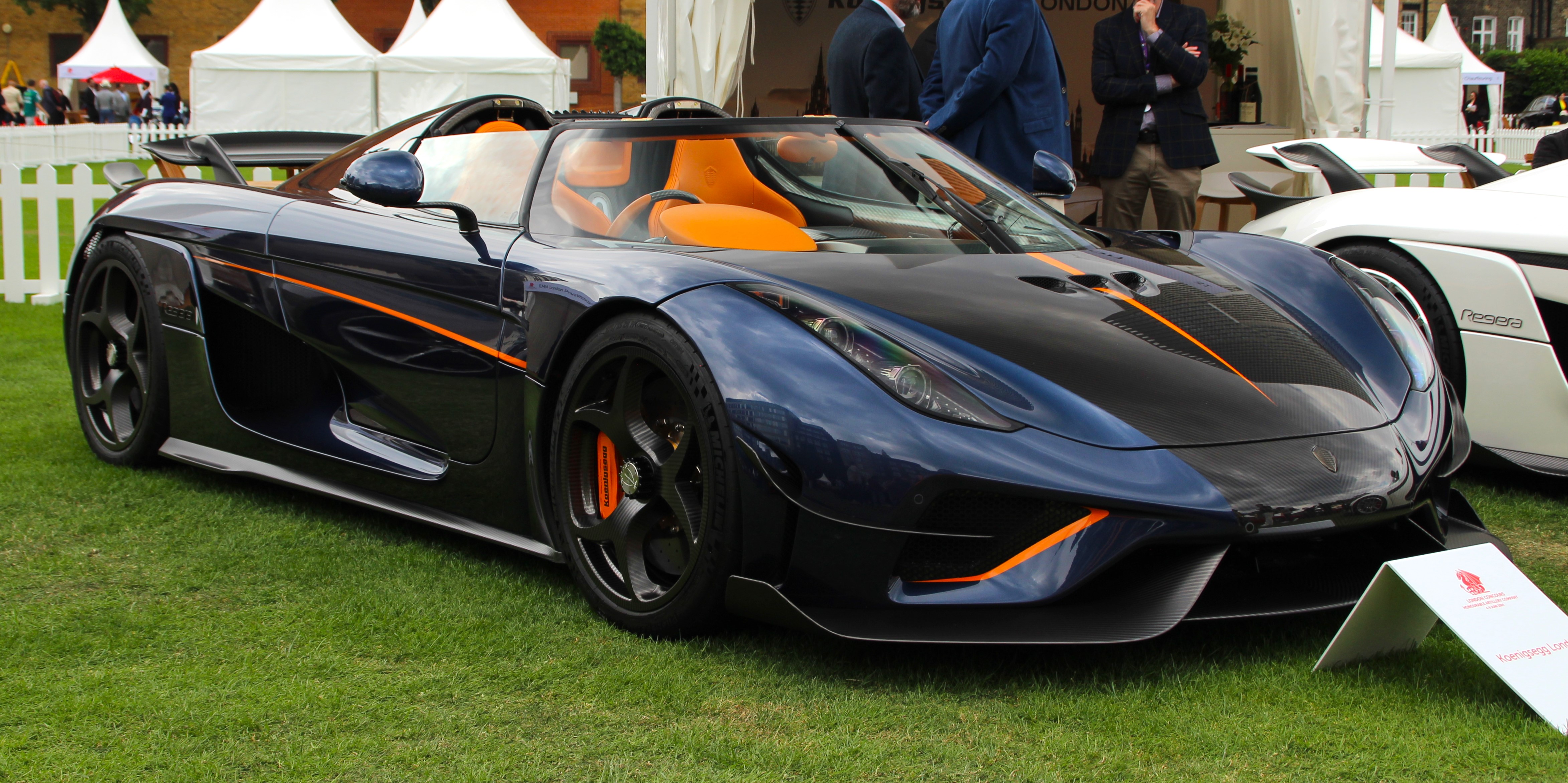
If the Koenigsegg name means something to you, there’s a meaningful chance a racing game put it there. The Agera R in Need for Speed. The One:1 in Forza Horizon. The Regera in Gran Turismo Sport. The company has been a fixture in racing games for over a decade, and for a lot of players a controller was the first contact with engineering pushed this far.
The Jesko is available in Forza Motorsport and Forza Horizon 5, where it consistently ranks among the fastest S2 class cars. Gran Turismo 7’s addition of the Jesko Absolut gives players a simulation-grade sense of what 330 mph in a road car might feel like. None of the virtual versions replicate the LST’s gear-skipping properly, though they do capture the acceleration character and the absurd top-end push that defines the car.
Playing these cars in a sim is not the same as driving them. It is, however, why a generation of enthusiasts knows what Koenigsegg is, understands why the engineering matters, and follows the company with an intensity usually reserved for motorsport teams.
Why the Jesko Is the Right Place to Start
If you’re new to hypercar culture, the Jesko is a useful entry point precisely because it represents an extreme. Not the extreme of a brand building a headline car to drive showroom traffic toward its sedans. Koenigsegg doesn’t have sedans. The Jesko is the extreme of a company for whom this is the entire point, everything they have applied to one object.
Understanding what makes the Jesko remarkable helps you understand what most expensive cars are not. It sets a ceiling, and the ceiling clarifies everything below it.
Want to go deeper? Read our Ultimate Guide to Exotic Cars for the full landscape, from $100K entry points to $3M Koenigseggs. Or see where the Jesko lands in our Best Exotic Cars of All Time ranked list.
Share this
Join the conversation
COMMENTS
Loading comments…
No comments yet. Be the first to weigh in.
Leave a comment
Posted
Thanks for joining the conversation.