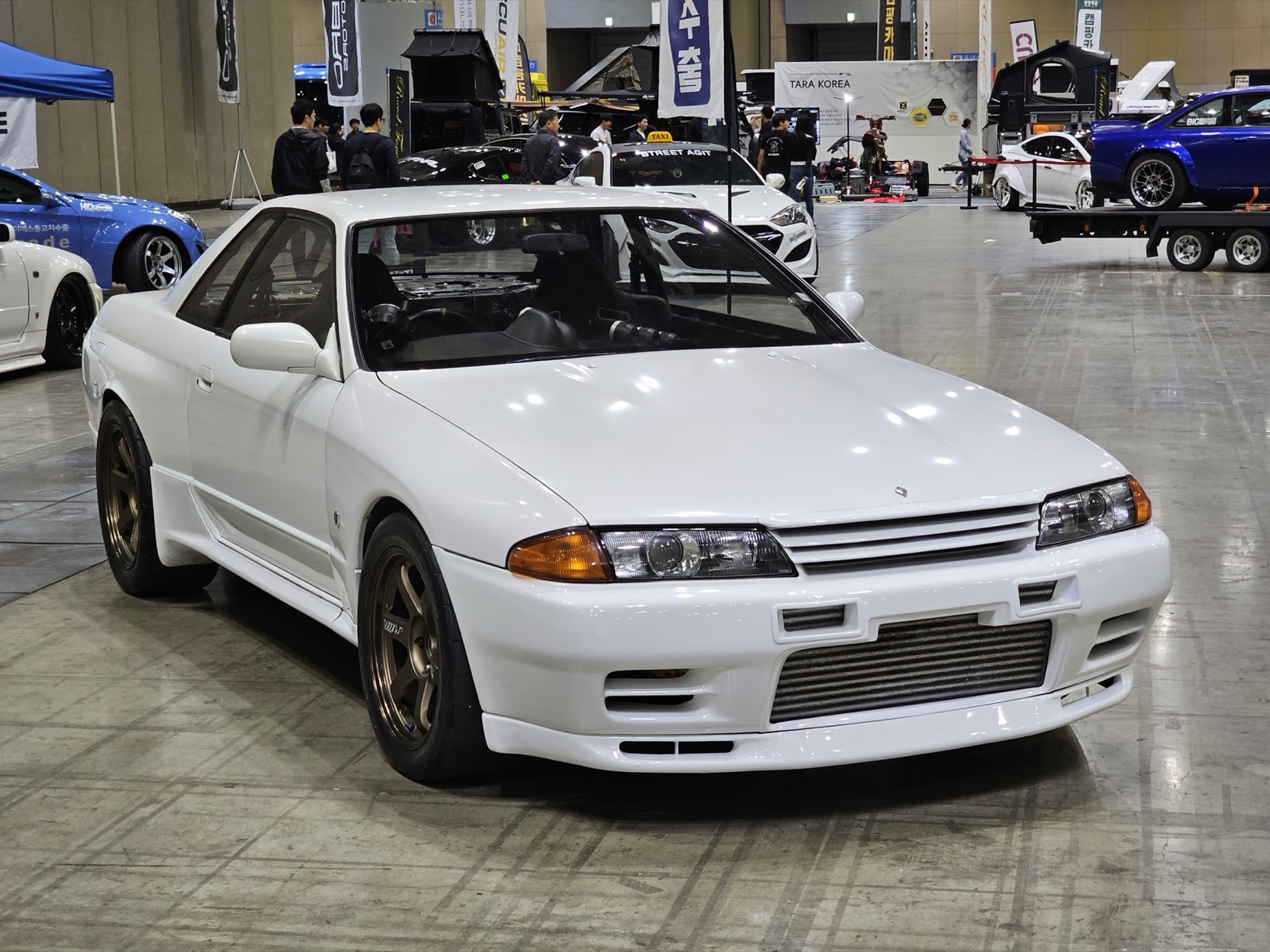
Nissan Skyline R32 GT-R Buyer's Guide 2026: Godzilla Decoded — Specs, Variants, and What to Pay
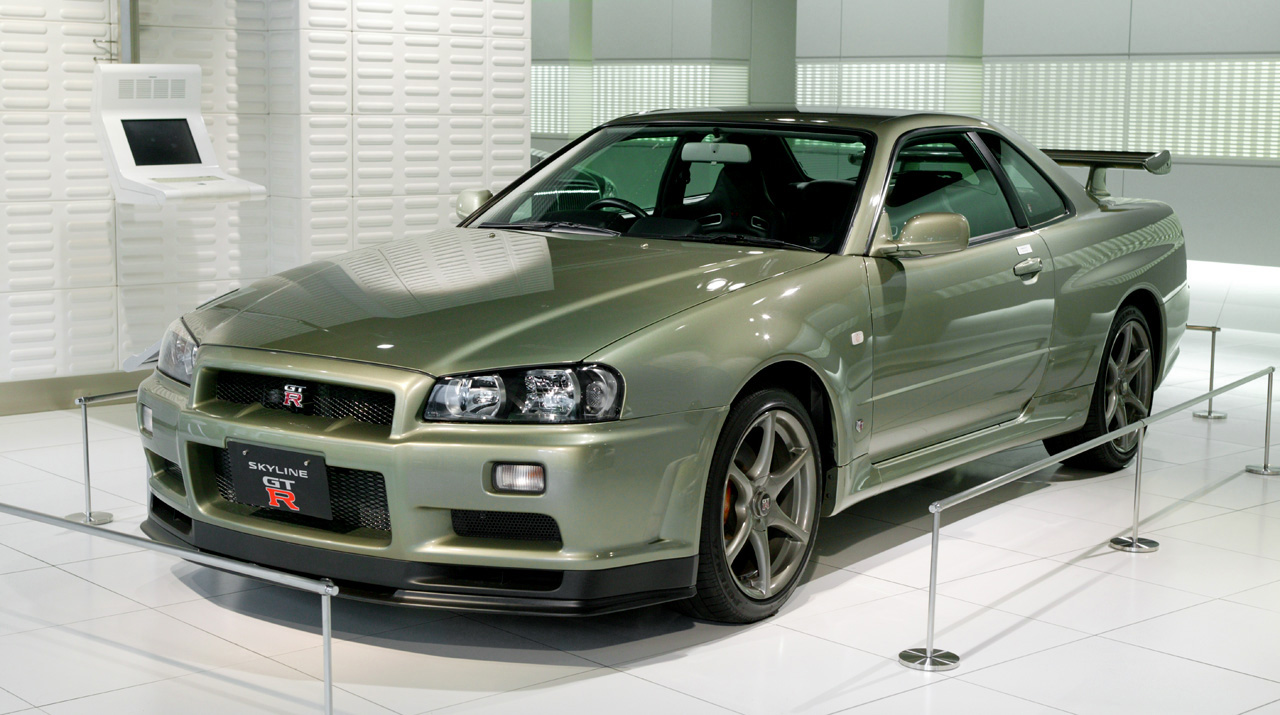
The Nissan Skyline GT-R R32, chassis code BNR32, is the car that earned Godzilla its name. Between 1990 and 1993 it dominated Group A touring car racing across multiple championships, taking four straight All-Japan Touring Car Championship titles and back-to-back Bathurst 1000 wins in 1991 and 1992. It crushed the Australian Touring Car Championship so completely that the Australian sanctioning body rewrote the regulations to ban it. Australian magazine Wheels coined the Godzilla nickname in its 1989 debut review, a monster out of Tokyo Bay flattening everything in front of it. Thirty-five years later, the name is still doing the work.
In 2026, the R32 has been legal to import into the United States for twelve years, since the first 1989 production cars cleared the 25-year rule in 2014. It’s the most accessible and most numerous of the Skyline GT-R generations: Nissan built around 43,000 between August 1989 and December 1994, against roughly 11,500 R34 GT-Rs. Add steady appreciation across the 2014–2026 import window to that volume and you get a stratified market, one where condition, originality and variant identification carry more weight than they ever have.
So: what to pay, what to inspect, and how to work a market in which the cheapest car you find is probably hiding the most expensive set of problems.
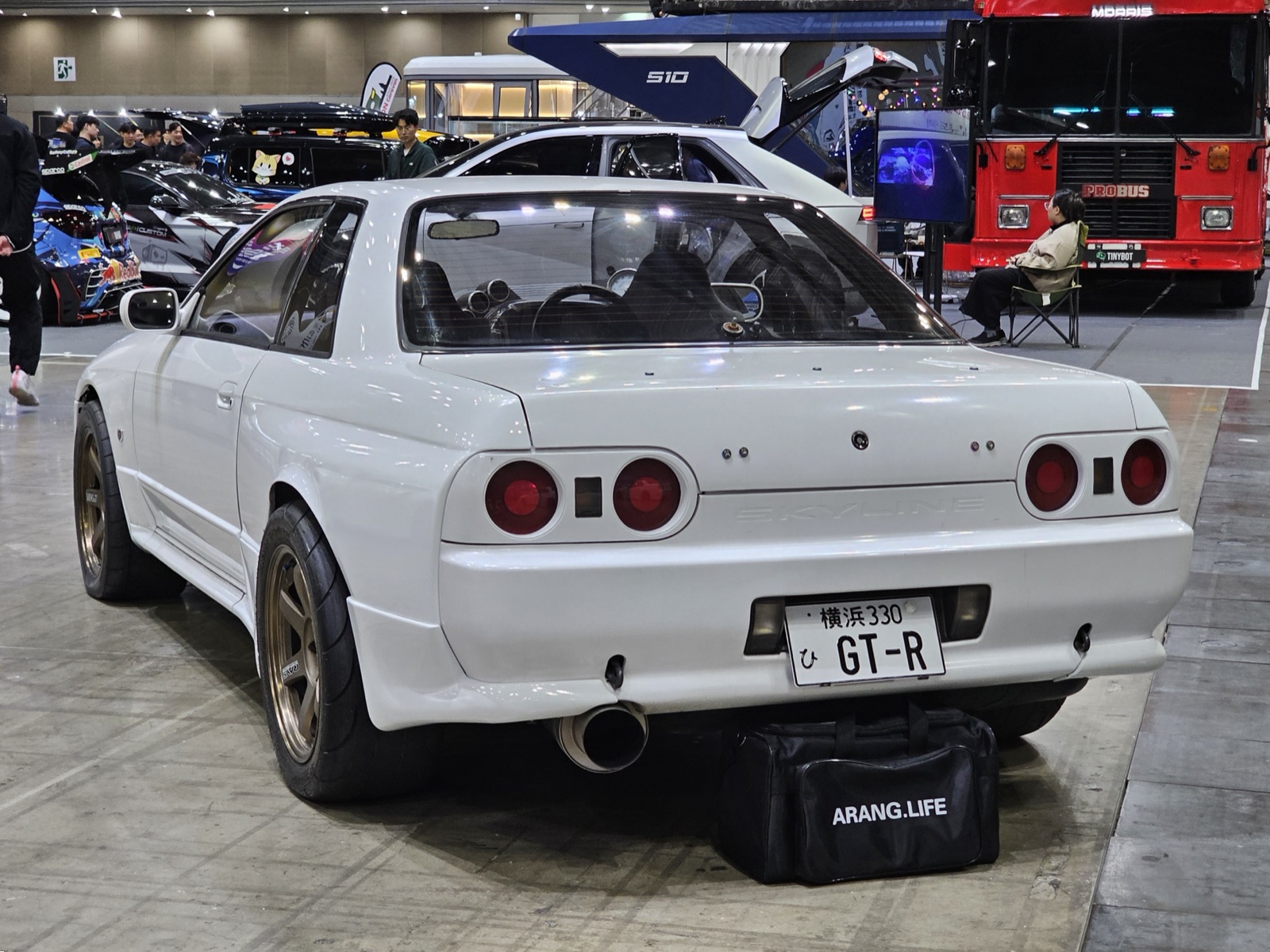
The Variant Tree
Five distinct variants face R32 buyers in 2026, each with its own production numbers, equipment and market value:
Standard GT-R (1989–1994) — the base model. ATTESA E-TS all-wheel-drive, RB26DETT engine, Getrag 5-speed manual. About 39,000 produced. The realistic entry point for most buyers.
GT-R V-Spec (1993–1994) — Brembo brakes, BBS 17-inch wheels, retuned ATTESA E-TS Pro with revised programming, slightly stiffer suspension. About 1,453 produced. Premium of 30–50% over standard GT-R.
GT-R V-Spec II (1994) — the final-year V-Spec, with wider tires (17×9 wheels), final-edition badging and last-of-the-line provenance. About 1,303 produced. Highly desirable, premiums of 50–80% over standard GT-R.
GT-R N1 (1989–1994) — homologation special for racing. Strengthened block, larger turbos, no air conditioning, no radio, manual windows. Only about 245 N1s built. When one surfaces, it commands $200,000–$400,000+ depending on condition and history.
GT-R Nismo (1990) — only 560 built, intended as the racing homologation version for FIA Group A. Front lip, side skirts, rear ducktail spoiler, lighter wheels, deleted ABS. The R32 unicorn. Recent auction comps: $250,000–$500,000+.
First-time R32 buyer? The standard GT-R or a clean V-Spec are the rational targets. N1 and Nismo are collector territory.
The RB26DETT: Inspection Reality
The RB26DETT is a 2.6-liter twin-turbocharged inline-six, rated from the factory at 280 horsepower to satisfy the Japanese gentlemen’s agreement of the era. Dyno numbers on stock unmodified examples land consistently at 320–340 horsepower at the crank, because Nissan was sandbagging. It’s widely considered one of the strongest performance engines ever built, good for 600+ horsepower on the stock block with proper tuning.
Where the RB26DETT shows its age in 2026:
-
Number 5 main bearing oil starvation — the well-documented Achilles heel. Factory oil pump drive is undersized, leading to oil starvation at sustained high RPM, particularly on the cylinder closest to the timing belt. Solution is the N1 oil pump upgrade (or aftermarket Tomei, JUN, etc.), $400–$800 in parts plus install. A well-maintained R32 should already have this upgrade. Verify in service records.
-
Turbo condition — factory ceramic turbines crack under sustained boost above ~1.0 bar. Many cars have been retrofitted with steel-wheel turbos or upgraded units (Garrett GT2860, HKS GT-SS, etc.). Stock ceramic turbos with roughly 30 years of service behind them are a maintenance event waiting to happen, not a selling point.
-
Compression test — a healthy RB26DETT makes 145–160 psi per cylinder, evenly across all six. Variation greater than 10% between cylinders suggests valve, ring, or head-gasket issues. Below 130 psi indicates rebuild incoming.
-
Oil consumption and coolant loss — both should be near zero on a healthy car. Oil consumption above one quart per 1,500 miles, or any unexplained coolant loss, should drop the offer by $5,000–$10,000 minimum.
-
Cam belt service interval — the RB26DETT timing belt should be replaced every 60,000 miles or 7 years. Service is non-trivial ($800–$1,200 in parts and labor). A car without recent timing belt records gets discounted accordingly, or you do the work the week you get it home.
Maintained properly, the RB26DETT ranks among the most reliable performance engines ever made. Maintained badly, it’s among the most expensive to put right. Service records matter more than miles.
ATTESA E-TS: The AWD System That Makes the R32 What It Is
ATTESA E-TS is a forward-bias all-wheel-drive system with a wet multi-plate clutch in the center, run by a separate ECU that watches wheel slip, throttle position and yaw. Cruising at steady state, the R32 sends nearly 100% of torque rearward, so it drives like a rear-drive car. As the rear tires start to give up, the system feeds up to 50% of torque forward. That’s the trick behind the R32’s party piece: it rotates like a rear-driver in slow corners and hooks up like an all-wheel-drive car on hard exits.
Failure modes in 2026:
- ATTESA pump failure — most common. Symptoms: AWD warning light illuminates on the dash, car feels rear-wheel-only under acceleration. Cause: the high-pressure hydraulic pump that operates the center clutch wears out or its accumulator fails. Replacement: $1,500–$2,500 including labor at a Nissan / Skyline specialist. Common enough that you should price it into your purchase if records don’t show recent pump service.
- Yaw sensor and AWD computer issues — the electronic side. Less common but more expensive to diagnose. Symptoms: erratic AWD engagement, fault codes. Specialist diagnosis $200–$400 just to identify; repairs vary.
- Center clutch wear — the multi-plate clutch eventually wears out, especially on heavily-driven cars or modified high-power examples. Internal clutch service is a major job ($3,000–$5,000+).
A car with the ATTESA system freshly sorted, pump replaced inside the last 5 years and no fault codes stored, is worth meaningfully more than one where AWD function is simply unconfirmed.
Super HICAS and the Lockout Question
Every R32 GT-R got Super HICAS, a four-wheel-steering system that gives the rear wheels a small countersteer input under hard cornering for sharper turn-in, then a same-direction input on exit for stability.
Owners are split on it. Some love what it does to the steering feel. Others find it unpredictable, especially once the actuator or the hydraulic lines age out and the responses stop being consistent.
By 2026, most R32 GT-Rs fall into one of two camps: the HICAS has been serviced and kept stock, or it’s been locked out with a delete kit ($150–$400 in parts). Locked-out cars feel more conventional and predictable. Service-stock cars keep the original engineering character.
Neither answer is “correct.” You just need to know which one you’re buying. A HICAS-stock car with no recent service has a $1,500–$3,000 maintenance event sitting in its future; a locked-out car is a known quantity.
Body and Frame: The Japanese Salt-Air Rust Map
R32 GT-Rs imported from Japan between 2014 and 2020 often came out of coastal salt-air regions such as Kobe, Yokohama and Tokyo Bay, and the rust patterns that follow are common but localized. Most US cars have been inspected and sorted by now. New imports keep landing, though, so verification still matters.
Specific inspection points:
- Front lower frame rails at the radiator support — common surface rust, occasional perforation
- Rear quarter wheel arches (inside and outside)
- Floor pans under driver’s footwell — pull the carpet
- Strut towers in engine bay — surface rust common, perforation rare
- Battery tray and inner fender — water trap, common rust
- Rocker panel ends at jack point reinforcements
- Targa-pillar areas (R32 GT-R was coupe-only, but A-pillar bases collect moisture from the door seal joints)
Surface rust that’s been cleaned up and converted is fine. Active scale rust, fresh welds at structural points, or new undercoating slathered over who-knows-what is a $5,000–$15,000 deduction, or a walk-away.
Modifications: Stock R32s Are Worth More
The R32 GT-R has been a tuner darling since the 1990s. Most cars on the market have been modified to some degree: exhaust, intake, ECU, suspension, wheels. The 2026 market has split cleanly along those lines.
Tasteful, period-correct modifications (Nismo or HKS exhaust, BC Racing or Tein coilovers, period-correct Volk or Rays wheels, mild ECU tune) are value-neutral or slightly positive. Nobody expects a 30-plus-year-old car to be untouched.
Heavy modifications (single turbo conversion, stand-alone engine management, big-brake conversion, race seats, roll cage, stripped interior, big-power tunes 600hp+) push the car firmly into “track or build car” territory. Value caps at $40,000–$60,000 no matter what the build cost, because the buyer pool is narrow.
Original-spec, unmodified examples with documented service history command the highest premiums in 2026. They’re also the rarest. Almost every R32 has been touched at some point, and a genuine low-mile original gets harder to find every year.
Chasing appreciation? Target original. Chasing power? Accept the ceiling.
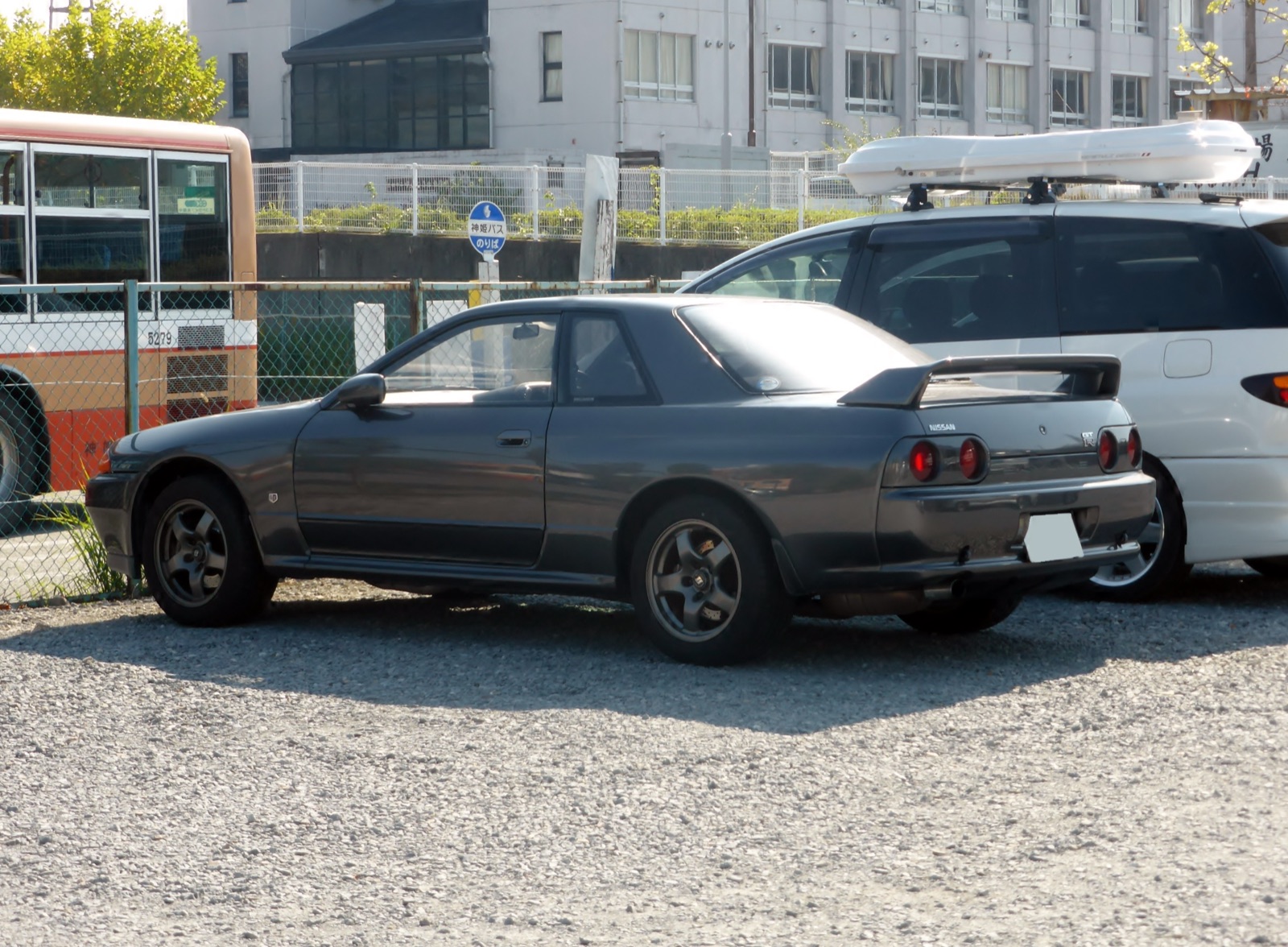
What to Pay in 2026
Real market data, sourced from BringATrailer, Cars and Bids, and JDM importer comps from late 2025 through early 2026:
- Standard GT-R, driver-grade with mods: $30,000–$45,000
- Standard GT-R, clean original, lower miles: $50,000–$75,000
- Standard GT-R, restored / show condition: $80,000–$120,000
- V-Spec, driver-grade: $55,000–$80,000
- V-Spec, clean original: $85,000–$130,000
- V-Spec II, clean: $100,000–$160,000
- N1: $200,000–$400,000+
- Nismo: $250,000–$500,000+
Documentation is the big swing factor. A car with a complete service binder, original Japanese auction sheets, ATTESA and HICAS service records and matching numbers can pull 20–30% over an identical car with nothing on paper. Pay for the records. On a 35-year-old Japanese performance car, it’s the cheapest insurance you’ll ever buy.
The 25-Year-Rule Timing Question
Every model year between 1989 and 1994 is now legal to import into the US. The newest R32 GT-Rs, December 1994 production, went fully legal in December 2019. The supply chain from Japan is mature: Toprank Importers, JDM Sport Classics, Roy’s of Beverly Hills Auctions and Garage Defend all run regular auctions and direct-import services for R32 GT-Rs.
For 2026 buyers, two approaches:
Buy in-country in the US through BringATrailer, Cars and Bids, or specialist dealers. Higher prices, but you inspect in person and the legal and import work is already behind you. Best for first-time R32 buyers.
Direct import from Japan through a reputable importer. Prices typically run 15–25% below US comps for equivalent condition. Figure 12–16 weeks from auction win to US delivery. You’re trusting the importer’s pre-purchase inspection, which is workable with the right shop.
Avoid: brokers with no physical presence, “just imported” cars sold without auction sheets, and any seller who won’t allow a pre-purchase inspection.
Insurance, Ownership, and the Long View
Agreed-value classic policies through Hagerty, Grundy, and American Modern handle the R32 GT-R well. Premiums for $75,000 agreed values run $700–$1,200 per year for 5,000-mile policies. Policies for V-Spec II and Nismo at $150,000+ agreed values run $1,800–$3,500.
Maintenance reality for a sorted, daily-driven R32: budget $3,000–$5,000 per year for fluids, tires, brake service and rotating consumables. Then add a major service event every 3–5 years (timing belt, ATTESA pump, turbo refresh) at $2,500–$8,000.
The long view is kinder still. R32 GT-R values have climbed steadily since US import legality opened in 2014. Standard cars that traded for $25,000–$35,000 in 2016 now clear $50,000–$70,000 without much argument. V-Spec II cars that sold for $60,000 in 2018 now sell for $130,000+. Nismo and N1 prices have doubled across the same window. Whether the curve keeps bending upward depends on the broader collector market, though among Japanese performance cars of the era the R32 GT-R carries the strongest momentum.
The Bottom Line
The R32 GT-R is the most accessible Skyline GT-R generation in 2026, and the most underestimated. Buyers chasing the R34 for its movie status tend to forget that the R32 built the legend in the first place, winning 29 races in a row and collecting the Godzilla name along the way. The R34 gets the screen time. The R32 did the work.
Buying your first one? Target a documented Standard GT-R or V-Spec at 60,000–100,000 miles with the N1 oil pump installed, recent ATTESA pump service, and a maintenance binder you can actually verify. Budget $55,000–$85,000 for the car, $5,000–$10,000 for first-year deferred maintenance. Chasing a V-Spec II, N1 or Nismo instead? Work with a Skyline specialist and a pre-purchase inspector who knows ATTESA, RB26DETT and Japanese auction sheet authentication.
For the broader R34 perspective and how the GT-R generations stack up, read our R34 GT-R deep dive. For the 25-year-rule market context across all major JDM platforms, see The 5 JDM Cars That Changed Everything.
More JDM buyer’s guides: Toyota AE86 buyer’s guide · Mazda RX-7 FD3S buyer’s guide
Share this
Join the conversation
COMMENTS
Loading comments…
No comments yet. Be the first to weigh in.
Leave a comment
Posted
Thanks for joining the conversation.