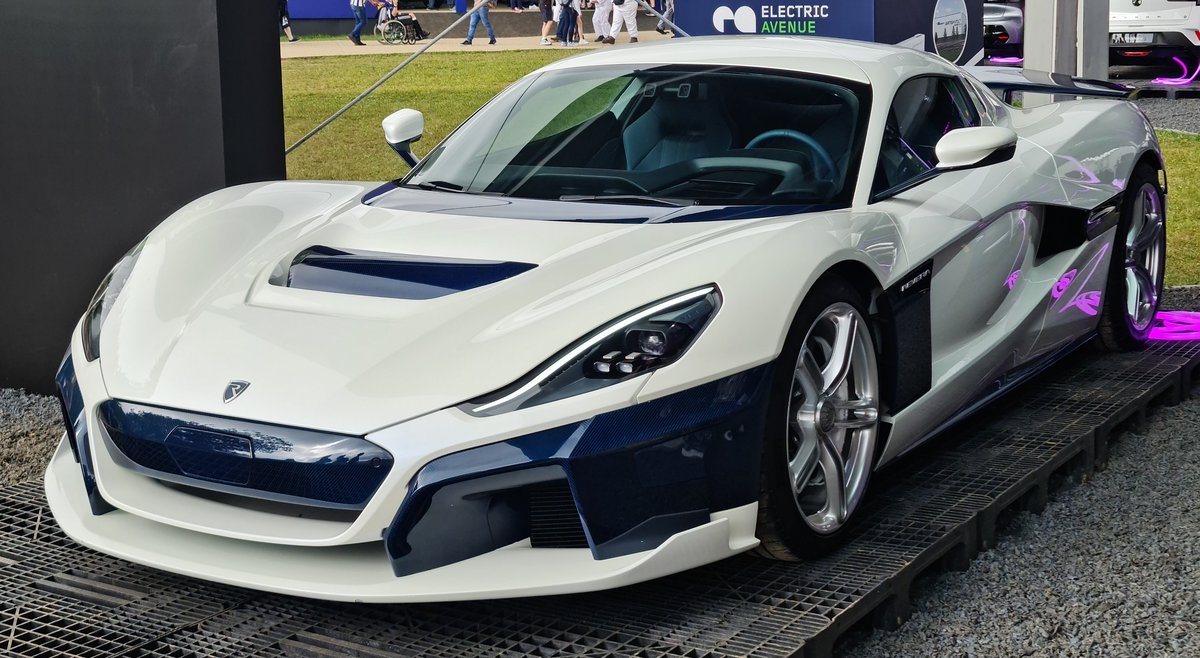
The Rimac Nevera: How a 24-Year-Old from Croatia Built the World's Fastest Electric Car
Mate Rimac built his first electric car in his parents’ garage in Zagreb in 2009. He was 21 years old. He had no factory, no investors, no manufacturing heritage. He had a 1984 BMW E30, a pile of battery cells, and a specific idea about torque vectoring that he couldn’t stop thinking about.
Fourteen years later, his company had 2,500 employees, facilities across Croatia and the UK, investment from Porsche and Hyundai, and ownership of Bugatti. The car he built — the Nevera — produces 1,914 horsepower from four electric motors, reaches 60mph in 1.97 seconds, and holds multiple world records for production electric vehicles.
The numbers are extraordinary. The story behind them is more so.
The Garage Origin
Rimac converted that E30 himself, pulling the 2.5-litre inline-six and replacing it with electric motors and self-assembled battery packs. He called it the Green Monster. It made around 600hp from electric motors he’d sourced and modified. On an airfield near Zagreb, he filmed it doing a standing quarter mile in 11.8 seconds.
The video went viral in 2011. It reached Jeremy Clarkson, who invited Rimac onto Top Gear. Rimac showed up at 23 with no PR team and a car he’d built in a garage.
The Top Gear segment exposed him to a global audience. Within 18 months, Rimac Automobili had its first external investment and had moved from a garage to a proper facility. Within five years, Porsche had invested. By 2021, Porsche held a 24% stake and Hyundai had committed €80 million.
Rimac did not find investors and then build. He built first. The investors came to him.
What Makes the Nevera Different
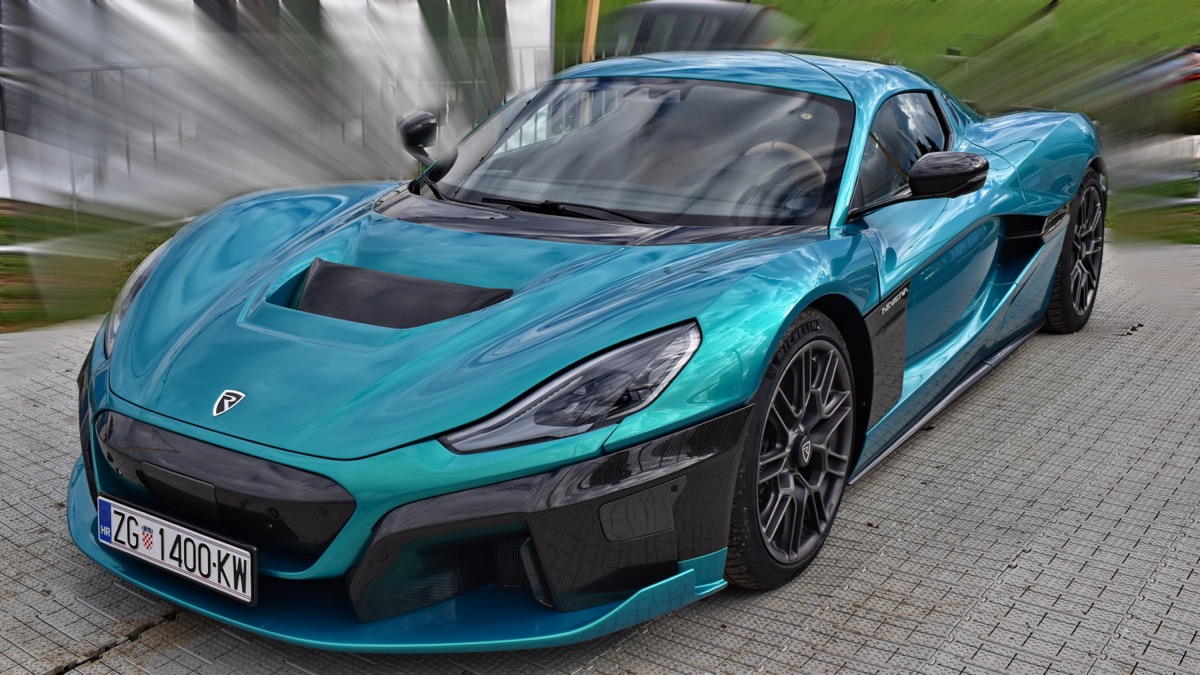
The Nevera has four independent electric motors — one per wheel. This is not unusual at the hypercar level. What is unusual is Rimac’s torque vectoring software, called All-Wheel Torque Vectoring+ (AWTV+), and the level of precision it achieves.
A mechanical AWD system — even a sophisticated one like Porsche’s PTM or the R34 GT-R’s ATTESA — transfers torque between axles and, to a lesser extent, between wheels on the same axle. The physics of mechanical differentials limit how granular the control can be.
With four independent electric motors, Rimac can apply any amount of torque to any individual wheel in under two milliseconds. The system runs 100 times per second and adjusts the torque split at each wheel independently based on steering angle, lateral G-force, throttle input, and surface grip data. In cornering, the outside rear motor can push while the inside front motor actively brakes — a capability no mechanical system can replicate at this speed and resolution.
The result: the Nevera sets consistent times. A Bugatti Chiron in human hands varies by 0.3–0.5 seconds run to run because the driver and the mechanical system are the variables. The Nevera’s AWTV+ removes those variables. Its lap times repeat.
In August 2023, the Nevera broke 23 production EV records at Goodwood, including 0-60 in 1.74 seconds on a surface with optimal grip. The record on street tyres under standard conditions remains 1.97 seconds.
The Honest Weight Problem
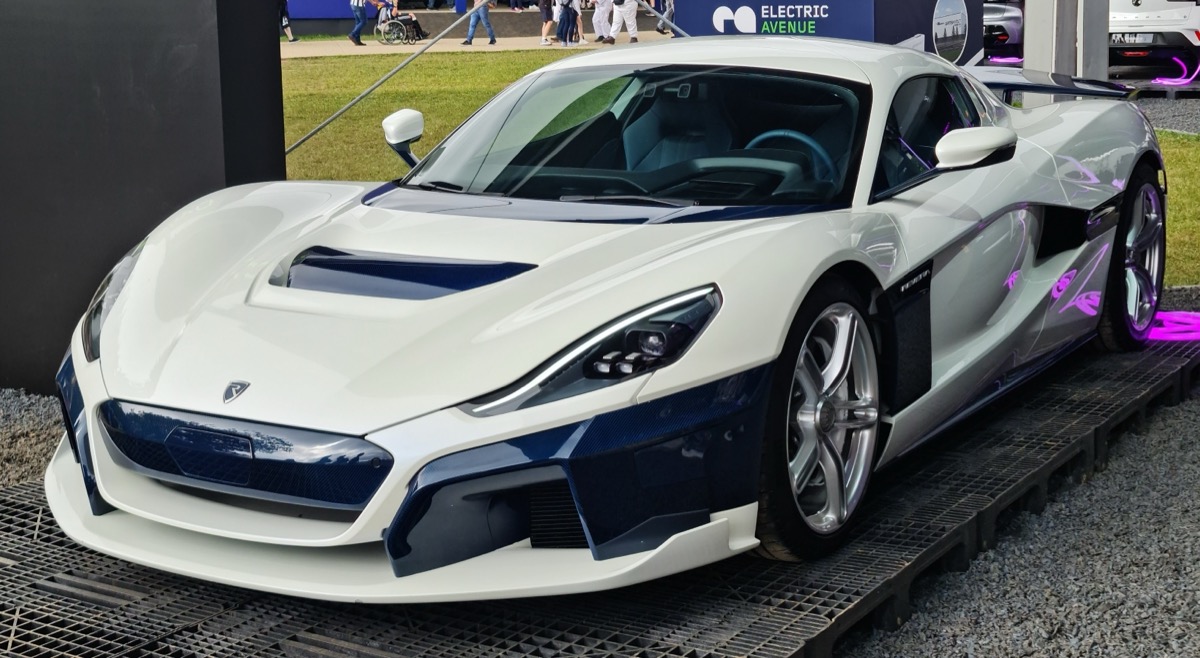
The Nevera weighs 2,150 kilograms.
That is heavier than a Bugatti Chiron. Heavier than a Rolls-Royce Ghost. Heavier than a BMW 7-series with the long wheelbase option. The battery pack alone — a 120kWh unit with 6,960 individual cylindrical cells — accounts for approximately 700kg of that total.
This is the honest problem with electric hypercars that the spec sheets don’t advertise.
The Nevera is faster than anything else in a straight line because 1,914hp applied to 2,150kg via perfect torque vectoring is a brute-force physics solution. On a racetrack with corners, that weight matters. The Nevera’s lateral G-force figures — around 1.35G peak — are good. They are not exceptional for a $2.4 million hypercar. A Porsche 911 GT3 RS, at 1,450kg, corners harder.
Rimac knows this. The Nevera’s pitch is not that it’s the best car on a circuit. The pitch is that it’s the most capable accelerating machine ever built for road use, and that its technology is the platform for everything electric hypercars will become.
How Rimac Ended Up Owning Bugatti
In 2021, Volkswagen Group made a decision that surprised everyone outside the companies involved. They transferred the Bugatti brand — and its IP, facilities, and development pipeline — into a joint venture with Rimac Automobili. The new entity, Bugatti Rimac, is 55% owned by Rimac and 45% by Porsche.
Mate Rimac, at 33 years old, became CEO of Bugatti Rimac. The 24-year-old who built a car in his parents’ garage now runs the company that makes the Chiron.
The logic was straightforward. Volkswagen had built the Veyron and Chiron as engineering statements — the W16 was their flagship technology, and its development cost has never been publicly disclosed but is estimated in the billions. They wanted Bugatti to continue, but they also wanted the next generation of Bugatti to be credibly electric. Rimac had the EV engineering. The deal made sense.
The Tourbillon — Bugatti’s next hypercar — uses a hybrid architecture with a Rimac-derived powertrain. The W16 is gone. What replaces it is, in part, what started in a garage in Zagreb in 2009.
The Question the Nevera Forces
If electric is faster, more consistent, and more precisely controllable than combustion, why does the combustion hypercar still feel more alive?
This is not a rhetorical question. It is an engineering and psychological reality that every person who has driven both a top-tier ICE hypercar and the Nevera has reported.
The Nevera’s acceleration is overwhelming. It is faster than anything else. But it lacks the communication loop — the intake note, the mechanical sensation of gears engaging, the vibration frequency that changes with engine load — that combustion cars provide. The driver receives the result without the process. It is, in a specific and hard-to-shake way, less interesting to experience even while being objectively more impressive.
This is probably not a permanent condition. Rimac has said he believes the next generation of electric hypercars will crack the engagement problem. The Nevera itself offers three sound modes, including a synthesised combustion soundtrack. That’s a solution, not a resolution.
The real answer is that driving engagement is partly mechanical and partly narrative. When you drive a Carrera GT or an Enzo, you are in dialogue with 100 years of internal combustion engineering. The stakes feel different. The Nevera is newer than that history, and the history it’s building is still being written.
In 2035, a Nevera will be a classic. The feeling will be different then.
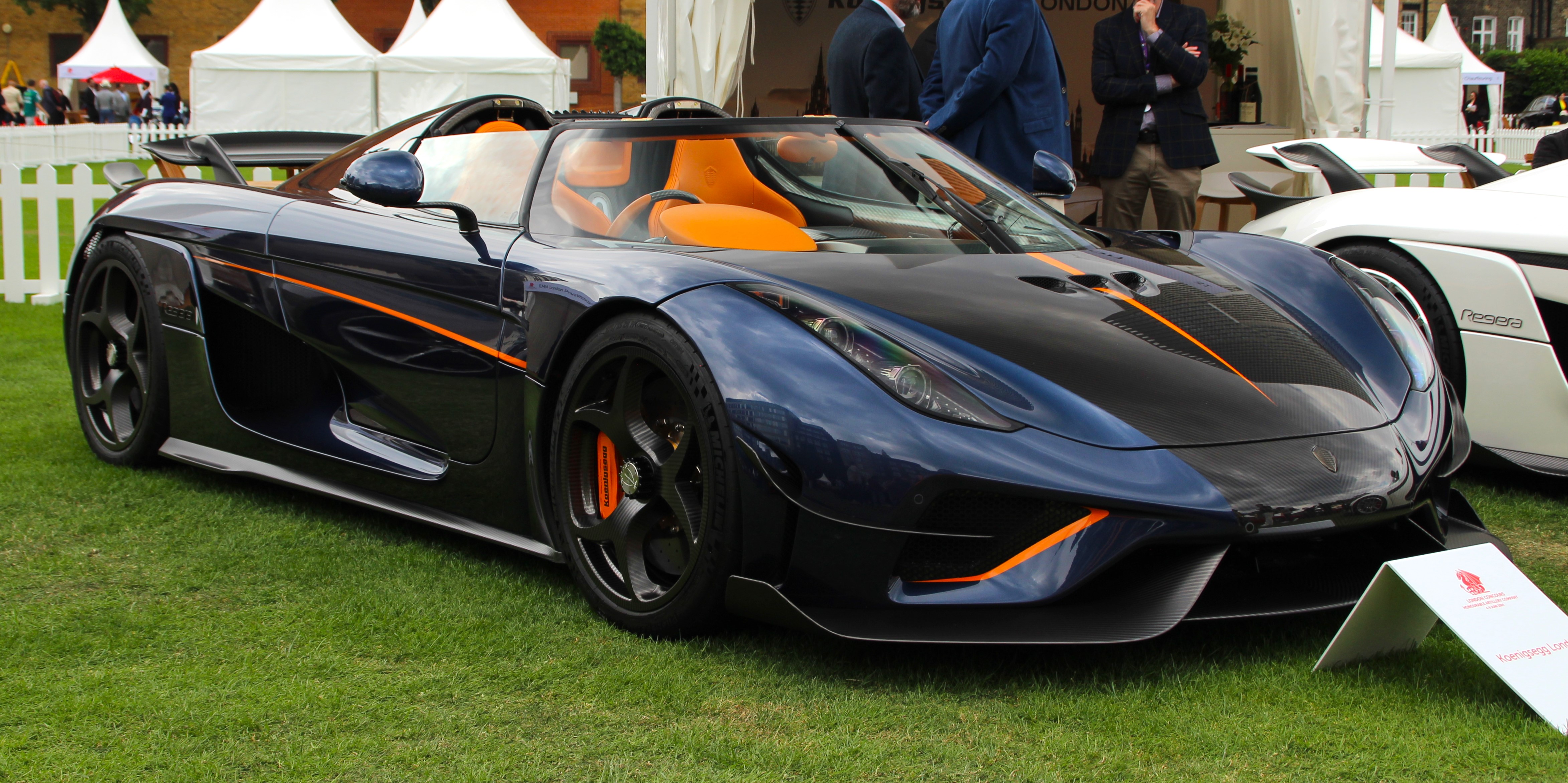
But right now, the combustion hypercar still feels more alive. The Koenigsegg Regera — also a hybrid hypercar built around an obsessive engineering bet, just with a twin-turbo V8 doing the talking instead of four electric motors — is the closest contemporary point of comparison, and it makes the engagement problem more visible by being more of its time. That’s the most interesting problem in the automotive world.
Share this
Keep Reading
The Koenigsegg Regera: Why This Is Still the Most Insane Car Ever Built
April 5, 2026
The Lotus Evija: 2,000 Horsepower. Four Motors. The Most British Car You've Never Heard Of.
April 15, 2026
The McLaren F1: The Last Car Gordon Murray Will Ever Need to Apologise For
April 5, 2026
Join the conversation
COMMENTS
Loading comments…
No comments yet. Be the first to weigh in.
Leave a comment
Posted
Thanks for joining the conversation.