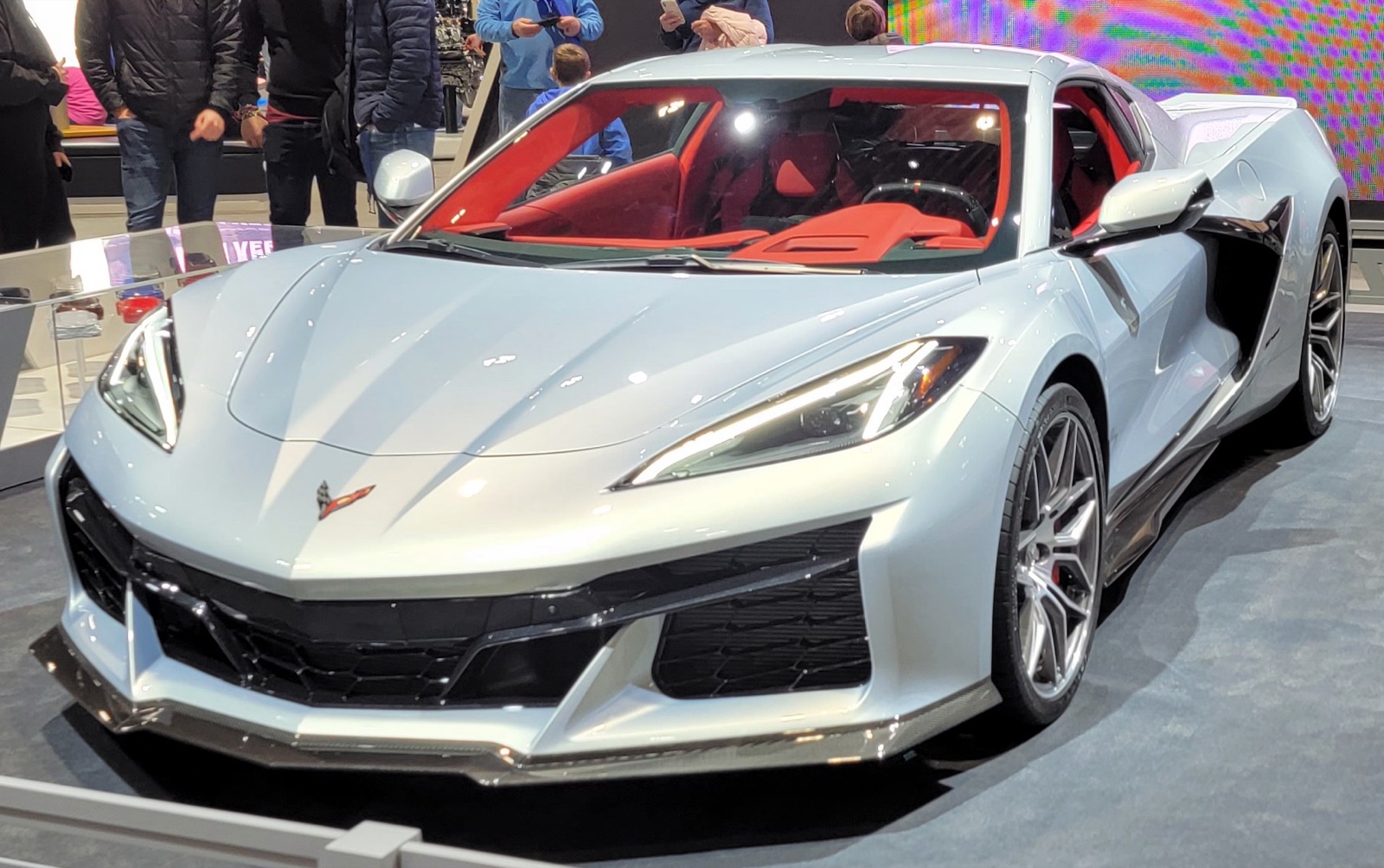
Corvette C8 Z06: The Mid-Engine American Finally Grows Up
The 2023 Chevrolet Corvette C8 Z06 makes 670 horsepower from a 5.5-litre naturally aspirated V8. It revs to 8,600 rpm. Flat-plane crankshaft. Mounted behind the driver. $115,000 to start.
Pick any one of those specs and it would pass without comment on a Ferrari 488 Pista or a McLaren 600LT. Put all of them on one car, at that price, from a company that had built front-engine pushrod V8 Corvettes for sixty-eight consecutive years, and you have the most consequential redesign in American supercar history.
This is the story of how General Motors finally answered a question its own engineers had been chewing on since the late 1980s: could the Corvette compete on European supercar terms without losing whatever made it a Corvette? In 2023 the answer came back yes. The engine they used to prove it deserves a chapter of its own.
The Sixty-Eight-Year Identity Problem
The Corvette has existed in some form since 1953, and across that entire span the defining engineering spec was front-engine, rear-wheel drive, pushrod V8. GM refined that architecture exhaustively. The LS-series small-block, introduced with the C5 in 1997, ranks among the most significant performance engineering advances in any American car program. The C6 ZR1 and C7 ZR1 produced 638 and 755 horsepower respectively from supercharged versions of the same basic idea. Fast cars. Also, unmistakably, Corvettes.
Which was the trouble. “Recognizably a Corvette” had turned into a ceiling instead of a foundation. By the late 2010s the front-engine layout was the thing capping what GM could engineer. Weight distribution couldn’t get more aggressive without wrecking daily usability. The aerodynamics couldn’t pull more downforce without making the car ugly. The supercharged V8 had run up against the practical limit of what pushrod architecture can do in a road car. Competing with what Ferrari and McLaren were shipping meant changing the architecture itself.
The decision was generational. Tadge Juechter, the Corvette’s chief engineer since 2006, pushed the mid-engine redesign through internal review processes that ate the better part of a decade. The program got approved late in the C7’s run, and serious engineering work began in 2014. The C8 launched in 2020, first as the Stingray, then as the Z06 for the 2022 model year, with cars landing in dealerships through 2023. Sixty-eight years of front-engine Corvettes ended there, and the platform that replaced it will define the next several decades.
The LT6 — The Engine That Justifies Everything
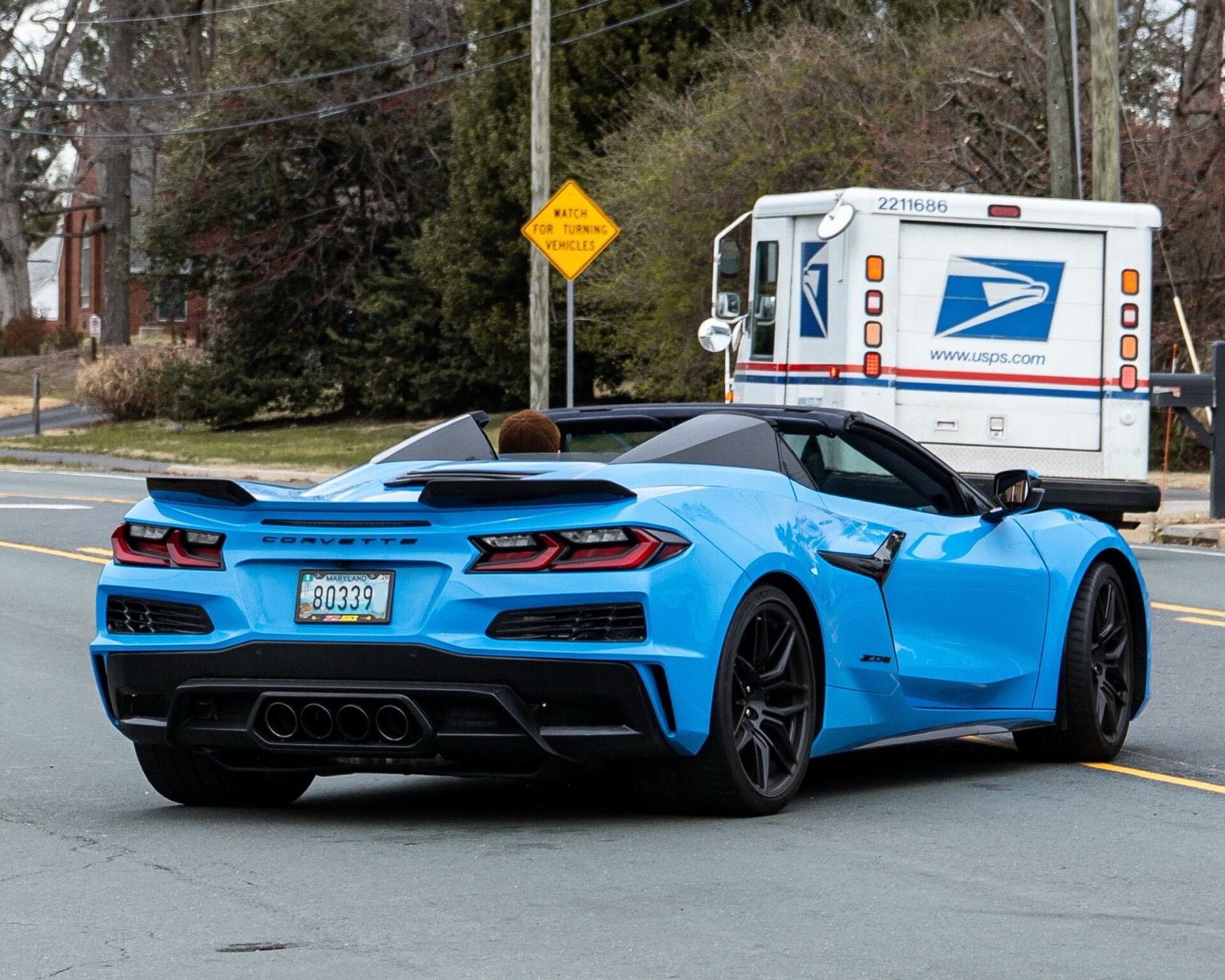
If you want the cleanest explanation of why this car matters to people who have never cared about Corvettes, it’s the engine.
The LT6 is a 5.5-litre dual-overhead-cam, 32-valve, flat-plane crankshaft V8. 670 horsepower at 8,400 rpm, 460 lb-ft at 6,300 rpm, 8,600 rpm redline. It is the most powerful naturally-aspirated production V8 in the world.
To see why that lands, look at what it replaced. The C7 Z06’s LT4 was a 6.2-litre supercharged pushrod V8 making 650 horsepower at 6,400 rpm, with the redline arriving at 6,500. Its torque curve behaved the way supercharged American V8s always have, enormous shove down low that flattened out as the revs climbed. An extraordinary engine. Also, architecturally, an old one.
The LT6 inverts it on nearly every axis. Naturally aspirated rather than supercharged. Dual overhead cams rather than pushrods. Flat-plane crank rather than cross-plane. 8,600 rpm where the LT4 quit at 6,500. The torque curve climbs steadily and peaks high, which is how European exotic engines deliver power and not how American muscle engines do.
That flat-plane crank is the architectural signature. Cross-plane cranks, the conventional American V8 layout, produce the muscle-car burble because the exhaust pulses come out unevenly. Flat-plane cranks fire the cylinders at evenly-spaced intervals instead, and the note goes high and metallic and screaming, Ferrari-like, because the underlying combustion physics is the same. The 488 GTB and the F8 Tributo use flat-plane cranks. So does the Aston Martin Vantage AMR. So do the McLaren MP4-12C and 570S. And now the Z06. American.
GM Powertrain developed the engine with input from the Cadillac CTS-V Le Mans racing program. The Cadillac people who had designed track-specific flat-plane V8s for endurance competition were pulled into the production engineering effort, so the LT6 you can buy for $115,000 is, in architecture, a detuned race engine. It’s hand-assembled at GM’s Performance Build Center in Bowling Green, Kentucky, one technician per engine, and that technician signs the plate.
The engine on its own would justify the C8 Z06. Everything else the car does sits on top of it.
The Mid-Engine Architecture
Moving the engine behind the driver was the C8 program’s biggest bet and the part that took the most institutional nerve.
A mid-engine car carries its mass differently. Polar moment of inertia drops, so the car rotates more readily. Weight transfer under braking and acceleration changes, which means different chassis tuning, suspension geometry, tire wear patterns. The driving experience is not a variation on the old one; it’s a different thing entirely. Owners coming out of front-engine cars often say the first hour is spent recalibrating what they expect the car to do underneath them.
The Z06 uses the Stingray’s mid-engine chassis, heavily reworked for track duty. Wider track, stiffer springs and dampers, bigger brakes, revised aerodynamics. Suspension is double wishbones front and rear, with magnetic ride control standard. Those magnetorheological dampers, refined across several generations of Cadillacs and Corvettes, remain some of the best adaptive damping hardware you can buy at any price.
Stiffness comes from aluminum extrusions, castings and stampings welded into a unibody, with substantial reinforcement over the Stingray’s structure. The Z06-specific chassis changes added roughly 100 pounds. Small in absolute terms. Not small at all when you’re fighting for every kilogram at this level.
Wheels are 20-inch front, 21-inch rear. Tires are Michelin Pilot Sport 4S as standard, Pilot Sport Cup 2 R with the Z07 package. Brakes are six-piston front and four-piston rear, steel rotors standard, Brembo carbon ceramics with Z07.
All of this is European supercar architecture built with American manufacturing precision. None of it is exotic by Ferrari standards. By American standards it’s class-leading.
The Z07 Performance Package
The Z06 on its own is already the most extreme Corvette ever built. Z07 pushes further.
The package adds carbon ceramic brakes (roughly 50 pounds of unsprung mass saved), Michelin Pilot Sport Cup 2 R tires, a more aggressive front splitter, dive planes on the front fenders, a fixed rear wing, and chassis settings retuned for circuit work. Cost runs roughly $8,000–10,000 depending on year and trim configuration.
The aero is what separates a Z07 car from a standard one. A standard Z06 generates about 365 pounds of downforce at 186 mph. The Z07-equipped car makes about 734 pounds at the same speed, better than double, with the splitter, dive planes and wing all pulling in concert.
You feel that difference where you’d expect to. Below 100 mph the two cars are much the same. Past 120 the Z07 starts hunkering into the road in a way the standard car doesn’t. At 150 and beyond, speeds you’ll only see on a circuit, the aerodynamic load compresses the suspension past its static state and the car goes planted and stable and predictable. The standard Z06 at that speed feels lively, nervous by comparison. Both readings are correct. One is a track car, the other is a road-and-track car, and most buyers who actually plan to run laps tick the Z07 box.
The carbon ceramics are the quiet hero of the package. Steel rotors start fading after roughly four to six laps of hard use. The ceramics hold their stopping power lap after lap and go through multiple track days without degrading. If the car is going to see real circuit time, the brakes alone pay for the option.
The Nürburgring Statement
In late 2023, Chevrolet released telemetry-verified Nordschleife data for a Z07-equipped C8 Z06.
The lap time was 7:13.9.
Numbers mean nothing without company, so here’s the company. The C7 ZR1, the previous most-extreme Corvette, with 755 supercharged horsepower, went round the same circuit in 7:18.1. The Z06 beat it with 85 fewer horsepower, no boost, and a chassis built around a layout GM had zero prior production experience with when the design was frozen.
Wider context: the Porsche 911 GT3 RS (current generation) runs the Nordschleife in approximately 6:49.3. The Lamborghini Huracán STO manages roughly 6:59. The McLaren 720S is around 7:15. So the Z06 trails the GT3 RS and the STO, cars that cost roughly $240,000 and $330,000, and beats the 720S, which started around $300,000 new.
Mid-pack among current track-focused supercars, then, and ahead of machines costing two to three times as much. Nobody is claiming this is the fastest car around the Nordschleife. What matters is that an American manufacturer, on its first mid-engine production program, with an engine hand-built in Kentucky, shipped something that runs with the Italians and the Germans at a third to a half of their money. The achievement is unambiguous.
What This Means in the American Supercar Story
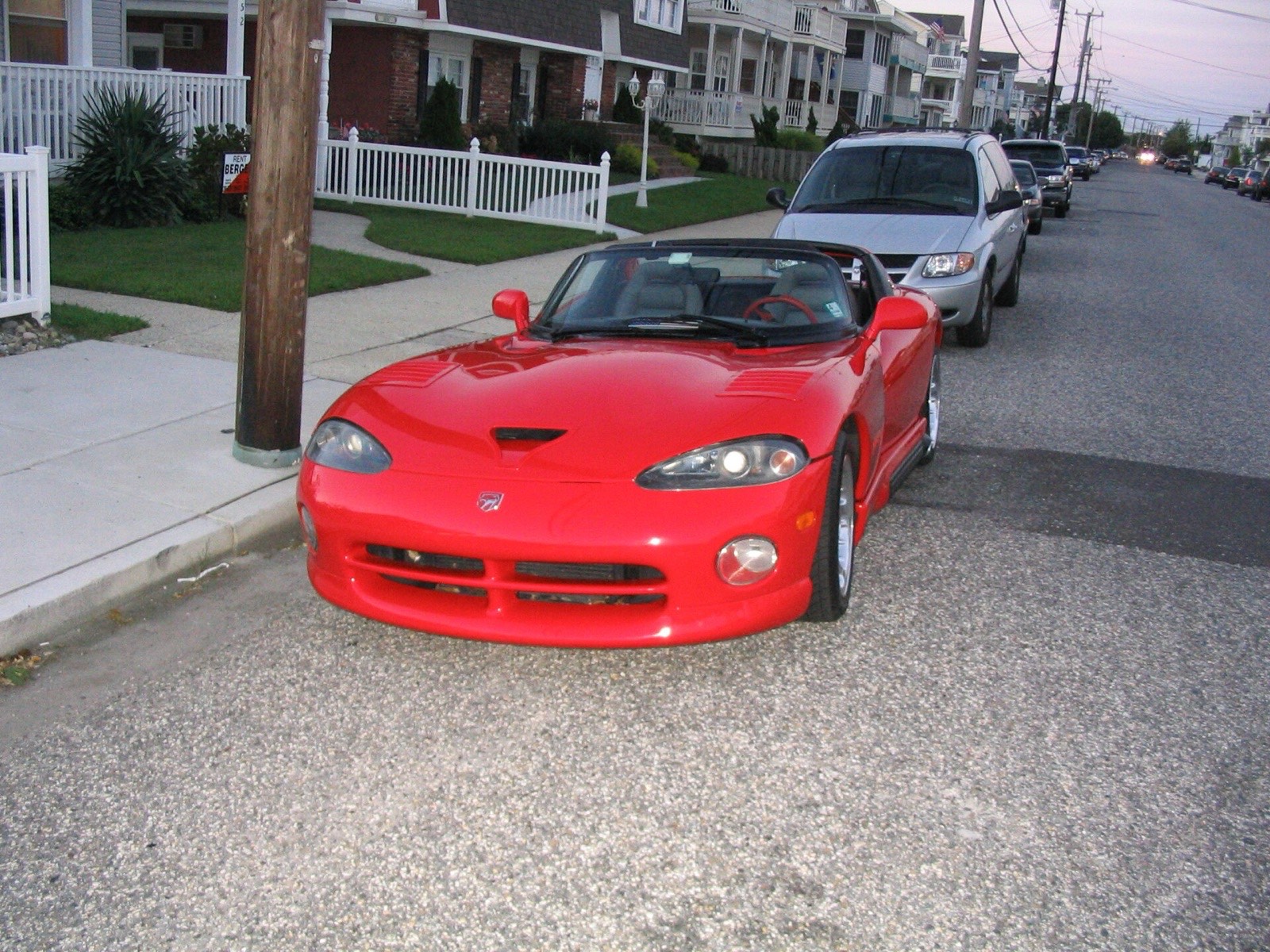
The C8 Z06 is the second time an American manufacturer has built a globally credible supercar. The Dodge Viper was the first, and the Z06 closes the chapter the Viper opened.
The Viper’s thesis was rejection: V10, manual, no driver aids, built in Detroit, European philosophy explicitly declined. It ran twenty-five years on that idea and died in 2017 because the regulatory environment stopped making room for it. The Viper exited on its own terms. It still exited.
The Z06 goes the other way and absorbs everything the Viper refused. Flat-plane V8, mid-engine, stability control, automatic transmission, modern aerodynamics, then American manufacturing scale and American value engineering applied until the European specification lands at half the European price. The car wants to be the Ferrari, made in Bowling Green, sold for $115,000.
Culturally that’s a big shift. The Viper spoke to a particular sort of American supercar buyer, the one who wanted nothing to do with European exotic ownership culture. The Z06’s audience is broader and wealthier and perfectly happy to compare directly against European product. People cross-shop it against the 911 GT3 and the Audi R8, occasionally against the Ferrari 488 and the Lamborghini Huracán. Nobody ever seriously cross-shopped a Viper against any of those.
That audience matters because it determines what GM can attempt next. The C8 ZR1, expected at 1,000+ horsepower via a hybrid system or a twin-turbocharged LT6, is the obvious step. Above it sits a C8 Zora, the rumored range-topper with electrified front axles for AWD performance. For the first time in Corvette history GM is planning a multi-tier supercar lineup, aimed squarely at the Huracán/Aventador hierarchy and the F8/SF90 hierarchy.
The Z06 is what makes that possible. Without this engine, this chassis and this price-to-performance ratio, GM would still be selling $70,000 V8 Corvettes that domestic buyers adore and international buyers ignore. The Corvette has crossed into a different conversation now, and once you’re in that conversation, getting out is harder than getting in was.
I’d call the C8 Z06 the most important American performance car program of the last twenty years. The Viper had the better story. The Z06 has the better future. Both of those can be true.
The 2026 Reality
The C8 Z06 is into its third model year and the allocation premiums have mostly evaporated. Used 2023 cars trade between $115,000 and $150,000 with reasonable miles. Z07-equipped examples ask an extra $10,000–15,000. The convertible is the rarer body and adds roughly $8,000–10,000 over an equivalently specified coupe.
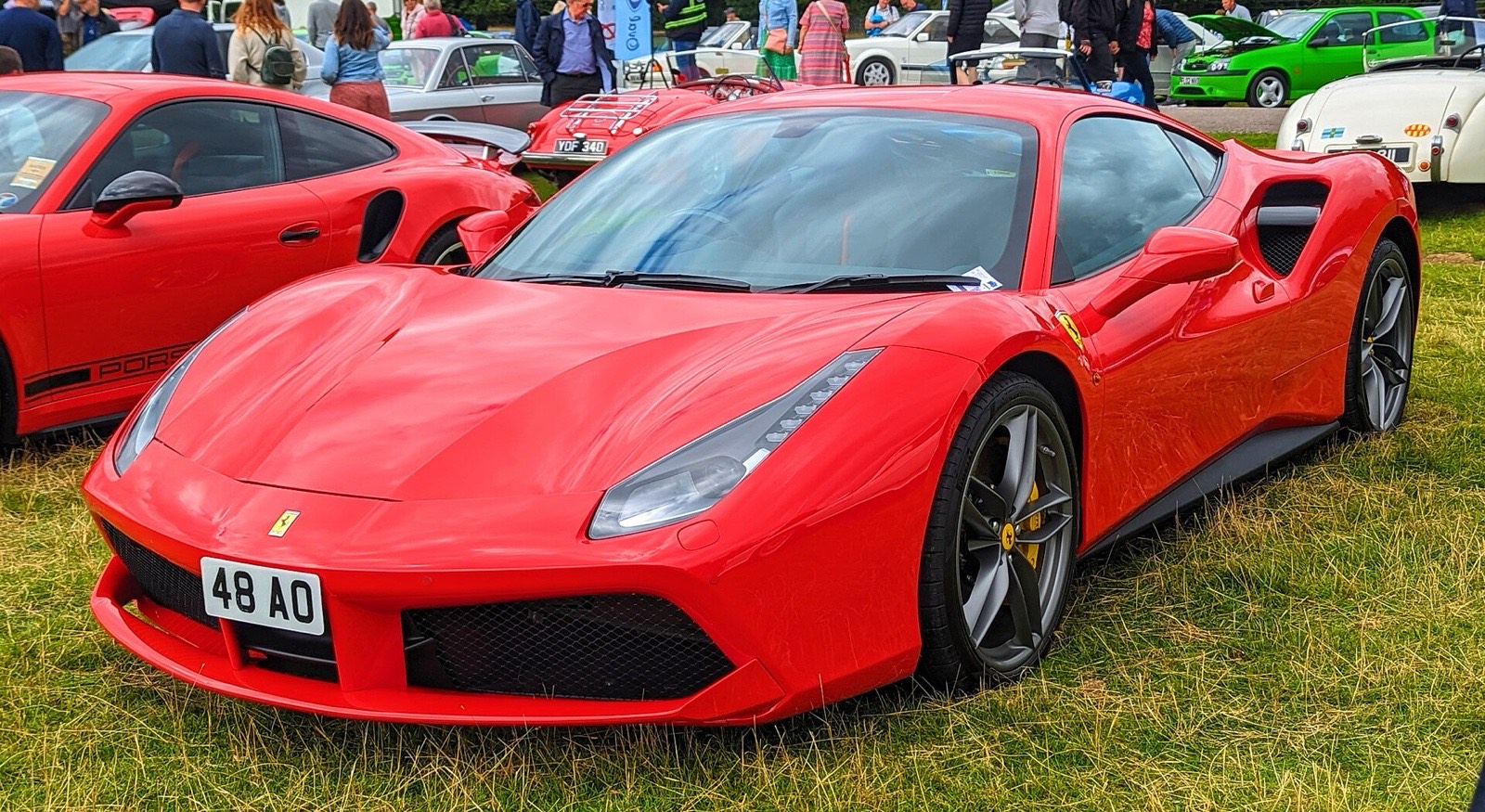
Service economics, as documented in our 5-year ownership comparison, are dramatically better than the European competition. Across five years, all-in Z06 ownership comes in roughly $100,000 below a Ferrari 488 GTB and $80,000 below a Lamborghini Huracán. American manufacturing scale and the GM dealer network cut the variable costs in ways European exotic ownership simply can’t.
The Z06 will be remembered as the car that proved American performance engineering had caught up, to its own historical highs and to the European machinery that has defined the supercar conversation for sixty years. The Viper proved an American manufacturer could win at Le Mans. The Z06 is proving an American manufacturer can build a daily-livable supercar that looks its European rivals in the eye and mentions, quietly, that it costs half as much.
Different argument from the Viper’s. Harder to wave away, too.
Photo credits: Wikimedia Commons, CC BY-SA — Chevrolet Corvette C8 (2023) production cars and LT6 engine documentation.
Share this

Join the conversation
COMMENTS
Loading comments…
No comments yet. Be the first to weigh in.
Leave a comment
Posted
Thanks for joining the conversation.