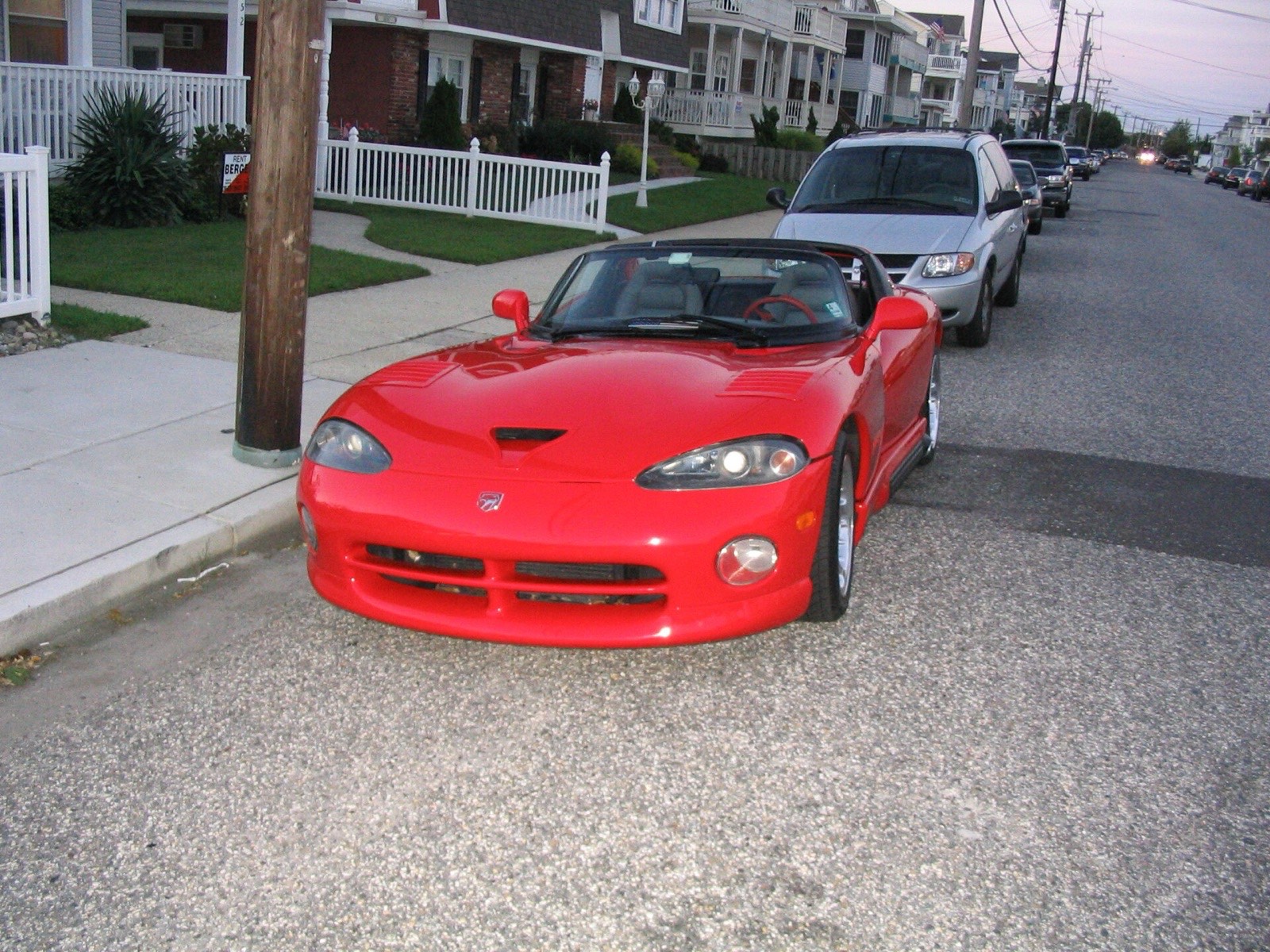
Dodge Viper: All Five Generations, One Unhinged Philosophy
The Dodge Viper is the only American supercar built on the assumption that the driver was the safety system.
For its first sixteen years of production, the Viper had no traction control, no stability control, no antilock brakes for most of its run, and a manual transmission as the only option. The engine was an 8.0-litre V10 derived from a Dodge truck. Steel chassis, while the competition used aluminum or carbon. Composite body, while the others used carbon fibre. And the first generation had no roof at all. Not a folding roof, not a removable hardtop, not a soft top. Gone. If it rained, you drove through it.
The car ran for twenty-five years across five generations and ended in 2017 with an ACR variant that held the Nürburgring lap record for production cars in its class. Through all of it, the body redesigns, the platform refinements, the inevitable surrender to electronic stability control in 2008, the philosophy never moved. V10. Manual. Make peace with it.
This is the story of all five generations, in order.
Generation I — RT/10 (1992–1995)
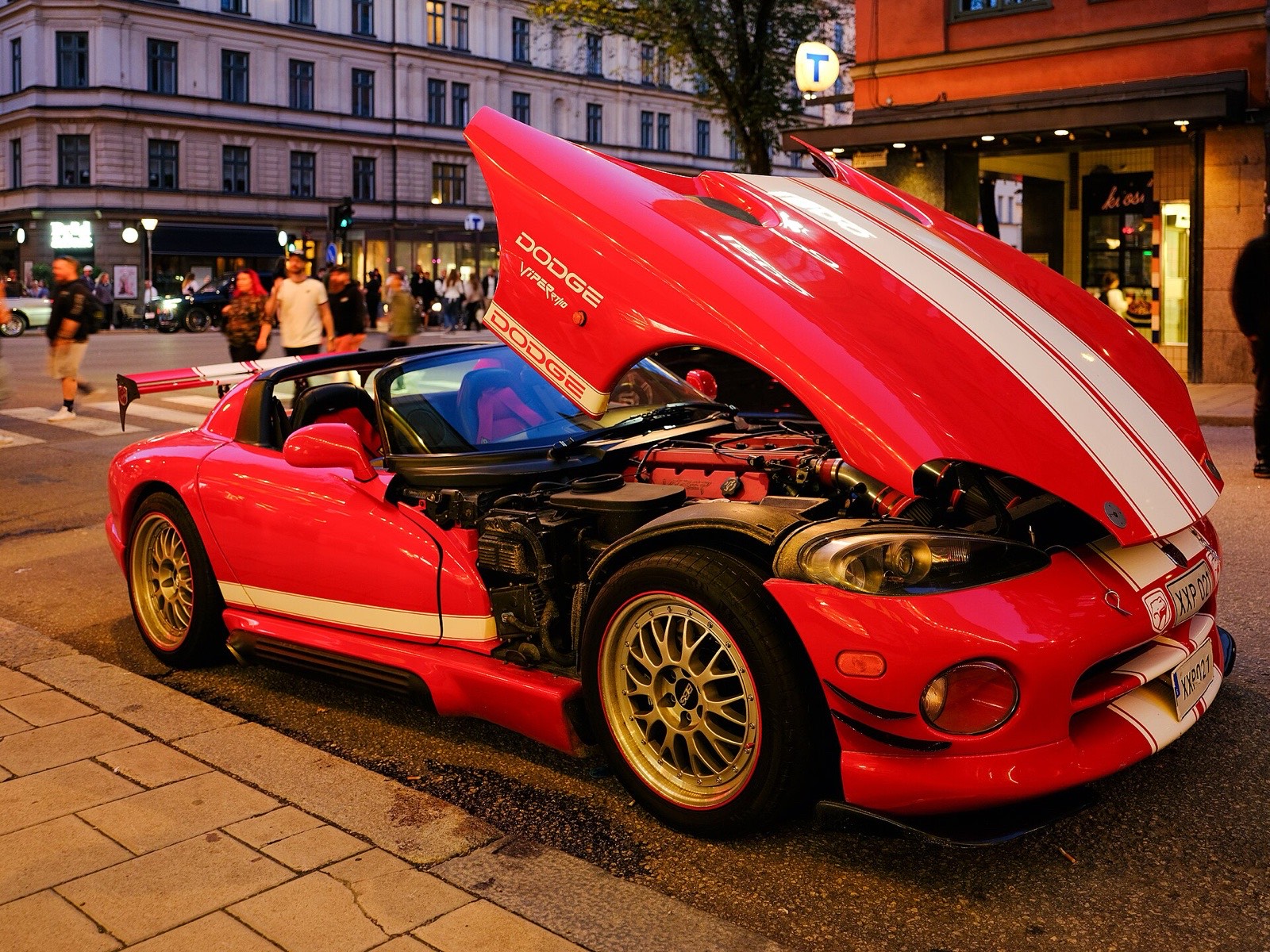
The Viper concept turned up at the 1989 Detroit Auto Show, essentially a test of whether Dodge could build something that scared people. The reaction was strong enough that Chrysler approved the production program, with Bob Lutz personally pushing it through corporate review. Lee Iacocca was the CEO. The car had no business being approved. It got approved anyway.
The production RT/10 launched in 1992. Under the hood sat an 8.0-litre V10 (yes, eight litres, ten cylinders) derived from the cast-iron Dodge truck V10 that Chrysler used in its Ram pickups. Turning a truck engine into a sports car engine fell to Lamborghini, which Chrysler owned at the time. The Lamborghini engineers redesigned the block in aluminum and cut the casting weight roughly in half while preserving the engine’s bore spacing and architecture. Out came 400 horsepower and 465 lb-ft of torque, which in 1992 made the Viper the most powerful American production car since the muscle car era.
The chassis was a tubular steel space frame, the body composite plastic, the transmission a six-speed Borg-Warner manual with no automatic option offered at any point in the Gen I run. Early cars had no roof. The side curtains were vinyl flaps that snapped to the door tops with rubber retainers. No exterior door handles either. The exhaust exited through the side sills, which got hot enough that early owners reported burns from leg contact climbing in and out.
The car had no antilock brakes, no traction control, no stability control. The Goodyear Eagle GS-C tires were extreme-performance compounds at a time when most exotics still rode on touring rubber. With 465 lb-ft available below 3,500 rpm and nothing electronic standing between the right pedal and the rear axle, serious owners understood the RT/10 to require both hands and complete attention every time that pedal moved.
Production from 1992–1995 totaled approximately 7,300 units. The mythology arrived instantly. So did the reputation for being dangerous in untrained hands, in the most literal sense, and the Viper community took that as the entire point.
Generation II — GTS Coupe and Le Mans Dominance (1996–2002)
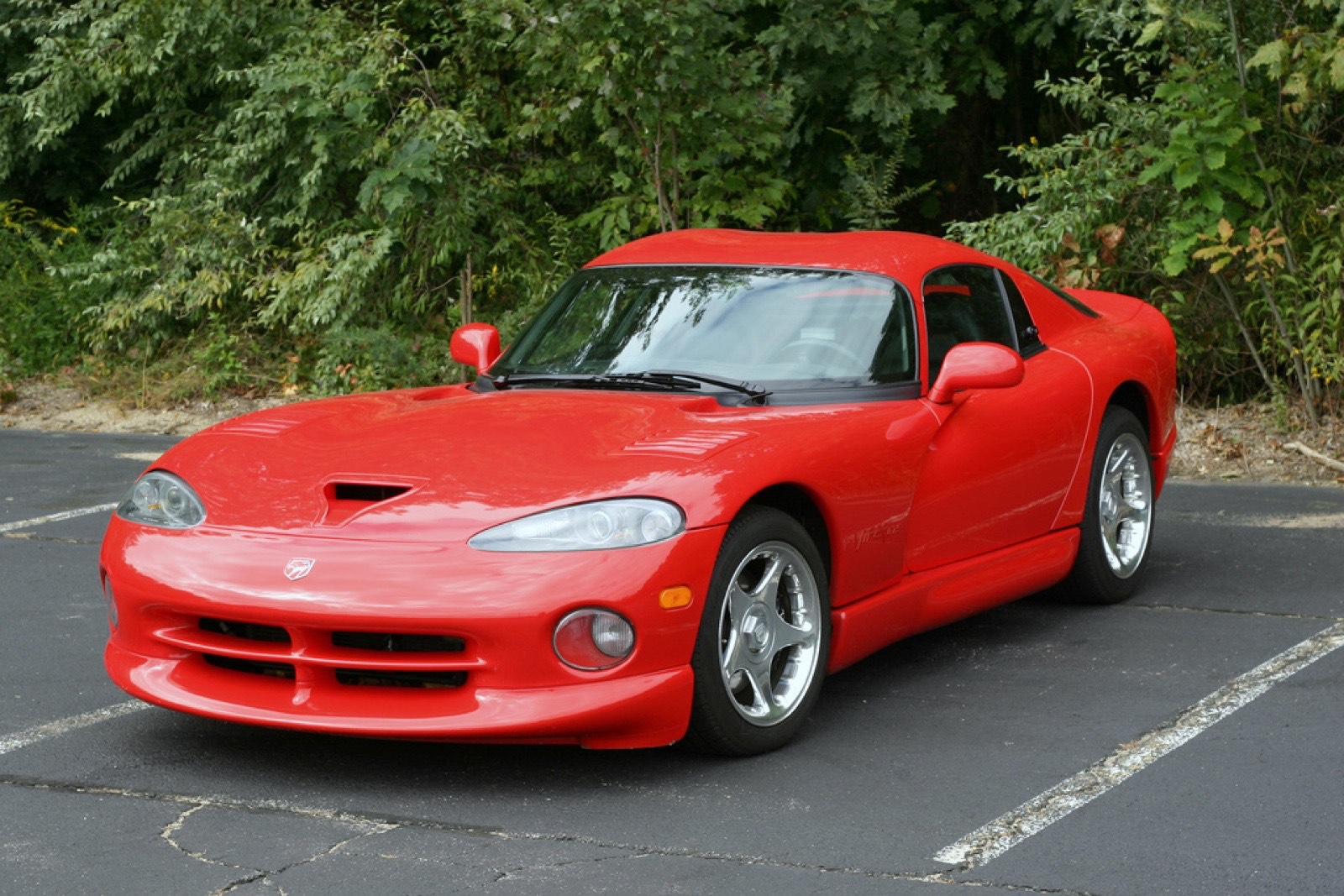
The Gen II Viper arrived in 1996 as the GTS Coupe, with a roof at last. Engineering targets included cutting weight (the GTS came in 60 pounds lighter than the RT/10 despite adding the hardtop structure) and refining the chassis. Power went up to 450 horsepower. The interior picked up creature comforts that Gen I had deliberately gone without: air conditioning, real door handles, glass windows that rolled down. By Viper standards, the GTS was civilized.
By every other standard it was still a missile. The 0–60 time of 3.9 seconds put it ahead of the contemporary Ferrari and Porsche flagships, and the 192 mph top speed was real. Still no traction control, still no stability control, still a manual gearbox as the only option. ABS arrived as standard equipment for the first time partway through the Gen II run.
The story that defines Gen II, though, happened at racetracks.
In 1997, Chrysler entered a privateer-developed Viper GTS-R in the Le Mans 24 Hours in the GT2 class. The car finished the race. The following year, Viper GTS-Rs took 1st, 2nd, and 3rd in their class at Le Mans. The year after that, they did it again. And again in 2000.
Four consecutive Le Mans GT2 class wins, 1997 through 2000. Plus the Daytona 24 Hours overall win in 2000. Plus the Nürburgring 24 Hours overall win in 2002. The Viper GTS-R became, in the most literal sense, the most successful American sports car in international endurance racing since the Ford GT40, and it managed it in the same era the Ferrari F40 was rewriting what a road-legal supercar should be, with similar disregard for driver comfort.
The Le Mans program ended in 2000. The road car carried on. By the time the Gen II run wrapped in 2002, the Viper had legitimized itself as a serious global supercar. The road car had improved, marginally. What settled the argument was a racing program proving that a platform whose engine started life in a Dodge truck could win at the highest level of GT competition.
Generation III — SRT-10 (2003–2007)
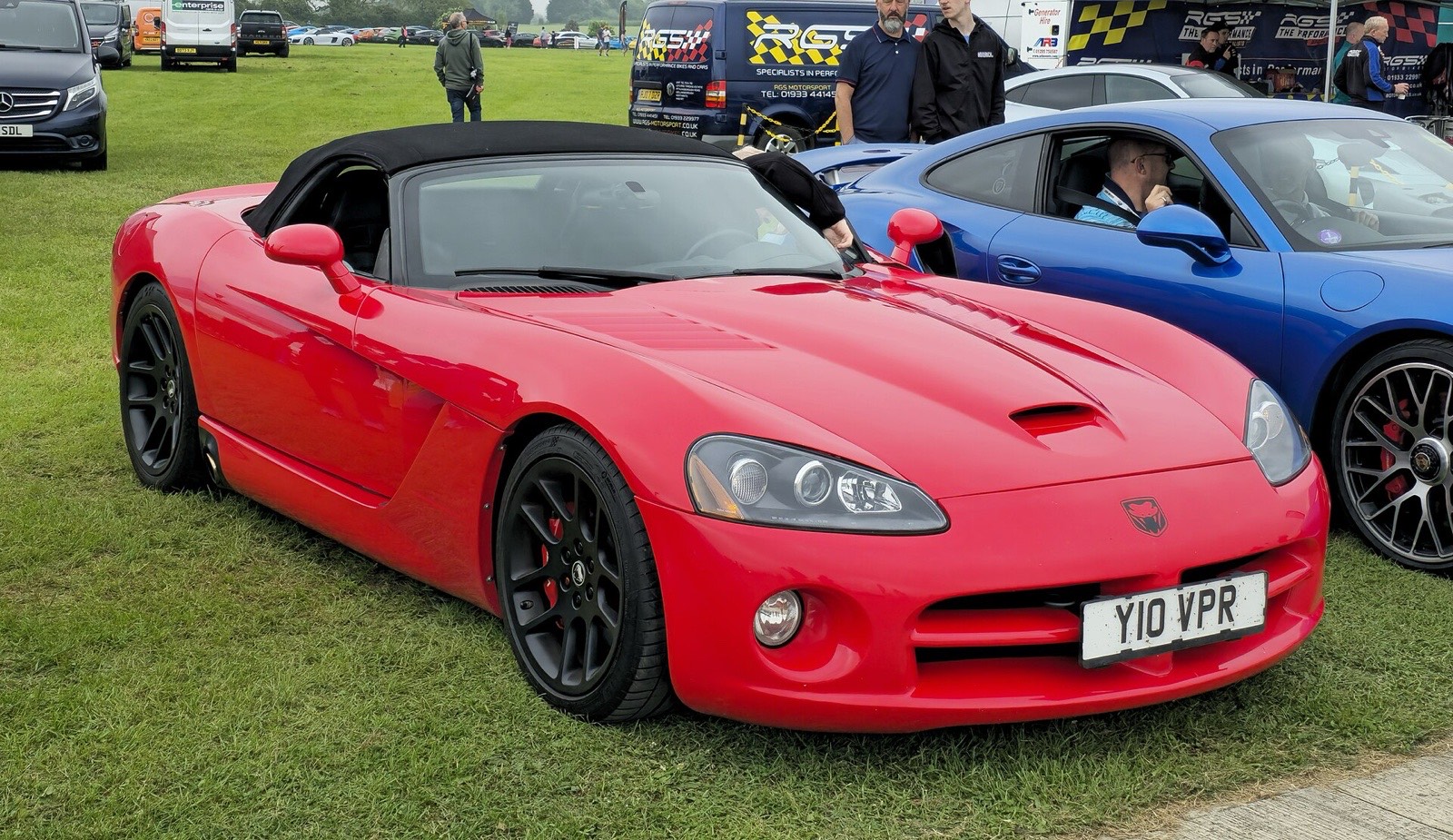
The 2003 redesign was the most thorough in the model’s history. New body, new chassis, more displacement at 8.3 litres, 500 horsepower, and a new internal designation: Street and Racing Technology, or SRT-10, the Chrysler performance division’s branding initiative.
The Gen III Viper was the first to address what owners had been politely complaining about for a decade. The cabin cooked. The ergonomics fought you. The side-exit exhaust was a hazard, and the steering was heavy enough that low-speed maneuvers counted as genuine work. The SRT-10 fixed most of that. The exhaust moved to the rear. The cabin was redesigned for actual ergonomics. The steering rack was retuned. Again by Viper standards, the car became more pleasant to drive every day.
Critically, the Gen III Viper still had no traction control. No stability control. Manual transmission only, six speeds. The driver remained the safety system.
The defining Gen III variant was the ACR — American Club Racer, introduced in 2008 as the final-year edition of the third generation. Stiffer springs, manually-adjustable Bilstein dampers, an adjustable rear wing producing real downforce, lighter wheels on track-focused tires. It set a Nürburgring lap time of 7:22.1, the fastest American production car around the Nordschleife at the time. It cost $98,800 new. Fewer than 200 were built.
Gen III production ran 2003–2007, roughly 7,000 units total. The platform had matured, the racing heritage was banked, and the Viper stood as a global supercar competing credibly with European and Japanese exotics costing twice as much.
Generation IV — The Compromise (2008–2010)
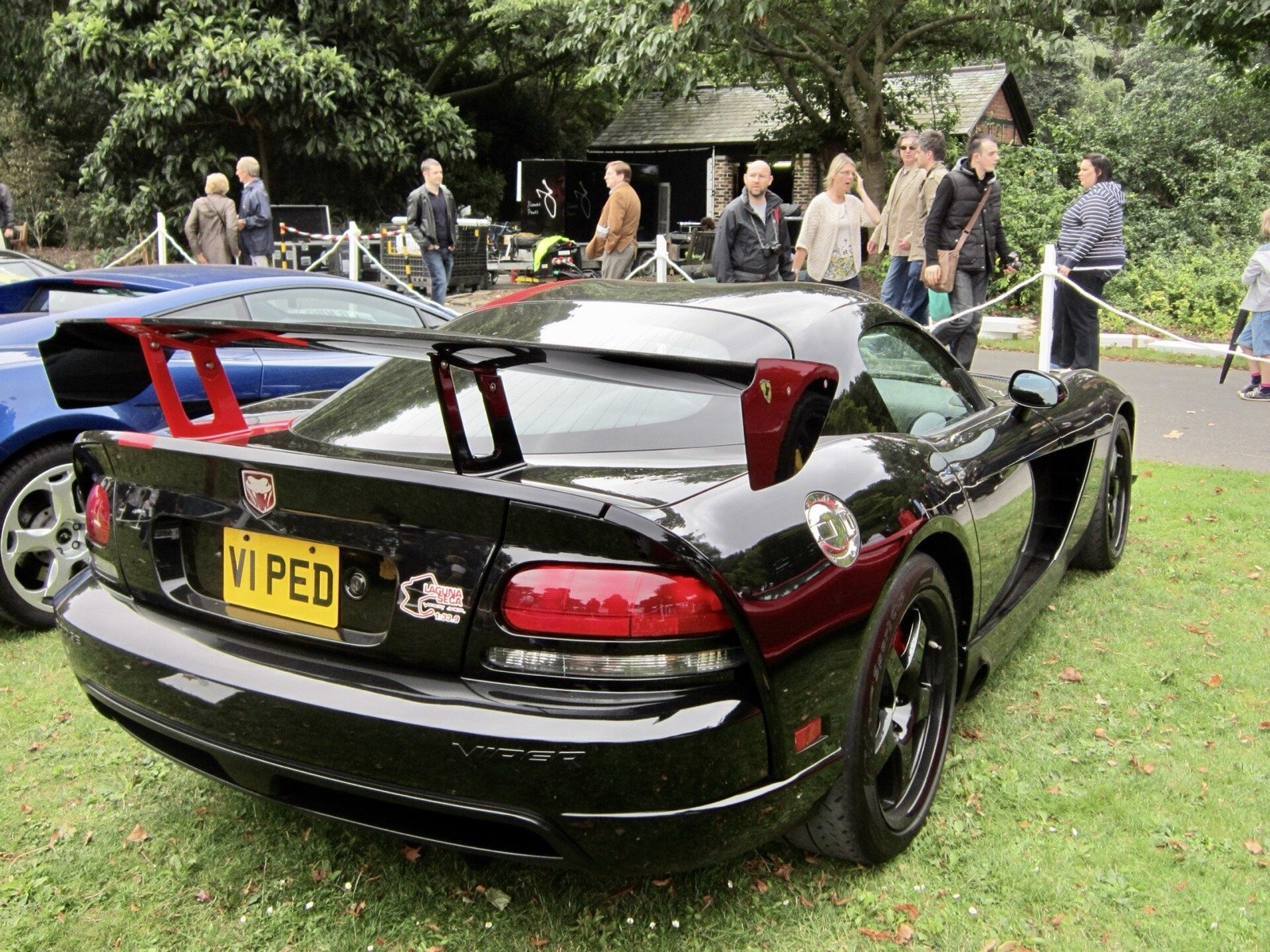
The 2008 model year refresh is where Chrysler blinked.
The Gen IV Viper got more power, 600 horsepower from a stroked 8.4-litre V10, and a six-speed Tremec manual that finally felt like a serious piece of equipment rather than a truck transmission. Retuned chassis. Upgraded brakes. Carbon ceramic rotors on the options list. By every conventional measurement the car was faster and more capable than any Viper before it.
It also got electronic stability control as standard equipment.
This was the first Viper that could be driven aggressively without the driver being entirely on the hook for the consequences. Chrysler tuned the system conservatively by its own standards, and the electronics intervened later than they did on a Corvette, but intervene they did. Wheel slip got managed. Yaw got corrected. For the first time in sixteen years of Viper production, the driver was not the only safety system.
Some owners welcomed this. Most did not. The Viper community had built its identity around the absence of electronic intervention, and long-time owners read the Gen IV as a philosophical retreat regardless of its objective superiority on track and on paper. The car had moved closer to its competitors while the competitors stayed put.
The Gen IV run was short, 2008 to 2010, and it ended when Chrysler entered bankruptcy reorganization in 2009. Production was suspended. Approximately 3,000 Gen IV cars were built across the three model years, and the model line went dark for two years while Fiat completed its acquisition of Chrysler and sorted out which programs would survive.
The Viper was almost killed in this period. It survived because a small group of executives believed the car had to come back, and that it had to come back as a Viper, not as a sanitized version of one.
Generation V — The Apex (2013–2017)
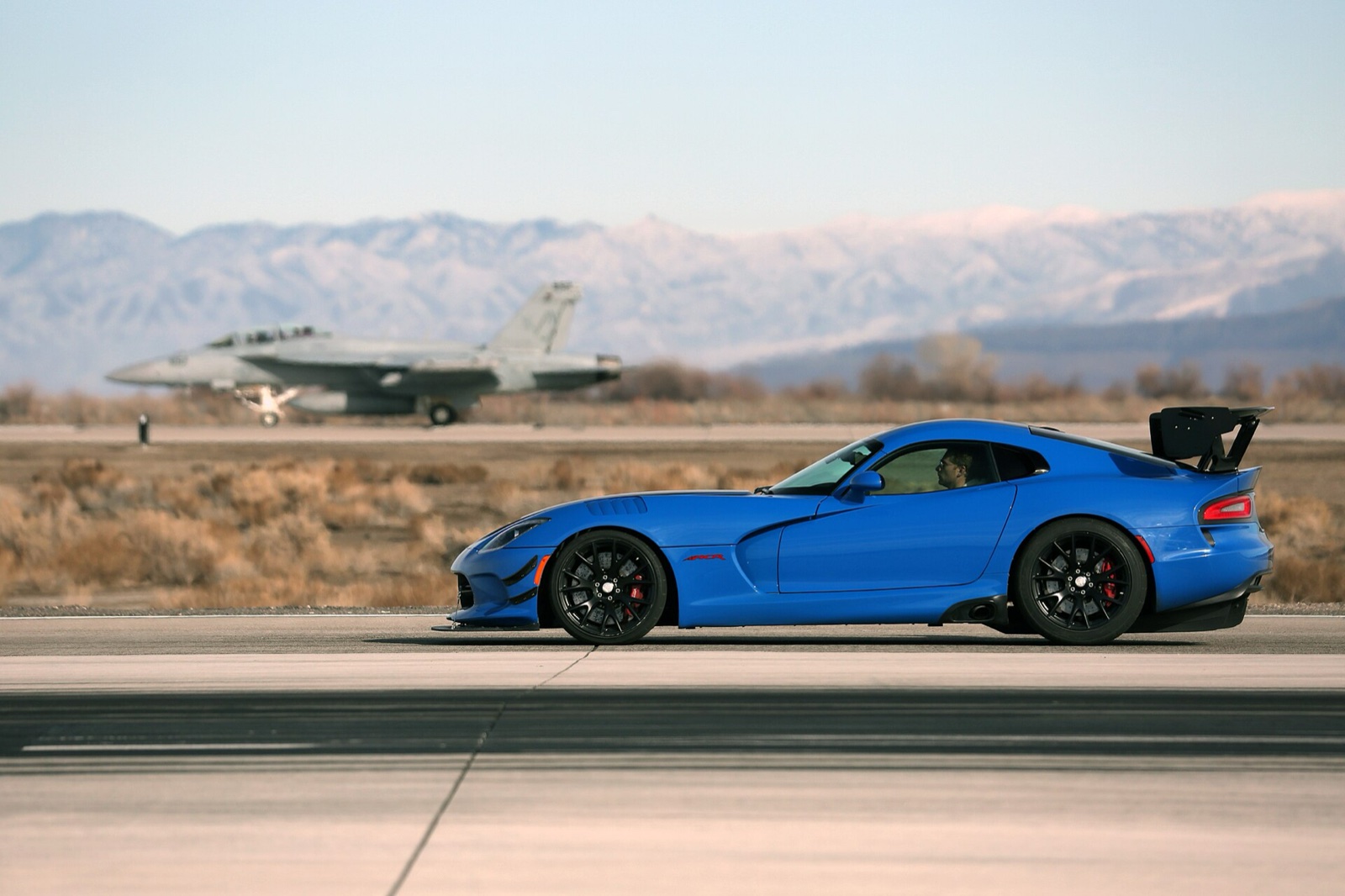
The Gen V Viper launched in 2013 as a clean-sheet redesign. New chassis, new body. The 8.4-litre V10 carried over with significant revisions, output rising to 645 horsepower, eventually 645 across most trims. The interior was genuinely modern for the first time: leather, electronics, infotainment, navigation. Stability control remained standard. ABS was standard. The driver aids were tuned more permissively than on the Gen IV, but nobody could pretend they weren’t there.
What made the Gen V definitive was the ACR variant, introduced in 2016 in two configurations, the standard ACR and the ACR Extreme, the latter adding a more aggressive aero package, stiffer dampers and a full track-focused setup aimed squarely at the Porsche 911 GT3 RS and the McLaren 675LT.
In 2017, on a closed Nürburgring Nordschleife, an ACR Extreme set a production-car lap time of 7:01.3, at the time the fastest production-car lap of the Nordschleife. Pump gas. Production-spec tires. No modifications outside the ACR Extreme package available to any buyer, all of it confirmed.
A Lamborghini Aventador SVJ beat that time the following year. The point had already landed. A Detroit-engineered American supercar, its iron-block V10 descended from a truck engine, had been briefly and definitively the fastest production car around the most demanding circuit in the world.
The Gen V production ended in 2017. The 2015 model year had quietly been the SRT badge’s final year as a Viper variant, since Chrysler reorganized SRT under the Dodge umbrella and the car simply became “Dodge Viper” again for its final two model years. Total Gen V production was approximately 3,400 units, and 2015 specifically had the lowest production volume of any Viper year: fewer than 700 cars built before the platform’s wind-down accelerated.
The final 2017 cars were sold within hours of arriving at dealerships. Demand exceeded supply by a wide margin in the model’s final year. Chrysler chose not to extend production.
What the Viper Proved
The Viper is the most complete refutation of the argument that American engineering can’t compete with European and Japanese supercar engineering at the highest level.
Every metric that mattered, the Viper achieved. Le Mans class wins, four years running. The Daytona 24 overall. Nürburgring records. Production-car credibility validated by every motoring publication that drove the cars without being predisposed to like them. At multiple points in the production run the cars were simply quicker than their European and Japanese rivals, and when they weren’t quicker, they held their own.
What the Viper lacked was the cultural infrastructure of European supercar ownership: the heritage, the concours circuit, the auction premium, the dealer network. That’s a marketing problem rather than an engineering one. The Gen V ACR Extreme set the Nürburgring production-car record on the same V10 architecture that had powered the original 1992 RT/10. The engineering proposition was sound at every step.
The Viper was discontinued in 2017 because the regulatory environment for naturally-aspirated, manual-transmission supercars without driver aids was becoming untenable. Federal stability-control mandates, federal side-impact requirements, federal emissions standards, all of it caught up to a car that had been engineered around the assumption that the driver was sovereign. Chrysler’s choice was to compromise the philosophy or end the car. They ended the car.
Fewer than 32,000 Vipers were built across the entire 25-year production run, all five generations combined. That total is small enough to put the platform in collector territory, with appreciating used values, growing scarcity and an increasingly serious presence at the major auctions. Gen V cars in collector condition trade between $90,000 and $200,000 in 2026 used market. ACR variants trade higher, and ACR Extremes have crossed $300,000 at auction.
The Viper proved that an American manufacturer could build a globally credible supercar by rejecting European philosophy outright rather than imitating it. Twenty-five years on that one thesis. When the regulatory reality made the thesis untenable, the car ended on its own terms, which is a cleaner exit than most automotive lineages get. Most of them end in compromise.
The Cobra started a tradition the Viper continued. The Viper finished one that the C8 Z06 has had to invent its own way to carry on, with hybrid technology and electronic intervention built in from the first sketch. Different car, different question. Both are valid. Only one of those lineages refused to compromise from start to finish.
If you’re weighing the Viper’s used-market economics against contemporary supercars, our 5-year cost-of-ownership comparison puts the Z06 alongside the Ferrari 488 and Lamborghini Huracán with real numbers attached.
Photo credits: Wikimedia Commons, CC BY-SA — Dodge Viper RT/10 (1992), GTS Coupe, SRT-10 Gen III (2003), SRT-10 Gen IV (2008), and ACR (Gen V).
Share this
Join the conversation
COMMENTS
Loading comments…
No comments yet. Be the first to weigh in.
Leave a comment
Posted
Thanks for joining the conversation.