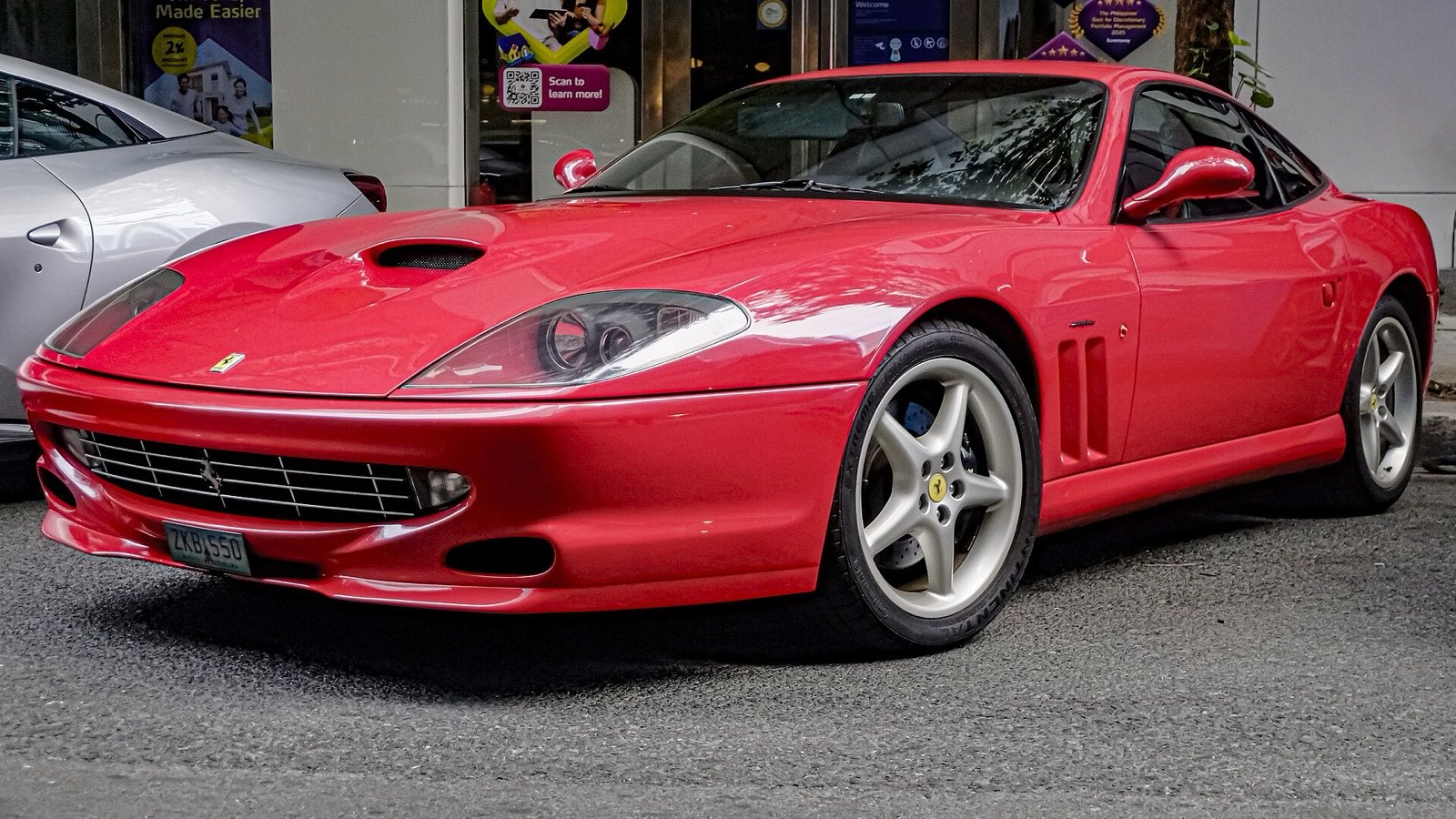
Ferrari 550 Maranello Buyer's Guide 2026: The V12 Touring Chose
Carrozzeria Touring Superleggera has been building bodies in Milan since 1926, and when a house with that history picks one Ferrari to rebuild from the skin in, the choice tells you something. Not the fastest V12 in the catalogue. Not the rarest. It went with the 550 Maranello, a front-engined, six-speed-manual grand tourer from the late 1990s, and turned it into a €690,000 carbon-bodied thing called the Veloce12.
That says plenty about what the 550 is. It says as much about where the market thinks the 550 is going. In 2026, clean coupes change hands between $200,000 and $300,000, the best-documented cars are clearing half a million dollars at auction, and Hagerty’s valuation guide shows every condition tier up double digits over twelve months.
So: what the 550 is, what the Veloce12 means for it, what to inspect, what to pay, and what it costs to keep one alive.
Why the 550 Maranello Matters
For more than two decades before 1996, Ferrari’s flagship carried its engine behind the driver. Berlinetta Boxer, Testarossa, 512 TR, F512 M. Mid-engined, flat-12, wide as a garage door. The 550 Maranello turned the tables, putting a V12 back in the nose and driving the rear wheels through a transaxle, a layout Hagerty notes Ferrari hadn’t used on a two-seat flagship since the 365 GTB/4 Daytona roughly 25 years earlier.
Ferrari’s own history of the car frames it as the company’s answer to anyone who believed a front-engined V12 couldn’t beat a mid-engined sports car. The press met it at the Nürburgring in July 1996, with Michael Schumacher and Eddie Irvine on hand. In October 1998, a 550 set production-car speed records at Marysville, Ohio, covering 100 km at an average of 304.1 km/h.
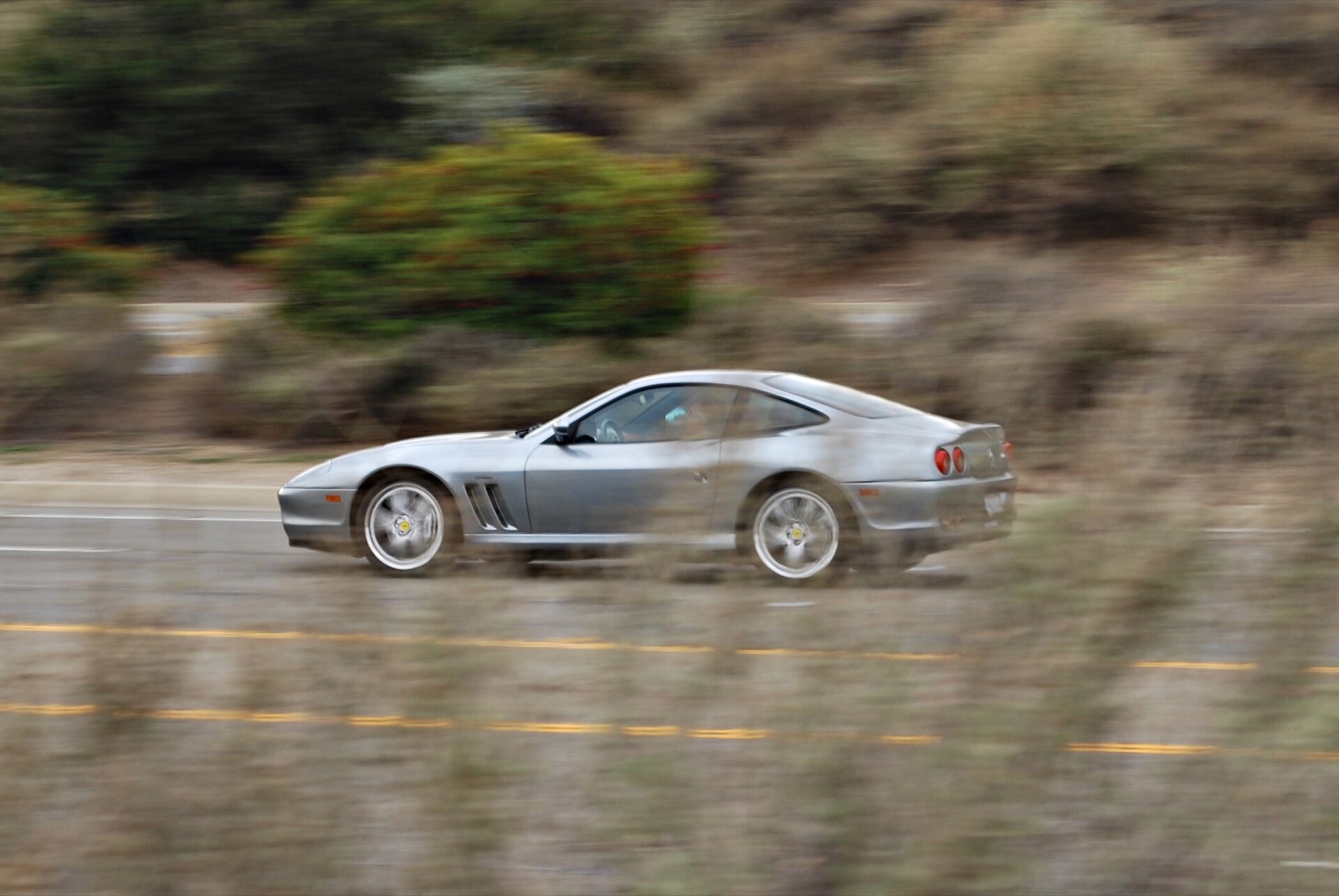
In 2026, though, the records are trivia. What sells the car is the gearbox. Every one of the 3,083 coupes Ferrari built left the factory with a six-speed gated manual. There was no paddle-shift 550. When the 575M Maranello replaced it in 2002, it brought the optional “F1” automated manual, for the first time on a Ferrari V12, and the market went straight to the paddles and never really came back. That leaves the 550 as the last V12 Ferrari sold exclusively with three pedals and a metal gate. That single fact explains most of the modern demand, and all of Touring’s interest.
The Veloce12: What Touring Built, and What It Signals
Carrozzeria Touring Superleggera unveiled the Veloce12 at The Quail during Monterey Car Week on August 18, 2024. Underneath the carbon fiber it is a 550 Maranello, with a reworked 5.5-liter V12 making 503 horsepower and 419 lb-ft, 25 horsepower more than stock, a gain Hagerty attributes to a revised exhaust. There’s also a carbon intake, upgraded cooling, a reinforced chassis, TracTive adaptive dampers and bigger brakes. The gated six-speed manual stays.
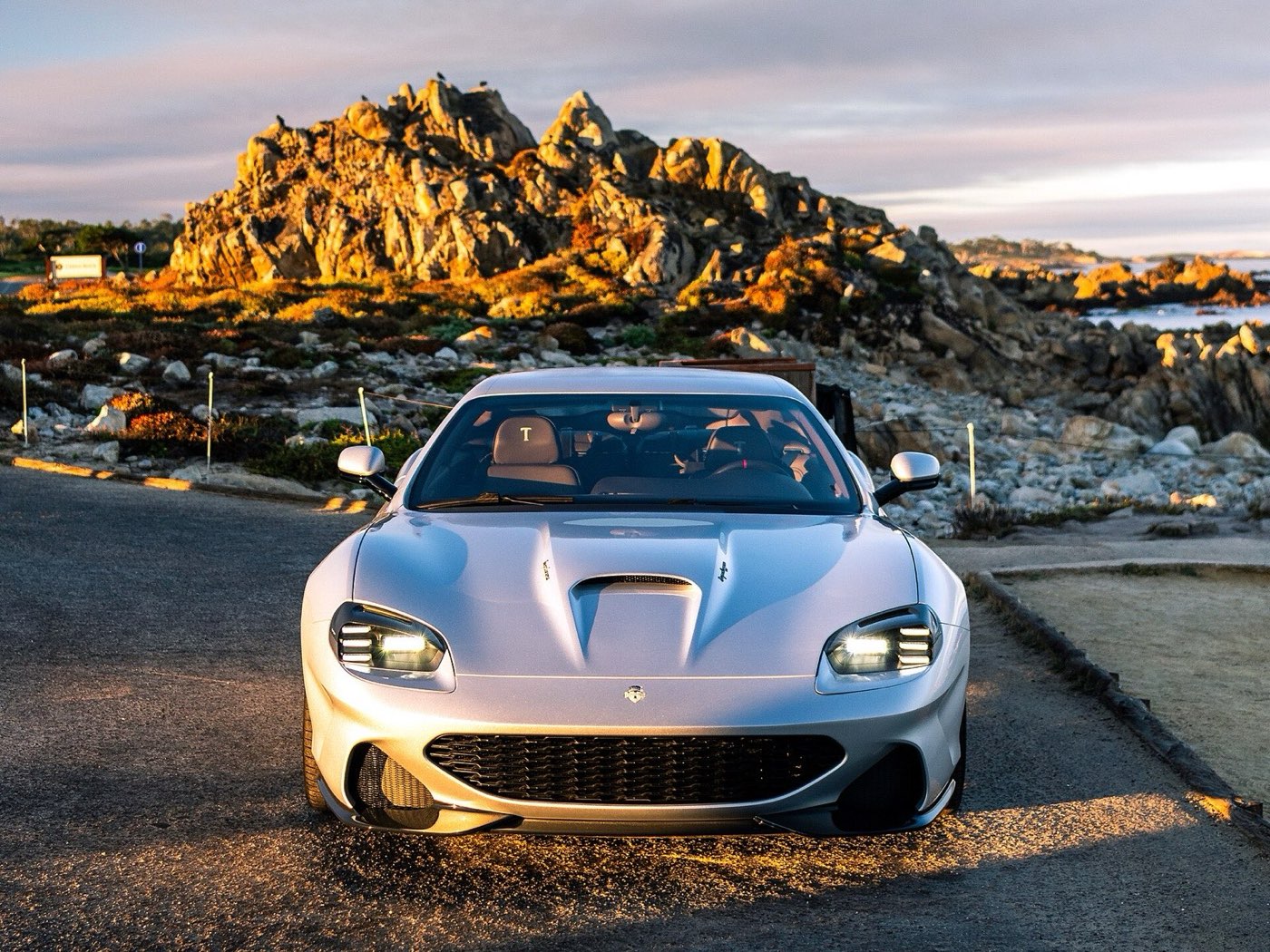
Production is capped at 30 units. Per Hagerty, pricing starts at €690,000, excluding the donor car, and each build runs to roughly 5,000 hours. At this year’s Pebble Beach Concours, Touring put the Veloce12 Aperta, a version with a removable modular roof framed by a sculpted aluminum arch, on the Concept Lawn.
The Veloce12 sits well outside this site’s $50,000–$500,000 scope. The donor car doesn’t. So what does it actually signal to anyone shopping a 550?
It does not meaningfully shrink supply. Thirty donors out of 3,083 coupes is under 1% of production. Anyone telling you the Veloce12 is “eating the 550 population” is doing the math wrong.
It does validate the thesis. A coachbuilder with Touring’s history priced its conversion at several times the value of the car underneath, and built the whole pitch around an analog V12, a manual gate and the absence of touchscreens. Collectors notice when a serious house bets its reputation on a platform. It also puts the 550 in front of an audience that had quietly filed the car under “used Ferrari.”
The donor-cost math has already moved. When Hagerty covered the car in February 2025, it put donor 550s at $100,000–$250,000. Eighteen months later, $100,000 won’t buy one. The cheapest 550 coupe to sell on Bring a Trailer this summer went for $135,000 (see the price section below). The restomod didn’t cause the rise, but it arrived at the same moment.
What You Get: Specs That Still Hold Up
Ferrari lists the 550’s engine as a 5,474 cc, 65-degree V12 with four valves per cylinder, dry-sump lubrication, Nikasil-lined alloy cylinders, titanium connecting rods and Bosch Motronic 5.2 engine management.
The numbers, per Wikipedia’s Ferrari 550 entry and Ferrari’s own data:
- Power: 485 PS (478 hp) at 7,000 rpm
- Torque: 568 Nm (419 lb-ft) at 5,000 rpm
- Transmission: six-speed manual transaxle, rear-wheel drive
- 0–100 km/h: 4.4 seconds (Motor Trend recorded 0–60 mph in 4.2 seconds in 2000)
- Top speed: 320 km/h (199 mph)
- Curb weight: 1,774 kg (3,912 lb)
- Wheelbase: 2,500 mm
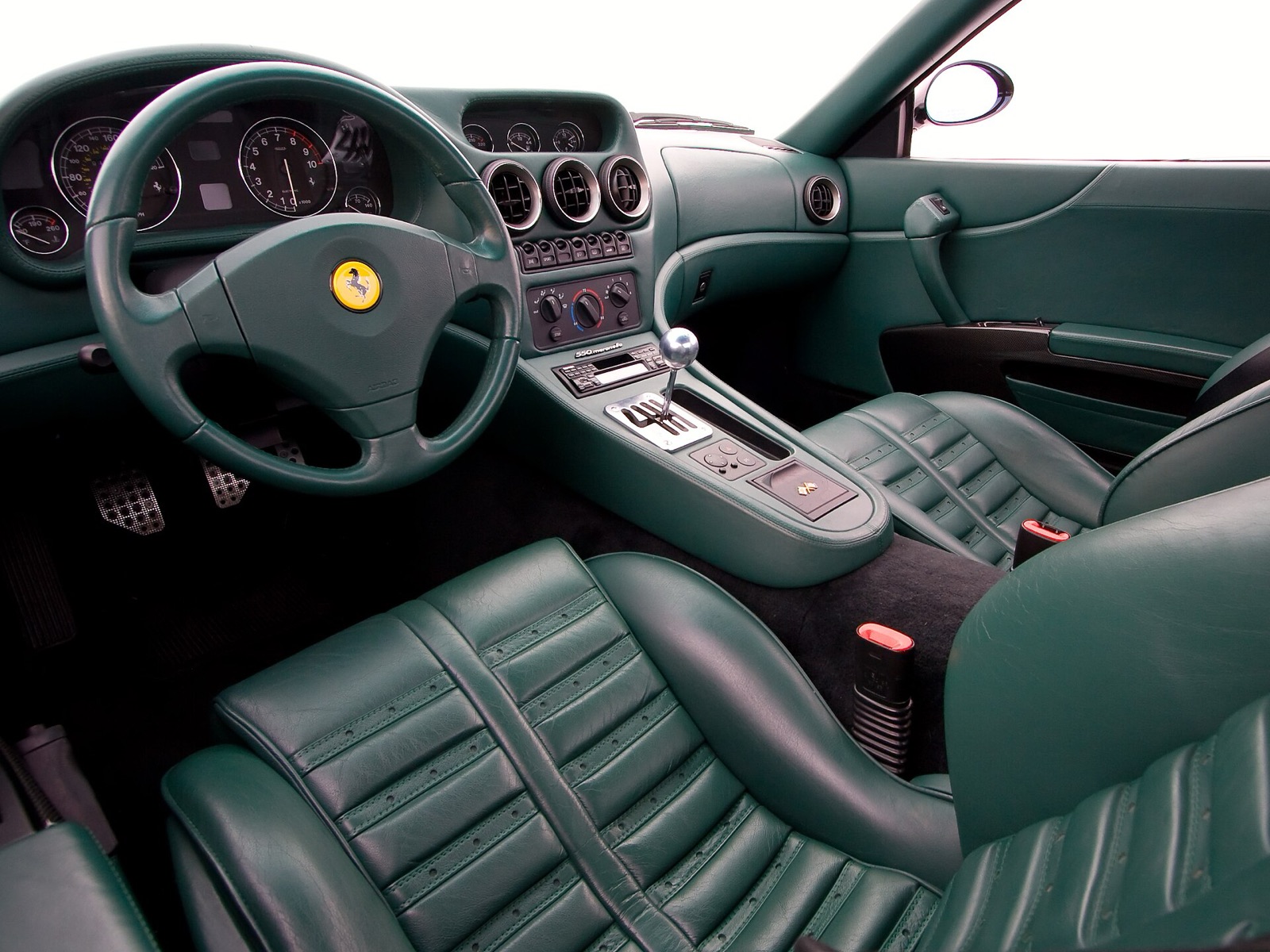
The body is aluminum, welded to a steel tube-frame chassis via a sandwich material Ferrari called Feran. Dampers are electronically adjustable, with driver-selectable Normal and Sport modes tied into the ASR traction control. Inside: leather everywhere, electric seats, a genuine luggage shelf behind the seats. You could cross a continent in it, and it had the pace of the F40 from less than a decade earlier. Ferrari’s history makes that comparison itself.
The variants you’ll see:
- 550 Maranello coupe (1996–2001) — 3,083 built, 457 of them right-hand drive per Classic & Sports Car. This is the car this guide is about.
- 550 World Speed Record (WSR) edition — 33 cars built to commemorate the 1998 records, per Ferrari. Rare enough that each one should be valued on its own history.
- 550 Barchetta Pininfarina — introduced in 2000, 448 built, a roadster with a minimal canvas top. Hagerty’s July 2026 guide puts an excellent-condition 2001 Barchetta at roughly $862,000, up 80.7% in a year. Different market, outside our range.
Known Issues: What to Inspect
Hagerty’s model notes call the 550 and 575 “remarkably trouble free as far as late-model exotic cars go”, naming minor electrical gremlins, premature wear of cooling hoses and some partial engine-mount failures on the 550 as the main weak spots. Specialist buyer’s guides from Classic & Sports Car, evo and UK specialist R&D Automotive fill in the rest.
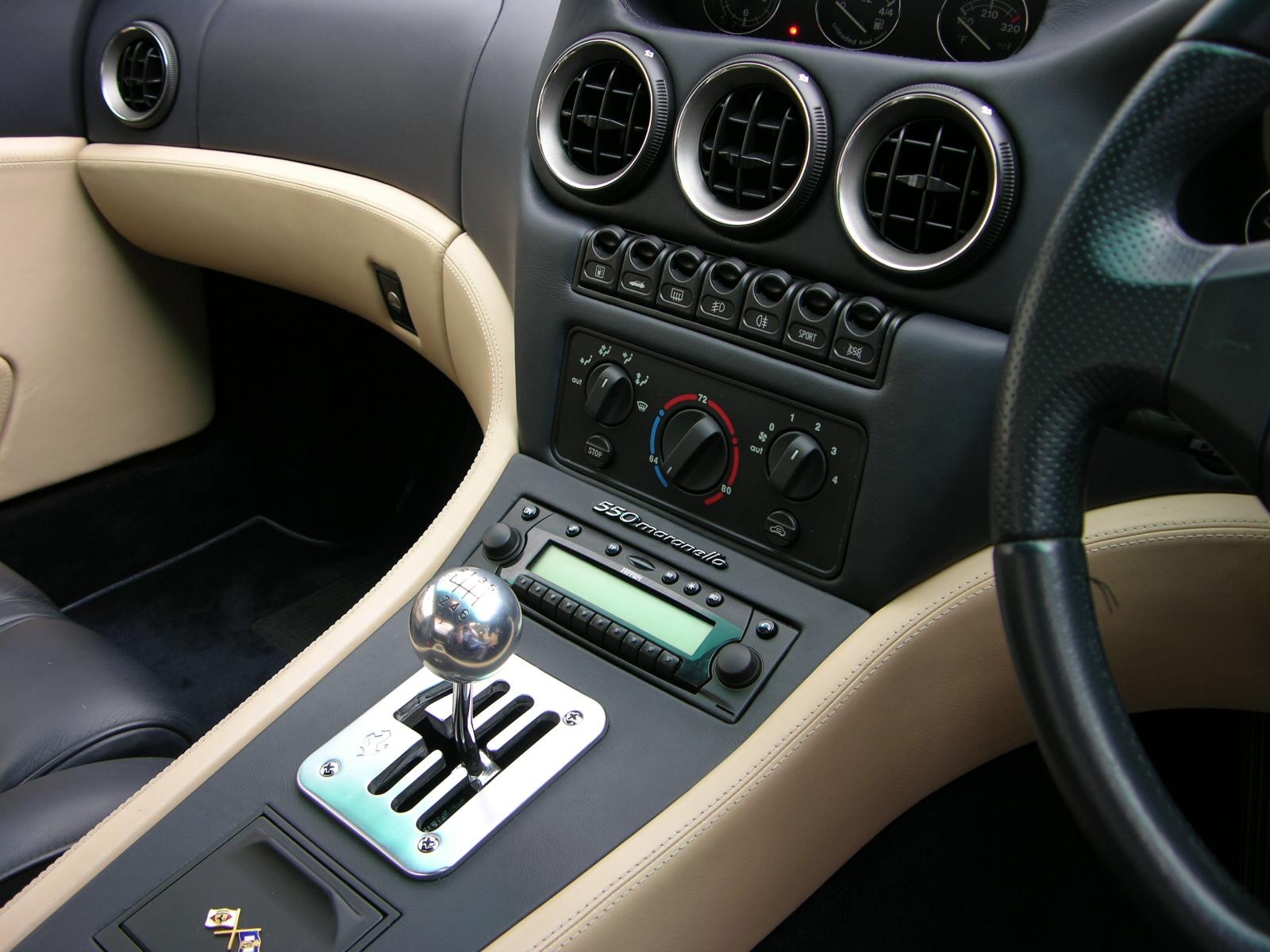
Sticky switchgear. Every buyer’s guide mentions it. The soft-touch plastics on door handles, window switches, the handbrake lever, heater vents and climate controls go tacky with age and UV exposure. Cosmetic, fixable by refinishing, and a decent clue as to how the car has been stored.
Cambelts. Both evo and R&D Automotive advise renewing the timing belts every three years. On the 550, belt service is done with the engine in the car, which spares you the engine-out ordeal familiar to mid-engined F355 owners. Ask for dated invoices, not a sticker.
Clutch. Classic & Sports Car says clutches should last 40,000–50,000 miles unless abused. Look for a high biting point or a noisy release bearing. evo puts replacement at around £3,000.
Dampers. Leaking dampers are common. evo quotes up to £1,500 for a new unit, or around £400 apiece to have them refurbished by original supplier Bilstein. Confirm the Normal/Sport switch actually changes the ride.
Cooling and leaks. Check the vee of the engine under the inlet manifold for coolant leaks from failing hoses, then the power-steering rack, then the transmission oil cooler. On 1997–98 cars especially, check for fuel tank leaks (Classic & Sports Car). Oil weeping from the cam seals is common and best fixed during the belt service (evo). Make sure the fans cut in and temperatures hold steady.
Vibration. Vibration from the engine while driving is probably a delaminating crank pulley.
Wheels. The original Speedline wheels were recalled for cracking and replaced with BBS wheels. A flaking finish is common.
Interior leather and electrics. Dashboard leather can shrink and peel after sun exposure; evo puts re-covering at up to £2,000. Airbag or alarm warning lights that won’t go out are often just dying internal batteries, which R&D Automotive says are cheap to sort. Missing key fobs can make it impossible to recode the alarm.
Body. The aluminum panels can bubble at the edges, particularly the front inner edge of the bonnet. Not structural. Expensive to put right.
Get a pre-purchase inspection from a Ferrari specialist who works on front-engined V12s, and pull the fault codes while you’re there. A thick binder is worth more than low miles.
Where to Buy One
Bring a Trailer is the most transparent public market for 550s right now. Between June 2 and September 16, 2026, BaT recorded 14 completed 550 Maranello coupe sales, plus cars that didn’t meet reserve. Every result is public, with full photo sets and comment-section scrutiny from owners who know exactly where these cars hide their problems.
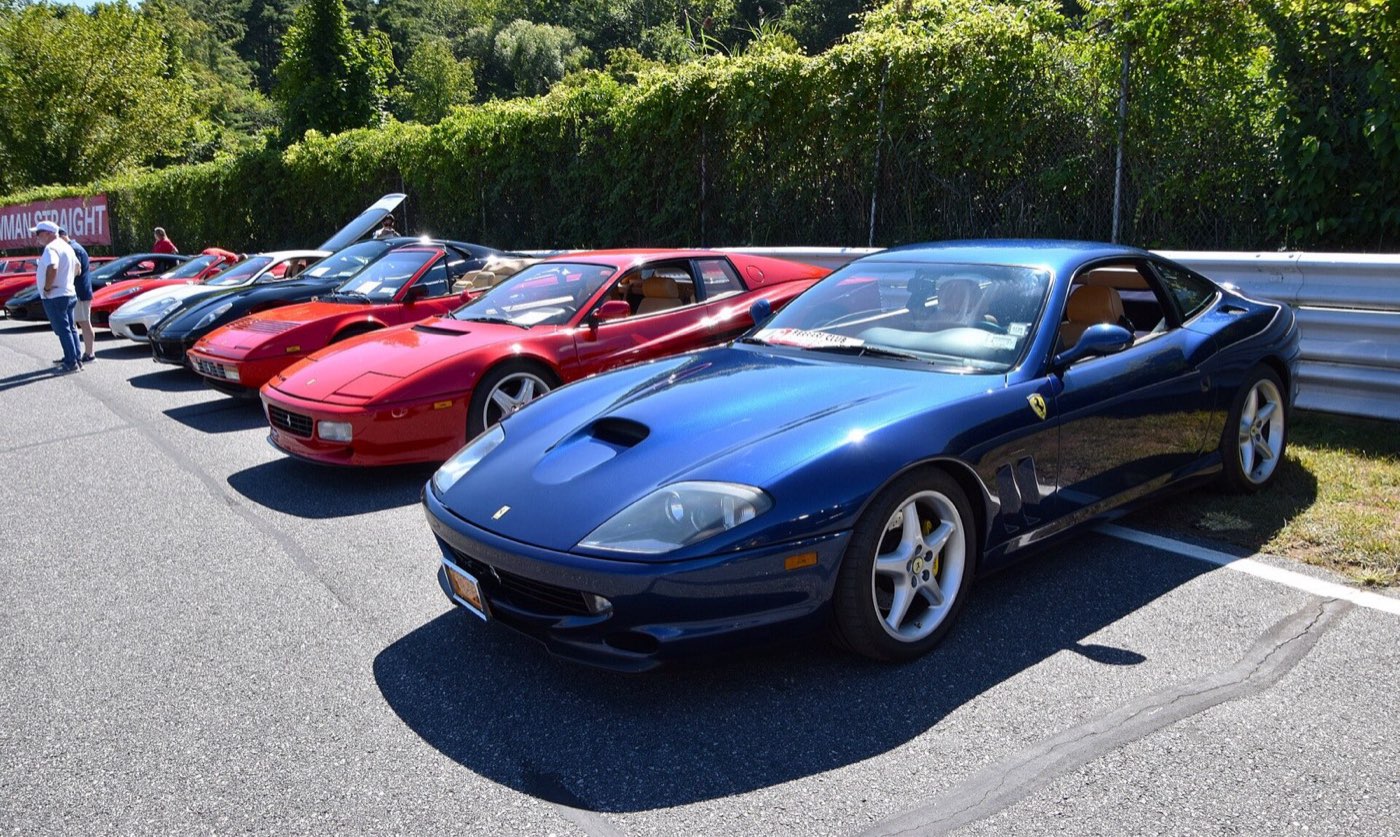
Big-tent auctions handle the top of the market. Per Hagerty’s sales log, an ultra-low-mileage 1999 coupe sold for $643,500 at Mecum, and a 5,443 km car brought $610,000 at RM Sotheby’s during Monterey week in August 2026. That isn’t the market most buyers are shopping in, but it drags the whole curve upward.
Ferrari specialists and franchised dealers charge more and give you inspection history in return, sometimes Ferrari Classiche certification as well. Classic & Sports Car cites one owner who spent £9,000 getting a car Classiche’d.
European imports. Several of the cheaper BaT sales were Euro- or Japanese-market cars: a Euro 2000 coupe at $135,000, a Japanese-market 1998 at $150,000. On BaT this summer, non-US cars sold at the bottom of the range. Budget for the paperwork, and for that same discount again when you sell.
New to all this? Our guide on how to buy your first exotic car covers inspections, escrow and financing.
Running Costs
The 550 is one of the more livable V12 Ferraris to own. It is still a V12 Ferrari.
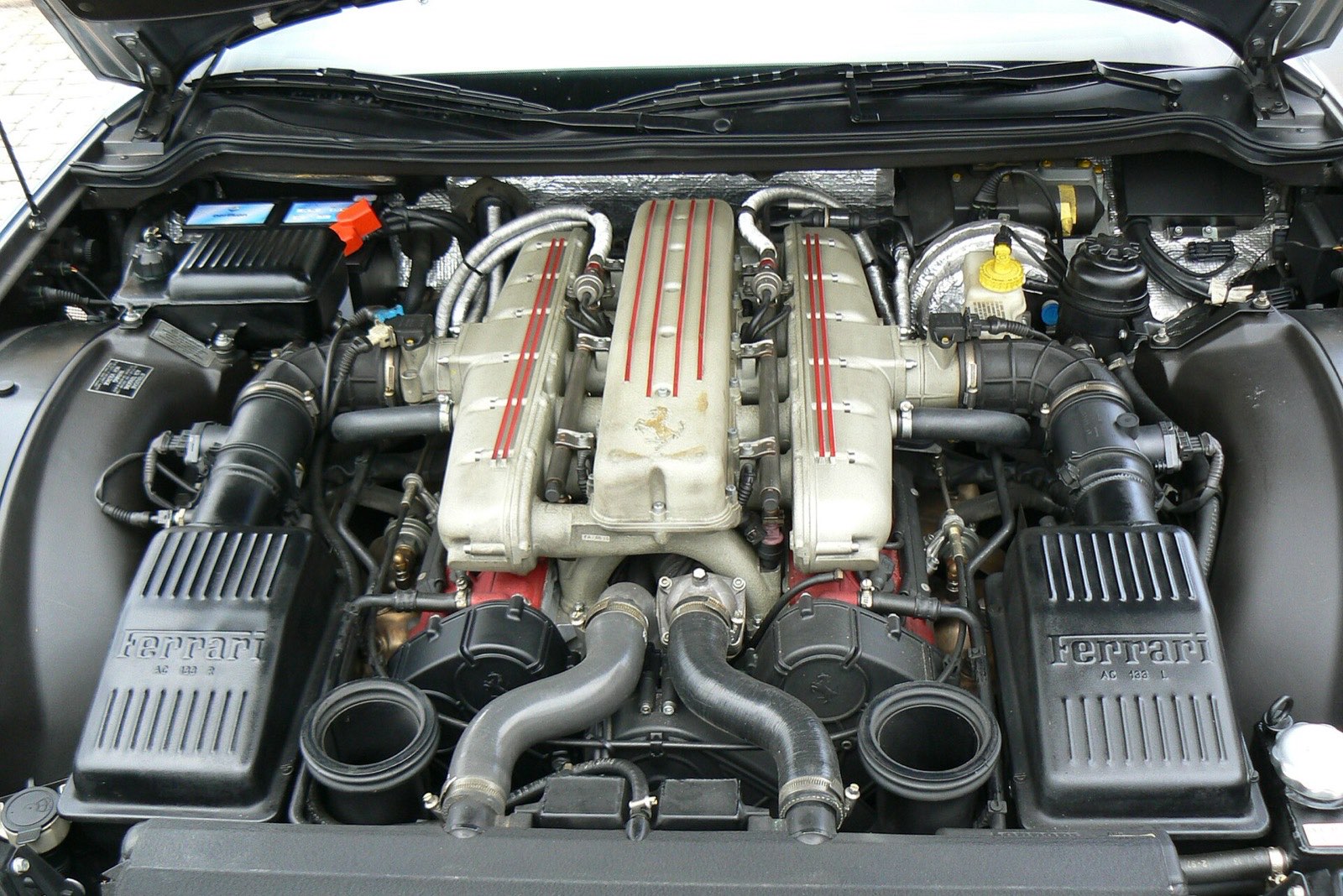
- Annual service: US Ferrari specialist J. Scuderia Automotive lists 456/550/575 annual service from $1,115.
- Belt service: the same shop lists its service with timing-belt replacement from $4,475, and a full major service — cam belts, tensioner bearings, plugs, fuel filters, and a long gasket-and-seal list — from $13,885.
- Annual budget: Classic & Sports Car recommends budgeting £2,500–3,000 a year for servicing and keeping up to £10,000 aside for unexpected bills.
- Tires: Classic & Sports Car says to expect 10,000–15,000 miles from a set. evo’s Harry Metcalfe got around 6,000 miles from Pirelli P Zero Rossos on his own car.
Add agreed-value insurance on top. Our exotic car insurance cost guide breaks down how collector policies price a car like this, and for how the 550 stacks up against modern exotics on total cost, see our five-car ownership cost comparison.
What to Pay, and Where Values Are Heading
Hagerty’s Price Guide for a 1999 550 Maranello coupe (July 2026), by condition:
- #4 Fair: ~$156,000 (range $140,667–$171,333) — up 13.9% in a year
- #3 Good: ~$202,000 (range $186,667–$226,333) — up 13.5%
- #2 Excellent: ~$275,000 (range $250,667–$291,333) — up 12.2%
- #1 Concours: ~$324,000 (range $307,667–$340,333) — up 10.2%
Over three years, Hagerty shows every tier up between 18.5% and 21.9%.
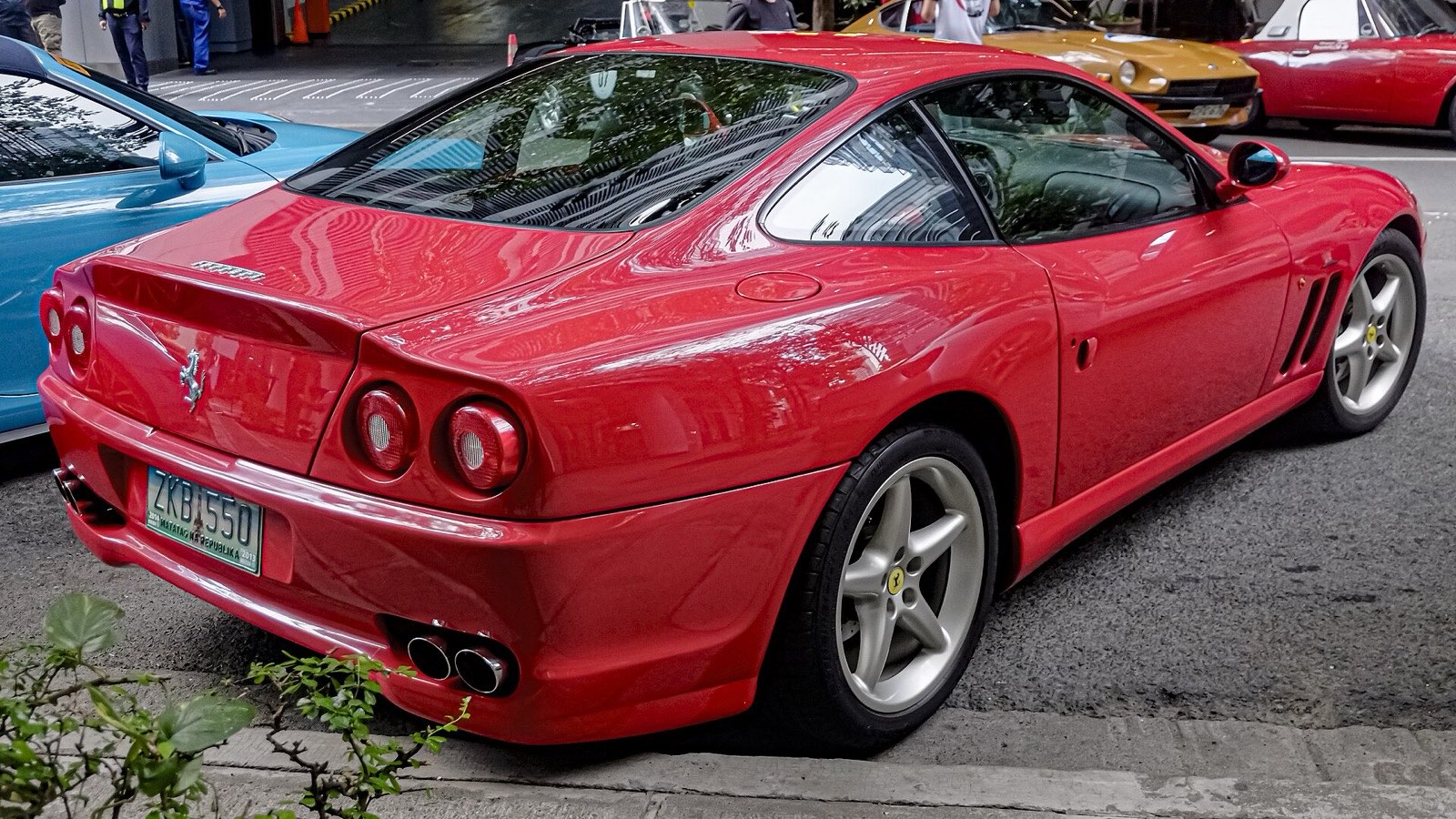
The Bring a Trailer results from June through mid-September 2026 line up neatly with that guide:
- Euro and Japanese-market cars: $135,000–$205,000
- US-market drivers, 20,000–40,000 miles: $192,500–$240,000
- Low-mile, well-documented cars: $305,000 (20k-mile 2001, September 16) and $335,550 (22k-mile 1999)
- Exceptional provenance or near-new: $392,500 (the ex-Sydney Pollack 1999), $440,000 (13k-mile 2001), and $507,000 (original-owner 1999)
Median of those 14 sales: about $220,000. Not every car sells, either. A 24,000-mile 1998 was bid to $202,000 in late August and still didn’t meet reserve, which tells you sellers’ expectations are running a step ahead of some bidders.
Where it’s heading. Three things are pushing the same direction. Manual-gearbox Ferraris have become their own asset class, and the 550 is the only V12 Ferrari that’s manual by definition. Collectors who grew up with 1990s cars now have the money to buy them. And the Veloce12 has handed the 550 a halo it didn’t have three years ago. Against all that: this is a 25-to-30-year-old V12 with serious running costs, prices have already climbed a long way, and the six-figure spread between a Fair car and a Concours car means buying the wrong one hurts. Hagerty’s July data shows appreciation continuing across every tier. No guarantee attached.
The Bottom Line
The 550 Maranello is the Ferrari V12 grand tourer at its most honest. Engine up front, drive at the back, a metal gate between the seats, and no screen telling you what you just did. Of every V12 Ferrari available to it, Touring Superleggera chose this one. You don’t need €690,000 to get the original.
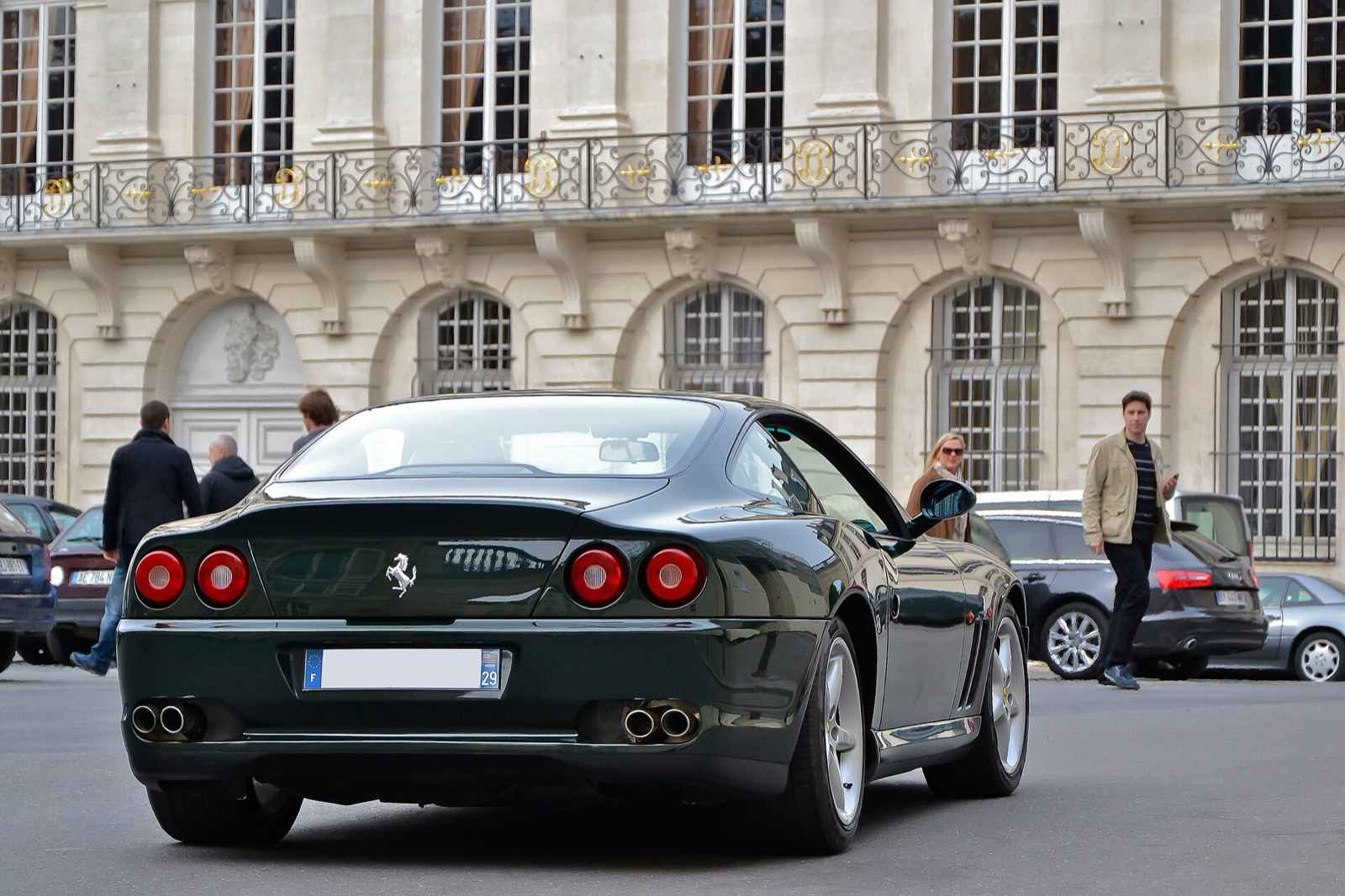
If I were buying in 2026, I’d target a US-market coupe at 20,000–40,000 miles with a documented three-year belt history, dampers that actually switch modes, clean switchgear and a folder of specialist invoices, in the $200,000–$240,000 band where Hagerty’s “Good” figure and BaT’s real sales overlap. Set aside at least $15,000 for first-year catch-up, because some of it will get spent. Skip the too-cheap Euro car unless a specialist has already been through it. And if you’re chasing a sub-10,000-mile museum piece, go in knowing you’re paying a collector’s premium on top of a driver’s car.
The paddles took over Ferrari a long time ago. This is one of the last ways to buy a twelve-cylinder Ferrari the old way.
Photo credits: Wikimedia Commons — Ethan Llamas (hero and rear, CC BY-SA 4.0); Axion23 (on-road, CC BY 2.0); M.Duffau (Veloce12, CC BY-SA 4.0); Wistar Rinearson (cockpit, CC0); The Car Spy (switchgear, CC BY 2.0); Freebourg (engine bay, CC BY-SA 3.0); Charles from Port Chester, New York (lineup, CC0); Alexandre Prévot (Paris rear, CC BY-SA 2.0).
Share this
Join the conversation
COMMENTS
Loading comments…
No comments yet. Be the first to weigh in.
Leave a comment
Posted
Thanks for joining the conversation.