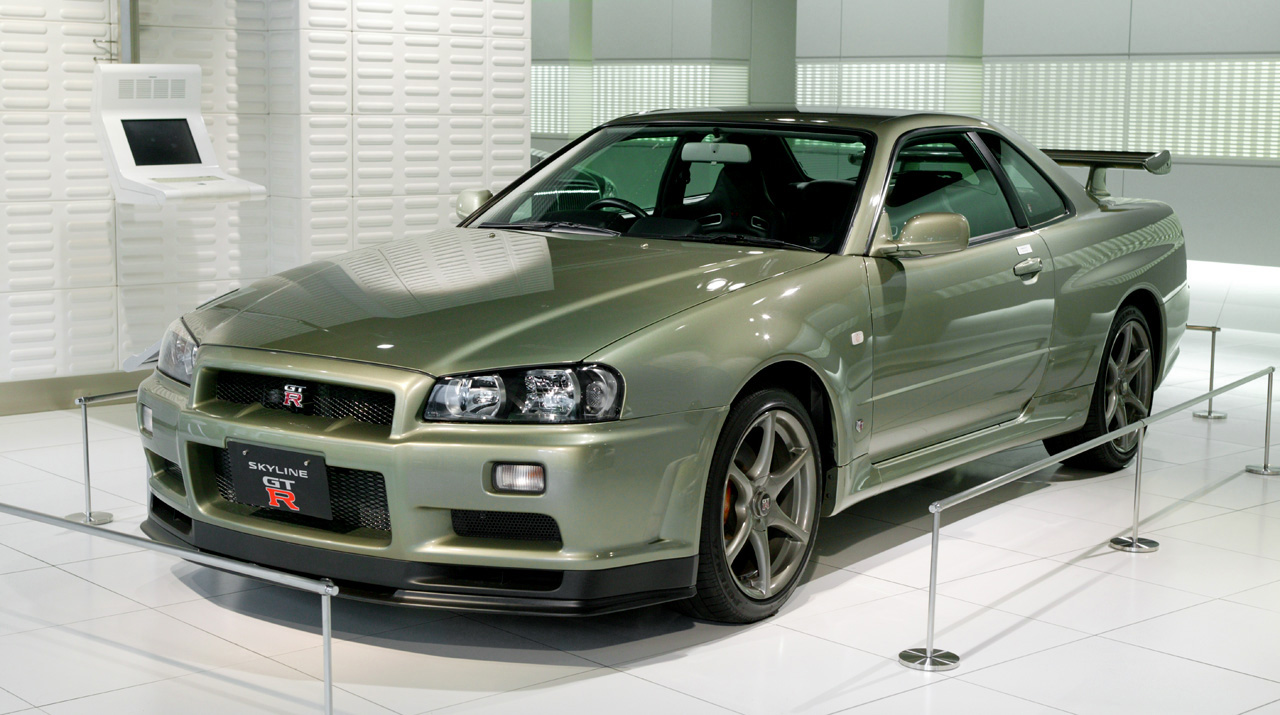
The World's Most Insane GT-R Builds (And Why the R34 Is Still the Starting Point)
There are faster cars. There are more technologically sophisticated cars. There are cars that cost ten times as much and require a climate-controlled garage and a factory-trained technician to look at them correctly.
None of them have a tuner culture like the GT-R.
The Nissan Skyline GT-R R34 — built from 1999 to 2002, 11,578 units produced, sold exclusively in Japan — is the starting point for serious builds not because it’s the easiest platform. It’s not. It’s because it’s correct. The architecture is correct. The engine is correct. The four-wheel-drive system is correct. Every major component was over-engineered in ways that Nissan’s engineers either intended as headroom or understood could be exploited. Either way, the community found it.
The R34 is where the conversation begins. Everything else is a matter of degree.
Why the RB26DETT Is the Perfect Tuner Engine
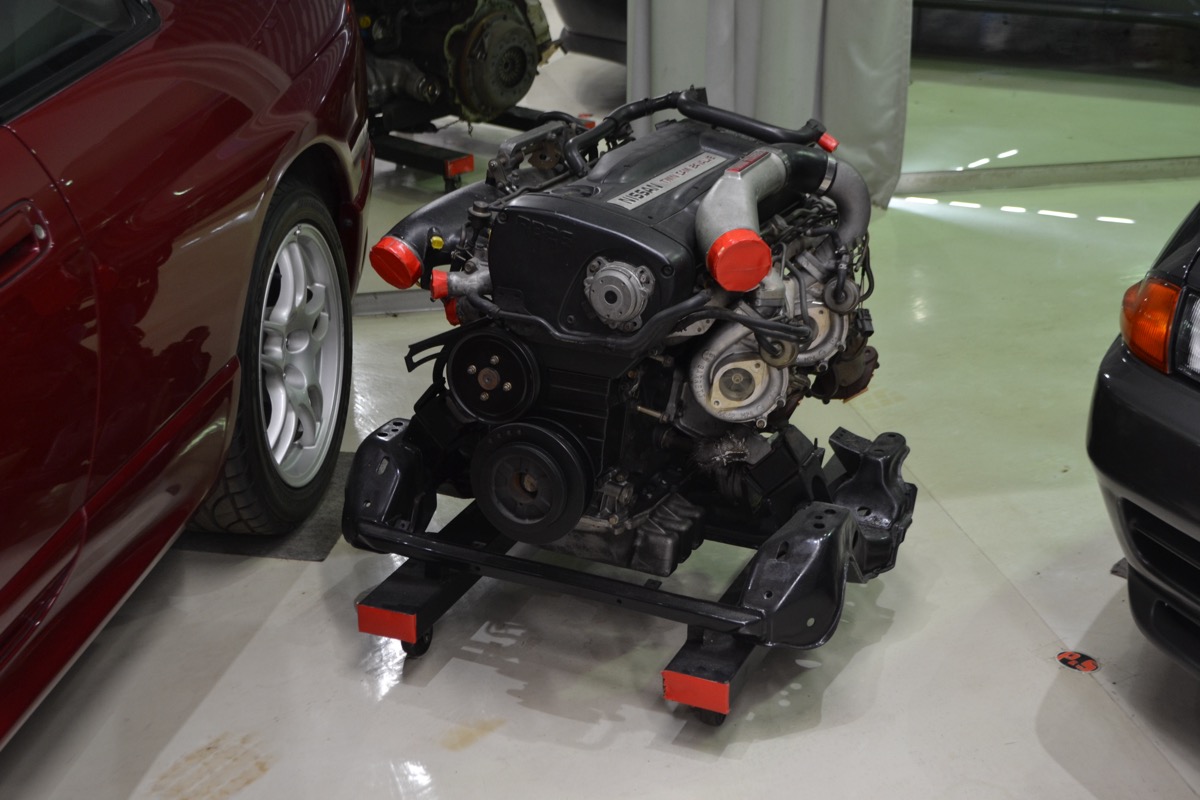
The RB26DETT left Nissan’s factory producing 276 horsepower. That number was agreed upon by Japanese manufacturers in a gentlemen’s agreement to cap power output — it was a fiction, and everyone knew it. The actual output was closer to 330 horsepower, sometimes more. But the agreed-upon 276 meant one thing practically: Nissan built the engine to handle considerably more than what they officially rated it for.
The block is cast iron. The head is aluminium, with twin overhead camshafts, four valves per cylinder, individual throttle bodies. The twin Garrett T28 turbos run low boost from the factory — approximately 10 psi. The internals — forged pistons, beefy connecting rods — were spec’d for the JGTC racing programme that ran alongside the road car. They built it to race standard and sold it to the public.
At stock internals with a simple tune and upgraded turbos, 450–500 horsepower is a weekend job. Mild built motor with larger turbos — a Garrett GTX3582 or equivalent — and you’re at 600–700 without breaking a sweat. Full build: sleeved block, forged internals, billet crank, proper fuel system, 1,000+ horsepower is achievable and has been demonstrated by dozens of shops.
The rotating assembly is the key. The stock RB26 crank is robust. The rods are forged from the factory. The block, despite being iron, does not need to be sleeved until you push past 900 horsepower in sustained track use. That’s the baseline before you start spending money on internals. No other tuner engine — not the 2JZ, not the EJ25, not the K20 — offers that combination of factory engineering headroom and community knowledge depth.
There are decades of dyno sheets, build logs, and engine teardowns. You do not guess with an RB26. You know exactly what will happen because thousands of people have done it before. The same depth of community knowledge exists around the other foundational JDM platforms — the 2JZ, the 4G63, the EJ257 — but the RB26 sits at the deeper end of that well by a meaningful margin.
Mine’s BNR34: The Benchmark
Mine’s is a Japanese tuning shop that has been building GT-Rs since the R32 era. Their BNR34 builds are the standard against which everything else is measured — not for power, but for balance.
A Mine’s-tuned R34 is not a drag car. It is a precision instrument. Mine’s approach is to extract every horsepower that the engine can safely and reliably produce at a given power level, then engineer the chassis, suspension, and aerodynamics to actually use it. Their full builds produce between 500 and 600 horsepower at the crank, but on a circuit they are faster than more powerful cars because the power is delivered correctly and the chassis is set up to exploit the ATTESA-ETS four-wheel-drive system rather than fight it.
Mine’s developed their own ECU software, their own exhaust headers, their own suspension geometry. The result is a car that can be driven on the road, driven to a track, driven hard all day, and driven home. That philosophy — the daily-usable track weapon — is the highest achievement in GT-R tuning.
A Mine’s full build in 2026 runs approximately $80,000–$100,000 USD on top of the car itself, which now trades for $80,000–$150,000 depending on mileage and condition. The total investment is real. The result is a car that will embarrass machines costing twice as much.
Garage Defend and the Widebody Language
If Mine’s represents surgical precision, Garage Defend represents the aesthetic argument. Their R34 builds — wrapped in carbon fibre widebody kits, running aggressive fitment, painted in deep metallics or raw exposed carbon — established the visual template that every serious GT-R photoshoot has borrowed from since.
The Garage Defend GTR-34 aero package adds approximately 60–80mm to the front and rear tracks via widened fenders. It is functional: wider track means more suspension geometry adjustment, more tyre contact patch, more mechanical grip. But it is also unambiguously about presence. A Garage Defend R34 does not ask permission when it enters a room.
Their engine work runs to the 700–850 horsepower range for street builds. Their suspension packages are developed on Japanese mountain roads and adapted for track days. The carbon body kit, the full cage on track variants, the Recaro seats — it is a complete philosophy, not a parts list.
HKS and the Power-Only Argument
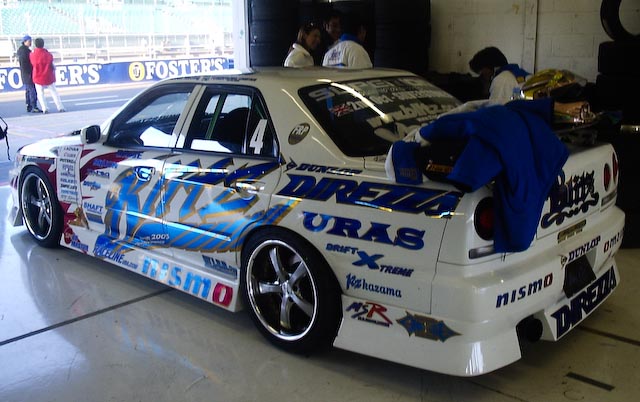
HKS takes a different position entirely. They make turbos. Big ones. And they have been using GT-Rs to demonstrate what those turbos can do since the R32 era.
Their GT1000 package for the R34 — GT turbos, intercooler, fuel system, ECU, reinforced gearbox — produces 1,000 horsepower from the RB26 with the stock block intact. That is the number: factory iron block, factory head, twin HKS GT turbos on appropriate boost, and you have four figures at the crank.
HKS drag builds on sleeved and fully built motors have exceeded 1,500 horsepower. At some point the numbers become abstract — a 1,500-horsepower R34 is not a street car, not a track car, it is a demonstration of what an engine can absorb — but the demonstration matters because it proves the ceiling is genuinely that high.
The gearbox is the limiting factor before the engine. The factory Getrag six-speed handles approximately 600–650 horsepower reliably. Beyond that, a Hollinger sequential or a Samsonas unit is required. That alone is a $15,000–$25,000 line item.
What a Proper Build Actually Costs
This is where the conversation gets honest.
The entry point — a clean R34 GT-R with high mileage and a stock motor — starts at $80,000 in the US market post-25-year rule. A low-mileage V-spec or V-spec II runs $120,000–$180,000. An N1 spec is a $250,000+ conversation.
A Street-Level Build (Stage 1): Stock motor, bolt-on turbos, intercooler, exhaust, tune. Result: 450–500 horsepower. Cost: $8,000–$12,000 in parts and labour. This is the minimum to feel the car properly.
A Serious Street/Track Build (Stage 2): Mild built motor — ARP studs, upgraded oil system, larger turbos, full suspension refresh, coilovers, bigger brakes. Result: 600–700 horsepower. Cost: $25,000–$40,000 on top of the base car.
A Full Time Attack Build (Stage 3): Sleeved block, forged internals, sequential gearbox, roll cage, aero package, dedicated ECU, track suspension. Result: 800–1,000+ horsepower. Cost: $60,000–$120,000 in build work alone.
Total cost for a Stage 3 build, starting with a clean base car, is $150,000–$280,000. This is not a cheap hobby. Anyone telling you otherwise is leaving out the engine rebuild after the first time you push the limits at the track.
R-Tune vs. Time Attack vs. Drag Build
The three categories are distinct and the mistakes people make crossing them are expensive.
An R-tune car — the street-focused, balanced GT-R — optimises for feel and daily usability. The ATTESA-ETS system is calibrated, not deleted. The ride quality is firm but survivable. The power delivery is progressive. Mine’s BNR34 is the archetype. These cars go to the Nürburgring and come back intact.
A time attack car is built for one circuit, one lap time. Everything is stripped. The cage goes in. The ATTESA calibration is set aggressively. The tyres are semi-slick. Aerodynamic downforce is maximised for the specific track. These cars are miserable to drive on the road and devastating on circuit. Garage Defend’s track builds, the HKS LMGT4 programme — this is the category.
A drag car is a different object entirely. The AWD system is often converted to RWD for straight-line efficiency. The suspension is set up for launch and stability, not cornering. Everything non-essential is removed. These cars produce the highest numbers and the most extreme statements. They are not “GT-Rs” in the meaningful sense — they are tube-frame vehicles wearing GT-R bodywork.
Knowing which car you’re building before you start is the single most important decision in the process.
Why the R34 Is Still the Starting Point
The R33 is underrated. The R32 is the original. The R35 is faster than all of them. The Mazda RX-7 FD makes the alternative argument from an entirely different mechanical conviction — a 1.3-litre rotary that no rational engineer would have chosen, in a chassis that nobody has improved on since 1992. Different platform, different builder culture, both real.
None of that changes the answer.
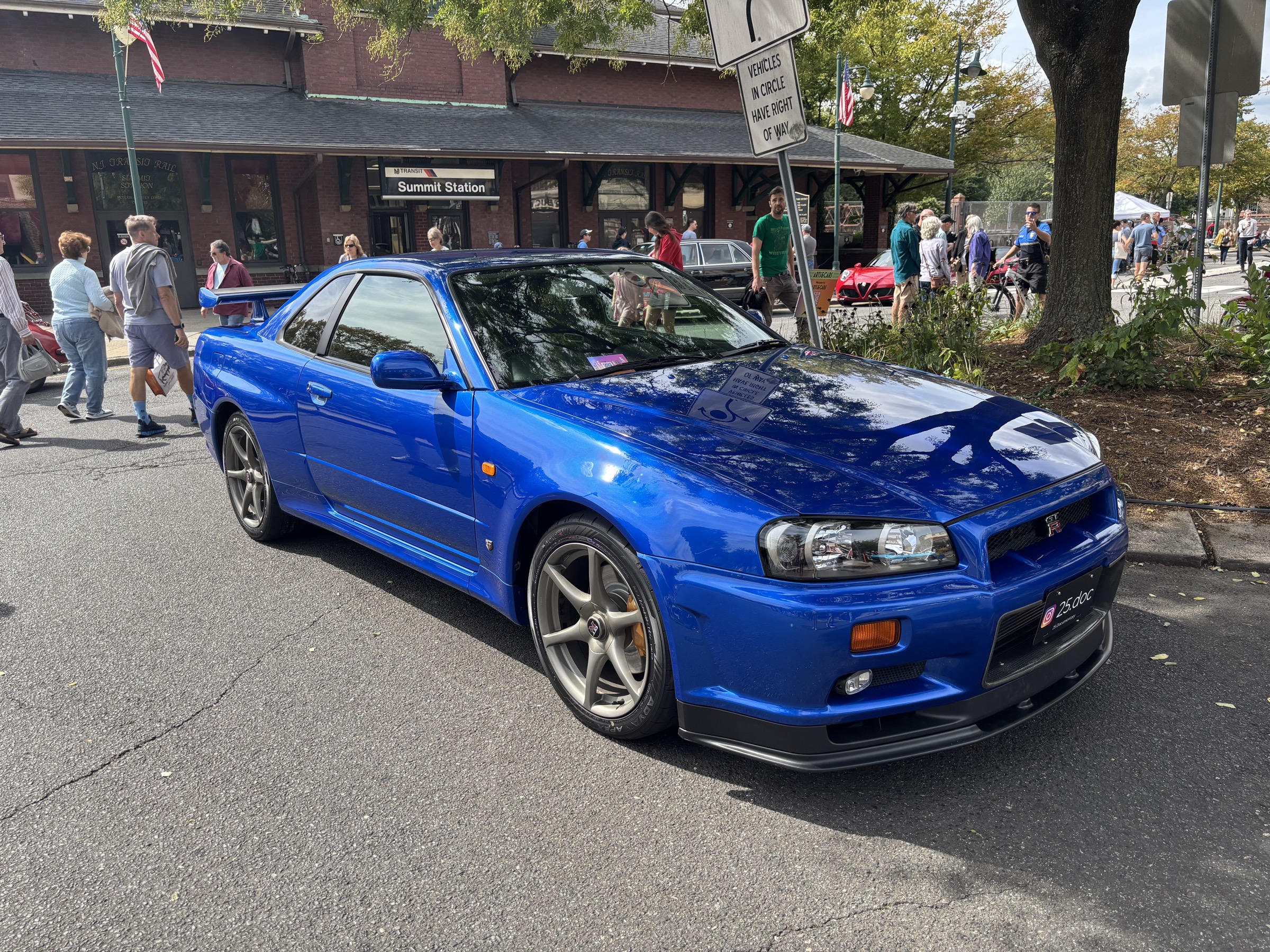
The R34 is the purest expression of the GT-R formula because it was the last one built before the car became something else. The R35 is magnificent engineering — 570 horsepower from the factory, a DCT gearbox that changes gears in 0.15 seconds, active torque vectoring — but it is a Nissan product, not a driver’s car. It is designed to be fast. The R34 was designed to be driven.
The R34’s steering communicates. The ATTESA system rewards commitment — the more aggressively you drive, the more the car co-operates. The RB26 sounds like nothing else at full boost, a howl that no modern turbocharged engine can replicate because modern turbocharged engines are designed to be quiet.
The R34 was built with a racing programme running alongside it. The engineers who designed the road car also designed the JGTC race car. That shared DNA is in every component, every specification, every piece of over-engineering that the factory chose not to explain.
That’s what makes it the starting point. Not nostalgia. Not price, though the price has made the argument more expensive than it used to be. The R34 is where you start because it’s the correct architecture, built with the correct philosophy, and every serious builder in the world knows it.
Everything else is just deciding how far you want to take it.
Share this
Join the conversation
COMMENTS
Loading comments…
No comments yet. Be the first to weigh in.
Leave a comment
Posted
Thanks for joining the conversation.