The 5 JDM Cars That Changed Everything (And What They Cost Now)
In the late 1980s, Japanese manufacturers were doing something that nobody in Europe or America fully understood until it was too late. They were building driver’s cars. Not status cars, not luxury cars — cars with specific engineering philosophies, specific targets, specific ambitions. Cars built to win on circuits, on mountain passes, in time attack competitions, in the hands of people who could actually drive.
Those cars are now 25–35 years old. Some of them have cleared the 25-year import rule and arrived in the United States for the first time. All of them have become serious collector pieces. Most of them are still better to drive than the majority of modern performance cars.
These are the five that changed everything.
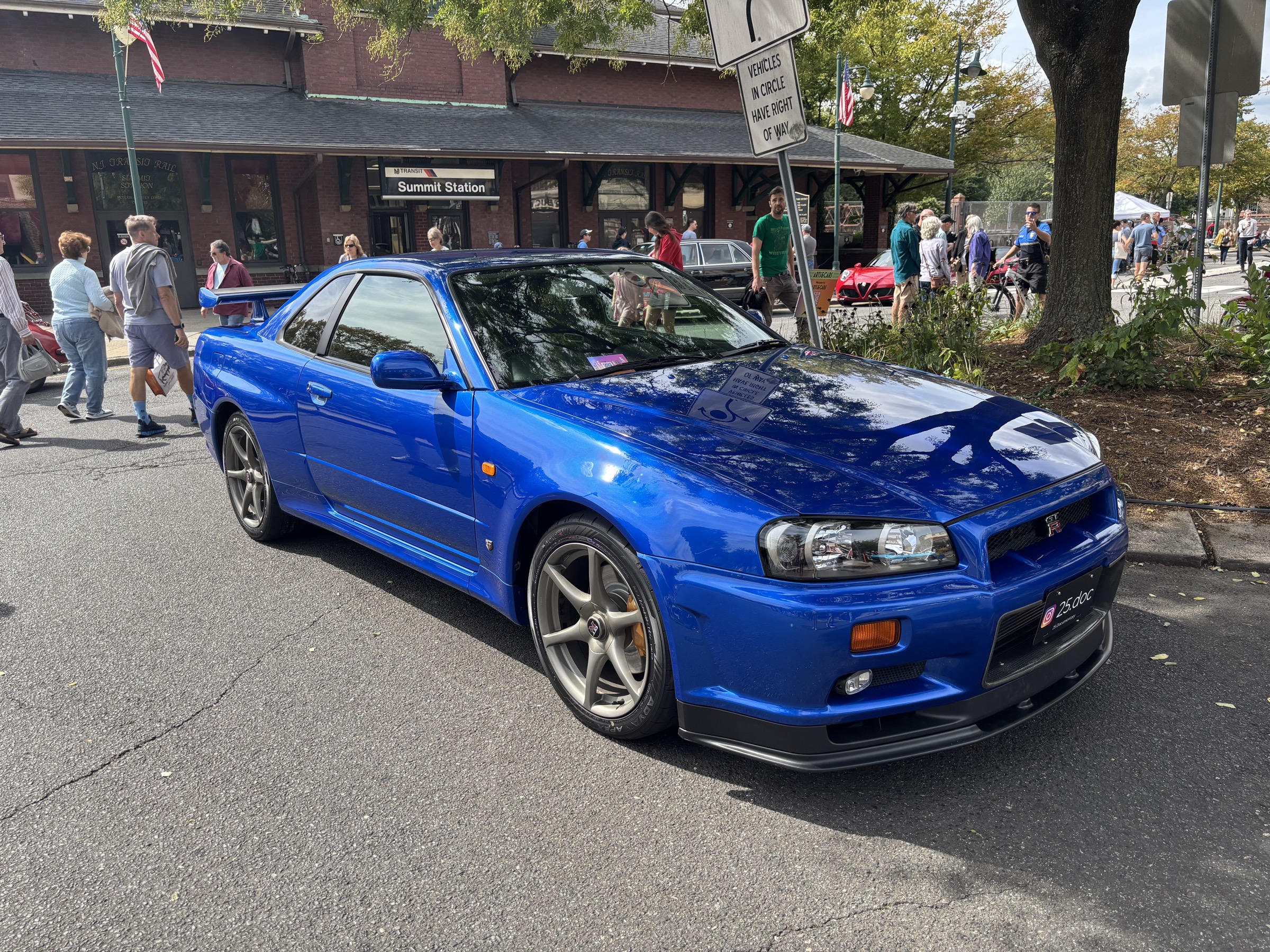
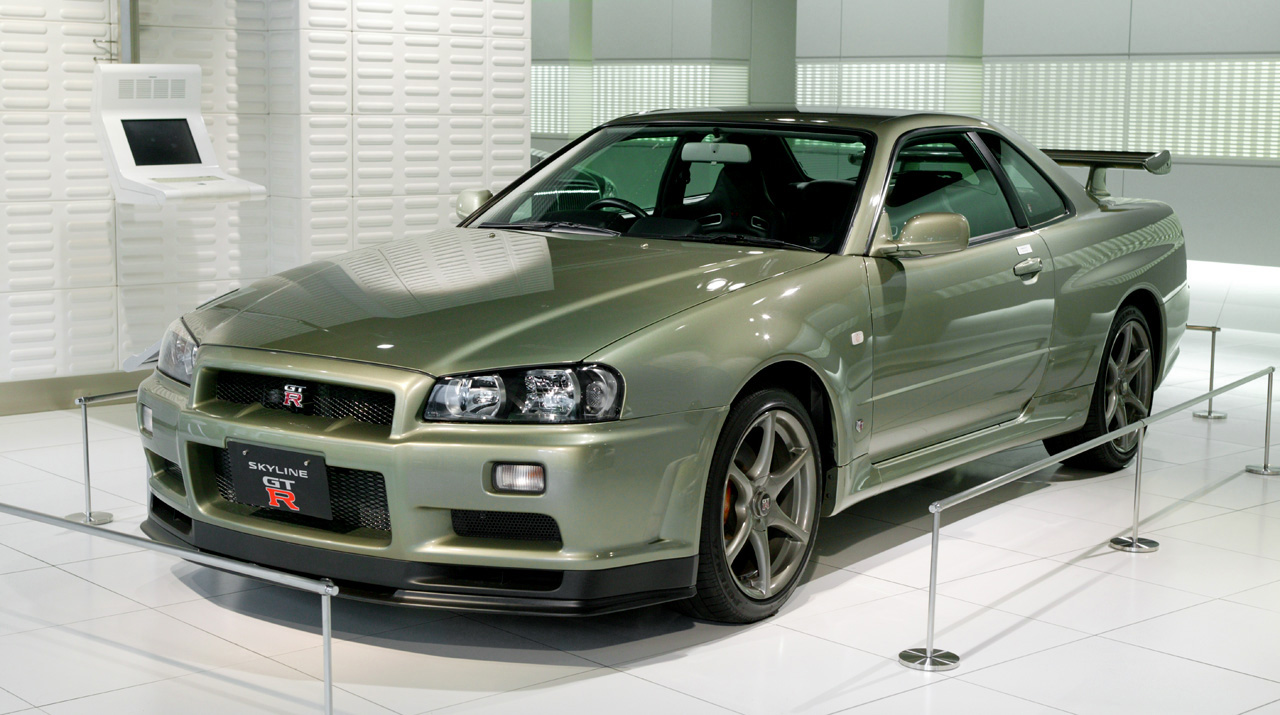
1. Nissan Skyline GT-R R34 (1999–2002)
New price: ¥4,998,000 — approximately $46,000 USD at 1999 exchange rates 2026 market: $80,000–$280,000 depending on spec and condition
The R34 GT-R is the most scrutinised Japanese car in history. Every specification is documented by an obsessive global community. Every variant — the standard, the V-spec, the V-spec II, the M-spec, the M-spec Nur, the V-spec II Nur — has its own following and its own premium.
The RB26DETT inline-six is the reason. Twin turbocharged, 2.6 litres, officially rated at 276 horsepower (the gentlemen’s agreement number — actual output was 320–330 horsepower from the factory). The engine was developed in parallel with the JGTC racing programme and built with engineering headroom that the tuning community has been exploiting for 25 years. 1,000 horsepower is achievable on the stock block. 1,500 horsepower is achievable with full internal work.
The ATTESA-ETS Pro four-wheel-drive system was the most sophisticated AWD system available in a production car in 1999. It distributed torque actively, biased for rear-wheel drive feel under normal conditions, and redistributed to all four wheels under hard acceleration. The Super HICAS rear-wheel steering system managed stability at the limit.
The V-spec II Nur — the most desirable variant, built on the Nürburgring-tested suspension calibration — was produced in limited numbers. Finding a clean one is a several-month project. Prices start at $200,000 and go north.
R34s cleared the 25-year US import rule beginning in 2024. Supply is limited, demand is enormous, and prices have not stabilised. The window to acquire one at reasonable cost closed around 2022.
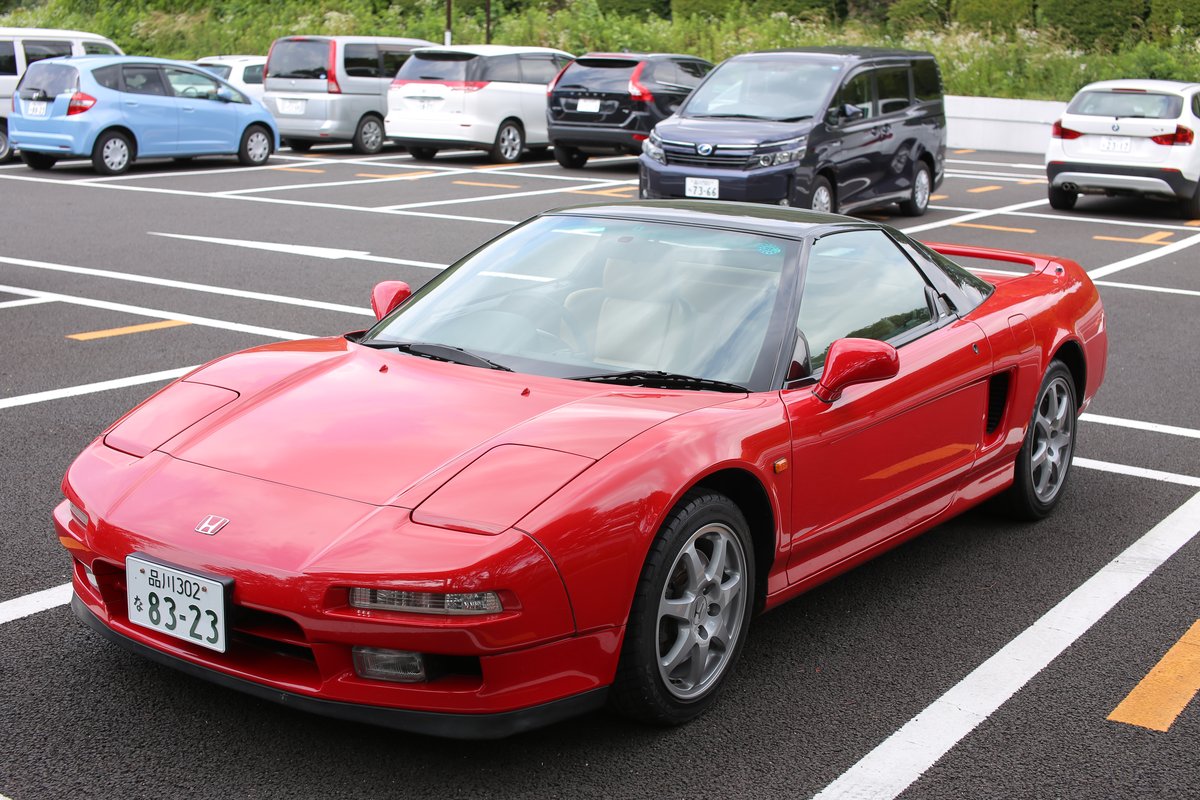
2. Honda NSX NA1 (1990–2001)
New price: ¥8,000,000 — approximately $56,000 USD at 1990 exchange rates 2026 market: $75,000–$160,000 for NA1; manual cars command significant premium
The NSX is the forgotten benchmark. In 1990, Honda built a mid-engine, naturally aspirated supercar — all-aluminium monocoque, double-wishbone suspension all around, VTEC V6 in 3.0-litre form producing 270 horsepower — and priced it to compete with the Ferrari 348.
Ayrton Senna drove development prototypes. His feedback shaped the final suspension calibration. This is not marketing mythology — it is documented in the development timeline, and the result is in the driving experience. The NSX communicates in the way that factory test drivers say it should after a week of intensive feedback from the fastest racing driver of his era.
The all-aluminium body meant the car weighed 1,370 kilograms — remarkable for a 1990 car with full air conditioning and proper creature comforts. The steering is unassisted, the gearbox is one of the best manual transmissions ever put in a production car, and the V6’s VTEC crossover at 5,800 rpm is a physical event you feel rather than just hear.
The NA1 generation ended in 2001. Honda continued production with minor updates until 2005, but the original is the definitive car. Manual transmission examples are worth $20,000–$40,000 more than automatics at equivalent condition. The Zanardi edition — built in 1999, motorsport-derived suspension, no air conditioning or audio — runs $180,000+.
The NSX proves that a 270-horsepower car can be the right answer if everything else is correct.
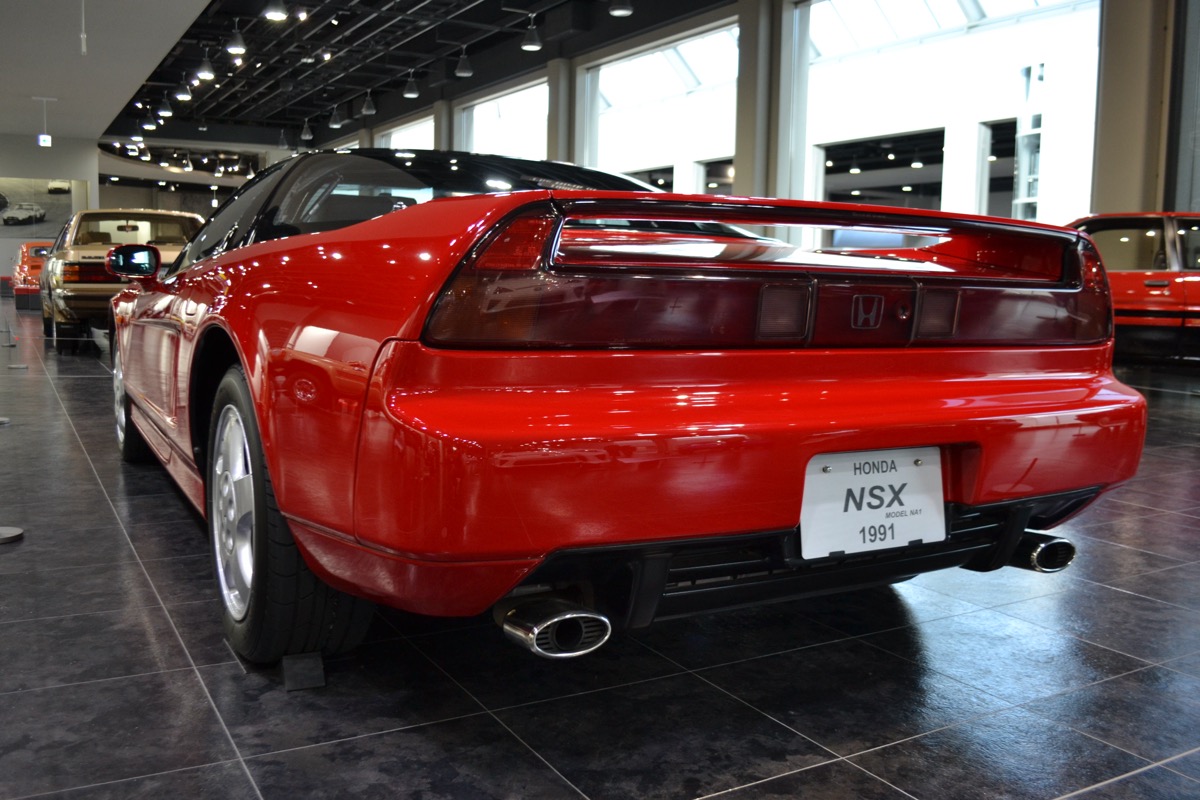
3. Toyota Supra A80 (1993–2002)
New price: ¥3,799,000 Twin Turbo — approximately $35,000 USD at 1993 exchange rates 2026 market: $60,000–$180,000; manual twin turbo examples are the benchmark
The 2JZ-GTE is the most famous engine in tuner culture and it earned that status legitimately. Toyota’s 3.0-litre inline-six, twin turbocharged, officially rated at 320 horsepower in JDM specification. Factory internals — forged connecting rods, solid cast-iron block — that handle 600 horsepower with nothing but a tune and bigger turbos. Single turbine conversions routinely produce 800–1,000 horsepower on stock internals.
The Supra is the American tuner’s equivalent of the GT-R. The culture is different — the Supra community is loud, maximalist, always chasing the next round number — but the engineering justification is real. The 2JZ is an engine that Toyota over-engineered relative to its factory application, and the community has been exploiting that headroom for thirty years.
The A80 weighs 1,560 kilograms for the Twin Turbo, which is heavier than the NSX and the R34. Handling is good but not exceptional in stock form. The car’s talent is straight-line performance and tunability. Nobody buys a stock-motor Supra for the canyon road; they buy it for what it becomes with $8,000 in engine work.
Manual transmission cars command the premium. The automatic transmission A80 is a different car — competent, fast, but not the archetype. Manual twin-turbo examples have crossed $200,000 at auction. The Fast and Furious effect is real and quantifiable in current prices; whether that premium is justified by the car itself is a separate conversation.
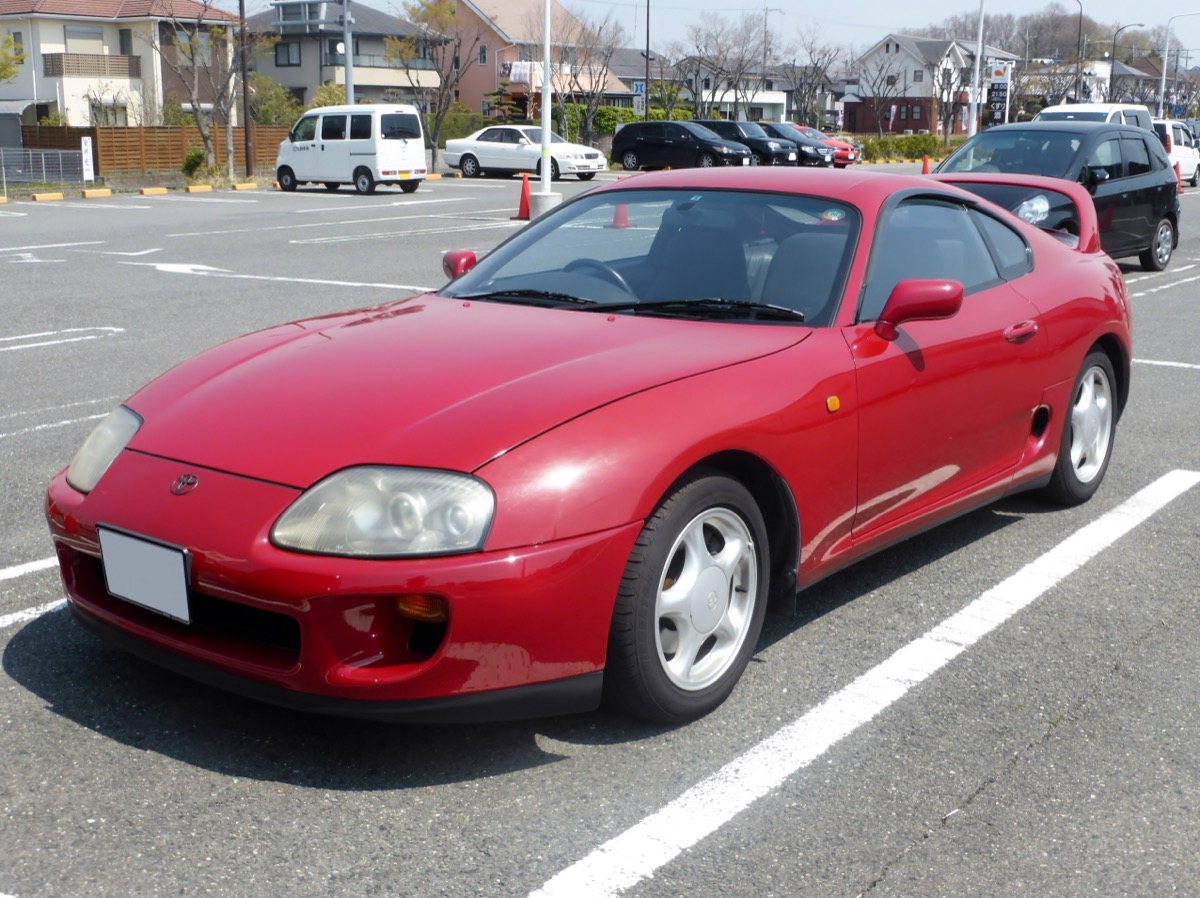

4. Mazda RX-7 FD (1992–2002)
New price: ¥2,990,000 — approximately $28,000 USD at 1992 exchange rates 2026 market: $30,000–$95,000; unmolested examples with low mileage command the top of the range
The RX-7 FD is the driver’s choice in any honest ranking of JDM cars. It weighs 1,260 kilograms. The front-mid engine position — the twin-rotor 13B-REW Wankel pushed behind the front axle — gives weight distribution that the GT-R and the Supra cannot match. At 50.2/49.8 front-rear, it is as close to neutral as a production car achieves without exotic engineering.
The sequential twin-turbocharged 1.3-litre rotary produces 255 horsepower in stock form. That number is modest. The way it makes power is not — rotary engines are smooth and high-revving in a way that piston engines at equivalent displacement cannot replicate, and the sequential turbo system (small primary turbo for low-end response, large secondary for top-end power) makes the power delivery progressive and controllable.
The RX-7 FD is the car in this list that rewards the best drivers most. If you are skilled and committed, it will show you what weight balance and communication actually feel like. If you push past your limits, it will not save you.
The reliability caveat is real and must be stated: the 13B-REW requires regular apex seal checks, fresh coolant, and careful warm-up and cool-down procedures. Owners who treat it like a piston engine will replace the motor. Owners who respect the rotary’s specific requirements get 100,000 miles from a healthy engine.
Prices have not moved as dramatically as the GT-R and Supra because the reliability reputation suppresses casual buyer demand. That gap is an opportunity for serious buyers who understand what they’re acquiring.
5. Mitsubishi Lancer Evolution VI (1999–2001)
New price: ¥3,540,000 — approximately $32,000 USD at 1999 exchange rates 2026 market: $35,000–$90,000; Tommi Mäkinen Edition commands significant premium
The Evo VI is the most rally-bred car ever sold to the public. Mitsubishi built the Evolution series to homologate vehicles for the World Rally Championship — to run a car in WRC, you had to sell a version of it to road customers. The Evo was the road car. The WRC car was the Evo with the limiters removed.
The 4G63 2.0-litre turbocharged inline-four produces 280 horsepower in Evo VI specification — again the gentleman’s agreement number, actually closer to 320 horsepower. The Super All-Wheel Control system distributes torque between all four wheels actively. The Active Yaw Control manages the rear differential. Together they produce a car that can be pushed harder than its power output suggests because the electronics are managing what would otherwise be understeer or oversteer into traction.
The Tommi Mäkinen Edition — built to commemorate Mitsubishi’s 1999 WRC championship — has a recalibrated ECU for 290 horsepower, Bilstein suspension, and Brembo brakes. It is the definitive Evo VI and the variant that commands premiums at every price level.
The Evo’s party piece is all-weather performance. Rain, ice, gravel — the AWD system adapts. Japanese tuners have pushed the 4G63 to extreme power levels, though the platform is less forgiving at high power than the RB26 or 2JZ. For a balanced, technically sophisticated driver’s car that remains usable in all conditions, the Evo VI is the most complete answer in this list.
What the Import Rule Means for the US Market
The United States has a 25-year rule for importing non-federalised vehicles. Cars not originally sold in the US market can be legally imported once they reach 25 years of age.
The practical effect: R34 GT-Rs began clearing the rule in 2024. The first clean examples arrived through specialist importers at prices that shocked buyers who had been tracking the market — $120,000 for a standard V-spec that might have been $50,000 in 2018. Supply is limited, condition is variable, and demand from buyers who have spent years waiting has pushed prices consistently higher.
The Evo VI begins clearing the rule in 2024–2026. NSX NA1 and Supra A80 have been legally importable in some configurations for several years; clean examples are increasingly scarce domestically in Japan.
For buyers in the US market, the calculus is this: prices will not come down. Every year of supply erosion in Japan — cars that get modified, crashed, or worn out — tightens availability without adding to demand. The US import market adds a buyer pool that previously had no legal access. Condition examples are already commanding premiums that would have been unthinkable in 2015.
The time to acquire a JDM car of this generation was five years ago. The second-best time is now.
The cars are real. The engineering is real. The prices reflect a global recognition that Japan, in a roughly fifteen-year window from the late 1980s to the early 2000s, built performance cars that have not been equalled in the mainstream market since.
That’s not nostalgia. That’s the market speaking clearly.
Share this
Keep Reading
Nissan Skyline GT-R R34: US-Legal Now — Specs, Prices & JDM Buyer's Guide (2026)
April 5, 2026
The World's Most Insane GT-R Builds (And Why the R34 Is Still the Starting Point)
April 5, 2026
The Bugatti Chiron: 1,479 Horsepower and the End of the W16 Era
April 10, 2026
Join the conversation
COMMENTS
Loading comments…
No comments yet. Be the first to weigh in.
Leave a comment
Posted
Thanks for joining the conversation.