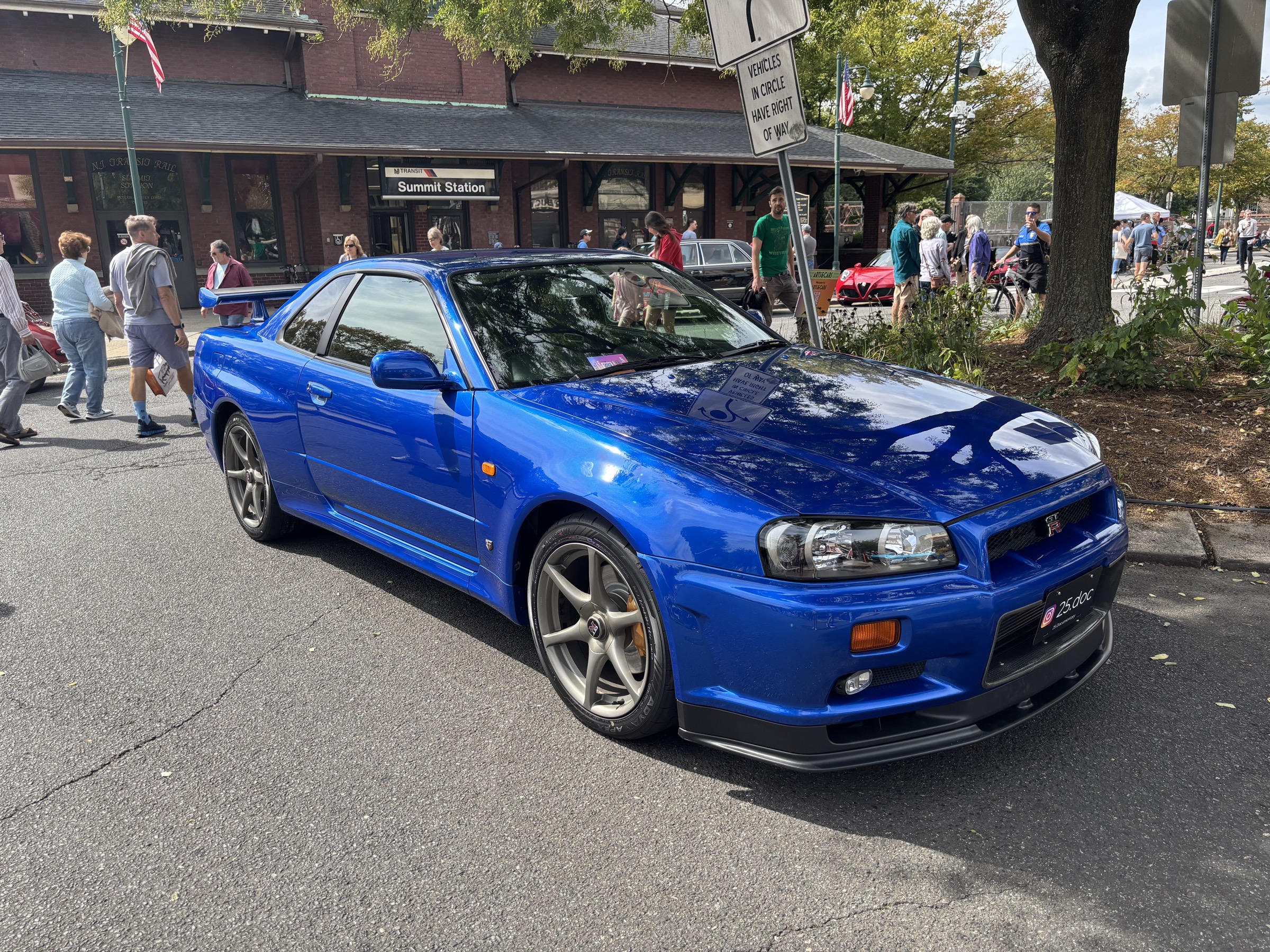
Nissan Skyline GT-R R34: US-Legal Now — Specs, Prices & JDM Buyer's Guide (2026)
There’s a generation of enthusiasts who grew up knowing exactly what a Nissan Skyline GT-R was, and knowing just as precisely why they couldn’t have one.
In the United States the R34 was a ghost. You could see it in Gran Turismo. You could see it in The Fast and the Furious. You could read about it in import magazines and stare at the photos until the pages went soft. What you could not do was buy one, drive one, or register one legally, because the US 25-year import rule kept the newest R34s in contraband territory until 2024. For a whole generation, the car existed as an idea and nothing else.
Now it can exist as a car. The remarkable part is that it was worth the wait.
What the R34 Actually Is
The Nissan Skyline GT-R R34 was built from 1999 to 2002. Like every GT-R before it, it came out of a very specific strand of Japanese engineering thinking: build a car that wins, whatever that takes, sort out the elegance afterwards.
At its core sits the RB26DETT, a 2.6-litre straight-six with twin turbochargers, feeding an ATTESA E-TS all-wheel-drive system and four-wheel steering. The factory quoted 276 horsepower. That was a polite fiction, and everyone knew it. Real output was closer to 320 hp straight off the line in Japan, roughly 400 with bolt-ons, and after that it became a question of how much abuse your transmission was willing to absorb.
Nissan built the GT-R as a homologation special, a road car that had to exist so the racing version could compete in Japan’s Group A touring car championship. The philosophy runs exactly counter to the McLaren F1’s. Where Gordon Murray deleted everything that wasn’t essential, Nissan bolted on anything that might help you win. The R34 is complicated, heavy for its power output, and almost impossible to catch out.
It is not a light, tactile, talkative sports car. It’s a siege weapon.
R34 GT-R Specs at a Glance
| Spec | Detail |
|---|---|
| Engine | RB26DETT — 2.6L twin-turbo inline-six |
| Factory power | 276 hp quoted (real-world ~320 hp) |
| Drivetrain | ATTESA E-TS rear-biased AWD + Super-HICAS 4-wheel steering |
| 0-60 mph | Low 4-second range (stock) |
| Top speed | Electronically limited to 112 mph (180 km/h) |
| Production | 1999-2002 |
| US import-legal | 1999 model year since January 2024 (25-year rule, rolling by year) |
| 2026 price range | ~$80,000-$200,000 (Midnight Purple II V-Spec: +20-30%) |
The ATTESA System — Engineering That Shouldn’t Work This Well
The engine isn’t what makes the R34 special. Neither is the power. It’s the all-wheel drive.
ATTESA E-TS (Electronic Torque Split) is a rear-biased system that reads wheel slip, acceleration and lateral G dozens of times a second, then shuffles torque between the axles in real time. Drive it gently and it behaves like a rear-drive car. Lean on it, and the moment the rears start to give up, torque goes forward instantly, predictably, with no theatre at all.
The result accelerates like a race car while staying as composed as something with twice the mechanical grip. Early road tests recorded 0–60 mph in the low 4-second range, which for a road car at this price in 1999 was extraordinary. Track numbers were more startling still. The V-Spec, with its Brembo brakes, stiffer suspension and wider bodywork, lapped the Nürburgring at times that embarrassed cars costing several times as much.
Then there’s the four-wheel steering, HICAS, which fed a small steering input to the rear wheels at speed to settle the car mid-corner. Japanese engineering being what it was in 1999, it worked.
R34 Variants, Explained (Don’t Overpay for the Wrong One)
Not every R34 is the same car, and the price gaps between trims are enormous. Know precisely what you’re looking at:
- GT-R (base) — the standard car. Still an RB26DETT and ATTESA; still extraordinary.
- V-Spec / V-Spec II — the enthusiast’s pick: Brembo brakes, stiffer suspension, an active rear diff, and aero tweaks. This is the one most people mean when they say “R34.”
- M-Spec / V-Spec II Nür — end-of-run specials with upgraded internals (the “Nür” name nods to the N1 racing engine). Rare, and priced accordingly.
- Z-Tune — not a trim you’ll stumble across: a Nismo-built, 2.8L, ~645 hp homologation unicorn with only around 19 ever made. If someone offers you a “cheap Z-Tune,” walk away.
A base GT-R and a V-Spec II Nür can sit six figures apart. Confirm the chassis code and the auction sheet before you fall in love.
Is the R34 GT-R Legal in the US? (Short Answer: Yes — Since 2024)
The R34 GT-R has been legal to import and own in the United States as of January 2024, when the 1999 model year cleared the federal 25-year rule. That rule works by model year, not purchase date, so the 2000, 2001 and 2002 cars come eligible one year at a time.
One caveat that costs real money: federal eligibility is not the same thing as painless registration. California in particular can still be brutal about emissions on imported cars, so check your state’s rules before you buy.
The Import Rule, the Waiting, and What Happened Next
The 25-year rule says any foreign vehicle becomes eligible for import once it turns 25. The justification is safety and emissions compliance, on the assumption that a car that old poses no real competitive threat to domestic automakers.
Built between 1999 and 2002, the R34 started crossing that line in 2024. What happened to prices was completely predictable, and happened anyway.
Clean, low-mileage R34 GT-Rs that changed hands for $30,000–$40,000 in Japan in the mid-2010s were trading at $80,000–$120,000 by 2022, purely in anticipation. By the time the cars could legally arrive in volume, the best examples were pushing $200,000.
None of which was irrational. A 25-year-old R34 can still humiliate modern sports cars on a road course. It’ll take almost any power level you ask for without exotic parts, and there’s a global community of engineers and tuners who have spent two decades working out precisely how to make it faster. It is also, crucially, finite. Nobody is building any more.
Which answers the question that nagged at a generation: what happens when the car you could never have becomes the car you can finally buy?
How Much Does an R34 GT-R Cost in 2026?
| Condition / variant | Typical 2026 price |
|---|---|
| Higher-mileage base GT-R | ~$80,000-$110,000 |
| Clean V-Spec / V-Spec II | ~$120,000-$180,000 |
| Low-mileage / Midnight Purple II | $200,000+ |
| Z-Tune (if you can even find one) | Seven figures |
R34 Buyer’s Checklist
Before you wire money on an imported R34, work through this:
- Get the Japanese auction sheet. Odometer rollback on JDM imports is real — the auction sheet is your source of truth on mileage and condition.
- Budget for the turbos. An RB26 turbo rebuild runs roughly $3,000-$8,000; assume it’s coming if the service history is thin.
- Verify the variant and chassis code. The trim gap is worth six figures — don’t take “V-Spec” on faith.
- Get an insurance quote first. Insuring a six-figure JDM import is not trivial, and it’s better to know before you own.
- Confirm state registration, not just federal eligibility (see the legality note above).
The R34 is a phenomenal car. It also rewards the buyer who does the homework and punishes the one who buys on feeling.
The Midnight Purple Problem
Spend any time in R34 circles and sooner or later you’ll walk into the Midnight Purple argument.
Nissan offered the car in a shade called Midnight Purple II, a deep, shifting colour that reads blue, then purple, then near-black depending on the light. Japan only, limited numbers, certain model years only. It is the most sought-after R34 colour by a margin that borders on absurd.
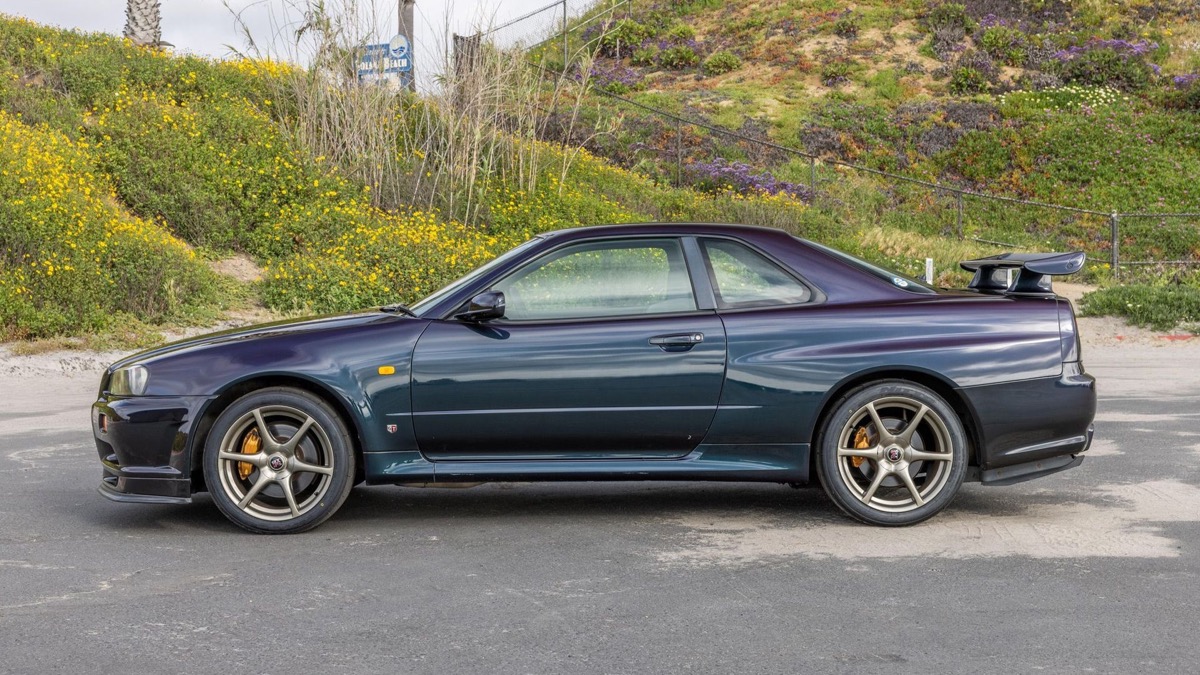
A Midnight Purple II V-Spec in excellent condition commands 20–30% over the same car in a common colour. Rational? No, not by any conventional measure. It’s the enthusiast market doing what enthusiast markets always do, deciding that the most desirable version of an already-desirable thing is worth substantially more than the alternatives.
Underneath the silly premium, though, sits genuine taste. The car looks extraordinary in Midnight Purple. It’s the right colour for this car in the same way the central driving position is the right seat arrangement for the McLaren F1: not the conventional choice, and correct anyway.
What Happens When You Drive One
The R34 doesn’t actually drive the way its reputation suggests.
The reputation says brutal, overwhelming, intimidating. The reality is fussier than that. The RB26 wants to be in its powerband, and below 4,000 RPM it’s a fairly modest car with the turbos doing nothing of interest. Above 4,500 RPM, both are spooling together and the acceleration turns violent and relentless. It doesn’t build speed so much as jump from normal to very fast, compressing time as it goes.
The chassis inspires the specific kind of confidence only really good all-wheel drive can. You push, it grips, it corrects, it grips harder. The limits sit high and the approach to them is transparent. It won’t swap ends on you without warning; it tells you what it’s about to do well before it does it.
What it won’t do is talk to you the way a lighter, simpler sports car does. The steering isn’t telepathic. The ride is firm without being punishing. It’s a serious car rather than an emotional one, which sounds like a complaint and isn’t. It rewards precision more than enthusiasm, and that’s a valid, badly underrated way to build a performance car.
Still Winning Arguments in 2026
The R34 occupies an odd spot in 2026. Old enough to be a classic. Fast enough to still matter. Rare enough to be genuinely valuable. And carrying two decades of cultural momentum with it, Gran Turismo and the films and the magazines and the forums and the tuner builds and the track records, the kind of meaning that accumulates slowly and can’t be manufactured on demand.
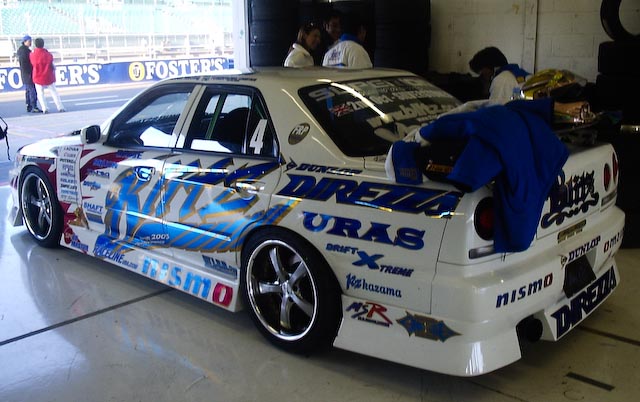
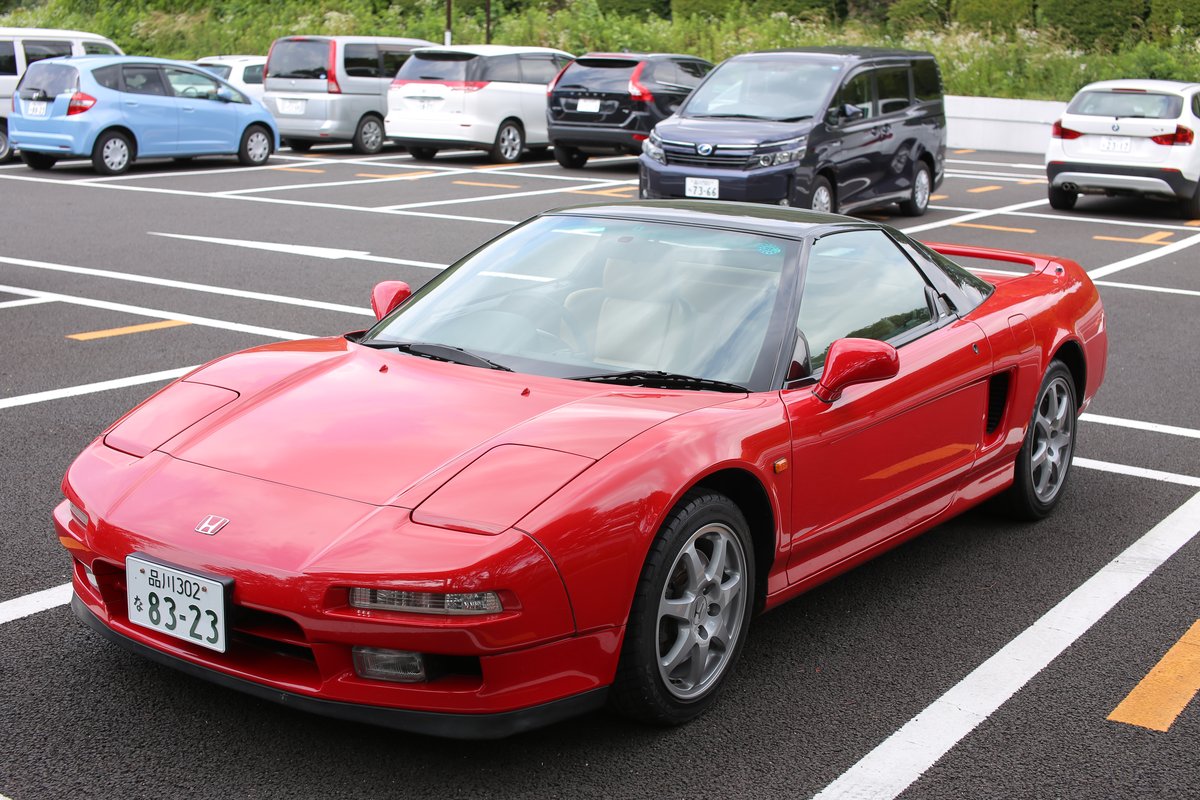
When people argue about the greatest Japanese performance cars, the R34 wins those arguments. Not because it’s the fastest or the most technically sophisticated thing Japan has produced; the NSX makes a better case for refinement and the LFA a better case for engineering purity. It wins because it stands for something specific about what a car can mean to the people who grow up wanting one. The builds that community has produced are their own argument.
It was the car you could see and not have. Now you can have it.
That changes the argument.
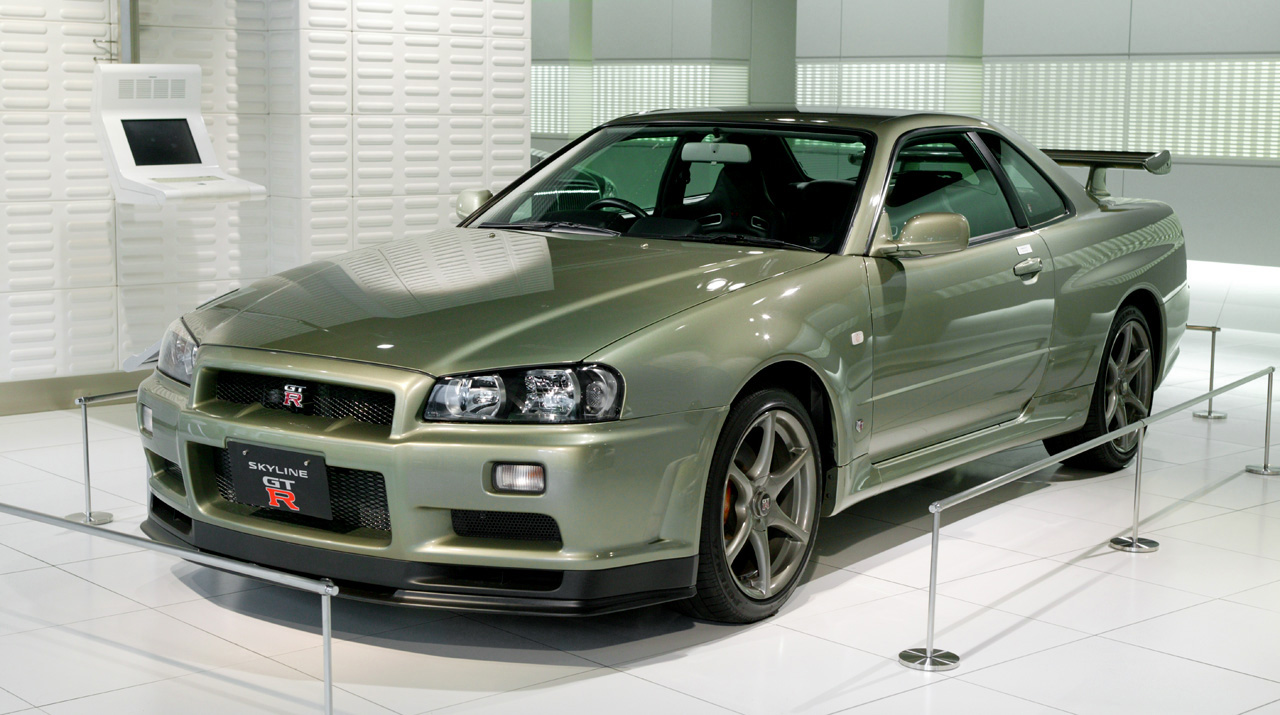
Images: 2001 Nissan Skyline GT-R R34, CC BY-SA. Used for editorial commentary.
Share this
Join the conversation
COMMENTS
Loading comments…
No comments yet. Be the first to weigh in.
Leave a comment
Posted
Thanks for joining the conversation.