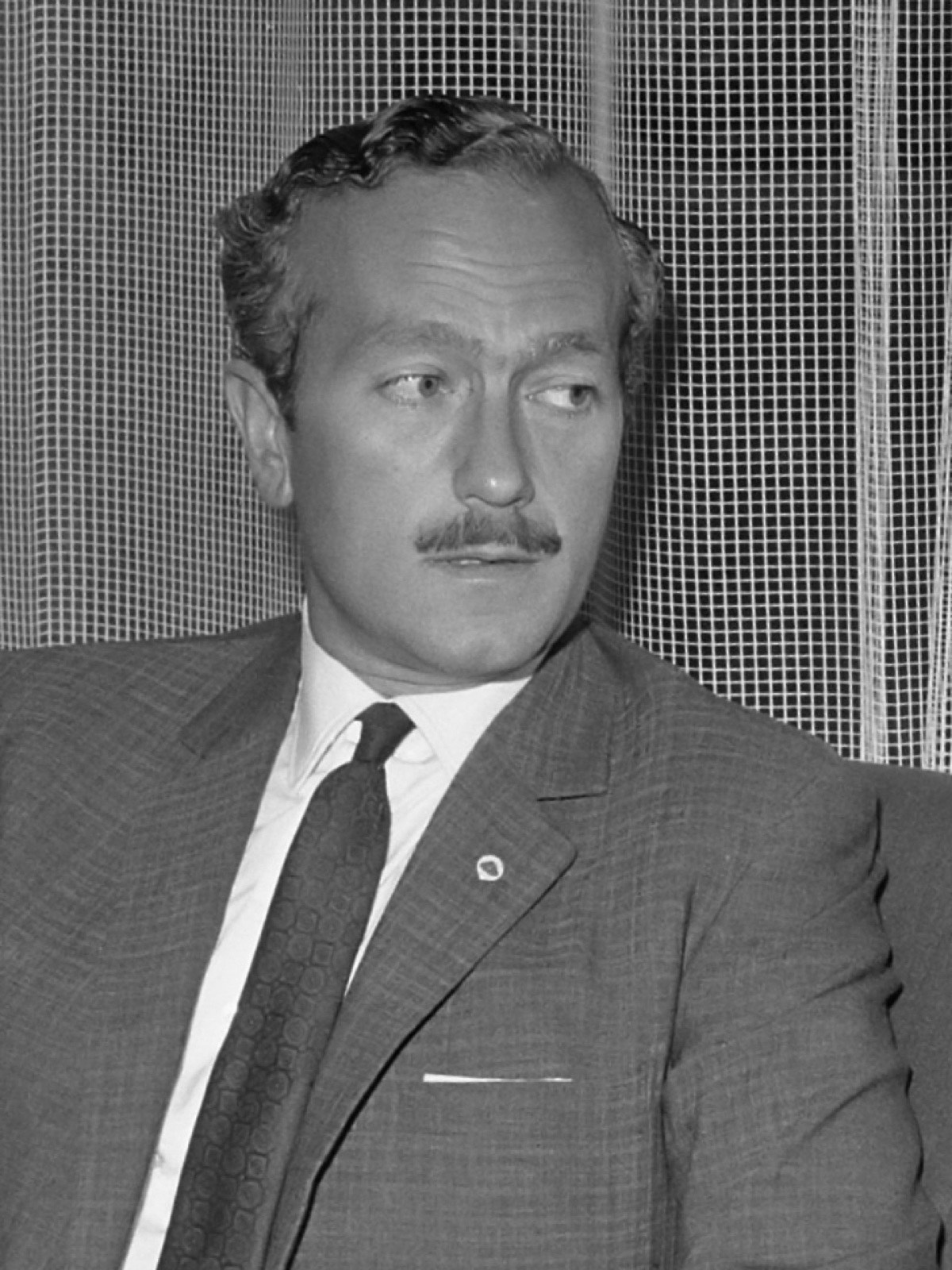
Lotus and Colin Chapman: Why Light Is the Only Luxury That Matters
“Simplify, then add lightness.”
Colin Chapman said it more than once, and he meant it as both a work order and a code of conduct. He built a company on those four words. He won seven Formula 1 constructors’ championships with them, rewrote what a road-going sports car could be by applying them outside the paddock, and he was still applying them when he died at fifty-four. No one in motorsport has ever compressed an engineering philosophy into fewer syllables, and almost nothing else from that era has aged half as well.
This is the story of Colin Chapman: the man who built Lotus, the idea that ran through everything he touched, and the way light cars are still engineered four decades after he was gone.
Royal Air Force, University, and the Mark VI
Anthony Colin Bruce Chapman was born in Richmond, England in 1928, the son of a pub owner. He flew training missions in the Royal Air Force after the Second World War, too late for combat but early enough to learn what a small, light aircraft would do when you pushed it past what the paperwork said it could take. Structural engineering at University College London came next. At twenty-one he was in his girlfriend’s parents’ garage, cutting into Austin Sevens so he could run them in club events.
The first car to carry the Lotus name showed up in 1948, a modified Austin Seven trials car built for crawling around fields at low speed. Everything after that got faster, lighter and odder. By 1952 he had registered Lotus Engineering Company Ltd. and was turning out one-off racing chassis for amateurs. Then came the Lotus Mark VI in 1953, the breakthrough: a tube-frame chassis wearing aluminum panels with a removable nose, aimed squarely at 750 Motor Club racing. Roughly 1,000 pounds. You could order it as a kit, build it in a domestic garage, and put a road registration on it.
The Mark VI set the template. Light. Stripped of anything that wasn’t carrying load. Body panels allowed to flex a little so the chassis didn’t have to haul around extra reinforcement. The aerodynamics look primitive against anything built after 1980, though for 1953 club racing they were as good as it got. And the cars won. They won at every level of British amateur and semi-pro competition. Chapman’s customer cars beat his customers’ rivals, and when Chapman himself climbed in, his own car beat the customer cars.
By 1957 the garage was finished as a workplace. Lotus took a small factory in Hornsey, north London. The model line had grown, the racing programme was scoring internationally, and the thinking that would drive the next twenty-five years was already fixed.
The Lotus Seven — The Philosophy Made Visible
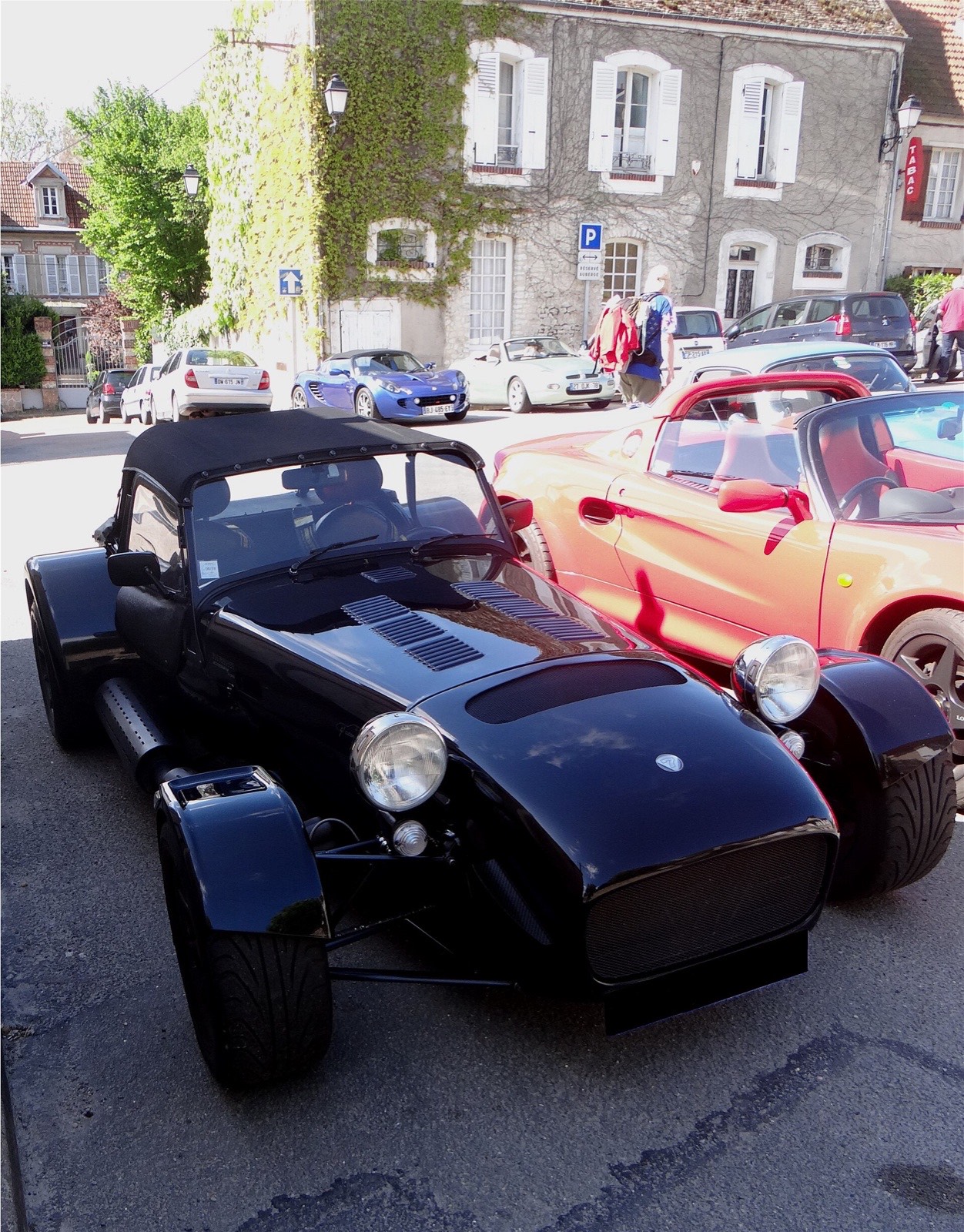
If you want Chapman in one car, it’s the Seven.
Introduced in 1957, the Lotus Seven took the Mark VI’s engineering and made it road legal. Tube-frame chassis, aluminum bodywork, no doors at all. You stepped over the side to get in. The original cars had no roof either, just a folding fabric cover. No traction control, no ABS, no power steering, none of the systems a modern car is assumed to need. Three gauges on the panel. Unupholstered seats. About 1,100 pounds in original spec.
What it did have: a four-cylinder engine somewhere between 40 and 105 horsepower depending on year and trim, independent suspension and disc brakes at all four corners, a four-speed manual. And a driver sitting out in the weather with nothing between him and the tarmac except the chassis and physics.
Call the Seven a perfect car and you have to qualify what you mean, because every modern sports car outruns it on every conventional metric. It’s perfect as an expression of the idea that produced it. There is no fat anywhere on the thing. Every part is there because the car stops working without it. Take a piece off and you’ve made it worse; bolt a piece on and you’ve added weight the car gets nothing back for.
Chapman sold the design to Caterham Cars in 1973. Caterham has built it, refining continuously, every single year since, which makes fifty-three consecutive years as of 2026. The current Caterham Seven 360 weighs 1,180 pounds, makes 180 horsepower, and runs 0–60 mph in 4.0 seconds. The chassis architecture is essentially what it was in 1957. The car has aged only in the sense that the world around it has.
Road Cars — Elite, Elan, Europa, Esprit
The Seven kept the purists fed. Alongside it, Chapman ran road car programmes that took the same obsession with mass and dressed it in something more commercially conventional.
The Lotus Elite (1957–1963) was the first production road car with an all-glass-fibre monocoque. The shell was the structure. No separate frame anywhere, just a fibreglass body doing the structural work. Around 1,460 pounds, with a 1.2-litre engine making 75 horsepower. It was beautiful in a way no previous Lotus road car had even attempted, and it was also expensive, a nightmare to manufacture, and a money-loser on every single unit. Chapman killed it after roughly 1,000 cars.
The Lotus Elan (1962–1973) took over. Steel backbone chassis, fibreglass body, twin-cam four making 105–126 horsepower depending on year, about 1,500 pounds all in. By every account from period road testers and from the collectors who chase them now, it was one of the finest-handling road cars anybody has built. Thirty years later it seeded the Mazda MX-5 Miata: Mazda’s engineers went through the Elan obsessively before drawing the original car, then used the same backbone-plus-light-body logic to get to a very similar place.
The Lotus Esprit (1976–2004) was the push into proper supercar territory. Mid-engine, wedge body by Giorgetto Giugiaro at Italdesign, a turbocharged four making up to 264 horsepower in the later cars. Then The Spy Who Loved Me landed in 1977, Roger Moore drove one off a pier, it turned into a submarine, and the Esprit became a cultural object with a life entirely separate from its lap times.
The thread running through all three is the same. Light first. Pretty by accident, if at all. Speed from power-to-weight rather than raw output. In 1986 a 264-horsepower Esprit could see off Ferrari V8s making 300-plus, because the Esprit carried roughly 2,500 pounds and the Ferrari roughly 3,300.
Formula 1 — The Engineering Revolution
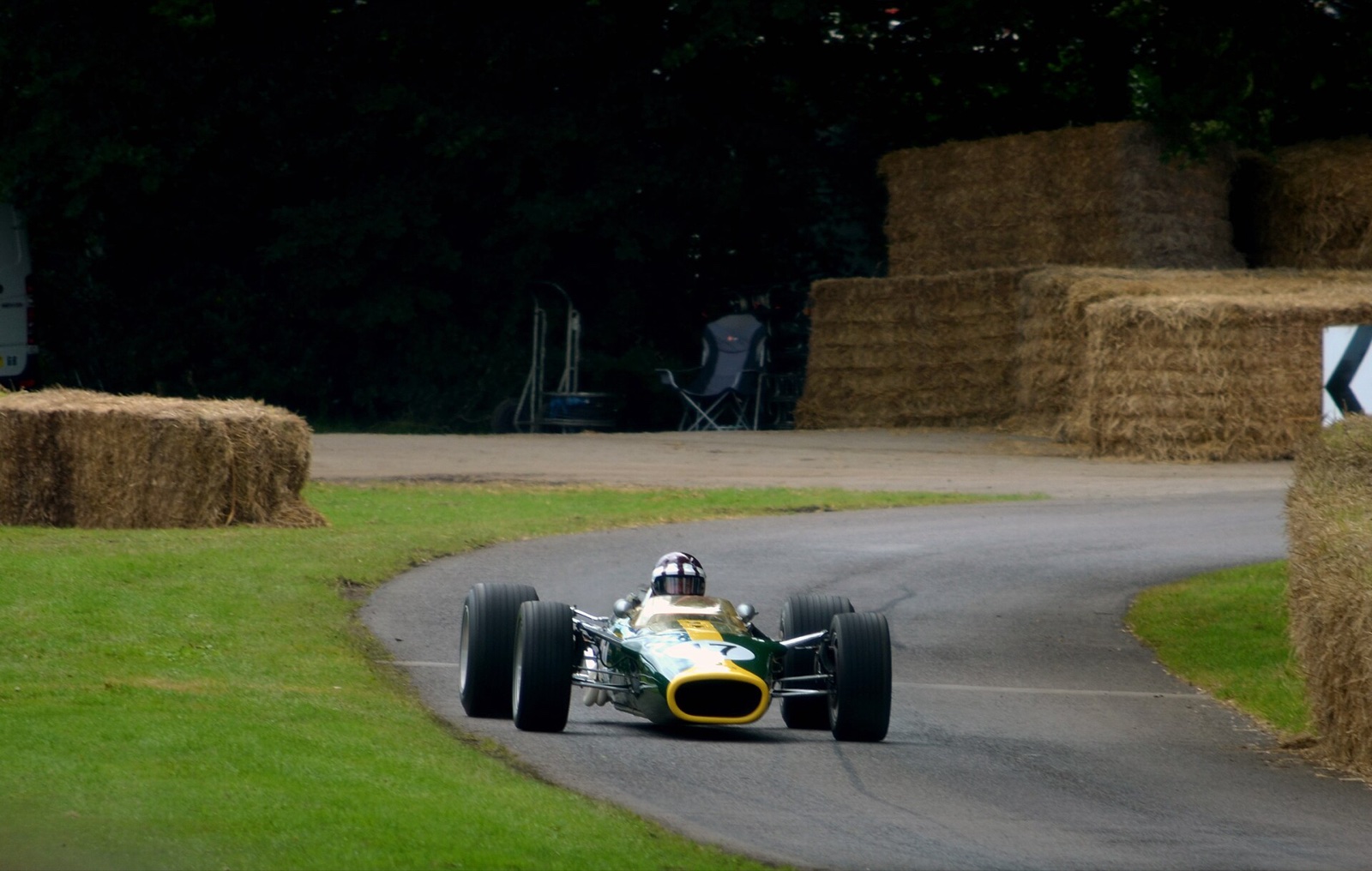
Grand Prix racing is where the philosophy produced Chapman’s most consequential hardware.
Lotus 25 (1962) was the first F1 car built around a fully stressed monocoque. Until then, F1 meant a tube frame with body panels hung off it. Chapman made the body do the work: aluminum panels riveted into one shell that was both skin and primary structure. The 25 came out lighter and stiffer than anything it raced against, and Jim Clark took the 1963 World Championship in it. Every F1 car built afterwards, by every constructor, used some version of a stressed monocoque. Chapman had drawn the architecture that would define the sport for sixty years.
Lotus 49 (1967) brought the engine-as-stressed-member. The Cosworth DFV V8, designed new for the car, bolted straight onto the back of the monocoque and became the structural link between chassis and rear suspension. The engine took suspension loads. No sub-frame between it and the back of the car at all. What you got was shorter, lighter and cleaner in the airflow than anything hanging its motor in a subframe. Clark won on the 49’s debut at Zandvoort in 1967. Lotus and Cosworth would take 155 Grands Prix together, and the stressed engine stayed the F1 standard for the next fifty years.
Lotus 78 (1977) brought ground effect. Mario Andretti drove it. The underbody was shaped to suck the car down, with sliding skirts along the sides sealing against the track so the underfloor airflow could generate downforce several times what wings alone managed. Andretti took the 1978 Drivers’ Championship, Lotus took the Constructors’, and inside two seasons every team on the grid had copied the idea. Ground effects ran the sport until the FIA banned the configuration in 1983 on the grounds that the failure mode was lethal: lose the underbody seal and the downforce vanished in an instant, which sent cars into the air. The concepts came back, reworked, with the 2022 regulation reset.
Total Lotus F1 results under Chapman (1958–1982): 79 Grand Prix wins. Six Drivers’ Championships (1963 Clark, 1965 Clark, 1968 Hill, 1970 Rindt, 1972 Fittipaldi, 1978 Andretti). Seven Constructors’ Championships. Drivers killed in Lotus F1 cars in that period: four, being Stacey, Clark, Rindt and Peterson. The cars were fast because they were light, and “light” occasionally meant “structurally on the edge.” Chapman lived with that trade. The safety standards of the era forgave it in ways nobody would now.
DeLorean and the End
The 1970s came close to finishing Lotus. The Esprit cost too much to build. Buyers were drifting away from small specialist sports cars toward bigger, softer GTs. The F1 programme swallowed capital at a serious rate. By 1980 the company was in real trouble.
Chapman’s answer was a consultancy deal with John DeLorean’s company. Lotus would handle the DMC DeLorean’s chassis and body engineering; DeLorean would pay roughly £18 million for it. A lifeline, on paper.
It was also, looking back, a substantial financial irregularity. About £10 million of the contract value went into a Swiss bank account via layered offshore arrangements. Chapman was implicated. When DeLorean’s company collapsed in 1982 the fraud investigation opened, and Chapman would have stood as a primary defendant at the trial that followed.
He died of a heart attack on December 16, 1982, aged fifty-four, before any of it reached him. His widow Hazel and the Lotus board spent years untangling the financial and legal mess. The company came through it. His reputation, in the months right after his death, was tangled up with the investigation, and it took time for the engineering record to reassert itself while the money allegations shrank to a footnote.
Everyone who worked with him describes an extraordinarily demanding boss: direct, impatient with slow thinking, prepared to send a car out with known structural compromises rather than miss a race. The same people describe the most original engineering mind British motorsport produced after the war. Both of those are accurate.
What Remains
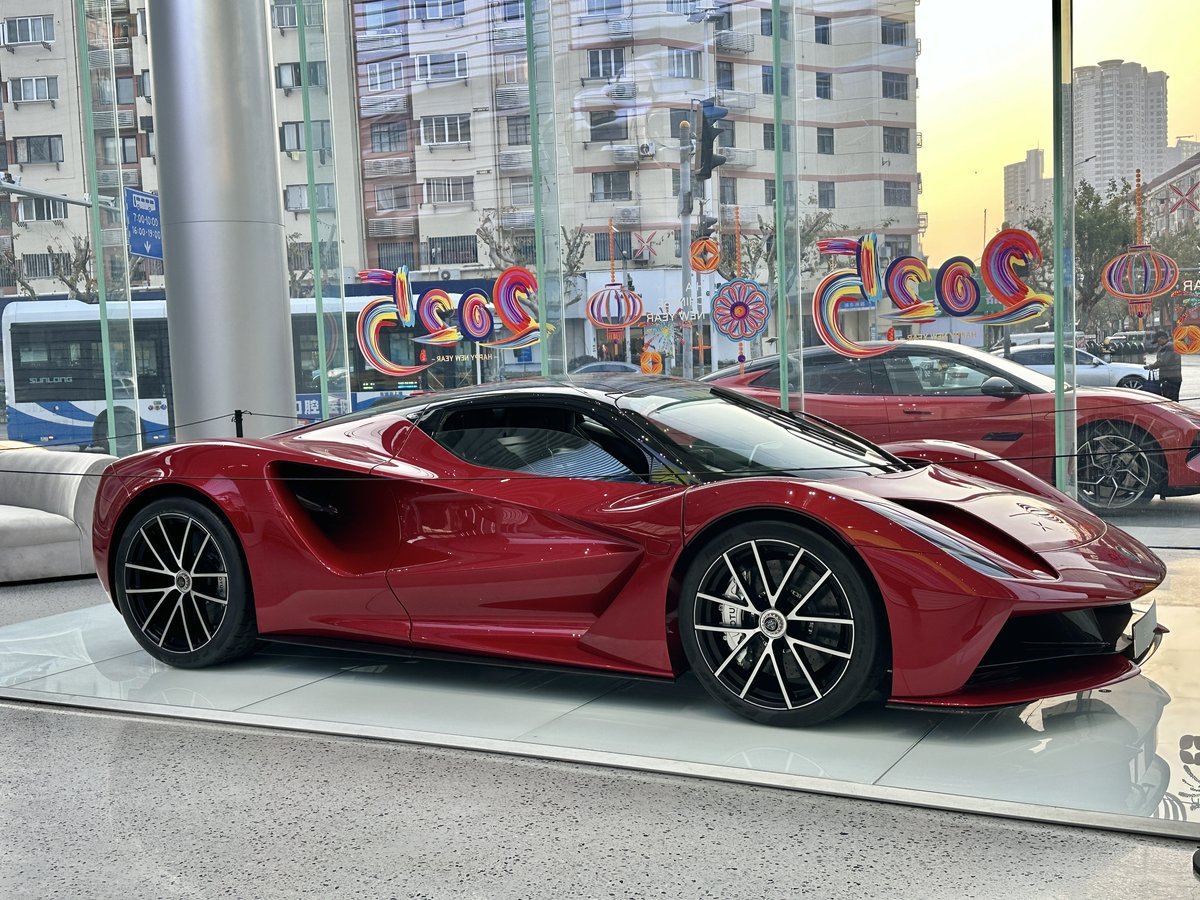
Lotus now belongs to Geely, the Chinese automotive group. The company builds the Evija hypercar, 2,000 horsepower from four electric motors, carbon-fibre construction, the most powerful production car in history when it launched, plus the Emira, the last combustion sports car the company will make. Neither one is a direct continuation of Chapman’s road-car thinking. The Evija is a serious machine, but it isn’t light by his definition. The battery pack on its own outweighs an entire Seven.
The philosophy is what survived him. Somewhere in every engineering review at every serious sports car maker, somebody asks his question: can we delete this component? Porsche’s GT3 programme is built around it. Singer Vehicle Design’s whole business exists inside it. McLaren’s carbon monocoque fixation runs straight back to the stressed shells Chapman riveted together. The Miata exists because Mazda’s engineers spent months pulling an Elan apart in their heads first.
Ask whether a decision adds mass without paying for itself in performance, and you have the most useful test in sports car engineering. Chapman wrote that test. He never got to watch the rest of the industry adopt it wholesale.
Forty-three years after his death, “simplify, then add lightness” is still the most quoted four-word phrase in motorsport engineering, and it lasts because it happens to be correct. Most engineering philosophy curdles with time. This one hasn’t, which is about as rare as results get in any field.
The proof is on sale right now: a Caterham Seven, direct descendant of the 1957 car, sixty-nine years of continuous production behind it, same architecture, same thinking. Light. Always light.
That’s the legacy.
Photo credits: Wikimedia Commons, CC BY-SA — Caterham Seven (continuous production of the original Lotus Seven design), Lotus 49 with Cosworth DFV (1967 Formula 1 season).
Share this
Keep Reading
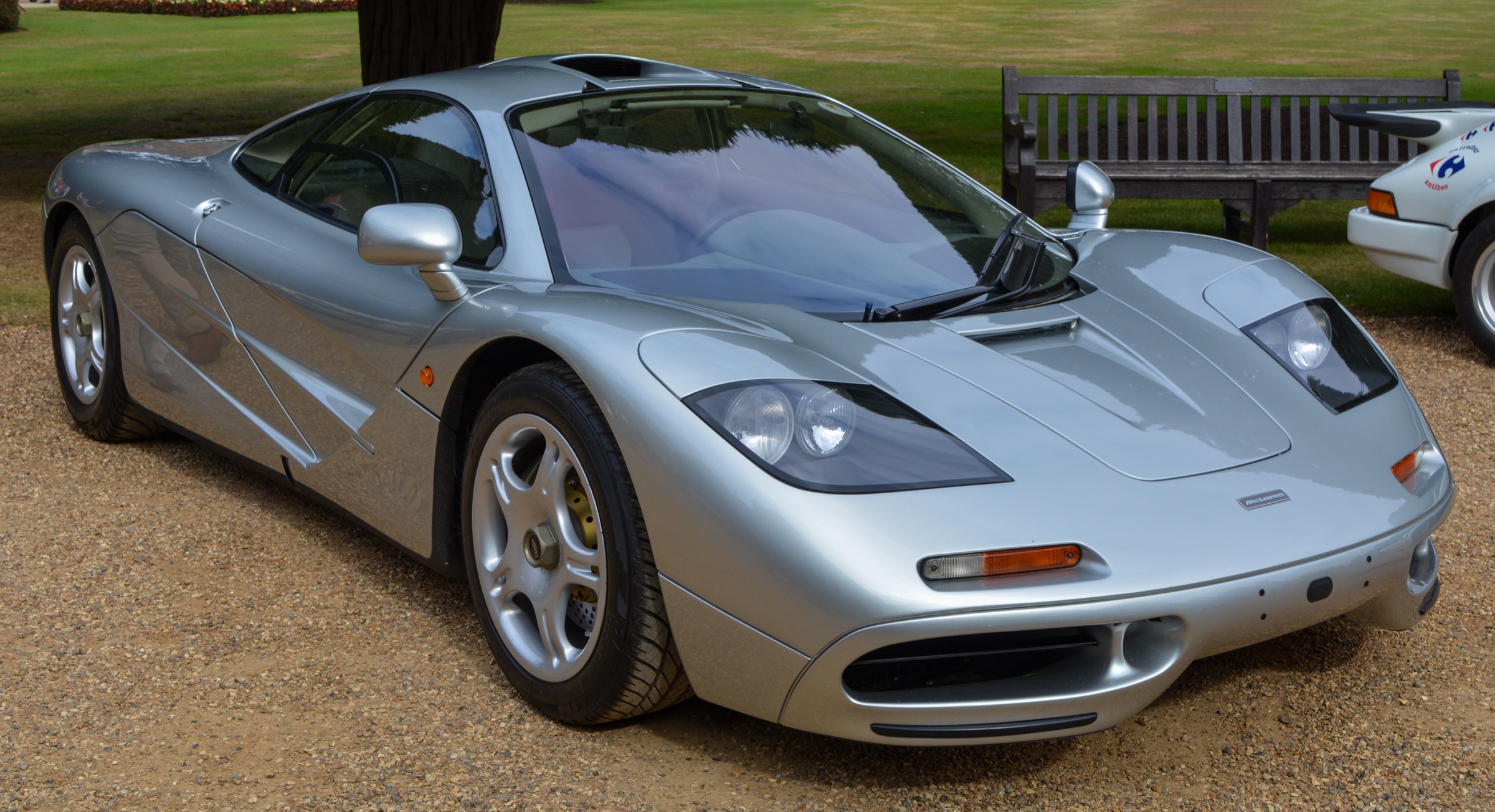
The McLaren F1: The Last Car Gordon Murray Will Ever Need to Apologise For
April 5, 2026
Gordon Murray: The Man Who Refused to Build a Bad Car
April 5, 2026
The Lotus Evija: 2,000 Horsepower. Four Motors. The Most British Car You've Never Heard Of.
April 15, 2026
Join the conversation
COMMENTS
Loading comments…
No comments yet. Be the first to weigh in.
Leave a comment
Posted
Thanks for joining the conversation.