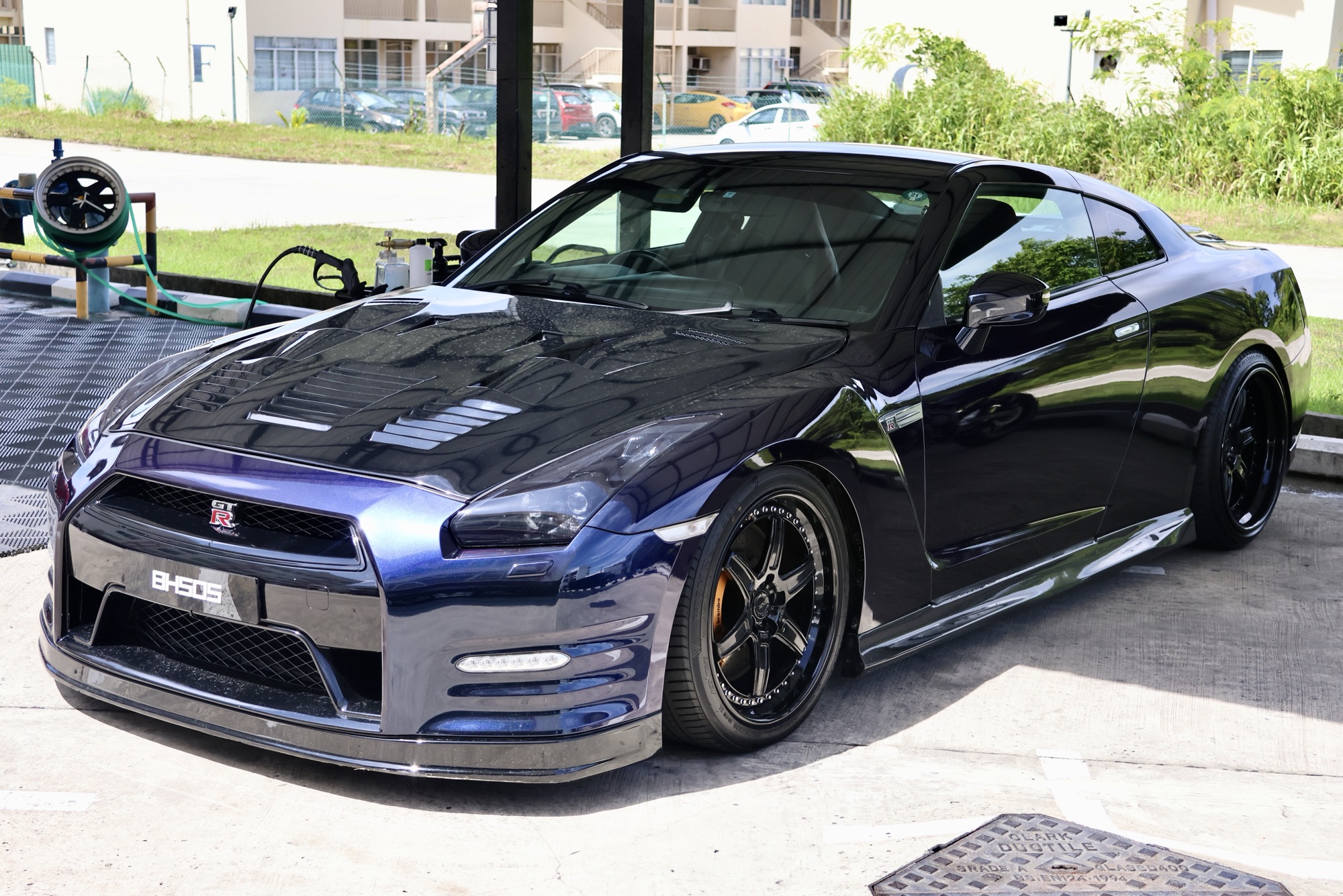
The R35 GT-R Reliability Audit: What Actually Breaks, What It Costs, and Which Years to Buy
The R35 GT-R is one of the most argued-about used cars in the modern enthusiast world, and most of the arguing happens with the wrong evidence.
Forum anecdotes blur together. Dealer service writers contradict specialist shops. YouTube long-term reviews use one car as a synecdoche for an entire production run that spanned 18 years and three generations of mechanical revision. Somebody knows a guy whose GT-R blew up at 60,000 miles, and that becomes the consensus. Somebody else has 140,000 trouble-free miles, and that becomes the consensus too.
So we did something different. We pulled every recall the National Highway Traffic Safety Administration has filed against the R35 across all 16 model years from 2009 to 2024. We pulled every consumer complaint filed with NHTSA’s Office of Defects Investigation in the same window. We cross-referenced the published service interval framework from two independent UK specialist shops and the public rebuild pricing tier from the named GR6 transmission specialist that other shops actually use. And we anchored the ownership-cost section against a single named, verifiable public figure — Craig Lieberman, the technical advisor for the first two Fast and the Furious films — who logged seven years and 48,000 miles of receipts on a 2015 GT-R.
The story that emerges is more useful than the forum version, and the most important finding can be reduced to one chart.
The Chart That Should Have Ended the Argument
The R35 GT-R was produced in three distinct technical generations, identifiable by Japanese chassis code: CBA-R35 from late 2007 through 2010, DBA-R35 from 2010 through 2016, and 4BA-R35 from 2016 to the end of production in 2024. Each generation incorporated mechanical revisions — not just cosmetic facelifts. The DBA changes specifically targeted the transmission failures we’ll get to in a moment.
Here is what every R35 NHTSA complaint, across all 16 model years, looks like when grouped by year:
| Model Year | Complaints filed with NHTSA | Generation |
|---|---|---|
| 2009 | 19 | CBA |
| 2010 | 11 | CBA |
| 2011 | 1 | CBA |
| 2012 | 0 | DBA |
| 2013 | 1 | DBA |
| 2014 | 0 | DBA |
| 2015 | 0 | DBA |
| 2016 | 0 | DBA / 4BA transition |
| 2017–2024 | 0 across all eight years | 4BA |
Thirty of the thirty-two safety-grade complaints filed against the R35 across its entire production run come from the first two model years. Cars built from 2017 through the end of production in 2024 generated zero NHTSA complaints. The 2011 mid-cycle revisions worked. The 2017 second facelift effectively eliminated the issues that NHTSA tracks.
Data source: NHTSA’s Office of Defects Investigation API, queried by VIN-decoded vehicle parameters for Nissan GT-R across model years 2009–2024.
This is the chart you should hold in your head while we go through the failure modes one at a time, because every story below is really a CBA story.
How We Built This
There is a category of reliability article on the internet — and on automotive sites with much higher domain authority than this one — that consists of three paragraphs of vague consensus opinion, lifted from forum threads, with no attribution, no methodology, and no acknowledgment of the bias problems baked into anecdotal sourcing. We tried not to write that article.
Federal data came from two NHTSA APIs: Recalls (recallsByVehicle) and Complaints (complaintsByVehicle), queried for every model year of the R35. Recalls give you the manufacturer-acknowledged defect record. Complaints give you the owner-attributed event record with Office of Defects Investigation ID numbers that are individually citable. Every owner quote in this piece carries an ODI number you can independently verify on nhtsa.gov.
Specialist shop data came from six independent R35 specialists across three continents: Litchfield Motors and Auto Torque in the UK, Colab Garage, Leonardi Performance, and 8020 Automotive in the US, and Hanz Autoworks in Asia. The transmission pricing tier comes from ShepTrans, the named GR6 specialist that the other shops actually reference.
Owner-cost data comes from one named, public-figure case study — Craig Lieberman, whose seven-year R35 receipts were published by Carscoops — supplemented by CarEdge’s national ownership-cost average for triangulation.
What we did not do: anonymous Reddit and forum scraping, which was blocked at the infrastructure level by the platforms in question and which would have produced lower-attribution evidence than the NHTSA-sourced material we used instead. That is a real limitation of this audit, but it is also why the evidence here is anchored on government complaint IDs and named owners rather than usernames.
What the Nissan Dealer Won’t Tell You About Your Transmission
The R35’s six-speed BorgWarner-co-designed GR6 dual-clutch transaxle is the component everyone fears, and the fear is justified for some cars and overstated for others — but the fear story has two parts, and the part nobody talks about is what the dealer is willing to charge you to fix it.
Here is what two separate 2010 GT-R owners told NHTSA, on the record:
“Transmission on my 2010 Nissan GTR failed at 40,138 miles. Nissan wants me to pay $18,000 to replace the transmission. Stated that they don’t repair them. Car would not go into reverse or forward gears after normal driving. Nissan charged me $1,034 [for diagnosis].” — NHTSA ODI 10914111
“Car would not go into reverse or forward gear after starting the engine, stationary. Took the car to the dealer for repair and was informed that the transmission needed to be replaced at a cost of $18,000. This vehicle has less than 50,000 miles on it.” — NHTSA ODI 10909533
Two strangers, same year of car, sub-50,000-mile transmissions, identical $18,000 quotes. That is the Nissan dealer position: we don’t rebuild these, we exchange the whole unit.
Now here is the public pricing tier from ShepTrans, the specialist shop the other specialists send you to:
| ShepTrans GR6 rebuild | Price |
|---|---|
| Stage 1 (stock-power use) | $3,495 |
| Stage 2 | $8,295 |
| Stage 2.5 | $8,795 |
| Stage 3 HD (modified street) | $14,895 |
| Stage 4 Extreme | $27,695 |
| Stage 5 Extreme | $31,495 |
| Stage 6 Extreme | $38,995 |
The specialist entry tier is nineteen percent of the dealer’s “totaled” quote. Most R35 owners who hit a transmission failure don’t need a Stage 3 HD build — they need the basic rebuild that addresses the known failure modes the specialist community has spent fifteen years cataloging. The dealer doesn’t have a part number for that work, so it doesn’t exist on the work order. The specialist does.
The failure modes themselves are well-mapped, and they cluster overwhelmingly on the early cars. Colab Garage’s breakdown identifies five distinct GR6 failure categories on CBA cars (2009–2011): pressure sensor failure from age and heat, shift fork piston wear, clutch seal tearing, gear selector ring damage, and solenoid malfunction from metal-fragment accumulation. The DBA revisions in 2011 added clips to keep the shift-fork pistons properly located and redesigned the clutch seals and selector rings. Litchfield’s plain-English summary: “the 2011+ UK car had a subtly modified gearbox and is far less prone to some of the gear selection issues associated with the original 2008–2010 versions, with Nissan making further improvements in 2013 and now seeing almost no issues with these later boxes.”
The other component to know about — separate from the transmission proper — is the bellhousing rattle. The R35 places the transmission at the rear of the car and connects it to the engine with a driveshaft only, without the torque tube layout that the Corvette uses. The independent movement between front and rear creates push-pull forces that wear the bellhousing shaft bearings over time. The symptom is a noticeable rattle at idle. The repair is a $899–$1,299 upgraded bellhousing and roughly three hours of labor, totaling under $2,000 at most independent specialists. It is annoying. It is not catastrophic.
The VR38DETT — Bulletproof Until You Tune It
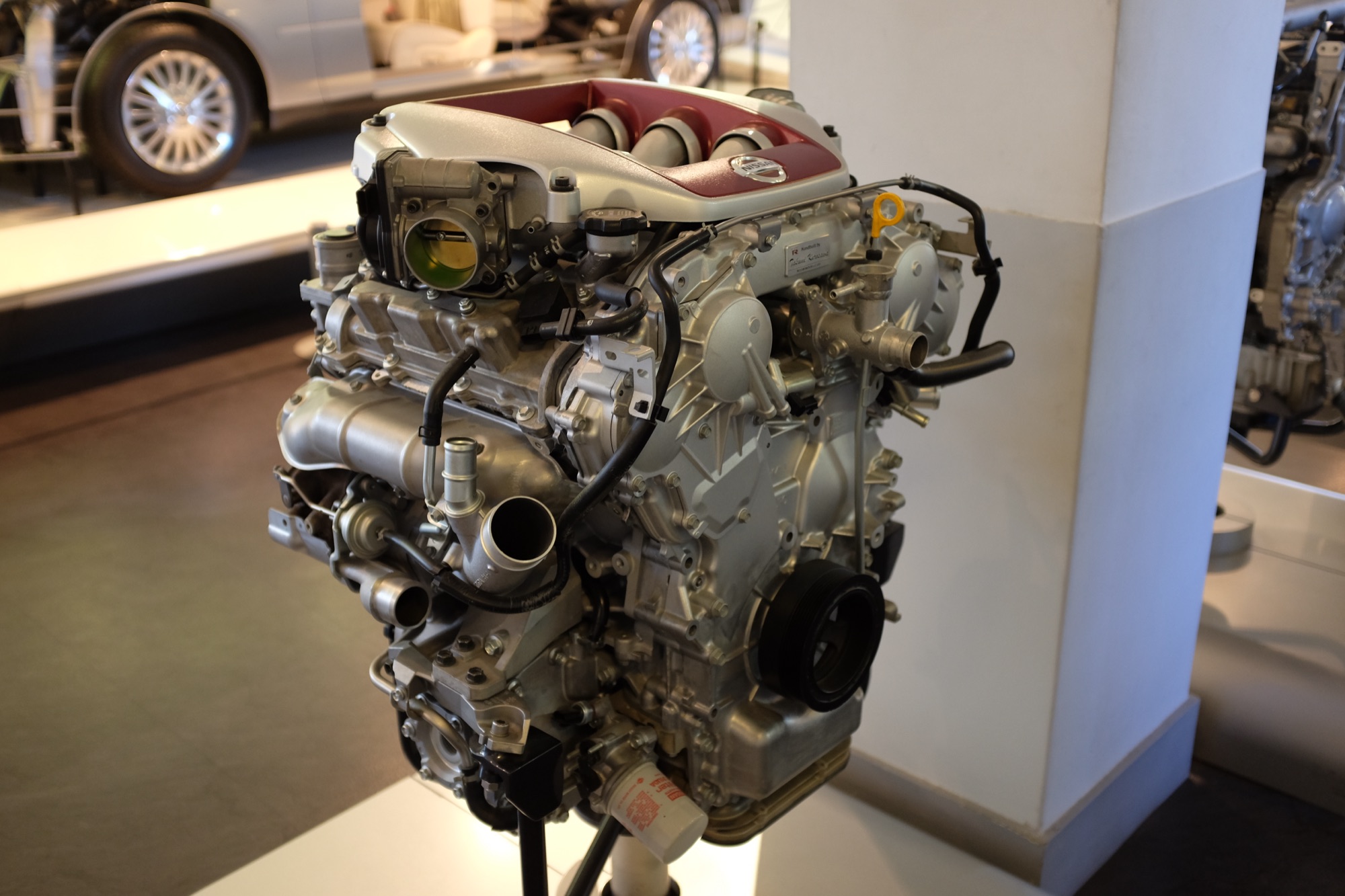
The engine is genuinely good.
The hand-built twin-turbo 3.8-litre V6 — designated VR38DETT — has carried the R35 through every generation, gaining power from 480 PS in the 2007 launch cars to 570 PS in the 2017+ 4BA, and 600 PS in the NISMO variants. With the conservative tuning and the substantial cooling system Nissan engineered around it, the stock engine is durable past 150,000 miles in the hands of an owner who actually services it.
What kills VR38DETT engines is modification beyond their thermal and mechanical headroom, not age. Specialists are consistent on the limit: the stock engine handles 600 wheel horsepower comfortably and roughly 650 lb-ft of torque. Bolt-on modifications past 700 wheel horsepower start breaking connecting rods. Past 750 horsepower with stock internals, you are gambling with the engine. The forged-rod tier of build, the upgraded oil pump, the better head studs — these exist for a reason, and the reason is that owners who skipped them blew their engines.
The high-mileage failure to watch for is rod bearing wear, which manifests as a knocking noise and a drop in oil pressure. It is the consequence of bad oil discipline more than any inherent design flaw. The mitigation is straightforward: premium oil (Motul 300V or Castrol Edge tier), an upgraded oil pump if the car is being driven hard, and oil changes at the specialist-recommended interval rather than the owner’s-manual interval.
Boost leaks and turbo bearing wear show up on older cars regardless of tuning. The repairs are not exotic. Both are diagnosable by any competent R35 specialist in an afternoon.
The cooling system has one CBA-specific failure mode worth flagging: Hanz Autoworks’ shop blog lists radiator fan motor failure as one of the three most common observed R35 problems, particularly on 2008–2010 cars. The symptom is overheating in stop-and-go traffic. The replacement part is inexpensive; the labor isn’t trivial but it isn’t an engine job either.
The Electrical Layer — The Long Tail of Small Annoyances
The transmission is the headline. The electrical failures are the long tail, and they are heavily concentrated in the same CBA cluster.
The single most-complained-about issue across the entire NHTSA complaint record for the 2009 and 2010 model years is the instrument cluster LED failure. The fuel gauge LED, the shift indicator, the speedometer backlighting — they burn out, individually or in groups, and the only fix is a complete cluster replacement. Owners’ price point, on the record:
“It is an extremely common issue for these gauge clusters to go out and it requires a $2,000 replacement. Nissan would not honor my extended warranty.” — NHTSA ODI 10783023
Nissan was sufficiently aware of the problem that they extended the original 3-year/36,000-mile warranty on the cluster to 6 years/unlimited miles. But owners who didn’t notice the failure within the extended window — which is most of them, because the lights mostly fail at night — were left paying out of pocket. One owner, ODI 10780106, noted that their replacement cluster failed with the same issue. Nissan never fully solved it.
The second documented electrical headache is the fuel EVAP system, and on 2009-only cars it crosses into legitimate safety territory:
“During a track day my fuel EVAP canister caught fire. There have been other GT-R owners that do not even track the car with normal driving, that have displayed a fuel stain in the passenger fender liner that is soaked from fuel from an overwhelmed (?badly designed) canister.” — NHTSA ODI 10852043
Nissan redesigned the EVAP system for the 2010 model year. The redesign did not fully resolve the issue — 2010 owners continued to file the same fender-liner leak complaint, often noting the proximity of the leak to the exhaust as a fire risk. If you are buying a 2009 or 2010 car and you plan to take it on track, this is the inspection item.
The third item is the ABS hydraulic control assembly, which fails as a Bosch C1111 code and requires the entire unit to be replaced. One ODI-recorded 2009 owner had this fail at 19,000 miles. The repair is expensive, particularly through the dealer.
And finally there is the steering lock, which was the subject of NHTSA recall 15V054000 — covering 2009 GT-Rs built between March 14, 2007 and April 25, 2008 — and a separate voluntary service campaign covering 2009 through 2011 cars. The symptom is the steering lock failing to disengage, which prevents the engine from starting. Owners with affected cars are eligible for free dealer repair, but the campaign predates many current owners’ awareness of it. If you are buying a 2009 or 2010, this is the second thing to check after the EVAP system.
There are smaller items — TPMS sensor faults on every generation pre-2017, Bose front lower door speaker rattle (a known design issue with a stocked replacement part), Tracker module clicking when its subscription lapses, multimedia system flicker — but none of these rise to the level of a buying decision. They are inconvenience taxes, not deal-breakers.
The Real Ownership Math: Garage Queen vs. Track Car
The honest version of “what does an R35 cost to own” depends entirely on how you drive it, and the gap between the two endpoints is bigger than any single source will tell you.
Here is what CarEdge publishes as the national average for a 5-year R35 ownership window:
| Category | 5-year total | Annual |
|---|---|---|
| Depreciation | $75,127 | $15,025 |
| Insurance | $31,075 | $6,215 |
| Financing | $27,786 | $5,557 |
| Fuel (18 MPG) | $12,835 | $2,567 |
| Maintenance | $3,466 | $693 |
| Total | $150,290 | $30,058 |
That $693 annual maintenance number is the national average, and it is the figure that will get repeated in every R35 ownership article on the internet that doesn’t ask a follow-up question.
Now here is what Craig Lieberman, the Fast and the Furious technical advisor, actually spent on his 2015 GT-R across seven years and 48,000 miles, including five track days per year:
| Category | 7-year total |
|---|---|
| Tires | $7,700 |
| Brake rotors | $1,800 |
| Brake pads (two changes) | $1,400 |
| Oil changes | $1,600 |
| Transmission fluid | $2,700 |
| Shocks | $2,000 |
| Total maintenance | $17,400 |
| Annual average | $2,485 |
Plus $19,400 in modifications layered on top.
Lieberman’s actual cost is 3.6× the national average. Five track days per year is not radical R35 use — it is what a meaningful percentage of owners do with these cars. The garage-queen-vs-driven-car delta is real, and it is the conversation any prospective buyer should have honestly with themselves before signing.
The expensive items, in descending order, are tires (front 285/35R20s and rear 305/30R20s, around $1,900 for a full set), trans fluid service every 35,000 miles at roughly $400, brakes that wear quickly under track use, and the inevitable specialist visit when something on the long list above eventually needs attention.
The Buying Guide, by Generation
Now we can write the buyer’s recommendation that the data supports.
CBA-R35 (2007–2010): the cheap-entry tier with eyes wide open
Price range: $60,000–$80,000 for clean examples. Power: 473–478 hp. Service interval: every 6,000 miles or 6 months, whichever comes first — twice as frequent as later cars, which is Nissan’s own dealer network acknowledging that these cars require closer monitoring.
Every documented major failure category clusters here. The transmission failures, the EVAP fire risk, the ABS pump failure, the gauge cluster epidemic, the steering lock recall, the radiator fan motor failures, the thinner paint, the pre-redesign body trim issues — all CBA. If you are buying one, budget for an immediate specialist pre-purchase inspection ($300–$500 well spent), assume you will eventually fund at least one major item from this list, and never let a Nissan dealer be the only opinion you get on a transmission concern.
The CBA is buyable. It is not low-cost ownership.
DBA-R35 (2011–2016): the sweet spot
Price range: $80,000–$100,000. Power: 523–542 hp. Service interval: every 9,000 miles or 12 months — significantly more relaxed than CBA.
This is the generation where Nissan fixed what it learned from the early cars. The transmission redesign addressed the shift-fork piston wear, the pressure sensors, the clutch seals, and the gear selector rings. The EVAP system was redesigned. The paint and trim issues that plagued the early cars were resolved. Litchfield’s assessment of the 2013+ cars: “almost no issues with these later boxes.”
If your budget is in the $80,000–$100,000 range and you don’t need NISMO badges, the DBA is the answer. Pre-2017 mechanical maturity, post-2011 fixes, well below the 4BA premium.
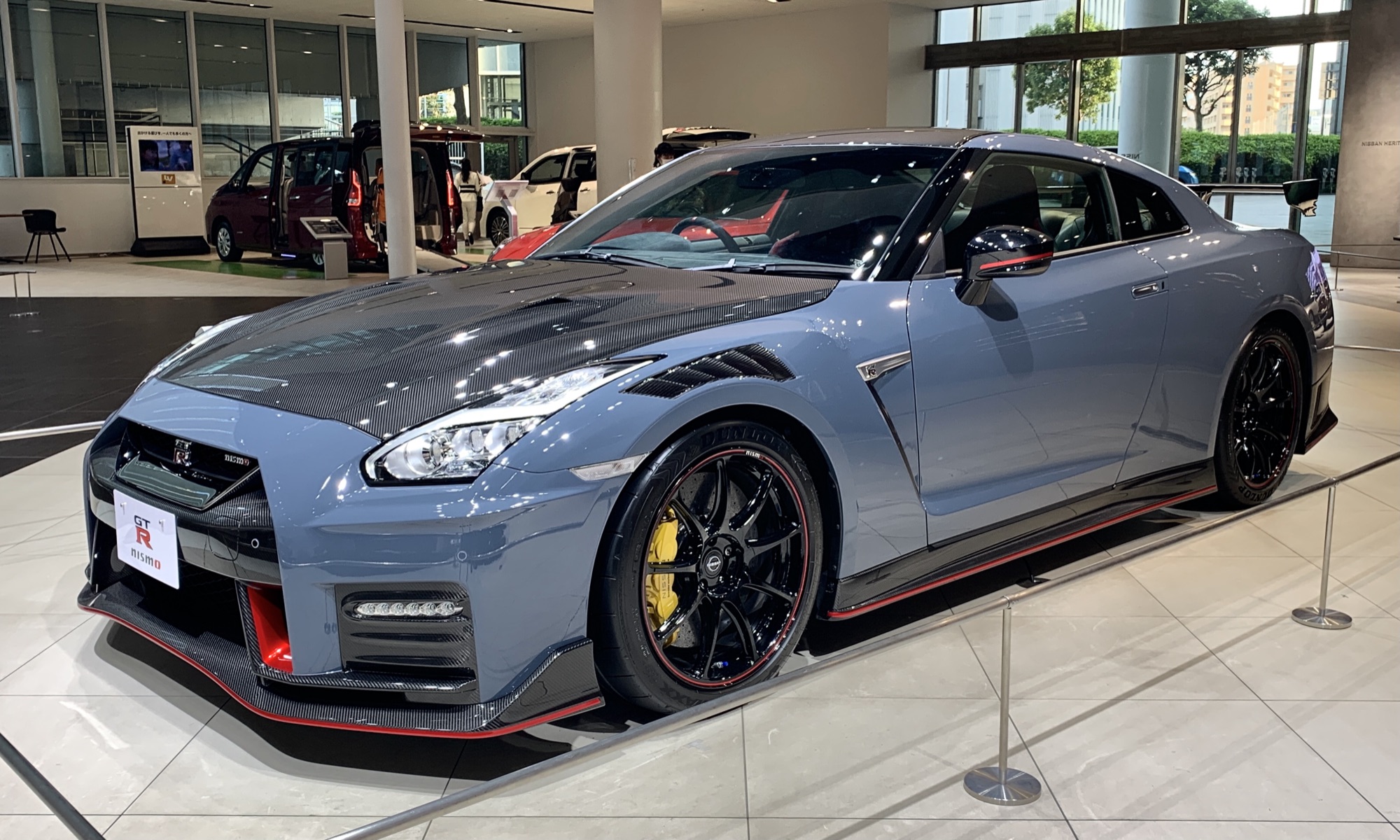
4BA-R35 (2017–2024): the bulletproof premium
Price range: $120,000+ for base, $200,000–$400,000 for NISMO and T-Spec. Power: 562–600 hp. Average sale price for the generation: roughly $163,000.
This is the data-driven proof that Nissan finally got it right. Zero NHTSA complaints across the entire 2017–2024 production window. Eight model years, zero owner safety complaints filed with the federal government. The premium price is buying you a documented reliability profile, not just a newer interior.
The 2024 NISMO that set the post-production record sale of $414,975 in January 2026 was not bought as a curiosity. It was bought as the closing parenthesis on a car that has now demonstrated, with eighteen years of production history, exactly what the engineering decisions were worth.
What I’d Actually Do
Stretch to a clean DBA if you can. A 2013–2016 GT-R with documented specialist service history and under 60,000 miles, in the $85,000–$95,000 range, is the answer to almost every R35-buying question that does not begin with the word “NISMO.” It is past the era of documented teething pains, before the price escalation of the second facelift, and operating on the longer service interval that Nissan itself decided the car had earned.
If the budget forces a CBA, do it with eyes open. Budget the pre-purchase inspection, budget the eventual transmission service through a real GR6 specialist rather than a Nissan dealer, and check the recall and service campaign status before you sign anything. The car is still good. The cost of ownership is not what the headline price suggests.
If the budget reaches a 4BA, you are buying a car with effectively zero documented safety complaints across an eight-year production window, and a market that has stopped depreciating. The risk profile is the lowest of any R35, and the floor price is the highest. Both of those are accurate.
And in every case, when something does eventually fail, get a second opinion before you accept the dealer’s verdict on the repair scope. Nineteen percent of $18,000 is $3,420. The difference is real money, the rebuild is the same car, and the specialists have spent fifteen years getting good at the work the dealer doesn’t offer.
Share this
Join the conversation
COMMENTS
Loading comments…
No comments yet. Be the first to weigh in.
Leave a comment
Posted
Thanks for joining the conversation.