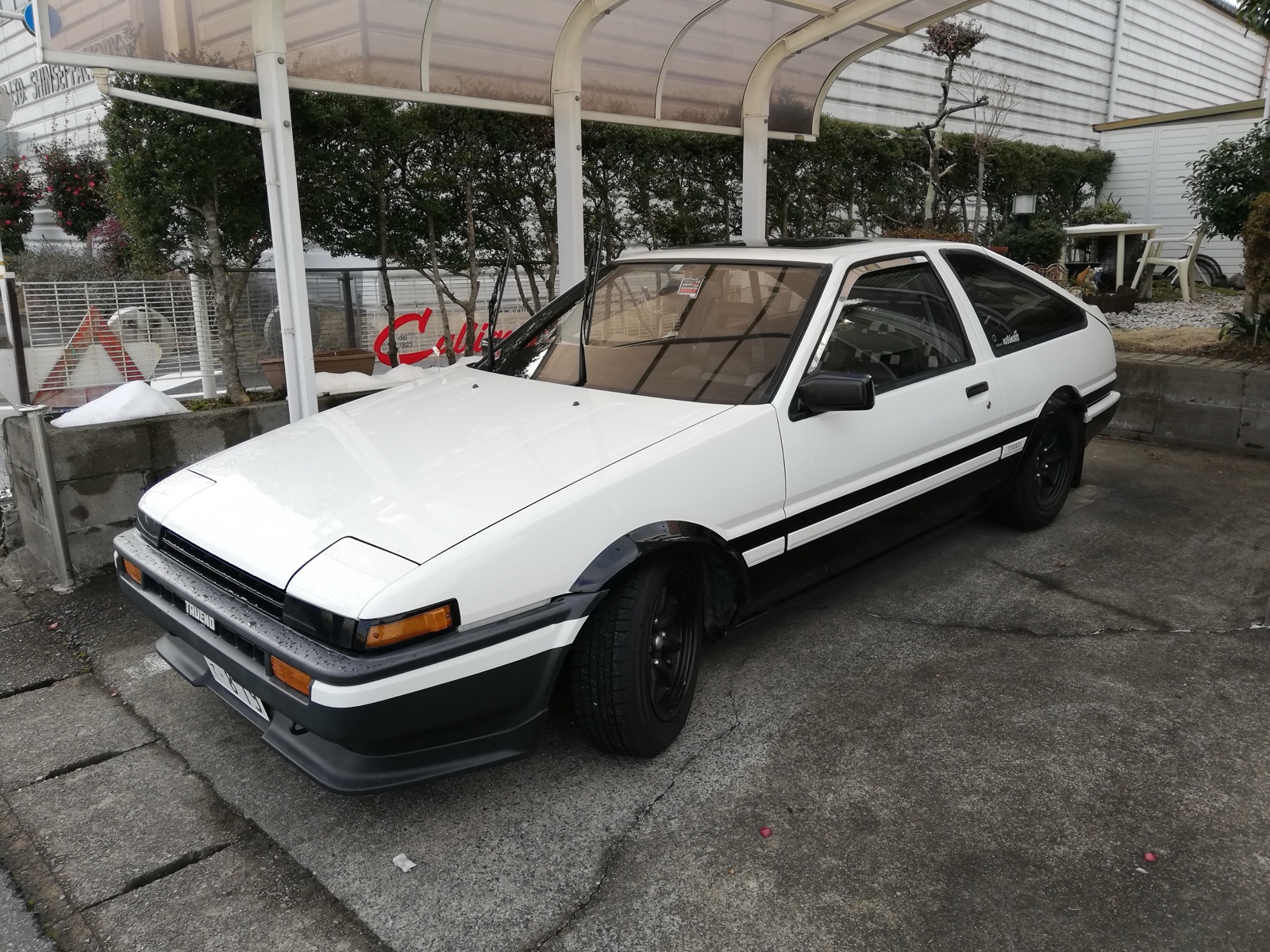
Toyota AE86 Buyer's Guide 2026: What to Pay, What to Inspect, What to Avoid
The Toyota AE86 was never supposed to be expensive. When it left Japan in 1987, it was a $9,000 economy coupe with a four-cylinder engine, a five-speed manual, and a layout — front engine, rear-wheel drive, lightweight, throttle-adjustable — that Toyota itself wouldn’t return to until the GT86 launched in 2012. For two and a half decades, the AE86 was a cheap track-day car for people who knew what they were buying.
That window closed somewhere around 2018. By 2024, clean Trueno hatchbacks with original interiors were clearing $50,000. By 2026, low-mileage, unmodified examples are pushing $80,000–$110,000, with restored show cars touching $150,000. The car that was a poor man’s drift weapon is now a collector piece — but the buying rules have shifted with the prices, and the trap doors are deeper than they used to be.
This is what to actually pay, what to inspect, and what to walk away from in 2026.
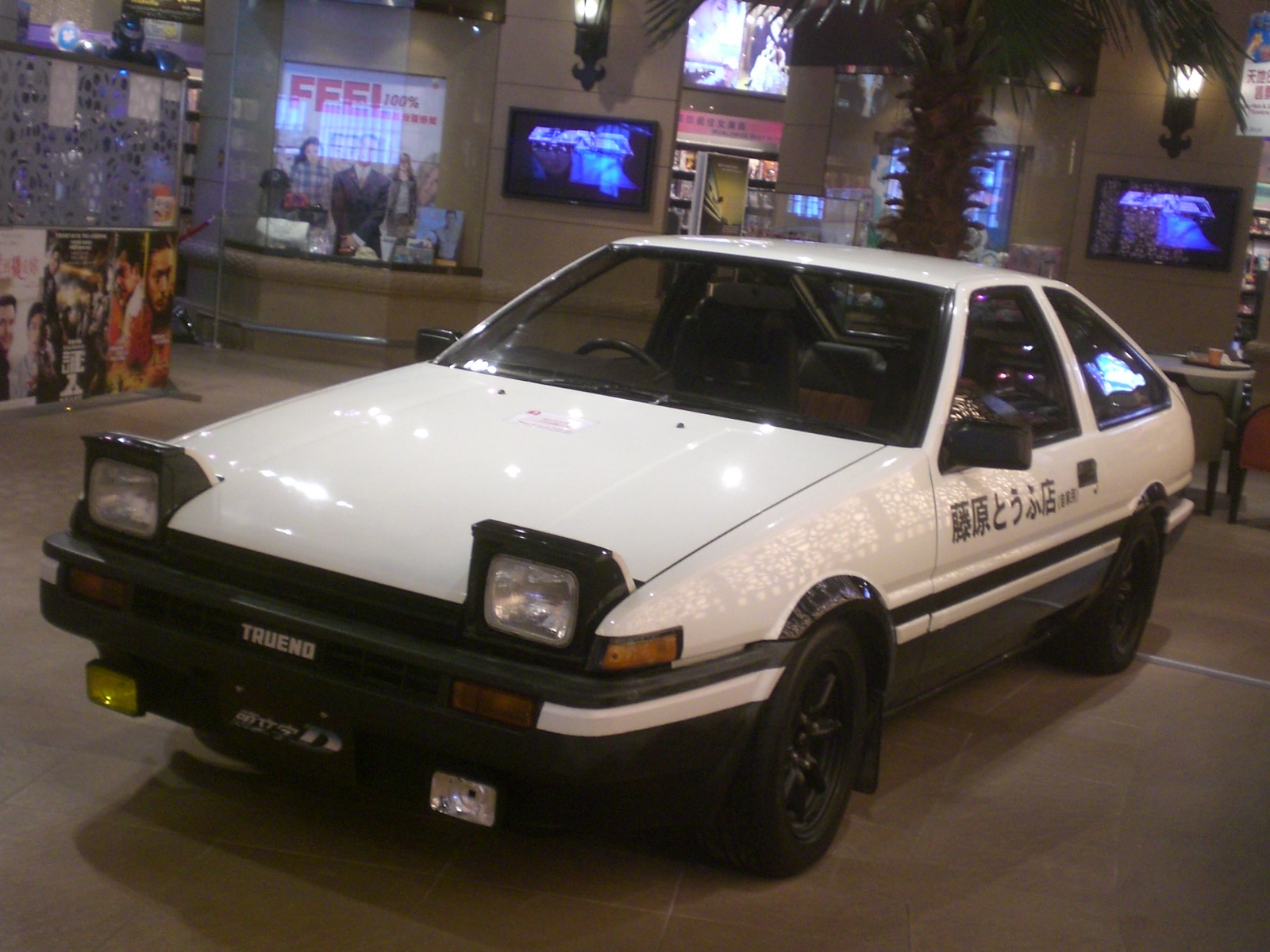
The Two Cars Hidden Inside “AE86”
Most buyers don’t realize there are two distinct AE86 bodies, sold under two different model names in Japan, and they trade for very different prices in 2026.
Toyota Sprinter Trueno — the pop-up headlight version. Three-door hatchback or two-door notchback coupe. This is the car from Initial D. The hatchback Trueno is the most valuable AE86 body style on the market today, especially in original “Panda” black-and-white two-tone livery. Expect to pay a 25–40% premium over a comparable Levin.
Toyota Corolla Levin — fixed-headlight version, same chassis, same drivetrain. Less iconic visually but mechanically identical. Often the better value for someone who wants the AE86 experience without the Trueno tax. Coupes (notchback) typically sell at a small discount to hatchbacks.
In the United States, Toyota imported a third variant — the Corolla GT-S — which used the same AE86 chassis with sealed-beam US-spec headlights, federalized bumpers, and emissions equipment. GT-S cars are mechanically nearly identical to JDM AE86s but trade at meaningful discounts because they aren’t “JDM imports” and lack pop-up headlights. For a driver, the GT-S is often the smartest entry point.
Why the Prices Exploded
Three forces hit at once.
The 25-year US import rule cleared the JDM AE86 for legal stateside import starting in 2008–2012, just as the cohort of buyers who watched Initial D in the 2000s aged into the income bracket to buy the cars they grew up wanting. Initial D ran from 1995 to 2014 in manga form and produced multiple anime adaptations through 2014. The fans turned into buyers, and the buyers came armed.
The second force was scarcity. Toyota built a lot of AE86s, but most of them were used hard. Drift-school cars, time-attack builds, daily-driven economy cars in Japan that rusted out before the cult formed. Of the survivors, the unmolested originals — original engine, original interior, no rear quarter rust, no chassis welds — make up a small fraction. Most of what you’ll see for sale has been modified, crashed, or both.
The third force is rear-wheel-drive scarcity in a small, lightweight package. The AE86 weighs roughly 2,200 lbs. There is no modern equivalent at that weight with a manual transmission and a rear-driven layout. The GR86 / BRZ comes close in spirit but weighs 600 pounds more. Buyers want what no manufacturer is currently making.
What to Pay in 2026
Real market data, sourced from BringATrailer auctions, Cars and Bids, and JDM importer listings throughout late 2025 and 2026:
- GT-S coupe (US-spec), driver-grade with mods: $18,000–$30,000
- GT-S coupe, clean original, low mileage: $30,000–$50,000
- JDM Levin coupe, driver-grade: $25,000–$45,000
- JDM Trueno hatchback, driver-grade: $40,000–$70,000
- JDM Trueno hatchback, restored or low-mile original: $80,000–$130,000
- Trueno Panda livery, museum-grade restoration: $130,000–$180,000+
Anything significantly below those ranges is a story car. The story is usually rust, accident damage, an engine that’s been replaced with a 4A-GZE supercharger swap of unknown origin, or a chassis that’s been welded after a hit. Cheap AE86s in 2026 are cheap for reasons.
The 4A-GE Engine Inspection Checklist
The 4A-GE is a 1.6-liter, twin-cam, naturally-aspirated four-cylinder that revs cleanly to 7,500 rpm. It was advanced for 1983 — Toyota fitted variable intake geometry and a 16-valve head when most economy engines still ran 8 valves. It’s also approaching 40 years old in 2026, and the failure modes are well-documented.
What to check on any AE86 you’re considering:
- Compression test on all four cylinders. Healthy 4A-GE makes 170–185 psi. Anything below 150 psi suggests valve, ring, or head gasket issues.
- Timing belt service history. The 4A-GE is an interference engine — a snapped belt destroys valves. Belts should be replaced every 60,000 miles or 5 years. If there’s no record of recent service, plan to do it ($400–$700 in parts and labor) before driving the car.
- Oil leaks at the cam covers, oil pan, and rear main seal. Some seepage is normal at this age; active dripping is not.
- Idle quality when warm. A healthy 4A-GE idles smoothly at ~800 rpm. Lumpy idle, hunting, or stalling typically points to vacuum leaks, the air flow meter, or the cold-start injector.
- Smoke on startup and under acceleration. Blue smoke on cold start = valve seals. Blue smoke under load = rings. Either is a cylinder-head or rebuild conversation.
- Aftermarket ECU or piggyback flagged in the engine bay. Not automatically a deal-killer, but means the engine has been tuned for something — investigate what was changed and why.
The Rust Map
Rust is the single biggest hidden cost on AE86 ownership in 2026. The factory rustproofing was thin even by 1980s standards, and the cars that survive in the United States have either lived in dry climates or been welded. Inspect:
- Rear wheel arches (inside and outside) — the most common rust spot. Look for bubbling paint, repair seams, or fresh undercoating that’s hiding repairs.
- Floor pans under the carpet — pull the carpet back, especially near the front foot wells where road salt collects.
- Frame rails, particularly where the front subframe mounts. Frame rail repair is a major job; a car with rotten rails is a project, not a driver.
- Battery tray — common surface rust that can perforate the inner fender if neglected.
- Tailgate / hatch base (Trueno) — the seam where the hatch glass meets the body.
- A-pillar bases and door frames where the rubber seals trap moisture.
A car with surface rust that hasn’t perforated the metal is fine — surface rust on a 40-year-old car is normal. A car with active scale rust, perforations, or recent welds at the rust hot spots is a red flag worth at least a $10,000 deduction from market value, and frequently a walk-away.
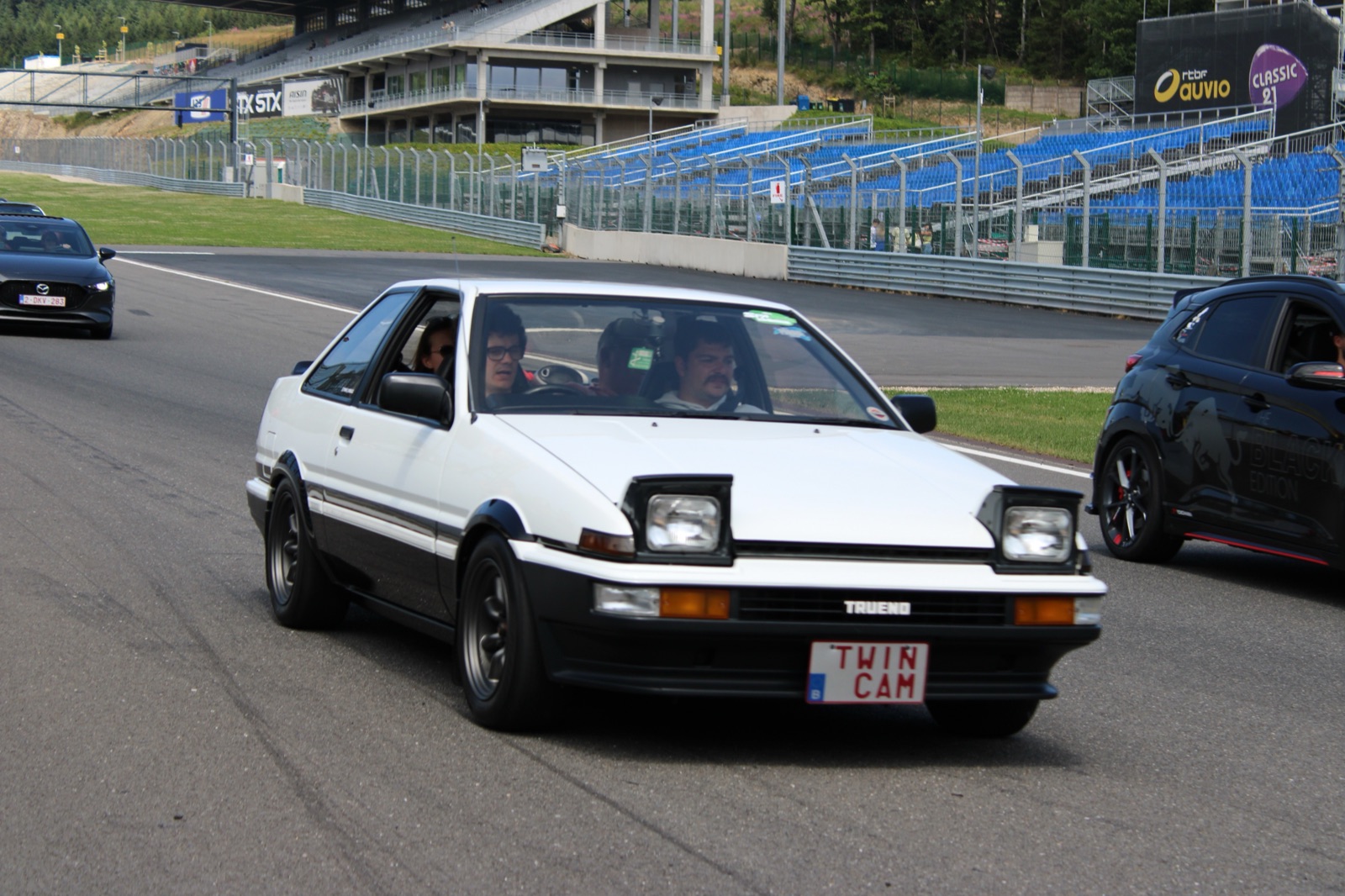
Suspension, Chassis, and the “Drift Tax”
Most AE86s for sale in 2026 have been modified. Coilovers, polyurethane bushings, adjustable rear panhard rods, welded differentials, hydraulic handbrakes, roll cages — the modifications inventory on a typical example reads like a touge build sheet, because that’s what these cars have been used for.
Modifications affect value in 2026 in unintuitive ways:
Tasteful, reversible mods (period-correct Watanabe wheels, quality coilovers like Cusco or Tein, polyurethane bushings, exhaust upgrades) tend to be value-neutral or slightly positive — buyers expect some level of period-correct modification on a car this old, and high-quality parts add real value.
Heavy modifications (welded diff, hydraulic e-brake, full cage, stripped interior, swapped engines — including the popular SR20DET and 4A-GZE supercharger swaps) push the car firmly into “drift car” territory. These cars trade in the $20,000–$45,000 range regardless of how much was spent on the build, because the buyer pool is narrow and the build quality is hard to verify.
Original-spec restorations (factory-correct paint, original interior, stock engine, factory wheels) command the highest premiums in 2026 because they’re the rarest. Anyone with $100,000 to spend on an AE86 wants the unmolested example, not the welded-diff drift weapon.
If your goal is appreciation, lean toward original. If your goal is driving, accept that any non-stock car has a price ceiling.
Insurance and Ownership Costs
Insuring an AE86 in 2026 depends entirely on whether you’re driving it daily or storing it as a collectible.
Hagerty and Grundy offer agreed-value classic policies for AE86s with mileage caps (typically 7,500 miles per year). Premiums run $400–$800 per year for a $50,000 agreed value, depending on driver age and storage situation. The agreed-value structure is critical — at 2026 valuations, you do NOT want a stated-value or actual-cash-value policy on a car this appreciating.
Daily driving an AE86 is harder to insure. Standard providers will quote it at classic-car premiums on a daily-driven policy ($1,200–$2,000/year), or refuse coverage entirely. State Farm and Geico are inconsistent. JC Taylor and American Modern are the realistic options for daily-driver classic policies.
Maintenance budget for a clean, sorted AE86 driven 5,000 miles per year: figure $1,500–$2,500 annually for fluids, belts, brakes, tires, and rotating consumables. A car that needs sorting will eat $5,000–$15,000 in the first year as you address deferred maintenance. Don’t underestimate this on a “cheap” AE86.
Where the Cars Are
Three buying channels in 2026, in order of risk-adjusted value:
BringATrailer and Cars and Bids — most JDM-imported AE86s and US-spec GT-S examples that change hands publicly run through these auctions. Prices are honest, the inspection windows are standardized, and seller fraud is rare.
Direct from Japan via importer — companies like Toprank Importers, JDM Sport Classics, and Roy’s of Beverly Hills Auctions handle direct imports. You see more inventory, but you’re trusting the importer’s pre-purchase inspection. Prices typically run 10–20% below US auction comps for equivalent condition.
Private sale through enthusiast networks — Club4AG forums, AE86 Driving Club Facebook groups, Initial D fan communities. Best deals if you know what you’re looking at; biggest risk if you don’t. Always inspect in person, always compression-test, never wire money before seeing the car.
The Bottom Line
The AE86 in 2026 is no longer a cheap thrill. It’s a six-figure collector car for the unmolested examples, a $30,000–$50,000 driver for the GT-S and clean Levin coupes, and a money pit for anyone who buys one cheap without understanding what they’re inheriting. The good news: the driving experience justifies the prices. There genuinely is no replacement currently in production — Toyota’s GR86 is closer in spirit than anything else, but it’s a different car for a different era.
If you can find an unmodified GT-S coupe with documented service history and clean rust survey for $35,000–$45,000, buy it tomorrow. If you can find a JDM Trueno hatchback with original Panda livery and matching numbers for under $80,000 in 2026, you’re either looking at a story car or you’ve found one of the best deals of the year. Inspect like your wallet depends on it. Because it does.
Pair this guide with the JDM cars that changed everything for the broader market context, and the complete JDM cars buyer’s guide for cross-model market dynamics.
Share this
Join the conversation
COMMENTS
Loading comments…
No comments yet. Be the first to weigh in.
Leave a comment
Posted
Thanks for joining the conversation.