JDM Cars: The Complete Guide to Japanese Performance Legends
JDM stands for Japanese Domestic Market — and what started as a simple description of cars built for the Japanese market became one of the most culturally significant terms in automotive history. JDM cars are distinct from their global export counterparts in specific, often significant ways: different engines, different suspension tuning, different power outputs, sometimes entirely different model generations. The pursuit of the “true” JDM specification has driven an entire import industry, a collector culture, and a community with enough depth to sustain three decades of obsessive attention.
What JDM Actually Means
Japanese manufacturers built different vehicles for the domestic market than they exported. These differences existed for regulatory, competitive, and strategic reasons:
The Gentleman’s Agreement (1989–2004) — Japanese manufacturers informally agreed to limit exported models to 276 hp. Domestic models faced no such restriction. The result: a Nissan Skyline GT-R sold in Japan made 276 hp on paper and substantially more in practice (independent dynos consistently showed 300–320 hp stock), while no GT-R was officially imported to the US at all until 2008.
Tax and size regulations — Japan’s Kei car regulations (specific size and displacement limits for favorable tax treatment) produced unique vehicles with no equivalent in export markets. The Honda Beat, Suzuki Cappuccino, and Autozam AZ-1 all exist because of these regulations.
Right-hand drive — Japan drives on the left. JDM cars are right-hand drive, which in some markets requires costly conversion and in others is simply how you drive them.
The term “JDM” is often used loosely to mean any Japanese performance car, but technically applies specifically to cars built for and sold in the Japanese domestic market.
The 25-Year Import Rule
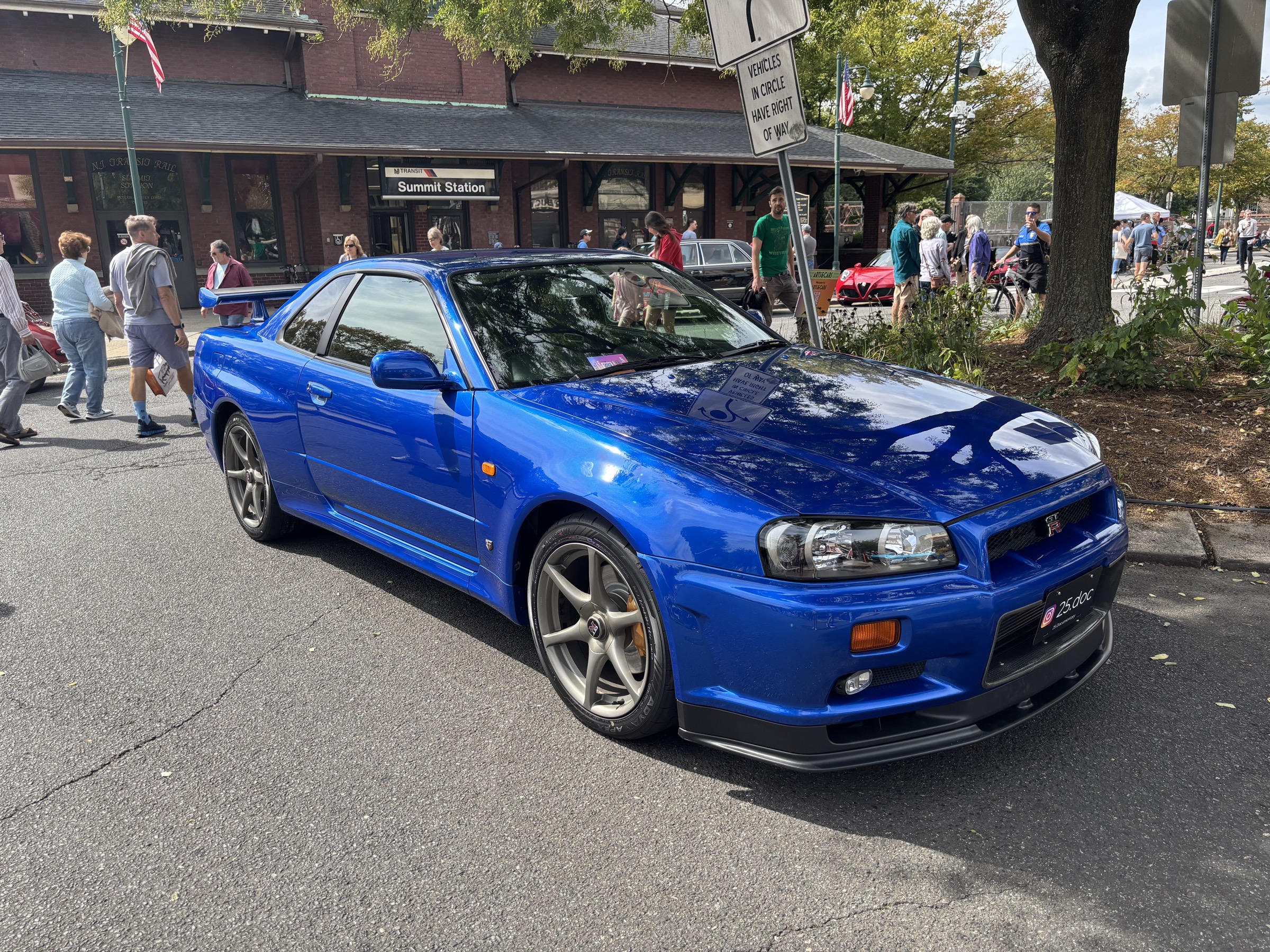
The United States allows importation of any vehicle 25+ years old without meeting current Federal Motor Vehicle Safety Standards. This is the rule that makes JDM import culture possible in America. In 2026, any Japanese vehicle built before 2001 is importable. The R34 GT-R (1999–2002) is becoming legal now, with all variants legal by 2027.
The result is a moving window of legality that keeps JDM import culture in continuous motion — always a new generation becoming importable, always a new wave of enthusiasts discovering vehicles previously unavailable.
Canada’s rule is 15 years; Australia has individual state regulations. The UK and other RHD markets have fewer import barriers.
The Essential JDM Cars
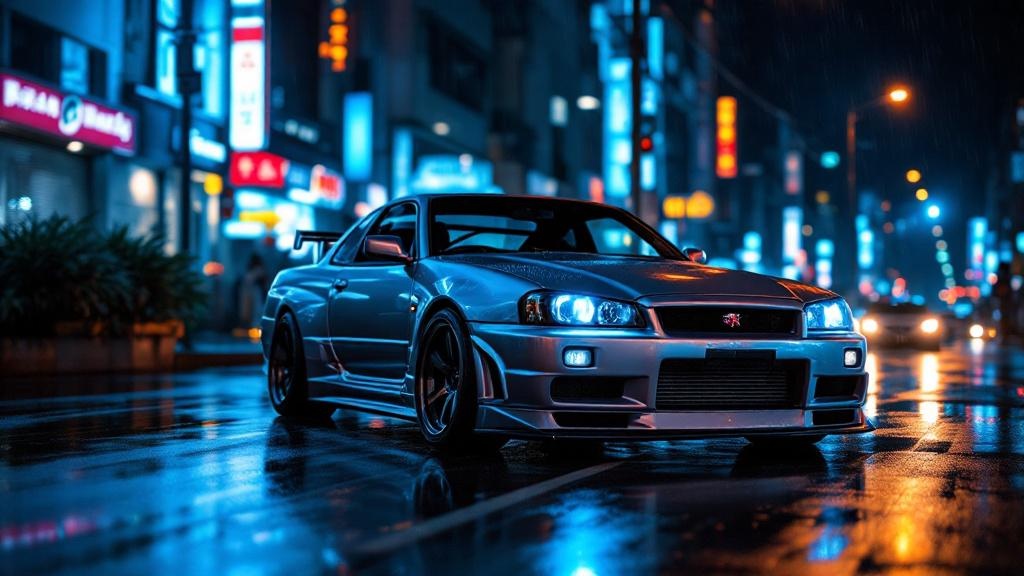
Nissan Skyline GT-R (R32, R33, R34)
The most mythologized JDM car. The RB26DETT twin-turbocharged inline-six, ATTESA E-TS all-wheel drive, and HICAS four-wheel steering made the R32 virtually unbeatable in Group A racing. Australian touring car racing banned it after one season — hence “Godzilla.”
The R34 V-Spec II Nür commands $200,000–400,000 with verified provenance. Standard R34 GT-Rs trade at $80,000–150,000 for well-maintained examples — and this is not where they plateau. Every Gran Turismo player who spent hours tuning an R34 understands why: the car rewards attention and precision in a way that transcends the screen. For the depth of what the R34 builder community has produced over 25 years — Mine’s, Garage Defend, HKS, the rest — the platform’s headroom is a separate study in its own right.
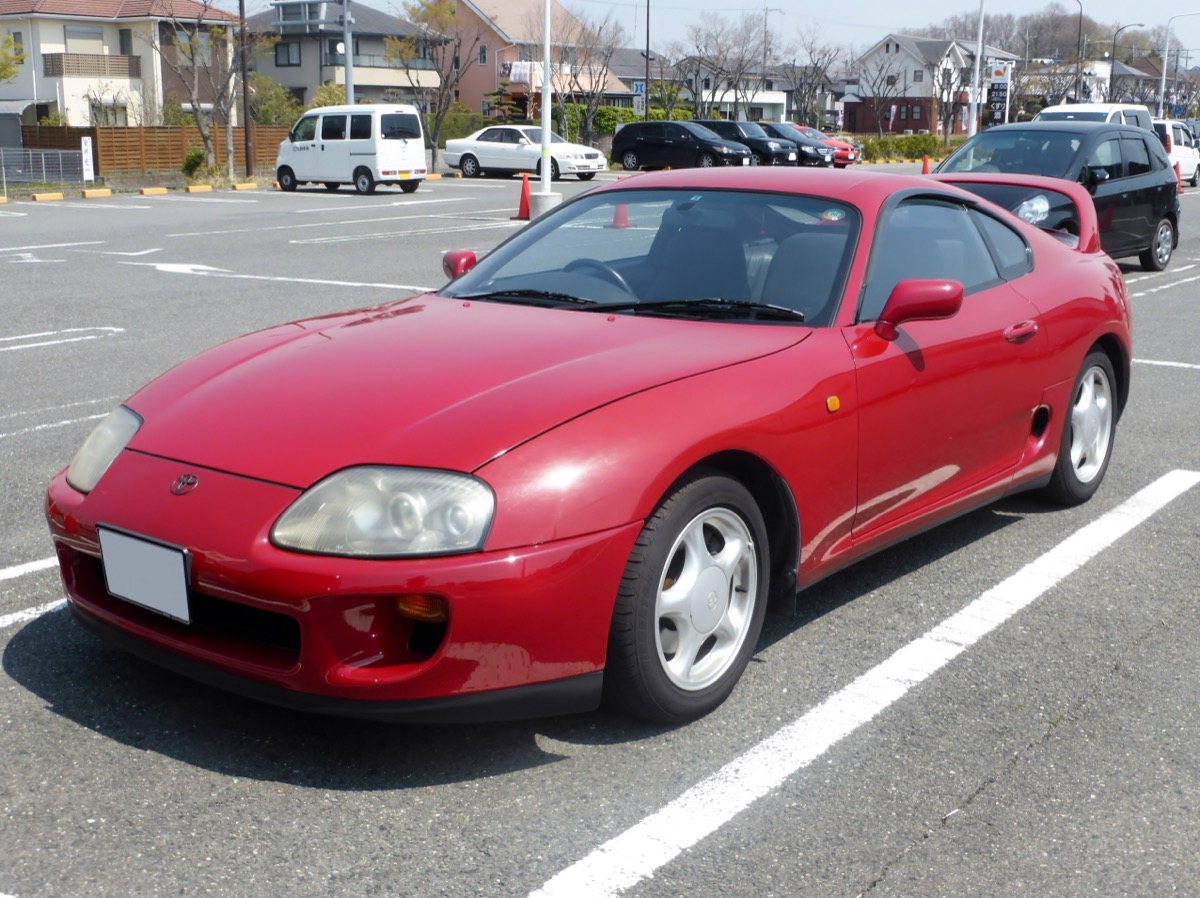
Toyota Supra (A80 — 1993–2002)
The A80 Supra’s 2JZ-GTE engine is one of the most tunable powerplants in automotive history. The iron block 3.0L twin-turbo inline-six was so conservatively built that 600 hp is achievable with bolt-ons on stock internals. 1,000 hp builds are common. The Fast & Furious franchise made the Supra ubiquitous; the actual car earns its reputation independently.
Mazda RX-7 FD (1992–2002)
The most driver-focused car on this list and the most demanding to own. The 13B-REW twin-rotor Wankel engine produces exceptional power-to-weight but requires understanding of rotary-specific maintenance — apex seals, flooding prevention, cooling management. The FD weighs under 2,800 lbs and handles with a precision that front-engined cars can’t replicate. The reward for learning the rotary’s requirements is one of the purest driving experiences ever built.
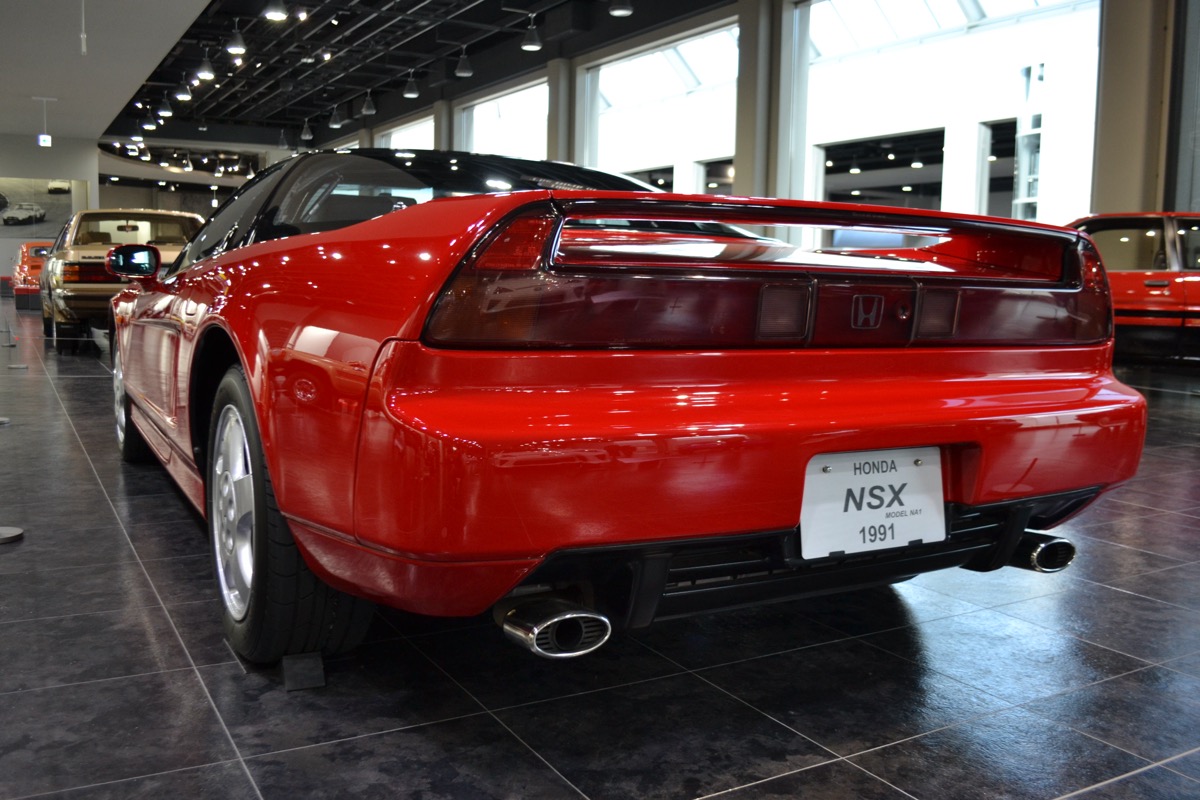
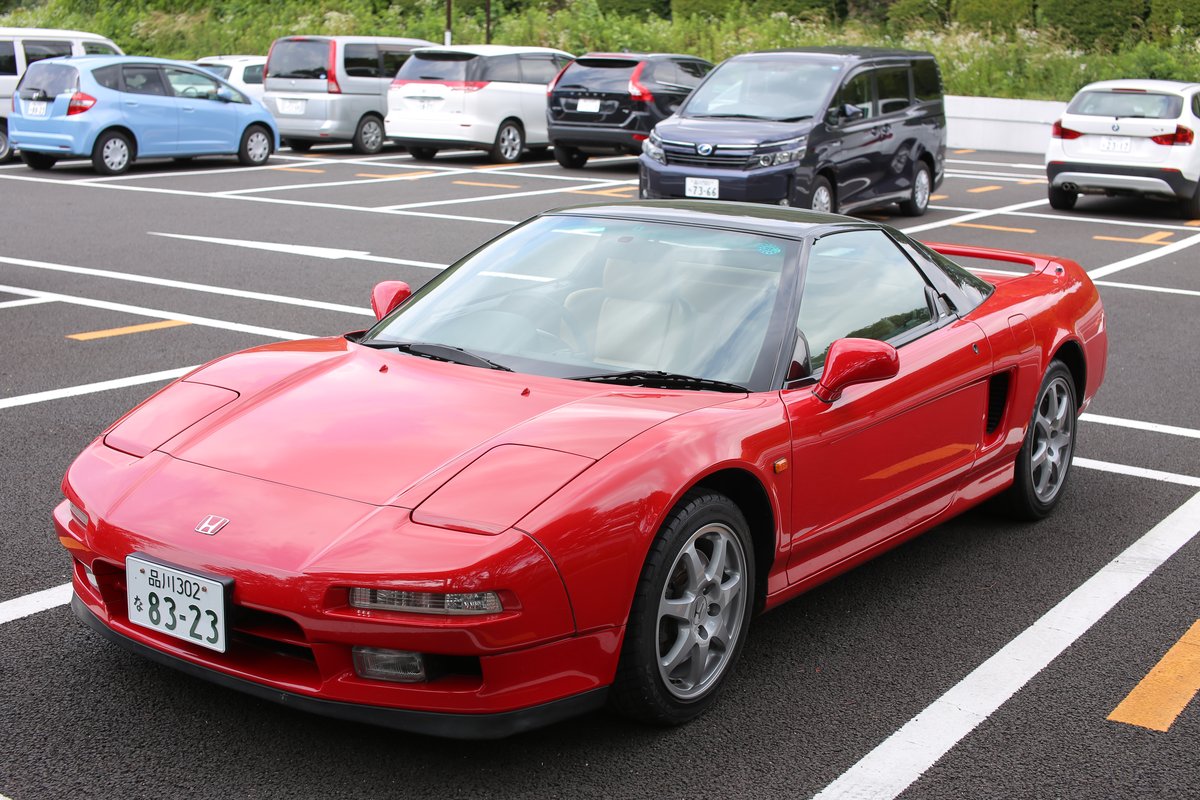
Honda NSX (1990–2005)
Ayrton Senna’s contribution to the automotive world. Honda’s brief: match the Ferrari 348’s performance but make it reliable and usable. Senna’s feedback during development shaped the suspension and steering feel. The result: a mid-engined V6 that could be daily-driven, dealer-serviced, and still kept pace with Italian supercars. The all-aluminum body was structurally advanced for 1990.
Mitsubishi Lancer Evolution (Evo IV–X)
Rally technology in a sedan. The 4G63 turbocharged four-cylinder and sophisticated AWD made the Evo a legitimate performance car for approximately the price of a well-equipped Accord. The Evo and its rival the STI defined an era of affordable performance that hasn’t been replicated.
Subaru Impreza WRX STI (GC8, GD, GR)
Subaru’s answer to the Evo with the more emotionally satisfying character. The EJ25 flat-four boxer rumble and driver-controlled DCCD center differential gave experienced drivers more latitude. The STI’s iconic wing and Subaru Blue became as culturally significant as any supercar’s branding.
Honda S2000 (1999–2009)
The F20C naturally aspirated inline-four revved to 9,000 RPM and produced 240 hp — a specific output higher than any NA production engine until the Ferrari 458. The chassis was designed by Honda’s F1 team. A genuine driver’s car that rewards skill investment.
Toyota AE86 (1983–1987)
The “Hachi-Roku.” Small, light, rear-wheel drive. Not fast by modern standards but an instructor that trained more talented drivers than any school. The AE86 became a cultural icon through Initial D — the manga/anime where a tofu delivery driver develops supernatural drift technique in an AE86 on Mount Akina’s downhill.
If you’ve played any Forza Horizon game, the AE86 is in the game specifically because of Initial D’s cultural impact. The drift physics in those games owe a direct debt to the driving culture the AE86 created.
The Gaming Connection
JDM culture and gaming culture are inseparable. Gran Turismo was built around Japanese car culture — the original game’s roster was dominated by JDM models, and the tuning/racing loop was designed to mirror Japan’s amateur racing scene. Forza’s Horizon series brought JDM cars to an open-world format that mirrors the street culture these cars came from.
Initial D Arcade Stage is still played competitively in Japan. Wangan Midnight Maximum Tune is a touge racing game built entirely around JDM car culture. Need for Speed Underground and Underground 2 brought JDM tuner culture to a global audience in 2003–2004 in a way that directly contributed to the mainstream awareness of cars like the Supra, RX-7, and 350Z.
If you can name these cars, there’s a good chance a video game taught you first. That’s not trivia — it’s the actual history of how JDM culture spread globally.
Buying JDM: What to Know
US sourcing: Established importers (Japanese Classics, Toprank Importers, Cars & Coffee Japan) provide inspected, legally imported vehicles with documentation. Expect 15–25% premium over auction prices for the service.
Japanese auction bidding: USS, JBA, and other auctions allow bidding through agents. The grading system (1–5 for condition) is reliable — grades 4 and 4.5 represent well-maintained examples. An auction agent charges 3–8% of sale price plus shipping and fees.
Total import cost: Auction price + agent fee (3–8%) + shipping ($1,500–2,500 Japan to US West Coast) + import duties (2.5%) + compliance + destination fees. Add 25–35% to auction price for total landed cost as a working estimate.
Insurance: JDM imports require specialist insurance. Hagerty and Grundy both cover imported vehicles on agreed-value policies. Standard insurers will either refuse coverage or charge significantly more than specialists. Get insurance quotes before purchasing — it’s occasionally the factor that changes the math on a purchase.
Inspection: Always. Independent pre-purchase inspection by a JDM specialist. Underbody rust, modified engines, and undisclosed history are real concerns on 25+ year old imports.
Where the Market Is Going
R34 GT-R values are rising with legalization. The generational buyers who grew up with these cars as aspirational objects — in magazines, in Gran Turismo, in Initial D — are entering peak earning years. R32 values have already moved significantly. AE86 prices have tripled in five years. S2000s are recognized modern classics.
The pattern is the same across all significant JDM vehicles: appreciation driven by finite supply, genuine driving quality, and powerful cultural resonance that doesn’t erode. If you’re approaching JDM seriously, the window for purchasing significant examples at historically reasonable prices is closing. It has been closing for a decade. It will continue.
Starting your search? Insurance is often the hidden cost that changes the math. Specialist providers like Hagerty and Grundy offer agreed-value policies specifically for imported JDM vehicles — get quotes before you commit to a purchase.
Share this
Join the conversation
COMMENTS
Loading comments…
No comments yet. Be the first to weigh in.
Leave a comment
Posted
Thanks for joining the conversation.