The Toyota Supra Has Always Been Three Different Cars Pretending to Be One
The Toyota Supra is one of the most argued-about nameplates in modern car culture, and almost all of that arguing rests on a premise that doesn’t hold.
The premise is that there is a Supra: one continuous identity that started in 1978, peaked in 1993 with the Mk4, and got betrayed in 2019 when Toyota partnered with BMW to build the Mk5 on the Z4 platform. The argument runs like this. The Mk5 isn’t a “real” Supra because it isn’t Toyota engineering all the way down. Real Supras have 2JZs. Real Supras don’t share an architecture with a German roadster. Real Supras are tuner platforms, finished sports cars being somebody else’s business.
Look at what the Supra has actually been across six generations and the whole thing dissolves.
What the Supra Started As
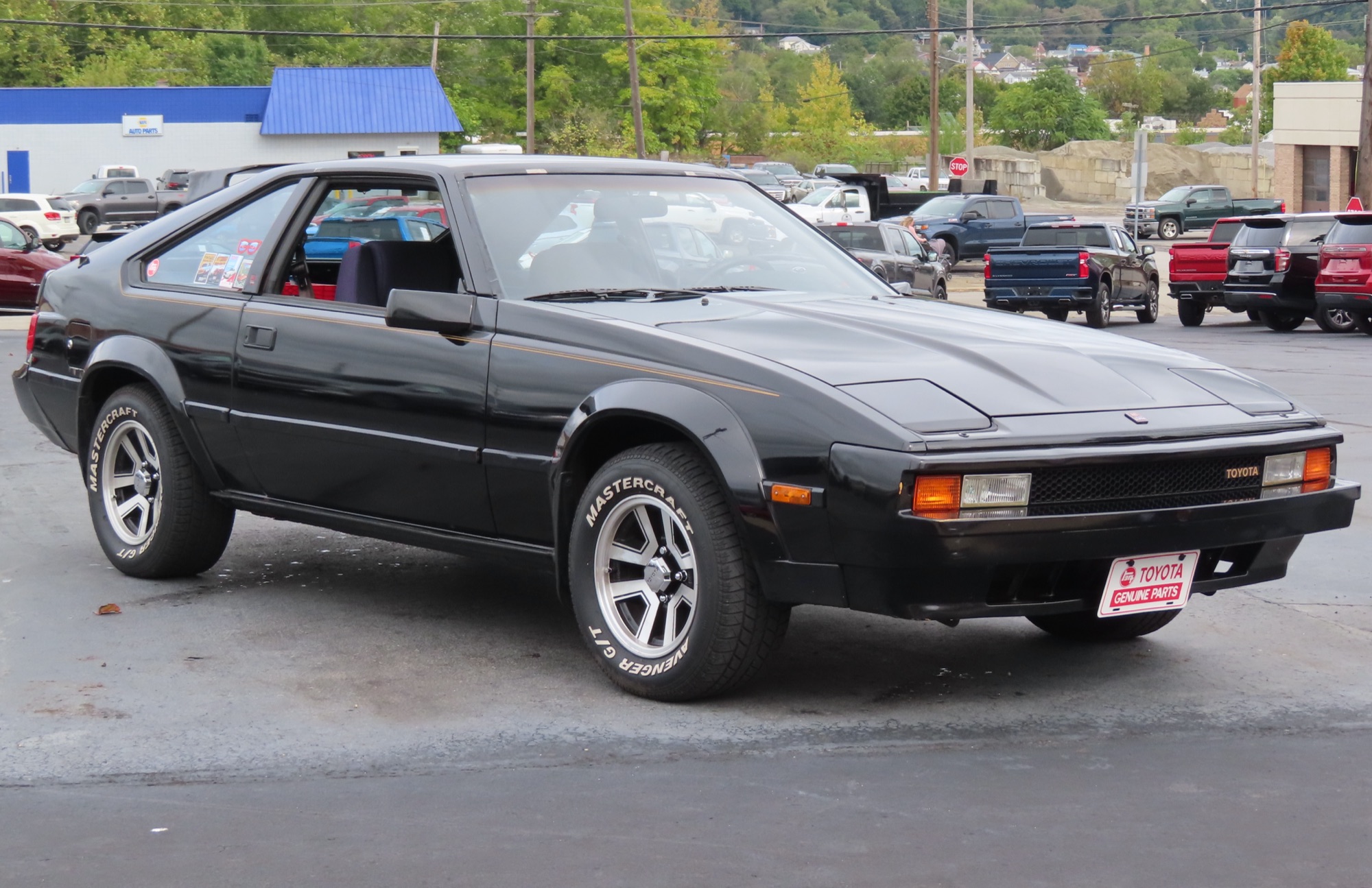
In April 1978, Toyota launched the Celica XX in Japan and the Celica Supra everywhere else. The car was exactly what the name said it was, an extended Celica. Toyota took the existing Celica platform, stretched the front by 5.1 inches to fit an inline-six, and sold the result as a more upscale grand tourer.
It made 125 PS from a 2.0-litre M-EU. Not a sports car. Not pretending to be one, either. It was an alternative to the Datsun 280Z, a comfortable, well-equipped cruiser that happened to carry six cylinders under a fastback roof. That was the original intent of the Supra brand: a slightly nicer Celica with a bigger engine.
The A60 that followed in 1981 carried the same philosophy. By 1982 you could option one with a “world’s first navigation computer,” a feature Toyota was rightly proud of and which tells you exactly what kind of car they thought they were building. Grand tourers get navigation systems. Sports cars don’t.
The Celica-XX era, meaning the A40, A50 and A60 between 1978 and 1986, is the first version of the Supra. A Toyota grand tourer built on Celica bones, recognizably from the same family that produced the Cressida and the early Soarer. The defining engineering decision of these cars is comfort first.
Nobody argues about that car. But it’s what the Supra was for the first eight years it existed.
The Identity Shift: A70 and Mk4
In February 1986, Toyota cut the Celica name off the Supra and launched the A70 as a standalone model. The new car was substantially different: rear-wheel-drive on a dedicated chassis, the 7M-GTE turbo engine, Lotus-tuned suspension, TEMS adaptive damping, ACIS variable induction, and pop-up headlights that signaled, accurately, a different car for a different audience.
By 1990 the JDM-market A70 could be specified with the 1JZ-GTE, a 2.5-litre twin-turbo inline-six rated at the “polite fiction” 276 horsepower that every Japanese performance car of the era claimed. The reality was higher. The 1JZ went on to become one of the most respected JDM engines of the decade, and the A70 built around it was the first real Supra-as-sports-car.
The A70 was also where Toyota lost control of the Supra’s identity, because the A70 was tunable. The 7M and the 1JZ both responded well to bolt-ons, the chassis could take the power, and a generation of Japanese tuners, including names that would be household-famous in the West a decade later, worked out that this was a car you could build into something Toyota had never designed it to be.
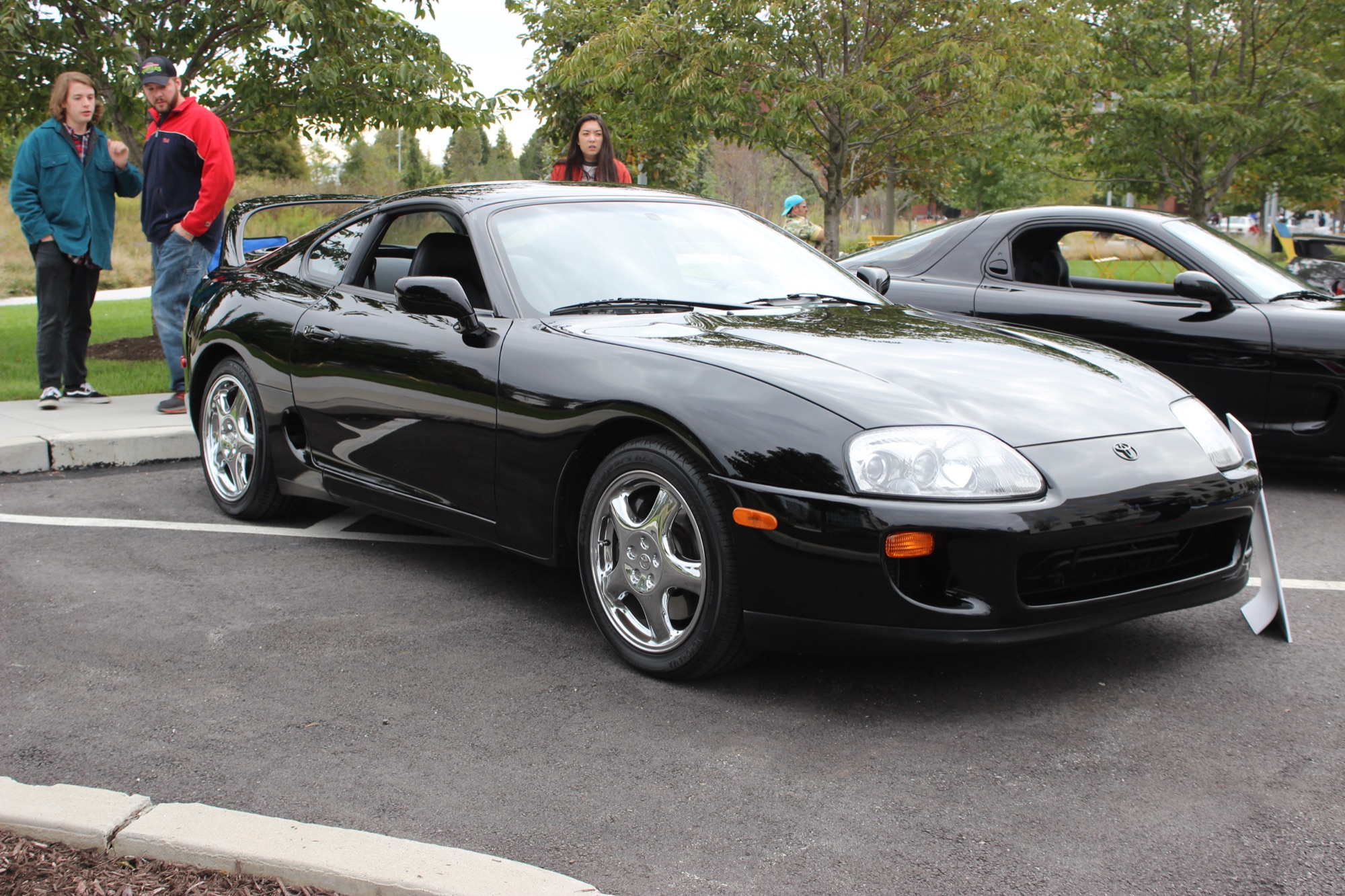
The Mk4, the A80, launched in May 1993 and finished the transformation. The 2JZ-GTE arrived. Sequential turbochargers, a cast-iron block, conservative factory tuning, and an architecture the tuner community immediately read as having an enormous untapped ceiling. Stock, the JDM-spec Mk4 made 276 horsepower. With a bolt-on tune, owners were reliably pulling 400. With internals and a single big turbo conversion, a 2JZ-GTE is documented as capable of handling 1,000+ horsepower on the factory block.
This is the car the Supra arguments are about. The Mk4 is the platform that became a legend.
The part nobody wants to admit is that Toyota didn’t engineer that legend. The tuner community did, in real time, against Toyota’s actual design intent. Toyota built a grand-tourer-derived halo car with sequential turbos and a 6-speed Getrag gearbox. On Toyota’s own terms the Mk4 was a slightly more aggressive evolution of the A70 concept, which is to say a fast GT.
What it became is a different thing: the canonical JDM tuner platform, mythologized through Gran Turismo, fixed in cultural amber by The Fast and the Furious, held in collective memory as the high-water mark of an era that was about to end. Toyota stopped selling the Mk4 in the US in 1998 and ended worldwide production in 2002. By the time the second F&F film turned the orange Mk4 into the artifact it is today, the actual car had been out of production for three years.
So the Mk4’s legend was finished by the people who couldn’t buy a new one. That’s the central irony of the Supra story.
The Mk5 — the Most Honest Supra Toyota Has Ever Built
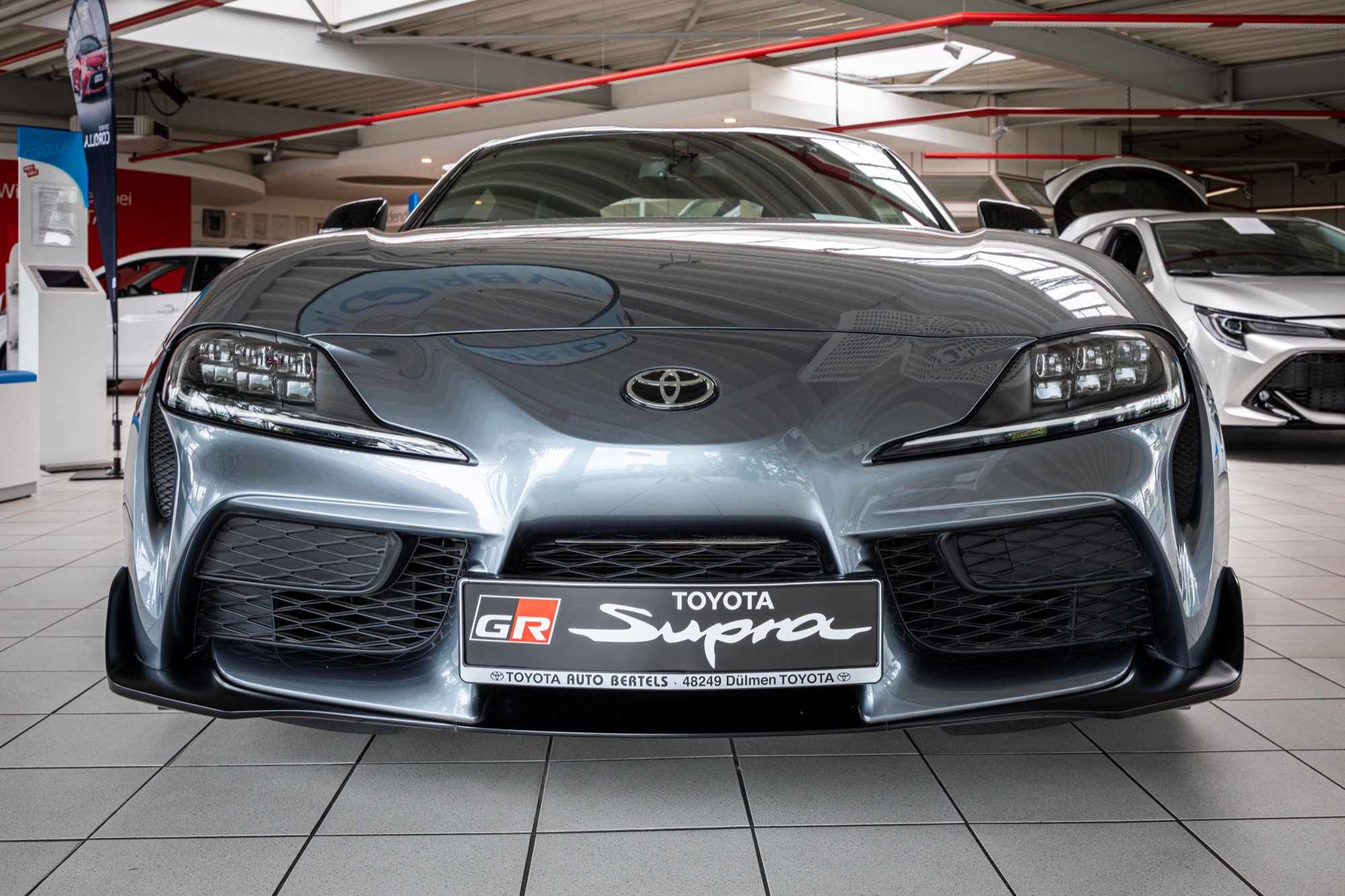
In 2019, Toyota launched the J29, the fifth-generation Supra, co-developed with BMW on the platform that also produced the G29 Z4. Assembly happens at Magna Steyr in Graz, Austria. The engine is BMW’s B58 inline-six. The chassis tuning, suspension geometry, steering calibration and body design are Toyota. The fundamentals are German.
The enthusiast reaction was brutal and entirely predictable. The Mk5 was branded a fraud. It wasn’t a “real” Supra. Toyota had outsourced its halo car. The 2JZ purists declared the line dead.
That reaction has been wrong for seven years, because partnership has always been how Toyota built the Supra. Look at what the original concept actually was:
- The A60’s 5M-GE cylinder head was developed by Yamaha, the same supplier behind the 2000GT’s straight-six and, later, the 1LR-GUE in the Lexus LFA.
- The A70’s suspension was tuned by Lotus.
- The A70 used the same TEMS adaptive damping technology Toyota was sharing across the Cressida and Soarer.
- The Mk4’s 6-speed manual was the V160, supplied by Getrag.
Toyota has never engineered a Supra entirely in-house. Every generation brought in somebody else for the parts Toyota didn’t want to build. The B58 deal with BMW doesn’t depart from Supra tradition at all. It continues it about as directly as a thing can be continued.
What makes the Mk5 more honest than its predecessors is that the partnership is acknowledged. The Yamaha head on the A60 isn’t a marketing story. The Lotus chassis work on the A70 isn’t on the badge. The Getrag transmission in the Mk4 isn’t part of the legend. BMW’s involvement in the Mk5 is the only partnership Toyota has ever publicly framed as central to the car.
By the numbers, the Mk5 is a real sports car. The B58 in its current calibration makes 382 horsepower from the factory. The chassis is shorter, lighter and stiffer than the Mk4’s, and the 0–60 times are quicker. The handling balance, in every published comparison test, is genuine sports-car balance rather than the heavy GT-with-a-turbo-bolted-on feel that even Mk4 owners will admit, if you press them, was the real character of the car they loved.
Rejecting the Mk5 has nothing to do with engineering analysis. It’s romanticism about a car that became iconic despite Toyota’s intentions, projected backward onto a successor Toyota was finally allowed to build the way it had wanted to all along.
The Real Pattern
Walk the Supra timeline once more with the romance stripped out:
| Era | What it actually was |
|---|---|
| Celica XX (A40/A50/A60), 1978–1986 | Grand tourer. Stretched Celica. Datsun 280Z alternative. Yamaha head. |
| A70, 1986–1993 | First standalone Supra. Sports-GT with tuner potential Toyota didn’t fully grasp. Lotus suspension. |
| Mk4 (A80), 1993–2002 | Grand tourer chassis with an engine the tuners turned into a religion. Getrag transmission. |
| Mk5 (J29), 2019–2026 | Genuine sports car, explicitly co-engineered. BMW B58 + chassis architecture. |
Four different cars, three different categories, four different engineering partnerships. The badge is the only continuous thing here.
The Mk4 is the most beloved of them because it lands at the intersection of the right engine (2JZ), the right cultural moment (Fast and Furious, Gran Turismo, the early internet tuning scene), and the right scarcity profile, out of production before its legend was fully made and never sold in numbers big enough to dilute the mythology. It deserves its reputation. It does not deserve to be the yardstick every other Supra gets measured against, because it isn’t what Toyota was trying to build, and it isn’t what the brand has been at any other point in its history.
The Mk5 is what happens when Toyota finally builds the sports car everyone kept mistaking the Supra for. The community resents it for not being the Mk4. That’s an internet problem, not a Toyota one.
What I’d Actually Drive
If you’re shopping the Supra range with your eyes open and a real budget, here’s how I’d call it.
A clean Mk4 turbo is a museum piece. They start at $80,000 and good ones cross $200,000. You’re not buying transportation, you’re buying a relationship to a specific cultural moment that was already over by the time you were old enough to drive. If that’s what you want, the Mk4 delivers it perfectly.
An A70 turbo, particularly a 1JZ-GTE JDM import that’s just cleared the 25-year rule, is the underrated answer. Less mythology priced into the car. Same Lotus-tuned chassis. An engine the JDM scene quietly rates as more refined than the 2JZ. Real money, but not unreal money. This is the Supra to drive if you’d rather not argue with anyone about which Supra you should have bought.
A Mk5, modified or not, is the only Supra in the modern catalog that drives like a current sports car. Being one helps. The B58 has a power ceiling the enthusiast community is only starting to map, the chassis is honest, and the badge is finally accurate.
The Celica-XX cars are a separate conversation, mostly for collectors who care about the original concept. They aren’t bad. They just aren’t what the argument is about.
Pick whichever Supra answers the question you’re actually asking. The mistake is asking all three Supras to be the same car. They never were.
Share this
Join the conversation
COMMENTS
Loading comments…
No comments yet. Be the first to weigh in.
Leave a comment
Posted
Thanks for joining the conversation.