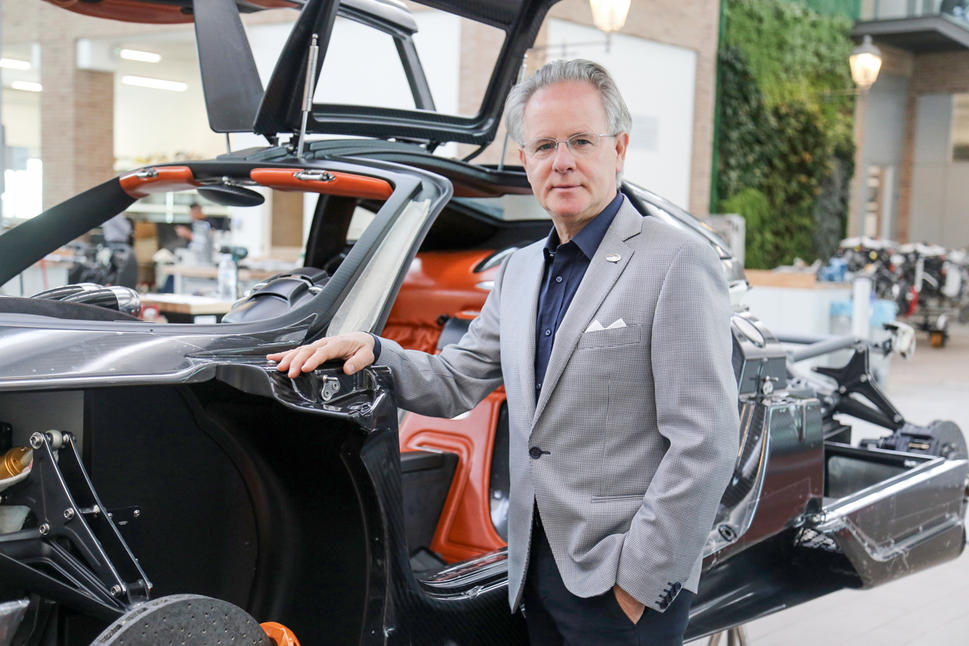
Horacio Pagani: The Argentinian Who Out-Italians the Italians
Horacio Pagani was born in 1955 in Huanquero, a small town in La Rioja province in northern Argentina. He grew up in Córdoba, which was Argentina’s automotive and industrial city — Fiat and Renault had factories there. He became obsessed with cars at an age when most children are obsessed with simpler things, and the object of his obsession was the Lamborghini Miura. He was eleven years old.
That obsession never left. It metastasized into something more specific and more demanding over the next five decades, until Horacio Pagani was building cars in a facility in Modena that employed 160 people and produced objects that the Italians who’d spent their lives in the automotive valley didn’t know how to fully describe.
He’s the most Italian thing in Italy. He isn’t Italian.
The Letters from Córdoba
At seventeen, Pagani wrote a letter to Ferruccio Lamborghini. This is the origin story that gets told, but it’s worth being precise about what it means. Ferruccio Lamborghini was, by the late 1970s, no longer running Lamborghini. He’d sold the company. He was at his estate at Lake Trasimeno, producing wine and tractors. The company was going through ownership changes, financial crises, production pauses.
Pagani wrote anyway. Whether the letter got a substantive response is less important than the gesture — it describes a person who understood no distance as too great, no contact as too presumptuous. He wanted to work with the people who made the objects he loved. The directness was native to him.
By the early 1980s, Pagani had immigrated to Italy. He arrived with almost nothing and found work in industrial composites. He had been developing his skills in Argentina — building scale models, learning fabrication, studying engineering through whatever materials he could find. None of this was a traditional credential. All of it was practical.
He was hired by Lamborghini in 1983.
Twelve Years at Lamborghini
At Lamborghini, Pagani worked on composites development. The timing was significant: carbon fiber was beginning to make its way into motorsport in the early 1980s, and Pagani’s work on integrating composite materials into automotive production put him at the leading edge of a technology shift that would define performance car manufacturing for the next forty years.
He worked on the Countach QV, the LM002, and eventually the Diablo — the V12 lineage that, three decades later, becomes the Lamborghini Revuelto. He was promoted to head of research and development. He was, by every account, exceptionally good at his job. He was also building an idea in parallel with his official work.
The idea was a car of his own. In the late 1980s, he proposed the Zonda project to Lamborghini’s management — a car he had been conceptualizing for years, a mid-engine GT with a V12 engine and bodywork that expressed the craftsmanship Pagani believed was the real heritage of the Motor Valley. The project would develop composites technology and showcase what was possible. Lamborghini’s management turned it down.
Their reasoning doesn’t fully survive the historical record, but the practical reality is clear: Pagani was a development engineer and composites specialist. The idea of him building a complete car was not how the organizational chart worked. He was an employee, and his job was developing someone else’s cars.
He left in 1991.
The Shed in Modena
Pagani founded his own company with nothing except the knowledge he’d accumulated and the obsession he’d started with. The early facility was modest — described in various accounts as a shed or a small workshop — in San Cesario sul Panaro, a few kilometers from Modena. This is the heart of the Motor Valley, where Ferrari, Lamborghini, Maserati, and Dallara all operate within a roughly 50-kilometer radius. The concentration of automotive craftsmanship, supplier expertise, and engineering knowledge in this region is unlike anywhere else in the world.
Pagani’s first challenge was an engine. He needed a V12. He had a design concept and he had a facility but he didn’t have a drivetrain. Mercedes-AMG had developed a V12 engine — the M120 — for their S-Class. It was a naturally aspirated 6.0-liter unit producing around 400 horsepower, far more sophisticated than anything Lamborghini or Ferrari were using for baseline GT car development at the time.
Pagani approached AMG directly. He wanted their engine for a car that didn’t exist yet, from a company with no production history, built by a man with no independent automotive credentials. The pitch required explaining not just what the car would be but why AMG should trust him to represent their engine properly.
AMG agreed. The relationship has defined every Pagani since.
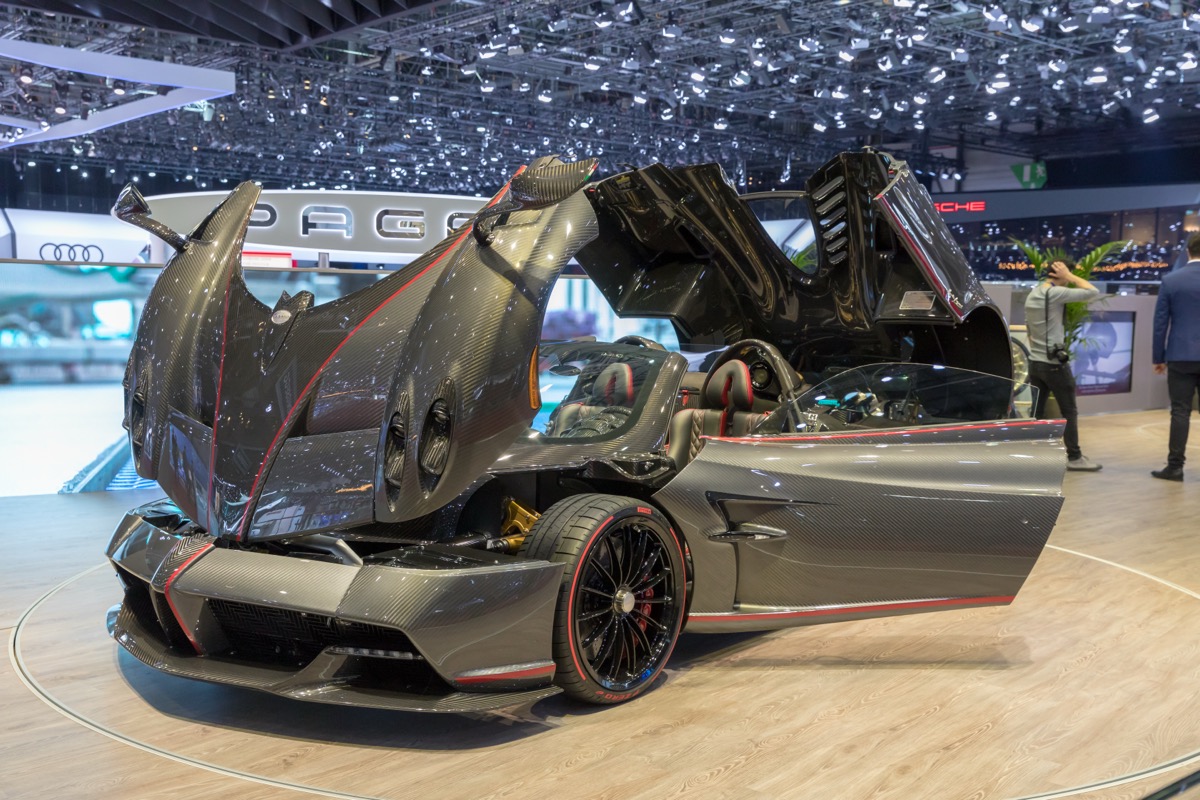
Why AMG Said Yes
This part of the Pagani story receives less attention than it deserves. AMG was, in the mid-1990s, transitioning from a tuning shop into a fully integrated Mercedes performance division. They had engineering prestige and brand ambitions. They were selective about how their engines appeared in the world.
What convinced them was Pagani’s composites facility and the early prototyping work on what would become the Zonda. The quality of the work was apparent. The ambition of the concept was clear. And Horacio Pagani himself was persuasive in the specific way that obsessives are persuasive — not with sales material, but with conviction that comes from having spent twenty years thinking about nothing else.
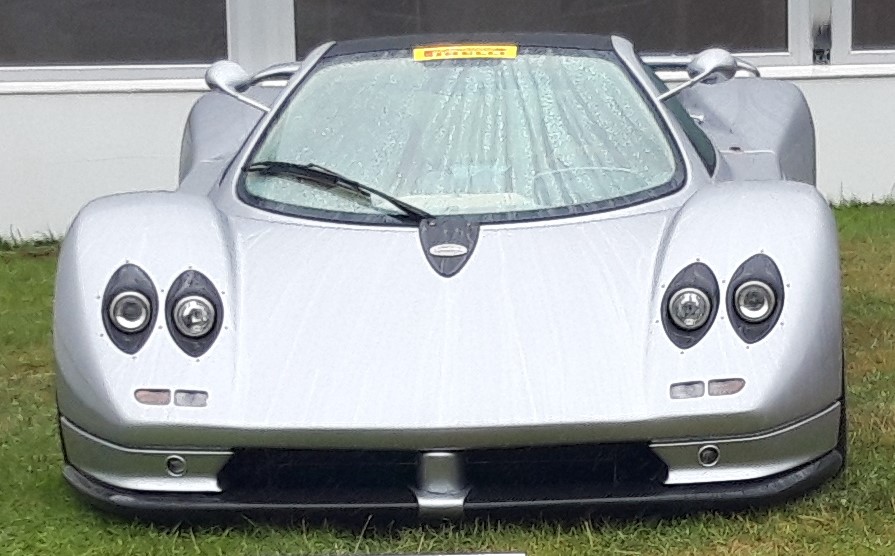
The Zonda C12 was unveiled at the Geneva Motor Show in 1999. Ninety cars were built in total across the Zonda’s production run. The car that Lamborghini’s management had dismissed a decade earlier was, by the time its production concluded, considered one of the defining supercars of its era.
Pagani didn’t say “I told you so.” He was already deep into developing the Huayra.
What “Italian” Actually Means
The narrative frame around Pagani — the Argentine who came to Italy and outperformed the Italians at their own game — risks becoming a feel-good immigrant achievement story, and that misses what’s actually interesting about it.
The genuinely Italian quality that Pagani embodies isn’t corporate or national — it’s the tradition of the master craftsman, the artisan who understands their material at the level of direct experience, who cannot separate the making from the meaning of the thing being made. This tradition predates the automotive industry by centuries. It’s the tradition of the furniture makers in Brianza, the textile workers in Como, the goldsmiths in Vicenza. It’s the tradition that the Motor Valley absorbed and expressed through engines and chassis rather than fabric and gold.
The large Italian manufacturers — Ferrari, Lamborghini under corporate ownership, Maserati — have all made compromises required by scale. They produce thousands of cars per year. They use supplier components. They make decisions based on warranty costs and production efficiency. This is not a criticism. It’s the natural consequence of being a business.
Pagani hasn’t made those compromises because he won’t. The 5,000 hours of labor per car, the in-house composites development, the material science investment — these are choices that a larger company would rationalize away in year two of operations. Pagani makes them because he understands the car as an object in the tradition of the master craftsman, not as a product in the tradition of the manufacturer.
He got this from Italy, from living in it and working in it for forty years. But he brought the capacity for that level of obsession with him from Argentina, in the mind of a seventeen-year-old who wrote letters to a man who’d already sold the company he admired.
The Legacy That’s Still Being Built
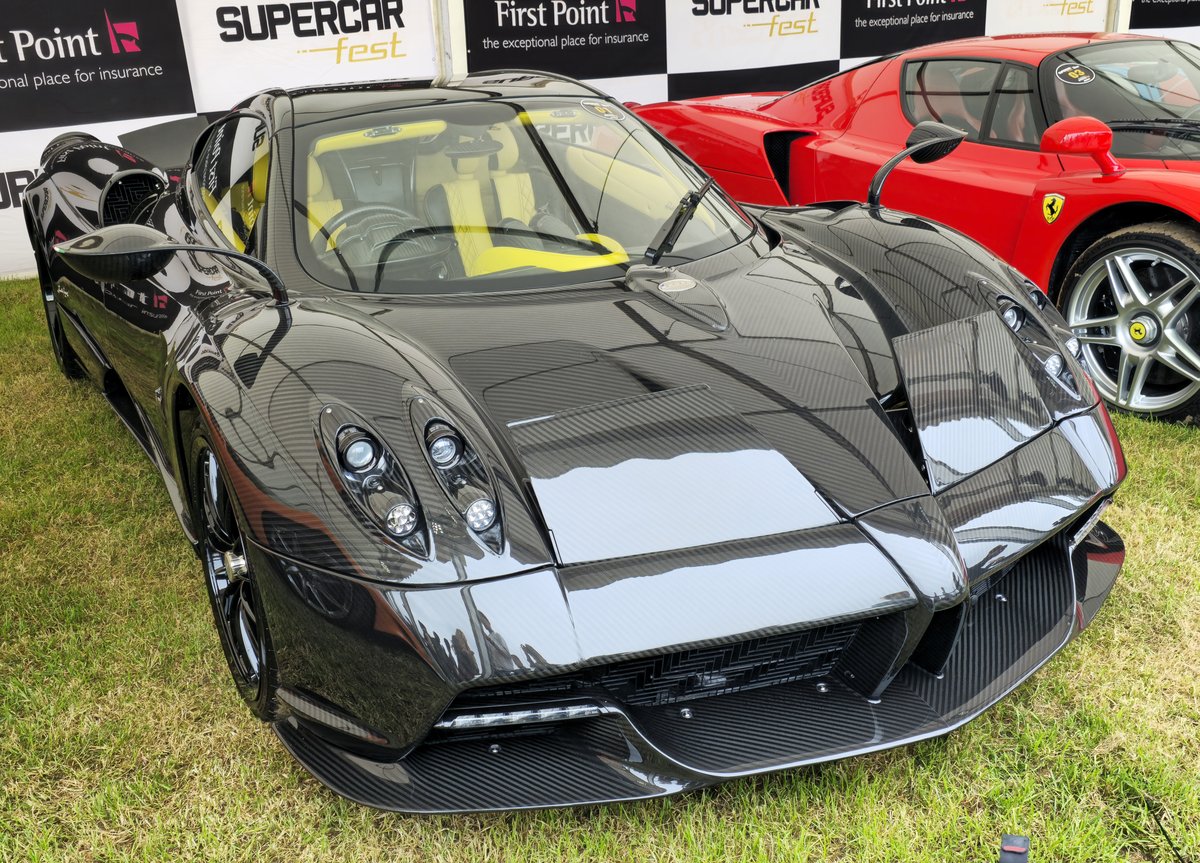
Pagani Automobili is not a legacy project. It’s operating in the present tense. The Huayra BC, the Huayra Roadster, the Huayra R, the Utopia — each successive model develops the original thesis rather than departing from it. The Utopia, launched in 2022, returns to an even more analogue, driver-focused philosophy than the Huayra — manual gearbox option, less electronic intervention, less downforce.
Horacio Pagani is 70. The question of succession and what the company becomes without his direct involvement is real. There’s no obvious answer. The company’s entire product identity is inseparable from one person’s obsessive vision.
But that was always the risk of the bet he made when he left Lamborghini in 1991 with an idea and no capital. He bet on his own conviction being specific enough and deep enough to produce something no institution could produce. That bet paid off. The cars exist. The material science exists. The facility exists.
The most Italian thing in Italy is still run by an Argentinian from Córdoba who wrote a letter to a man who’d already sold his company, because the letter wasn’t really about the company. It was about the cars. And the cars were always the point.
Share this
Join the conversation
COMMENTS
Loading comments…
No comments yet. Be the first to weigh in.
Leave a comment
Posted
Thanks for joining the conversation.