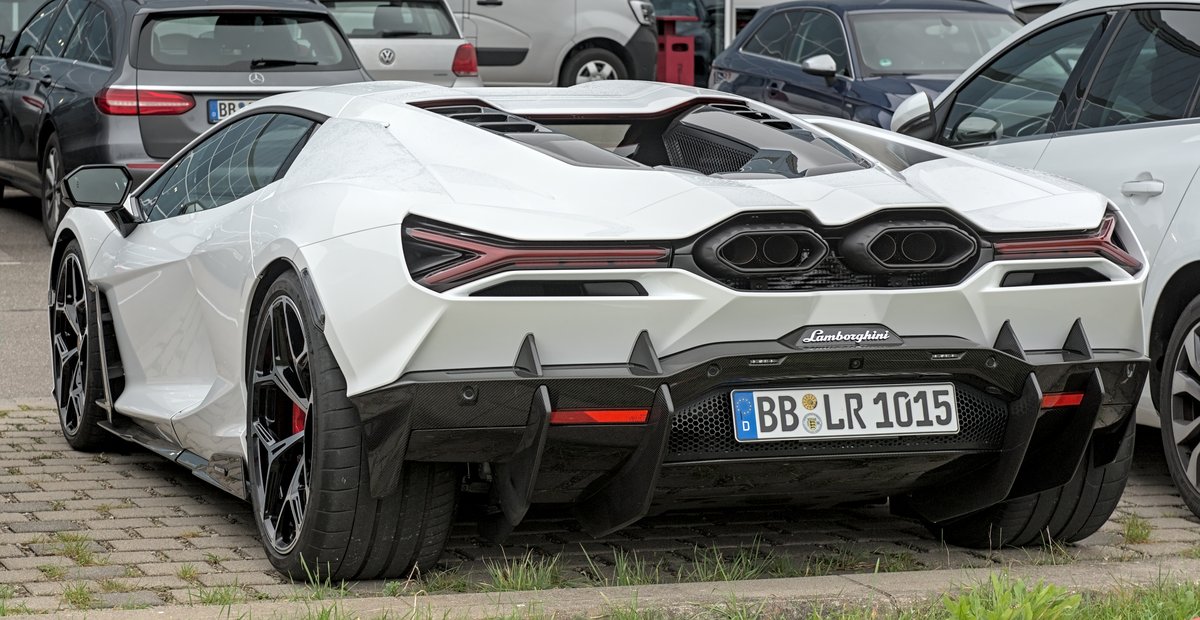
The Lamborghini Revuelto: V12 Lives. It Just Has Help Now.
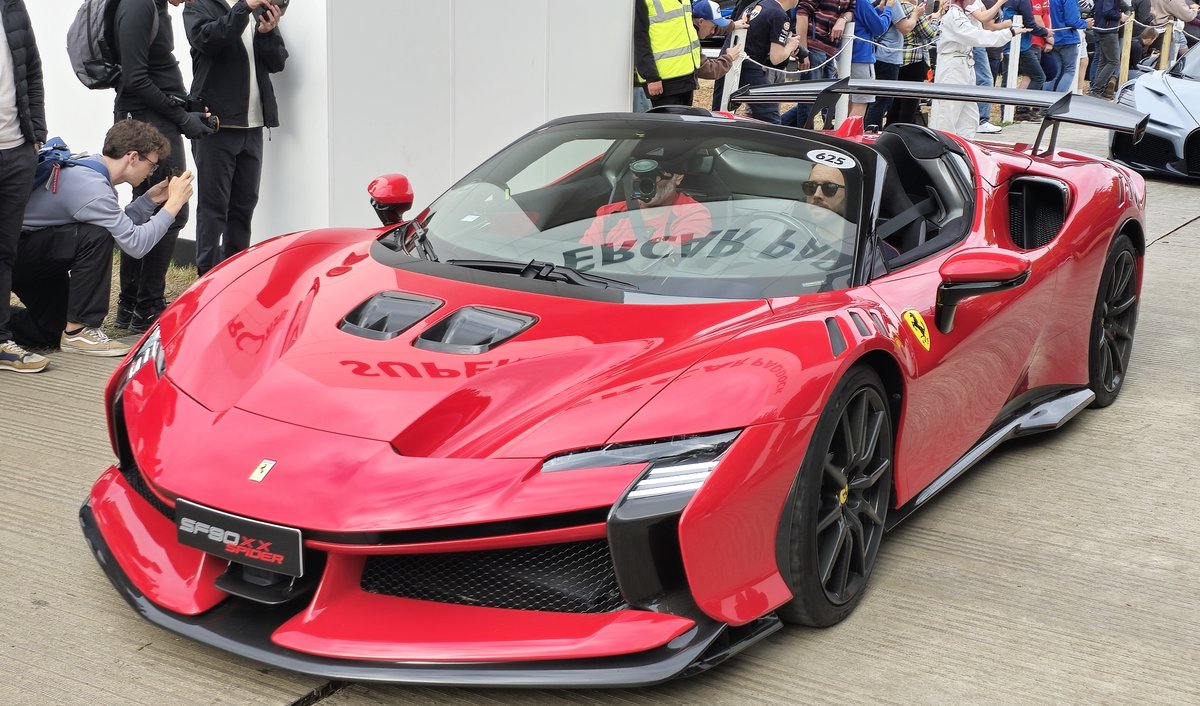
The Lamborghini Revuelto produces 1,001 horsepower. 825 of those come from a naturally aspirated 6.5-litre V12. The other 176 come from three electric motors. Ferrari took a turbocharged engine and electrified it with the SF90 XX Stradale; Lamborghini ran the argument the other way round, keeping a screaming NA V12 and using the electricity as fill-in. If that reads to you like the V12 has been demoted to a supporting role in its own story, you’ve misread the brief.
The motors exist to serve the V12. Not the other way around.
What the Aventador Was
The Aventador ran for twelve years. It was replaced once. What it got instead was a facelift in 2016, the SVJ in 2018, the LP780-4 Ultimae in 2021, and an engine that stayed essentially the same throughout: a 6.5-litre naturally aspirated V12 making somewhere between 690hp and 780hp depending on the variant, driving all four wheels through a seven-speed single-clutch automated manual that clunked and jerked in traffic and didn’t care.
Nobody bought an Aventador for its city manners.
They bought it because at 6,500rpm the engine crossed over from noise into something that registered in the chest before it reached the ears. Because at 8,500rpm it found a different register again, a sound that other manufacturers with turbocharged V8s and active exhausts have spent billions trying to approximate and none have replicated. And because the Aventador was theatrical in a way that asked for commitment. Loud, wide, low, dramatic. It made every decision for you.
The Aventador didn’t hand you options. It handed you itself, completely.
The 6.5-litre V12’s lineage runs back further than the Aventador. The Diablo’s V12 was developed inside Lamborghini in the late 1980s by, among others, an engineer named Horacio Pagani, who later left to build his own answer to the question of what an Italian V12 should be. That’s where this engine’s character was set. The Revuelto is the latest chapter in an argument that’s been running for almost forty years.
Why Turbos Would Have Been the Wrong Answer
When Lamborghini announced the Revuelto as the Aventador replacement, the existential question was obvious. Keep the V12, or add turbos to chase efficiency and meet emissions targets?
They kept it, naturally aspirated, unchanged in its essential character. The only correct answer. The execution is more interesting than the headline, though.
A turbocharged engine makes torque early. In most modern turbocharged performance engines peak torque arrives between 2,000 and 4,000rpm, and that curve goes on to define everything about how the car feels. A turbocharged Lamborghini V12 would have been fast, objectively and measurably fast, and it would also have felt like every other fast turbocharged car. Quick off the line, torquey through the middle of the rev range, the engine note softened and insulated by all the extra engineering sitting between combustion and crankshaft.
The naturally aspirated V12 makes its torque at the top. 535lb-ft at 6,000rpm. The engine wants to rev, is designed to rev, and the experience of driving a high-revving naturally aspirated V12 can’t be separated from the act of keeping it in the range where it performs.
The three electric motors, two on the front axle and one at the rear between engine and gearbox, solve the only real weakness in that setup. Immediate torque at low speed. They take the traffic, the parking lots, the slow sections of road where the V12 would otherwise be loafing, filling in the bottom of the rev range so the V12 doesn’t have to.
So the V12 lives entirely above 5,000rpm and does what it was built to do, while the motors handle what physics requires at the other end of the speed range.
Call that specialization rather than compromise.
The Numbers
1,001 horsepower. 1,772 kilograms. Zero to 60mph in 2.5 seconds. Quarter mile in 8.7 seconds. 217mph top speed.
The Aventador Ultimae produced 780hp and weighed 1,550kg, so yes, the Revuelto is heavier, because the hybrid system has to go somewhere. The power increase more than compensates. The Revuelto is faster in every measurable dimension.
The transmission is a new eight-speed dual-clutch unit. Gone is the Aventador’s single-clutch gearbox that defined entry-level supercar ownership for over a decade, and it’s gone because the V12 in the Revuelto revs so fast that a single-clutch unit simply can’t keep pace. The dual-clutch executes shifts in milliseconds. The V12 never breaks stride.
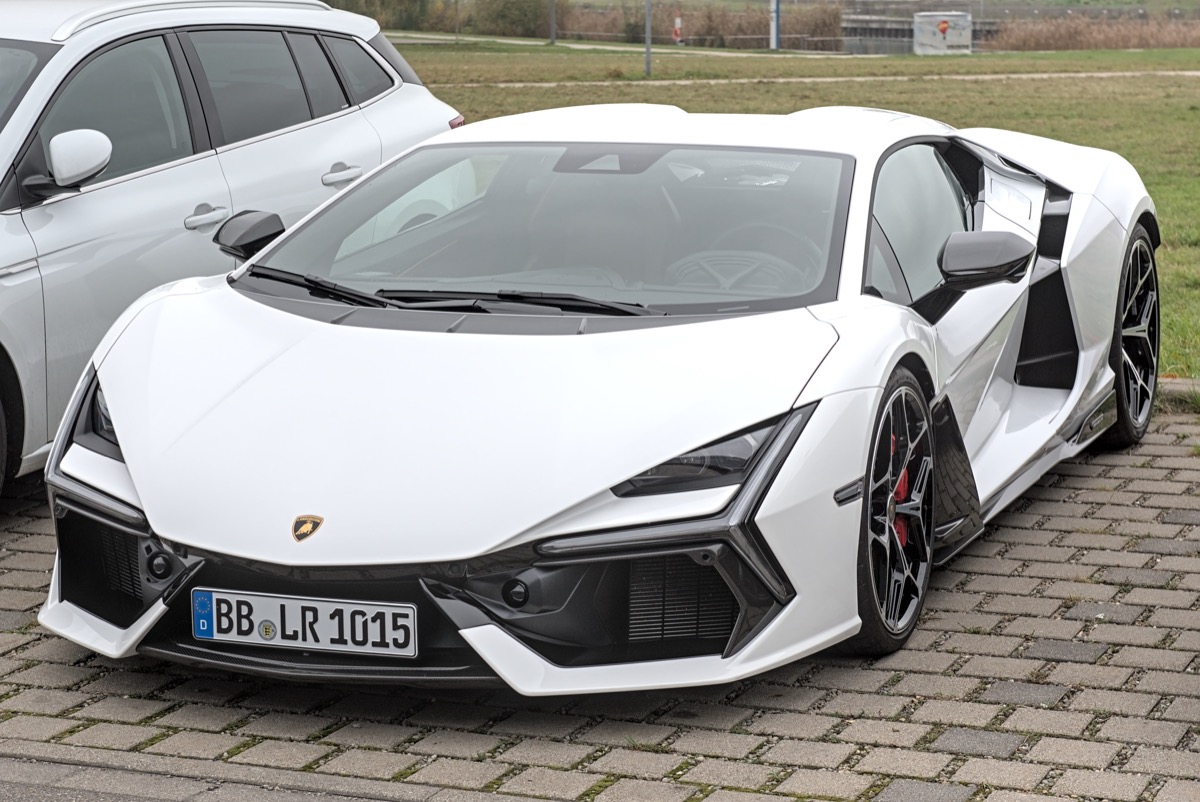
Four-wheel drive, as before. The front axle’s electric motors enable torque vectoring beyond anything a mechanical differential system can replicate, with torque at each individual wheel adjusted in real time, 100 times per second.
The Carbon Monocoque as Continuity
The Revuelto’s structure is a carbon fibre monocoque developed specifically for this car. Not borrowed, not shared. The Aventador used a carbon monocoque. The Murciélago used aluminium. The line from Aventador to Revuelto is structural and philosophical at once.
The pushrod suspension, front and rear, is another line of continuity. Pushrod layouts place the spring and damper inboard, away from the wheel, an idea lifted from Formula 1. Ferrari moved away from it. Lamborghini kept it. The Revuelto rides harder and tells you more than a conventional suspension setup would. You feel the road surface through the seat. You feel weight transfer as it happens.
Lamborghini didn’t soften the Revuelto to make the hybrid system feel better. They kept the architecture aggressive and let the hybrid system serve the aggression.
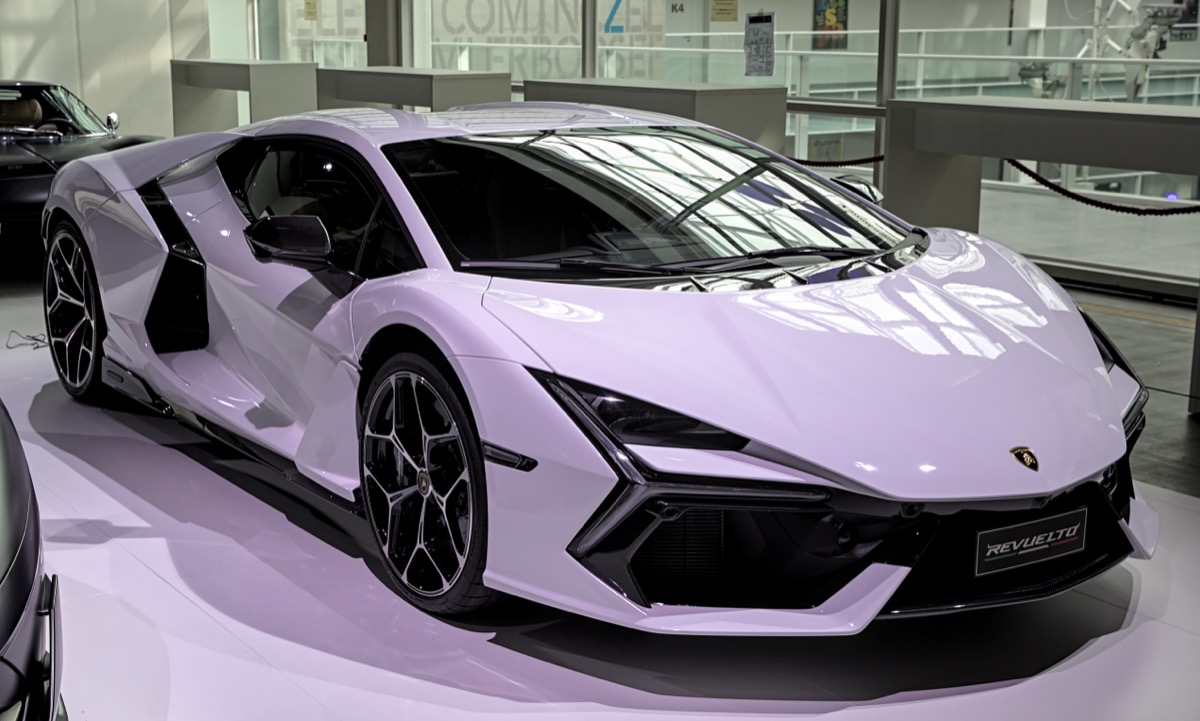
The Sound
One question decides whether Lamborghini made the right choices with the Revuelto, and it has nothing to do with lap times or efficiency ratings or carbon emissions.
What does it sound like?
At idle, the V12 burbles. Nothing remarkable there; plenty of engines burble. Around 4,000rpm the character changes, the intake note rising over the exhaust note until the sound turns distinctly Italian in a way that’s hard to articulate and impossible to mistake. At 7,000rpm it becomes the thing Aventador owners remember, and everyone else who ever stood near one remembers too. At 8,500rpm, closing on the 9,500rpm redline, it is producing a noise with no analogue anywhere in the turbocharged world.
The electric motors add a faint high-frequency whine at low speeds. Above 60mph you can’t hear them. The V12 is the entire acoustic experience of driving this car.
Lamborghini could have turbocharged the V12 and made it more efficient and quieter and easier to live with. They chose not to. That choice is the Revuelto.
The V12 Freed
Among people who think carefully about cars, the argument against the Revuelto runs like this: the hybrid system adds weight and complexity for a marginal gain in performance. The Aventador was already fast enough. Why carry 200kg of batteries and motors?
Because the point was never performance. It was character.
The electric motors allow the V12 to live exactly where it belongs, high in the rev range, operating at its designed peak, never asked to produce low-speed torque or crawl through city traffic. Take them away and the V12 is the whole powertrain, covering the full operating range on its own, usable at 1,500rpm and 4,000rpm and 8,000rpm alike. Compromises follow. They always do.
With the electric motors covering the bottom of the operating range, the V12 is freed. It only has to exist at the top of the rev range. It only has to be itself.
Technology usually gets bolted onto a legacy. Here it’s being used to protect one, the naturally aspirated high-revving V12, the most irreplaceable thing in Lamborghini’s history, finally given the conditions it needs to be exactly what it is.
So the V12 doesn’t share the Revuelto with three electric motors. It puts them to work.
Share this
Join the conversation
COMMENTS
Loading comments…
No comments yet. Be the first to weigh in.
Leave a comment
Posted
Thanks for joining the conversation.