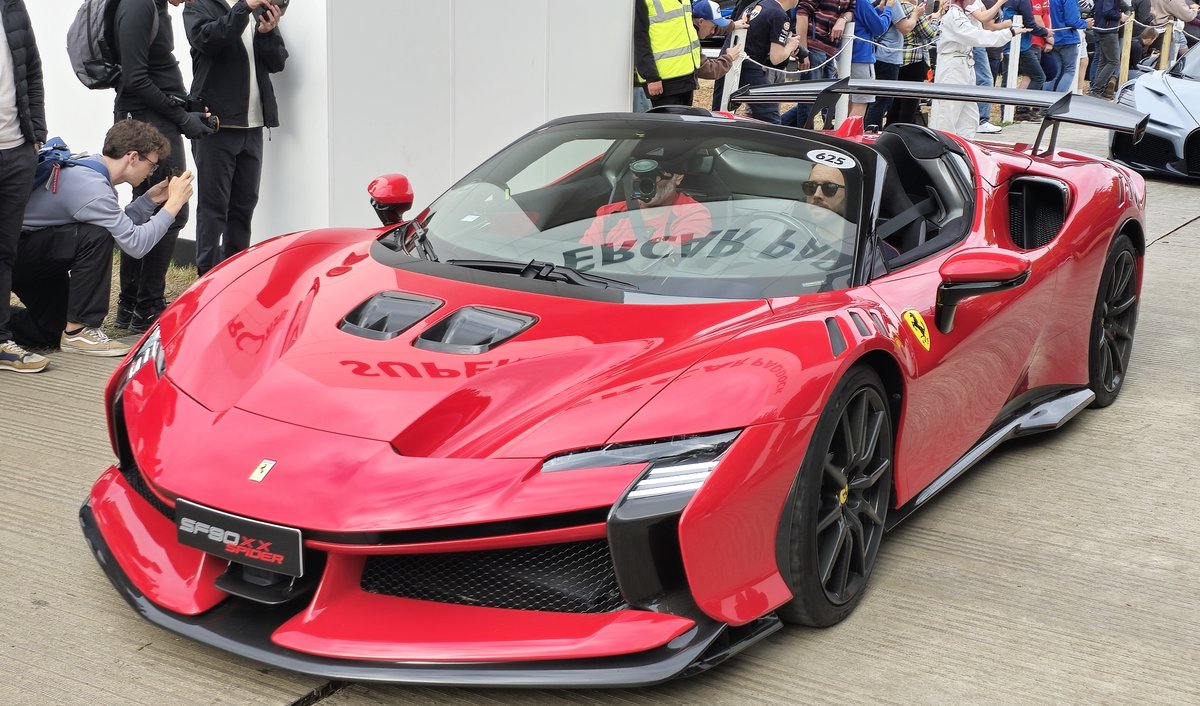
The Ferrari SF90 XX Stradale: When the Track Car Becomes the Road Car
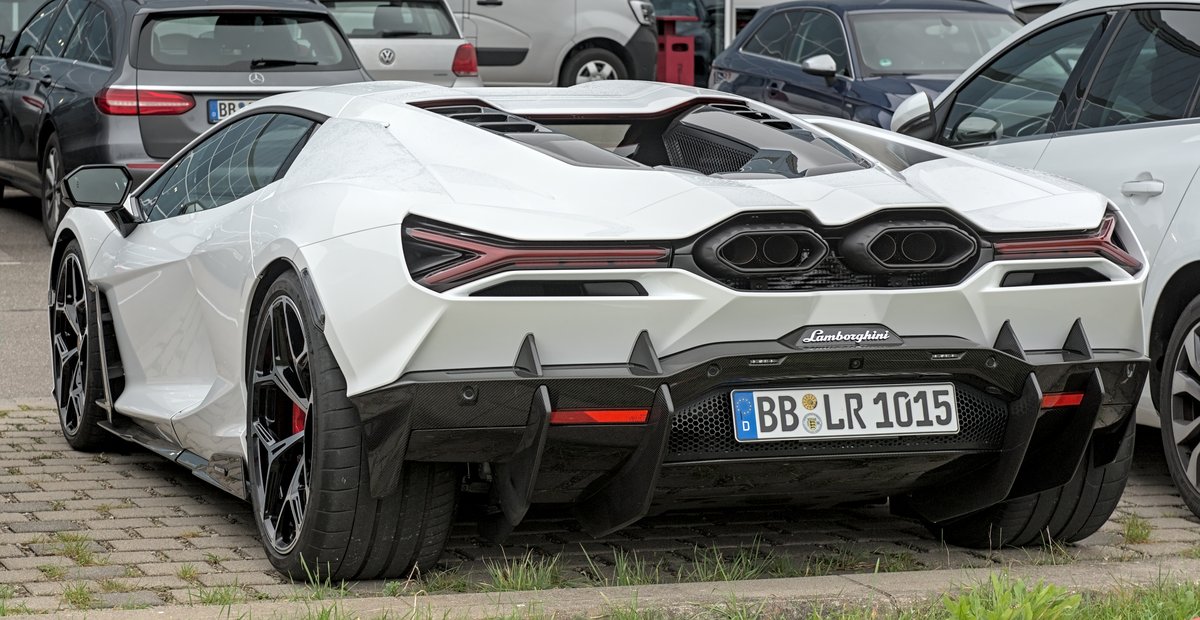
The SF90 XX Stradale is not a track-day version of the SF90 Stradale. It sits in the same era as the Lamborghini Revuelto — the current generation of hybrid hypercars that use electrification not as a compromise but as an amplifier. It’s the other way around.
Ferrari built the XX programme for the circuit first. Then they made it road-legal. That inversion matters more than any single number on the spec sheet, and it’s why the SF90 XX sits in a different category from every other hypercar wearing a prancing horse.
What “XX” Actually Means
Ferrari’s XX Programme has existed since 2005. The FXX, then the 599XX, then the FXX-K, then the FXX-K Evo — each one a closed-group track weapon built for Ferrari’s most committed clients. These cars are owned but not possessed. Ferrari stores them, maintains them, transports them to exclusive track days. The owners fly in and drive.
They are race cars. Not race-inspired. Not track-capable. Race cars.
The XX Stradale carries that badge onto public roads for the first time. Ferrari hasn’t done this before — made the most extreme version of a car both road-legal and customer-owned in the conventional sense. The FXX-K could not be driven to a shop. The SF90 XX Stradale can. That’s the disruption.
It’s also the argument: Ferrari is at its best when it starts from the race car and works backward toward comfort, not when it starts from the grand tourer and tries to make it faster.
The Numbers That Establish the Hierarchy
1,030 horsepower. That’s the combined output of the twin-turbocharged 4.0-litre V8 and three electric motors — two at the front axle, one between the engine and eight-speed dual-clutch gearbox at the rear. The standard SF90 Stradale produces 986hp. The difference looks small. The result is not.
Zero to 60mph in 2.3 seconds. The SF90 XX weighs 1,560kg, which is 10kg lighter than the standard car despite carrying all the additional aero hardware. Ferrari reduced that weight through titanium and carbon components that would be impractical to put on a production car. The SF90 XX is not a production car in any meaningful sense.
Top speed: 320km/h. But that number tells you less than this one — 860 kilograms of downforce at 200km/h.
860kg. At 200km/h. That’s more downforce than the dry weight of a Lotus Seven — Colin Chapman’s purest expression of “simplify, then add lightness,” now generating less load at any speed than the SF90 XX adds to itself.
Active Aero as the Real Story
The SF90 XX’s aerodynamic package is not a fixed wing and a splitter. It’s a system.
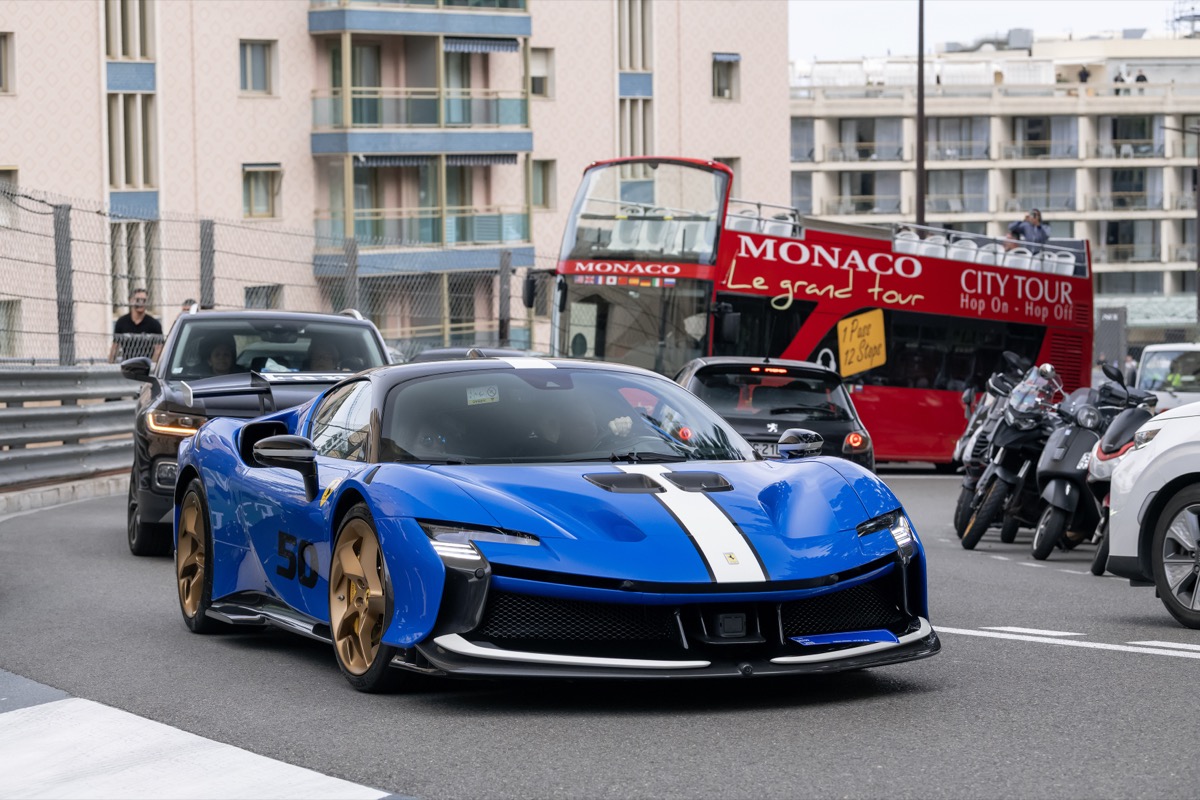
The front bumper has larger air intakes feeding the brake cooling system. The underbody is a full flat floor with a rear diffuser borrowed directly from the FXX-K Evo. The rear wing is active — it adjusts its angle in real time based on speed, braking, and cornering load. In high-downforce mode, it generates that 860kg figure. In low-drag mode, it flattens for straight-line speed.
Ferrari calls this the “High Downforce” configuration. It exists alongside a second mode called “High Speed” — still generating meaningful downforce, but optimized for top-end velocity. The driver doesn’t manage this manually. The car reads what’s happening and adjusts.
This is not road car technology adapted for the track. This is Formula 1 philosophy adapted for a car that can, in theory, pick up groceries.
What the SF90 XX Deletes
The interior of the SF90 XX Stradale tells you immediately what kind of car you’re in.
The rear seats are gone. In their place sits a titanium roll cage — not bolted in, structurally integrated. The door panels are stripped to carbon. The dashboard retains the SF90’s digital interface but strips away acoustic insulation that would add weight and dampen the powertrain’s voice.
The harnesses are pyrotechnic-release units. In a serious impact, a charge fires to release the buckle instantly. This is not a comfort feature. It’s a survival feature. Ferrari put it in a road car.
The steering wheel is fixed with a quick-release mechanism. The seat is a carbon racing bucket with HANS anchor points. You are not buying a Ferrari with some track-day pretensions. You are buying a race car that passed homologation.
What the SF90 XX adds is equally specific: enough sound insulation to meet road noise regulations, air conditioning, a navigation system. The concessions to street legality are surgical. Every addition to comfort had to justify its weight.
The Sensory Experience of a Car Tuned First for Track
Drive the SF90 XX on the road and something is immediately apparent — the suspension is working differently than it should for a road car.
The SF90 XX uses magnetorheological dampers that Ferrari calibrates across five suspension settings. The softest is called “Wet.” On road surfaces, Wet is still stiff by any normal car’s standard. This is not a suspension designed to absorb potholes. It is designed to maintain contact patch uniformity at 200km/h through a medium-speed corner.
The steering is direct to the point of nervousness in urban traffic. The brakes — 398mm front rotors, carbon-ceramic — require more pedal force than a road car before they begin to bite. They are designed to operate at temperature. On the street, you are always running below their threshold.
All of this is the point. The SF90 XX is not pretending to be a comfortable car. It is a circuit car that happens to be legal on the street, and it communicates that reality through every control input. The sound insulation keeps it quiet enough to be registered. The chassis keeps reminding you of what it really is.
Ferrari’s Real Argument
There is a version of this car that doesn’t exist: an SF90 Stradale that Ferrari made slightly stiffer, added a wing to, and sold for twice the price. Every manufacturer does that car. It is the track pack. It is the sport exhaust. It is the stickier tires.
The SF90 XX Stradale is not that car.
Ferrari started with the XX programme — their internal track-weapon division — and asked what it would take to make it legal for public roads. The answer was air conditioning, turn signals, and enough acoustic treatment to clear noise regulations. Everything else stayed. The roll cage stayed. The pyrotechnic harness release stayed. The active aero optimized for downforce over comfort stayed.
This is Ferrari’s actual argument about what a road car should be: a vehicle for which performance is not the goal to be approximated, but the non-negotiable foundation. Comfort and legality exist in the spaces performance didn’t need.
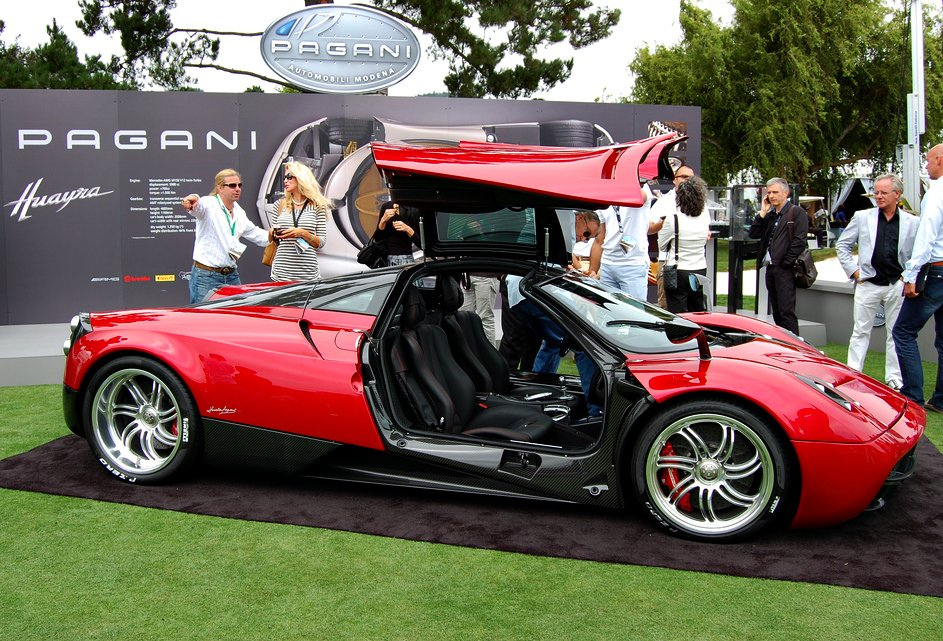
There have been two decades of manufacturers building faster road cars by copying race car technology. The opposite philosophy — represented in this era by the Pagani Huayra, built by the Argentinian who left Lamborghini to make completed objects rather than optimized ones — treats the road car as the destination, not the diluted version of the race car. The SF90 XX Stradale skips that process entirely.
It is the race car. Full stop. The road car is the bonus.
Share this
Join the conversation
COMMENTS
Loading comments…
No comments yet. Be the first to weigh in.
Leave a comment
Posted
Thanks for joining the conversation.