Best Exotic Cars of All Time: The Definitive Ranked List
This is an engineering ranking. The 25 cars below earned their place by what they accomplished mechanically — what they proved, what they made possible, what they refused to compromise on. Cultural impact and personal nostalgia don’t move the needle here. A car earns this list because its engineering rewrote a rule.
If you want the cars that shaped a generation rather than the ones that advanced the discipline of building cars, that’s a different list. The two overlap — the McLaren F1 and Bugatti Veyron appear in both because they accomplished both — but the criteria are different and the rankings reflect it.
If you want to know what owning any of these cars costs in 2026, our 5-year cost-of-ownership comparison puts real numbers on the question.
No honorable mentions. No hedged takes. These are the 25 best exotic cars ever engineered, in order.
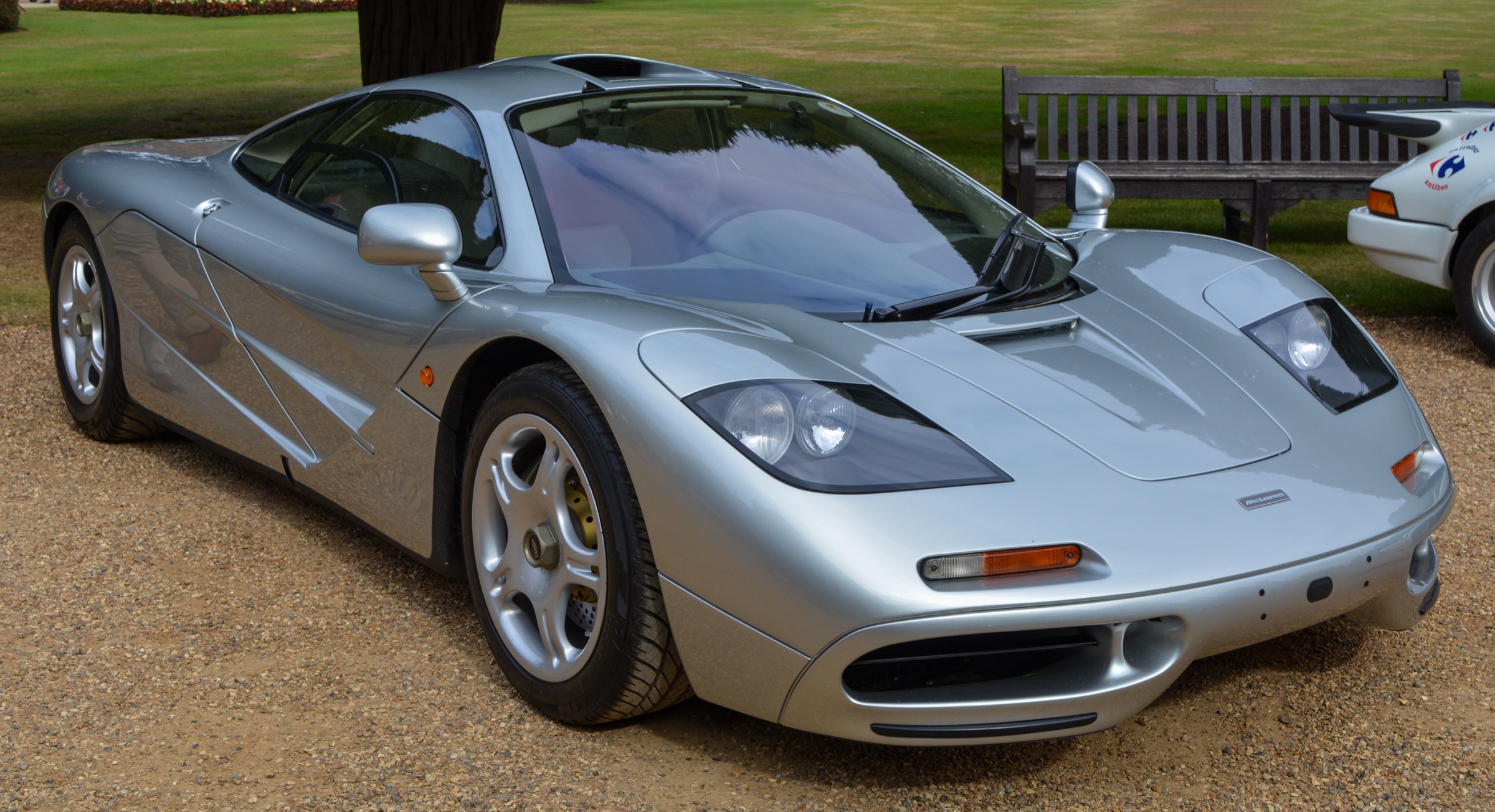
1. McLaren F1 (1992–1998)
The McLaren F1 is the greatest driver’s car ever made. Gordon Murray’s obsession with lightness, the central driving position, the naturally aspirated BMW S70/2 V12 producing 627 hp in a car weighing 2,509 lbs — these add up to something that drivers who’ve experienced both modern hypercars and the F1 consistently say puts modern cars to shame for pure driving sensation. It held the production car top speed record (240.1 mph) for nine years. 106 were built. It is unrepeatable.
The F1 proved that a single engineer’s vision, executed without compromise, produces something greater than any committee-designed product. Gordon Murray’s story is essential reading for understanding why.
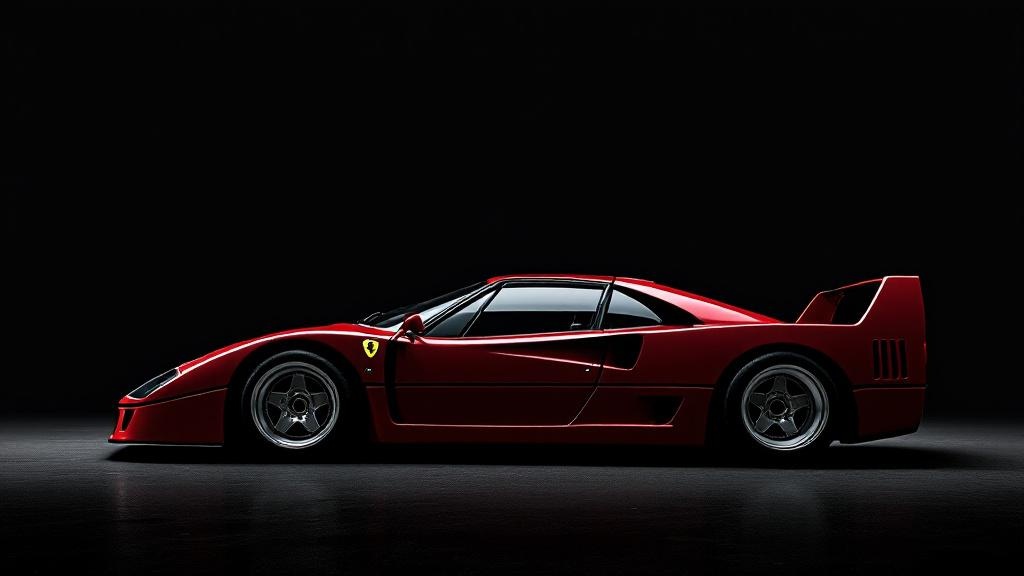
2. Ferrari F40 (1987–1992)
The last Ferrari Enzo Ferrari personally approved. Built to celebrate Ferrari’s 40th anniversary, the F40 had no ABS, no traction control, no power steering, no interior carpet. What it had was a twin-turbocharged 2.9L V8, 478 hp, and a relationship between the driver and the road that modern safety systems deliberately insulate you from. The F40 is the car that separates people who talk about “driving feel” from people who’ve experienced it in a machine that makes no concessions.
If you drove the F40 in Gran Turismo 2 as a kid, you already understand the mythology — the game captured the rawness even through a DualShock controller.
3. Bugatti Veyron (2005–2015)
The Veyron should not exist. The brief — 1,001 hp, 250 mph, usable on public roads, passing all safety and emissions regulations — required a W16 engine, four turbochargers, ten radiators, and a development program that cost Volkswagen Group approximately $5 million per car in losses. It did exactly what was asked. Everything that followed — the Chiron, the Koenigsegg records, the Rimac Nevera — stands on the Veyron’s shoulders.
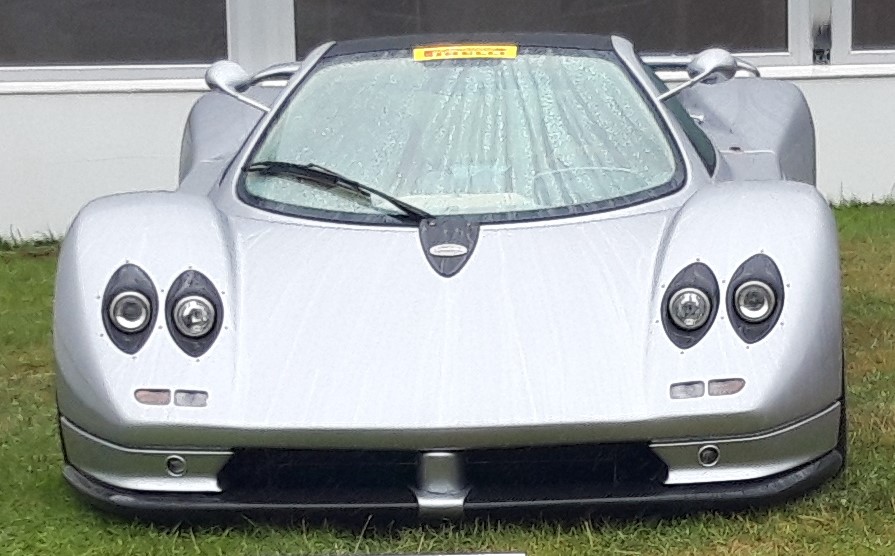
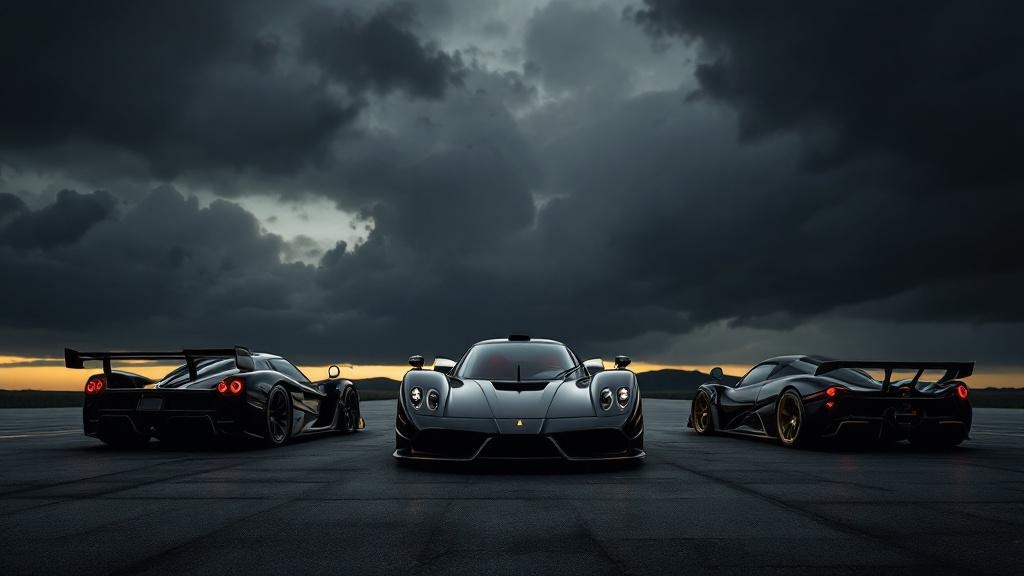
4. Pagani Zonda C12 (1999–2017)
The Zonda ran for 18 years in continuous limited production because every time Pagani announced the end, buyers appeared willing to fund another variant. The Cinque, the Revolucion, the HP Barchetta — each pushed the visual and technical complexity of a hand-built car further than seemed possible. The Zonda proved that one person with a specific vision, sufficient obsession, and AMG V12 engines could build something that challenged Ferrari.
5. Lamborghini Miura (1966–1973)
The car that invented the mid-engined supercar format. Three Lamborghini engineers, working unauthorized on their own time, built a chassis they thought Ferruccio should make into a car. He saw it at the Turin show and approved production on the spot. The result was the Miura — transverse mid-engine, bodywork by Bertone, and a look that 60 years of automotive design hasn’t improved upon. Every mid-engined supercar since is an iteration of an idea these three engineers had in 1965.
6. Ferrari 250 GTO (1962–1964)
The most valuable car in the world. 36 were built for homologation. The 250 GTO won its class at Le Mans and the Tour de France in the same year. A pristine example sold for $70 million in 2018. The design, the sound, the context — this is the car every car collection is ultimately measured against.
7. Koenigsegg Agera RS (2011–2018)
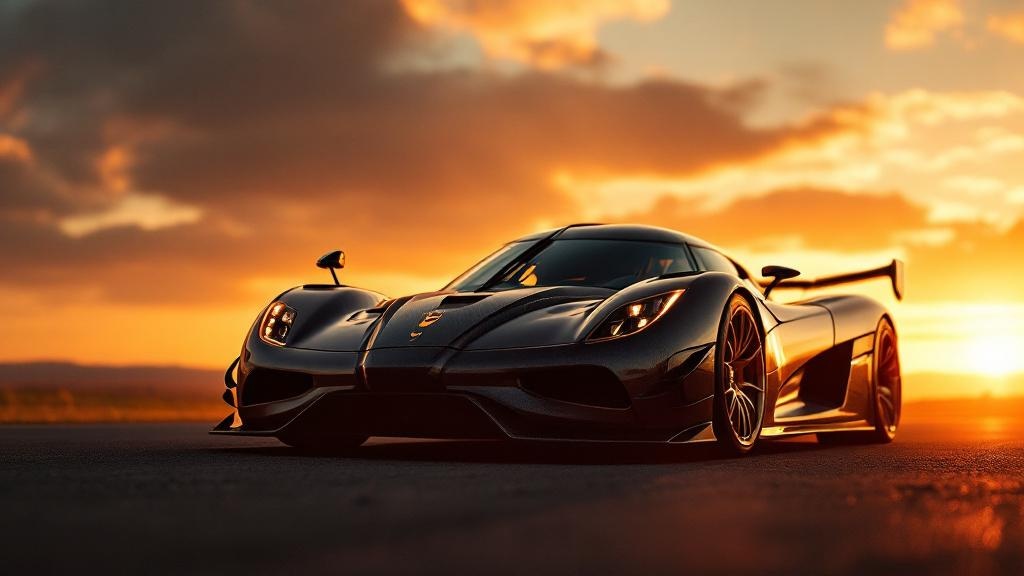
In November 2017, on a closed stretch of Nevada Route 160, a Koenigsegg Agera RS set the production car top speed record at 277.9 mph. Two runs, opposite directions, averaged. The Agera RS also set records for 0–400 km/h–0 (36.44 seconds). It established beyond argument that Koenigsegg’s engineering claims were not theoretical.
8. Porsche Carrera GT (2004–2006)
The last naturally aspirated, manual-transmission, mid-engined supercar Porsche built before electronic aids became standard. The 5.7L V10 derived from an aborted Le Mans program makes a sound unlike any production car before or since. It is genuinely challenging to drive well. That is precisely the point.
9. Rimac Nevera (2021–present)
0–60 in 1.74 seconds. 1,914 horsepower. Built by a company that didn’t exist 15 years ago by a founder who was 19 when he started. The Nevera is proof that electric hypercars aren’t a compromise — they are the next evolution of the concept the McLaren F1 began. Also a genuinely usable grand tourer with 300+ miles of range.
10. Bugatti Chiron (2016–present)
1,479 hp. The Super Sport 300+ reached 304 mph with a modified prototype — the first production-based car verified above 300 mph. The Chiron is the most powerful, fastest mass-produced car in history. It is the Veyron’s legacy, perfected.
11. Ferrari LaFerrari (2013–2016)
Ferrari’s first hybrid hypercar. 950 hp combined (V12 + electric motors), 499 units. All hybrid power goes to performance, not range. The Aperta convertible version is among the most desirable Ferraris ever made.
12. Lamborghini Aventador SVJ (2018–2022)
The Aventador’s final form and a Nürburgring production car lap record holder at 6:44.97. The ALA active aero system — directing airflow through the bodywork to vary downforce per corner — is genuinely innovative. 900 units.
13. McLaren P1 (2013–2015)
The most track-focused of the “Holy Trinity” (P1, LaFerrari, 918). DRS system borrowed from Formula 1, suspension calibrated for circuit use. 375 built. It destroyed the Porsche 918 at the Nürburgring by a significant margin.
14. Porsche 918 Spyder (2013–2015)
The car that taught the automotive press hybrid powertrains and supercar performance aren’t contradictory. 887 hp, Nürburgring 7:14. 918 built. Now trading above $2 million — a future classic whose appreciation trajectory is already clear.
15. Ferrari Enzo (2002–2004)
Named for the founder. F1-derived paddle-shift gearbox, 660 hp V12, carbon fiber construction, 399 units. Ferrari’s first car where the aero and structural philosophy came directly from Formula 1 rather than being inspired by it.
16. Koenigsegg Jesko (2019–present)
1,600 hp on E85. The Light Speed Transmission. Named after Christian’s father. Our full Jesko breakdown covers why this car represents Koenigsegg’s current technical ceiling.
17. Lamborghini Countach (1974–1990)
The Countach is the reason a generation of children had a poster on their wall. Marcello Gandini’s wedge design defined what an exotic car looked like for 20 years. Technically flawed but visually definitive. No car before or since has made a first impression with the same force.
18. Aston Martin One-77 (2009–2012)
77 cars. 7.3L naturally aspirated V12, 750 hp — the most powerful NA production engine at the time. Possibly the most beautiful car on this list.
19. Pagani Huayra (2011–present)
Where the Zonda proved the concept, the Huayra refined it. Mercedes-AMG V12, active aero on each corner, carbon triax bodywork. The most technically complete car Horacio Pagani has made.
20. Ferrari 458 Italia (2009–2015)
The last naturally aspirated mid-engined Ferrari. The 4.5L V8 is almost universally regarded as the finest NA engine of the 21st century. The sound alone justifies its place on this list. The transition to turbocharged engines with the 488 was the end of an era the 458 closed perfectly.
21. McLaren 720S (2017–2022)
At launch, the fastest car at its price point by most objective metrics. Aerodynamic architecture where air flows through the front structure to the rear diffuser, bypassing the body entirely. The supercar every manufacturer had to respond to in 2017.
22. Lamborghini Huracán STO (2020–present)
The most track-focused Huracán. 640 hp naturally aspirated V10, rear-wheel drive. The car Lamborghini builds for people who know what they’re doing and want a machine that responds in kind.
23. Bugatti EB110 (1991–1995)
Romano Artioli’s attempt to resurrect Bugatti produced a car decades ahead of its time. Quad-turbocharged V12, AWD in 1991, carbon fiber monocoque before it was standard. Commercially unsuccessful, technically extraordinary. The car VW studied before commissioning the Veyron.
24. Porsche 911 GT3 RS (2022–present)
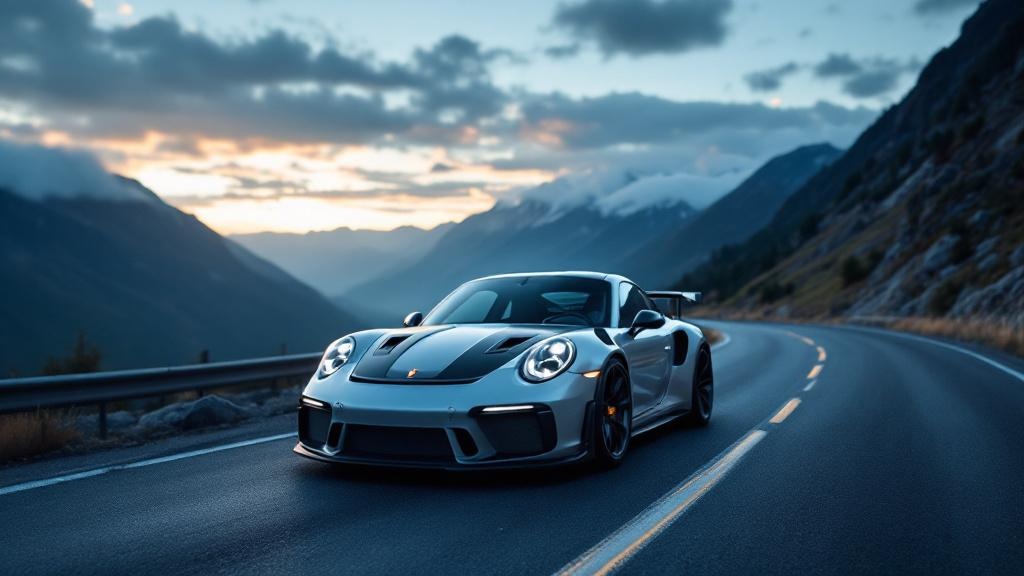
The current 992 GT3 RS generates more downforce than any road-legal Porsche ever built. The 4.0L flat-six at 9,000 RPM, the DRS rear wing, the single-mindedness of purpose — the GT3 RS is the car that proves Porsche takes motorsport technology transfer more seriously than anyone.
25. Ferrari F8 Tributo (2019–present)
The last of the turbocharged mid-engine V8 era before hybridization. 710 hp, faster than the F40 in most measurable ways while being genuinely civilized at low speeds. The Tributo name acknowledges this generation is ending. A worthy send-off.
The Gaming Legacy
More than half the cars on this list appear in Gran Turismo 7 or Forza Motorsport. For many enthusiasts under 40, the first encounter with these machines was virtual — chasing lap times in a McLaren F1, attempting to control a Carrera GT in Gran Turismo 4, discovering the Pagani Zonda existed because Need for Speed Hot Pursuit put it on the cover.
That’s not a lesser form of engagement. The knowledge of power-to-weight ratios, aerodynamic principles, and manufacturer lineages that gaming communities carry is genuine automotive literacy. The step from virtual to physical is smaller than the industry sometimes admits.
Ready to make the jump from admiring to owning? Start with our How to Buy Your First Exotic Car guide, or explore the most accessible tier in our Best Supercars Under $200K breakdown.
Share this
Join the conversation
COMMENTS
Loading comments…
No comments yet. Be the first to weigh in.
Leave a comment
Posted
Thanks for joining the conversation.